
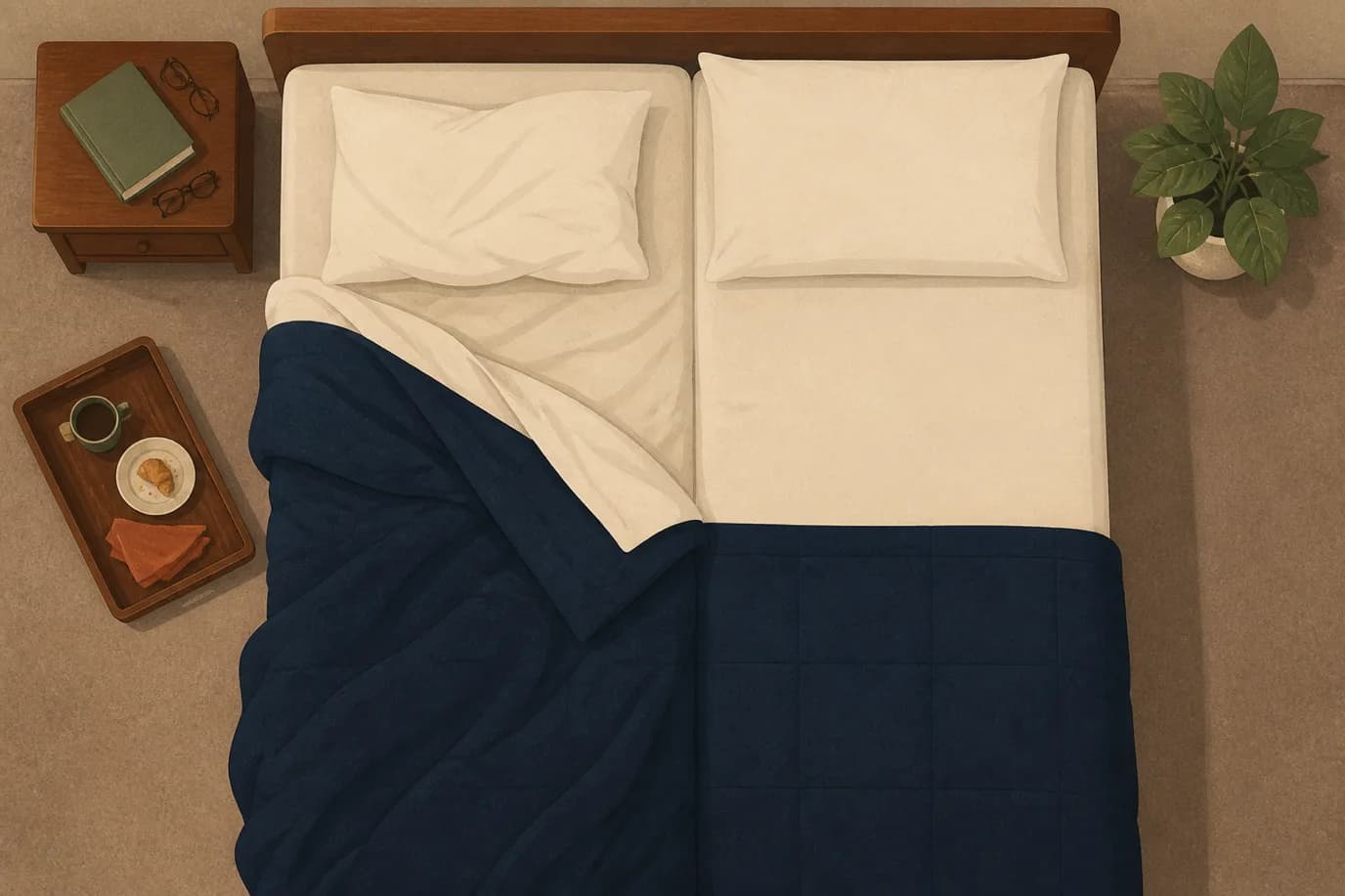
A solo traveller in a double room is paying for a bed that nobody will sleep in. Every hotel has an opinion about whether that is fair, and almost none have a number. The room costs roughly the same to heat, clean and depreciate whether one person or two are in it, so charging the full rate is easy to defend at the morning meeting. It is harder to defend at eleven at night when a guest is comparing four properties on a phone and yours is the one showing a price built for two people. That decision belongs in your revenue management system alongside every other rule about who pays what, and in most properties it lives nowhere at all.
The second half of the problem is mechanical rather than commercial, and it catches operators who have already thought about the first half. You can decide that a solo guest should pay fifteen euro less, write it in a policy document, brief the desk, and still show the same number to every searcher on the planet, because the rate leaving your channel manager carries one price per room per night with no notion of how many people are in it. The pricing decision and the distribution plumbing are separate pieces of work, and doing the first without the second changes nothing a guest can see.
This article is about both. What the second person in a room genuinely costs you, what they are genuinely worth, how far apart those two numbers sit, and how to get a single-occupancy rate to actually appear in front of somebody searching for one adult. It is a pricing question that has been answered properly by the cruise and tour trade and largely ignored by hotels, which is odd, because hotels have the better data.
Per Room or Per Person
Two conventions split the industry, and which one you grew up in decides how visible this problem is to you.
Per room. The rate is attached to the room. One guest or two, the number does not move. This is the norm across the United States, the United Kingdom, most of Asia and most city hotels everywhere. There is no line called a single supplement because there is no line at all. The solo guest simply pays the couple's price and privately decides whether that was reasonable.
Per person. The rate is quoted per person per night, usually with breakfast or half board attached, and a solo guest occupying a double pays a stated surcharge. German-speaking markets call it the Einzelzimmerzuschlag, abbreviated to EZZ on tariff sheets. French tariffs carry a supplément chambre individuelle, Spanish ones a suplemento individual. This convention dominates the Alpine half-board trade, much of Italian and Austrian resort hotellerie, and anything sold through a tour operator brochure.
The per-person markets publish real numbers, which makes them useful to look at. A pension in Styria lists an Einzelzimmerzuschlag of twelve euro per night on a bed and breakfast rate in the low sixties, with a separate Nächtigungsabgabe of two euro fifty per adult per night on top. An Alpine hotel at Maria Alm adds fifteen to twenty euro per person per day on its half-board tariff. Trade guidance in German-speaking markets puts the usual band at fifteen to thirty percent of the room price, with the note that nothing regulates it and every house sets its own.
Now compare that to a per-room market. If a double in a mid-market city hotel goes out at one hundred and forty euro and a solo guest pays one hundred and forty euro, the effective single supplement is one hundred percent of what a room for one might otherwise have cost. The German hotel charging thirty percent looks greedy on the tariff sheet and is in fact the cheaper option for a person travelling alone. The city hotel charging nothing extra is charging the most, and gets no complaints, because there is nothing to complain about on the invoice.
That is the first useful observation. The per-person convention is not meaner. It is just honest about a decision the per-room convention makes silently.
What the Second Guest Actually Costs You
Before deciding what to charge, it is worth being precise about what changes when a second body walks into the room, because the intuition is badly wrong in both directions.
The room does not change. Same square metres, same heating, same lighting, same furniture wearing out at the same rate, same share of the mortgage and the insurance and the front desk salary. Whatever proportion of your cost base is fixed against the room stays exactly where it is. This is the entire argument for charging a solo guest full price, and it is a good argument as far as it goes.
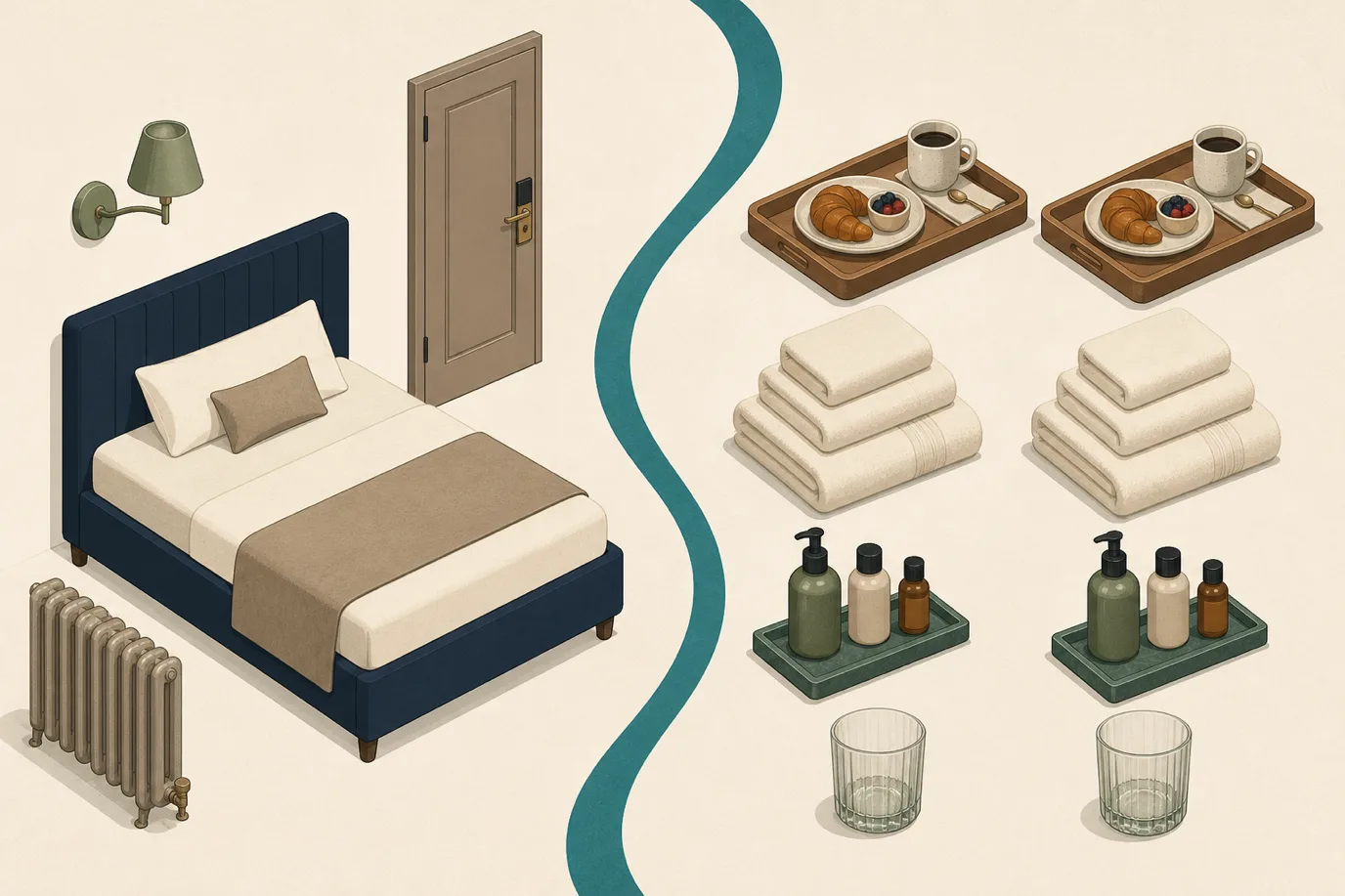
What changes is a short list of genuinely per-person items, and the total is smaller than most operators guess.
The Lines That Genuinely Change
Run these against your own accounts rather than trusting anyone's benchmark, including this one. The point is the shape of the list, not the precise figures, which vary enormously by market and service level.
| Line | What actually changes | Rough scale |
|---|---|---|
| Breakfast | One extra cover. Usually the largest single item, and the one most often bundled invisibly into the rate | The dominant cost in most calculations |
| Housekeeping time | A second bed side to make, more glasses, more waste, a fuller bathroom. Longer, but nowhere near double | A few extra minutes of a cleaning hour |
| Linen and laundry | A second towel set and bathrobe through the wash | Small but real, and it recurs nightly |
| Amenities | Toiletries, slippers, water, whatever you place per guest rather than per room | Small, and entirely within your control |
| Tourist or city tax | Charged per person per night in most jurisdictions, so a solo pays less | Not your cost unless your rate is tax inclusive |
Add those up honestly and, for a mid-market European hotel including a served breakfast, the genuine variable cost of the second person usually lands somewhere in the low tens of euro per night. Not half a room. Not a third of a room. A breakfast, some towels and a few minutes of somebody's time.
That number matters more than anything else in this article, because it is the floor under every decision that follows. If you discount a solo booking by forty euro to save twelve euro of cost, you have not made a pricing decision. You have made a donation, and you have made it to guests who in many cases would have booked you anyway.
What the Second Guest Is Actually Worth
Cost is only one side. The reason hoteliers dislike solo bookings is rarely the towels. It is the quiet belief that two people spend more once they are in the building, and that belief is mostly correct.
Two people in the bar order two drinks and stay longer than one person with a book. Two people book a table in the restaurant, where one person often eats at the bar or goes out entirely. Spa treatments are frequently packaged and marketed in pairs, and a couples treatment has no solo equivalent at the same value. If you run meaningful food and beverage, the second body is worth real money and it does not show up in ADR at all.
Set against that, several things push the other way, and they are easy to overlook because nobody reports on them.
Solo trips tend to run longer. The ABTA Holiday Habits research, fielded annually by The Nursery Research and Planning across a nationally representative sample of two thousand people, has tracked solo travel climbing for several years, and the trade surveys that break out trip length consistently show solo itineraries stretching further than couple ones. A longer stay at a slightly lower nightly contribution can beat a shorter stay at a higher one, and it costs less to acquire.
Solo demand also arrives when you want it. In city hotels the solo guest is disproportionately a midweek business or bleisure traveller, landing on exactly the nights that couples do not. Judging a Tuesday booking against a Saturday standard is a category error, and it is the most common way this segment gets undervalued.
The segment is also growing faster than the market it sits in. Grand View Research, a commercial research firm rather than an official statistical agency, values global solo travel at around five hundred and fifty billion dollars in 2025 and projects it past one and a half trillion by 2033, a compound rate in the mid teens against general travel growth in the mid single digits. Treat the absolute figures as vendor estimates. The direction is corroborated everywhere, including by the tour operators discussed further down, who are voting with their pricing.
The honest conclusion is that you cannot resolve this from an article. You can resolve it from your own property management system in about twenty minutes: pull total spend per occupied room for the last twelve months, split by number of adults, and see what the gap actually is. Most operators are surprised in one direction or the other, and either surprise is worth more than an assumption.
The Number That Should Set Your Single Rate
Put the two sides together and the rule falls out on its own.
The single-occupancy discount should be anchored to the variable cost of the second person, adjusted for whatever your own data says about lost ancillary spend. It should not be anchored to a share of the room rate, because the room is the part that does not change.
Working from a twelve euro variable cost on a one hundred and forty euro double, a fifteen euro single-occupancy discount costs you three euro of contribution per night. That is the price of appearing in a search you are currently invisible in. A forty euro discount on the same room costs you twenty eight euro of contribution per night, applied to every solo booking including the ones already committed to you, and buys you nothing that the fifteen euro version did not already buy.
This is the same trap as any untargeted discount, and the corpus of pricing advice about when discounting actually works applies here without modification. A discount only earns its keep if it converts a booking you would otherwise have lost. Solo guests who found you through a brand search, a repeat stay or a corporate rate were never at risk, and a deep single-occupancy rate pays them for a decision they had already made.
There is a second-order effect worth naming. Every euro you take off the single rate also comes off your ADR, and ADR feeds the comparison you make against last year and against your competitive set. A modest single rate barely moves it. A deep one moves it enough to make the relationship between ADR and RevPAR harder to read, and it will look like rate erosion in a report six months from now when nobody remembers why it happened. Whatever you set, write down that you set it, and exclude it from the year-on-year explanation.
Whether a Solo Traveller Ever Sees You
Here is where most of the value in this article sits, because it is the part that is invisible from inside the hotel.
When a guest searches Booking.com for one adult, the site shows a price for one adult. If your property is configured on a pricing model that has no concept of occupancy, the number it shows is simply your room price, which was built for two people. Your competitor two streets away, configured differently, shows a lower number. Neither of you did anything clever. One of you is on a pricing model that can express the difference and one of you is not.
This is a distribution problem wearing the costume of a pricing problem, and no amount of policy writing fixes it.
The Four Pricing Types
Booking.com's own connectivity documentation sets out four models, and the differences decide what you are able to show.
| Model | How it prices | Supports per-guest pricing |
|---|---|---|
| Standard | One price for the room, with an optional fixed single-occupancy price | No |
| Derived, also called rate-level occupancy | A base occupancy price plus offsets, either a percentage or an absolute amount, for other occupancies | Yes, by offset |
| Occupancy-based pricing | An absolute price for every occupancy level, set explicitly rather than derived | Yes, and requires certification |
| Length of stay pricing | A price for every occupancy level for every length of stay | Yes, and requires certification |
Booking.com's own worked example is a quadruple room. At standard pricing it is one hundred for anyone. With pricing per guest it becomes one hundred for four guests, ninety for three, eighty five for two and seventy for one. The shape is the point: the reduction per missing guest is modest and it decreases as you go, which is exactly what the cost structure justifies.
Setting it up manually runs through Rates and Availability, then Pricing per guest. Pick the room, set a base occupancy and a base price, then add rules that add or subtract a fixed amount or a percentage as the guest count changes. Do it for each rate plan, not just the first one, which is the step people miss.
If you distribute through a connectivity provider rather than typing rates into the extranet, there is a prior question. The provider has to be enabled for a per-guest pricing model, or the extranet will not let you configure something the connection cannot carry. Check the connectivity section before you plan the work, because the answer determines whether this is an afternoon or a project.
Changing Model Without Wrecking Your Rates
Moving between pricing models is where this goes wrong, and it goes wrong quietly. The documentation is unusually direct about what happens, and it is worth reading twice.
Standard to derived. Your existing standard price becomes the base occupancy price. Prices for the other occupancies do not exist yet and have to be defined. Least dangerous of the three.
Standard to occupancy-based. Your existing standard price becomes the price for maximum occupancy. Everything below that is undefined until you set it. Closed dates, restrictions and inventory all need rechecking as well. On a room that sleeps four, this means your one hundred euro rate silently becomes the four-person rate, and one, two and three guests need explicit prices before anything sensible appears on the site.
Standard to length of stay. Your standard price and your single occupancy price, if you had one, are both lost. Every price has to be redefined from nothing, along with restrictions and inventory.
Three practical consequences follow. Do the migration in your lowest season, not in the run-up to a busy period. Do one room type first and check it before touching the rest. And check the result the way a guest sees it, by searching your own property for one, two, three and four adults on a date several weeks out, rather than by looking at the extranet grid that you just edited and will therefore read as correct.
One more detail catches properties with genuine single rooms. Where single occupancy and maximum occupancy are the same thing, which is the definition of a single room, you can only specify a price for maximum occupancy. There is no separate single-occupancy price to set, because there is no other occupancy.
Tourist Tax, Breakfast and the Per-Person Lines
Two components of your rate are already per person, and how you handle them decides how much room your occupancy pricing has to move in.
Tourist and city taxes are usually levied per person per night. The Styrian example above charges two euro fifty per adult per night on top of the room. A solo guest therefore pays less tax than a couple automatically, without anybody deciding anything, and if you quote rates exclusive of tax the guest sees that benefit at checkout rather than at the point of comparison. Where it gets muddled is inclusive pricing: if you fold a per-person tax into a per-room rate, you are absorbing a different amount for one guest than for two, and your net rate moves with occupancy whether you intended it to or not.
Breakfast is the bigger one. A rate that includes breakfast is a fundamentally different product for one guest than for two, because the included item is per person and the price is per room. This is the single most common place where hotels give away margin without noticing, and it argues for unbundling. If breakfast is separately priced, occupancy pricing has something clean to work with, your solo rate can be genuinely lower without touching the room, and the cost line moves with the covers actually served. The economics of hotel breakfast are worth understanding properly before you decide, because the answer interacts with your channel mix and your rate parity position.
The general principle is simple enough to state. Anything genuinely per person should be visible as per person, either in the rate structure or on the folio. Bundling per-person items into a per-room price is what creates the impression that a solo guest is subsidising a couple, and in the case of breakfast that impression is entirely accurate.
What the Tour Operators Worked Out First
The phrase single supplement comes from the tour and cruise trade, and that trade has spent the last two years dismantling it while hotels have mostly not noticed.
Tauck announced in January 2026 that it would waive the single supplement entirely on all Category 1 riverboat cabins, on every departure of every one of its river cruise itineraries, more than two hundred and fifty departures across the year. On other cabin categories it cut the supplement by a thousand dollars on selected European departures. On land itineraries it reduced supplements by up to six hundred dollars across a hundred and five departures of thirty seven tours.
Trafalgar followed in April 2026, waiving the supplement outright on most of its 2026 Rhine and Danube sailings, with reduced rather than waived supplements on Christmas market departures and on 2027. Riviera Travel holds a handful of no-supplement cabins on every single sailing and is launching, from 2027, a river cruise ship built entirely for solo passengers. Avalon Waterways ringfences a set number of category one cabins with no supplement on every departure.
Not everyone has moved. Viking still sits at a hundred and fifty to two hundred percent for single occupancy, which is the old model in its purest form. The distribution of behaviour is the interesting part: within a single category, some operators have decided the solo segment is worth building product around and others have decided it is worth surcharging.
Two lessons transfer to hotels. The first is that a company selling a five thousand euro river cruise has done the arithmetic and concluded that filling the cabin at a reduced rate beats holding it for a couple who may not come. Your one hundred and forty euro room is a far smaller bet with the same shape. The second is about expectation. A guest who has just booked a cruise with no single supplement arrives at your booking page carrying that experience, and a rate card that charges them the couple's price without acknowledgment reads as dated rather than as neutral.
When to Build Single Rooms as a Room Type
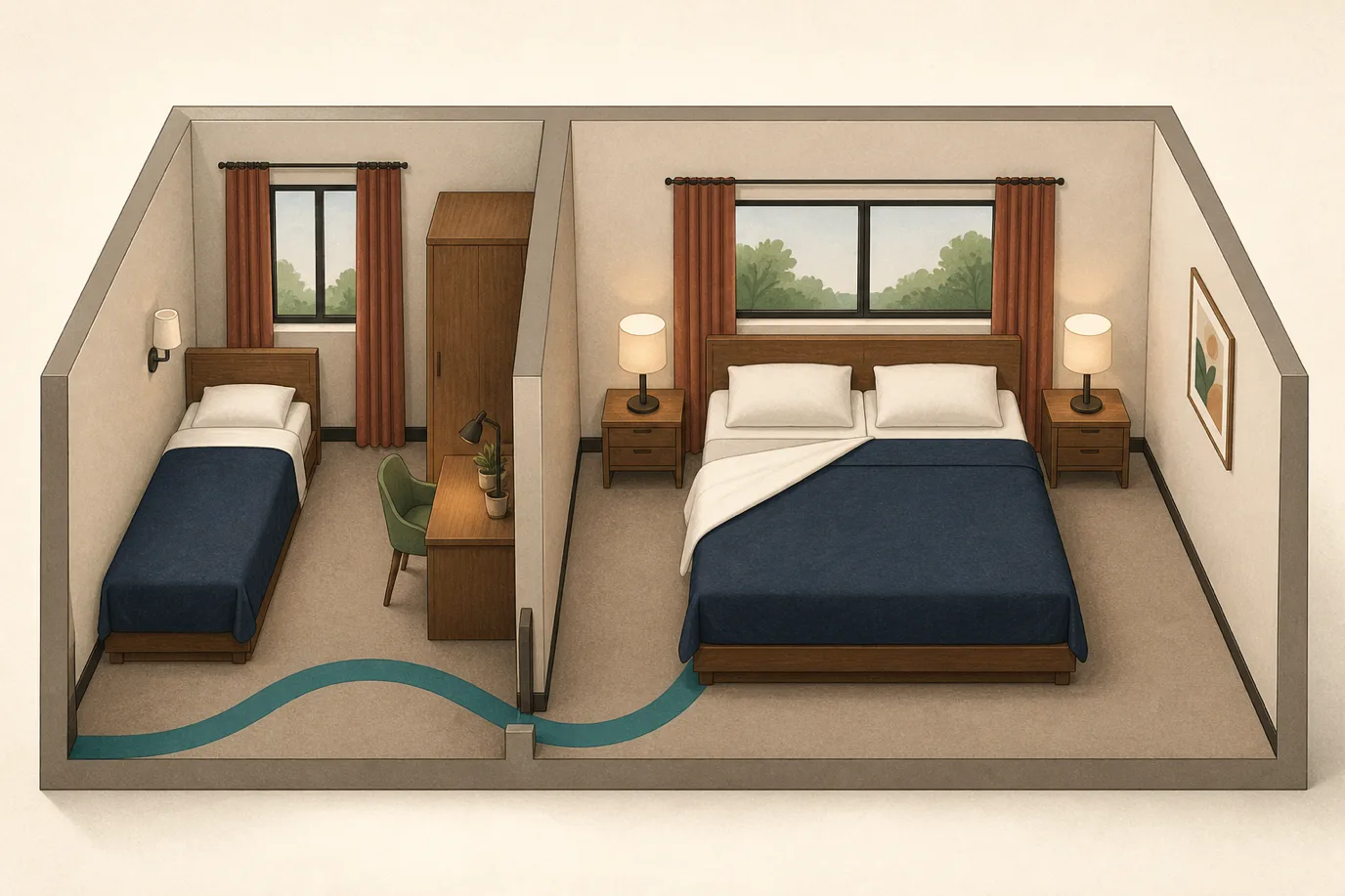
The alternative to discounting a double is selling something smaller. Plenty of older European properties still have genuine single rooms, and plenty of newer ones converted them into storage or knocked them together during the last refurbishment.
The case for having them is clean. A single room is a different product at a lower price, so you serve solo demand without touching the rate on your doubles. It protects double inventory for two-person demand, and it stops the desk making ad hoc decisions about who deserves a discount. On the distribution side it is simpler too, because you are selling a room rather than configuring occupancy rules across every rate plan.
The case against is inventory rigidity, and it bites on precisely the nights you care about. A single room is close to unsellable on a compressed weekend when every enquiry is for two people. If a city-wide event fills the town, that room either goes empty or goes at a rate that makes no sense for the night. You have swapped a pricing problem for a capacity problem, and capacity problems are harder to solve at short notice.
A workable test: if solo bookings are a consistent and substantial share of your midweek room nights, and you already have rooms that are awkward to sell as doubles because of size or aspect, formalise them as singles and price them properly. If your solo demand is seasonal or thin, or if your building is all one room type, occupancy pricing on the doubles gets you the same commercial result without the rigidity.
When Not to Discount at All
Having argued for a single-occupancy rate, it is worth being equally clear about when to withdraw it, because a rate that runs all year is not a strategy.
On a compression night, the second bed is not empty capacity. It is capacity you could have sold. If a conference has taken the city and you will sell every room twice over, a solo guest occupying a double at a reduced rate is costing you the difference between their rate and the couple's rate you turned away. On those nights the correct single supplement is the full one, and the correct mechanism is not a policy conversation but a restriction: close the single-occupancy rate on those dates the way you would close any other discounted rate.
The same applies to peak season in resort properties where the double is the constrained product, and to any date where your booking window tells you that two-person demand is still to come. The whole point of running a single-occupancy rate through a rate management system rather than a policy document is that it can be opened and closed by date, like everything else.
What you should not do is handle this by exception at the front desk. A single-occupancy rate that the desk can override on judgement is a rate that varies by shift, produces inconsistent invoices for identical stays, and shows up eventually in reviews as one guest discovering what another paid.
Sixty Rooms, Two Ways to Get It Wrong
Numbers make this concrete. Take a sixty room mid-market city hotel in Europe, running an ADR of one hundred and forty euro on a double with breakfast included, with a genuine variable cost of about twelve euro for the second person.
Getting it wrong by charging nothing extra and offering nothing less. A solo searcher sees one hundred and forty euro. A comparable property showing one hundred and twenty five for single occupancy wins the click, and you never appear in the decision. You have protected an ADR that nobody booked. The cost is entirely invisible, which is why this failure persists: there is no line in any report called bookings we did not receive.
Getting it wrong by discounting like a tour operator. You set a single rate of ninety eight euro, a thirty percent reduction that looks generous and matches the German convention. Against twelve euro of avoided cost you are giving up thirty euro of contribution per solo night. Apply that to every solo booking, including corporate guests on a negotiated rate and repeat guests who were never comparing, and the segment that was quietly profitable becomes the one dragging your rate down.
The version that works. A single-occupancy rate of one hundred and twenty five euro. You give up fifteen, of which twelve was cost you never incurred, so the true contribution loss is three euro a night. You are now visible in one-adult searches. If that visibility wins twenty additional solo room nights a month, the contribution is roughly two thousand two hundred and sixty euro that previously went to the hotel down the road, against sixty euro of margin conceded on the bookings you would have had anyway.
The asymmetry is the whole argument. The downside of a modest single rate is small and calculable. The downside of no single rate is large and unmeasurable, which is not the same thing as zero. And the downside of a deep single rate is that it does the damage of the second option while pretending to be the third.
The Part That Is Not Pricing
Price gets a solo traveller to consider you. It does not get them back, and this segment reviews more than most, because a person eating alone has time to write.
Room allocation is the first thing to fix and costs nothing. A guest travelling alone put at the far end of a dim corridor next to the service door will notice, and a solo woman travelling alone will notice more sharply. If you have rooms nearer the lift and nearer the staffed floor, that is where the solo arrivals go.
Check-in discipline matters for the same reason. Room numbers should be shown, not announced across a lobby. This is basic and it is still commonly done badly.
Dining alone is the experience most hotels handle worst. A restaurant that seats a single guest at a two-top by the kitchen door, with the second setting cleared away in front of them, communicates something specific. A proper counter with real seating, a communal table, or a room service menu that is not an afterthought all solve it. Solo guests in city hotels frequently eat in because they would rather not eat alone in a restaurant they do not know, which means this is a revenue question as much as a hospitality one.
None of this is expensive. All of it shows up in the reviews that decide whether the next solo traveller believes the price.
Where to Start
Five steps, in order, and the first two are the ones that change the outcome.
Calculate your real variable cost per additional guest. Breakfast cover, laundry, amenities, the housekeeping minutes. One afternoon with your own accounts, not a benchmark from an article. This number is the floor under everything else.
Find out what a one-adult search shows. Search your own property on the major sites for one adult, on a midweek date six weeks out, and compare what you show against three competitors. If your number is identical to your two-adult number, you have found the problem and you now know it is a plumbing problem.
Check what your distribution can express. Establish which pricing model your property is on and whether your connectivity provider supports per-guest pricing. This determines whether the fix is an afternoon in the extranet or a migration to plan properly.
Set the rate at cost plus a margin, not at a convention. Somewhere between the variable cost and the number your competitors show. Then close it on compression dates like any other discounted rate.
Measure it as a segment. Total spend per occupied room split by occupancy, tracked for a season. If solo guests are genuinely worth less on ancillary spend, you will see it and can adjust. If they stay longer and arrive midweek, you will see that too, and you will stop treating them as a problem to be surcharged.
The single supplement is one of the few pricing questions where the honest answer is smaller than the conventional one. The second person in a room costs you a breakfast and some towels. Charging as though they cost you half a room is a habit inherited from an era when nobody could compare four hotels in thirty seconds, and it survives mainly because the guests it drives away never appear in any report you read.