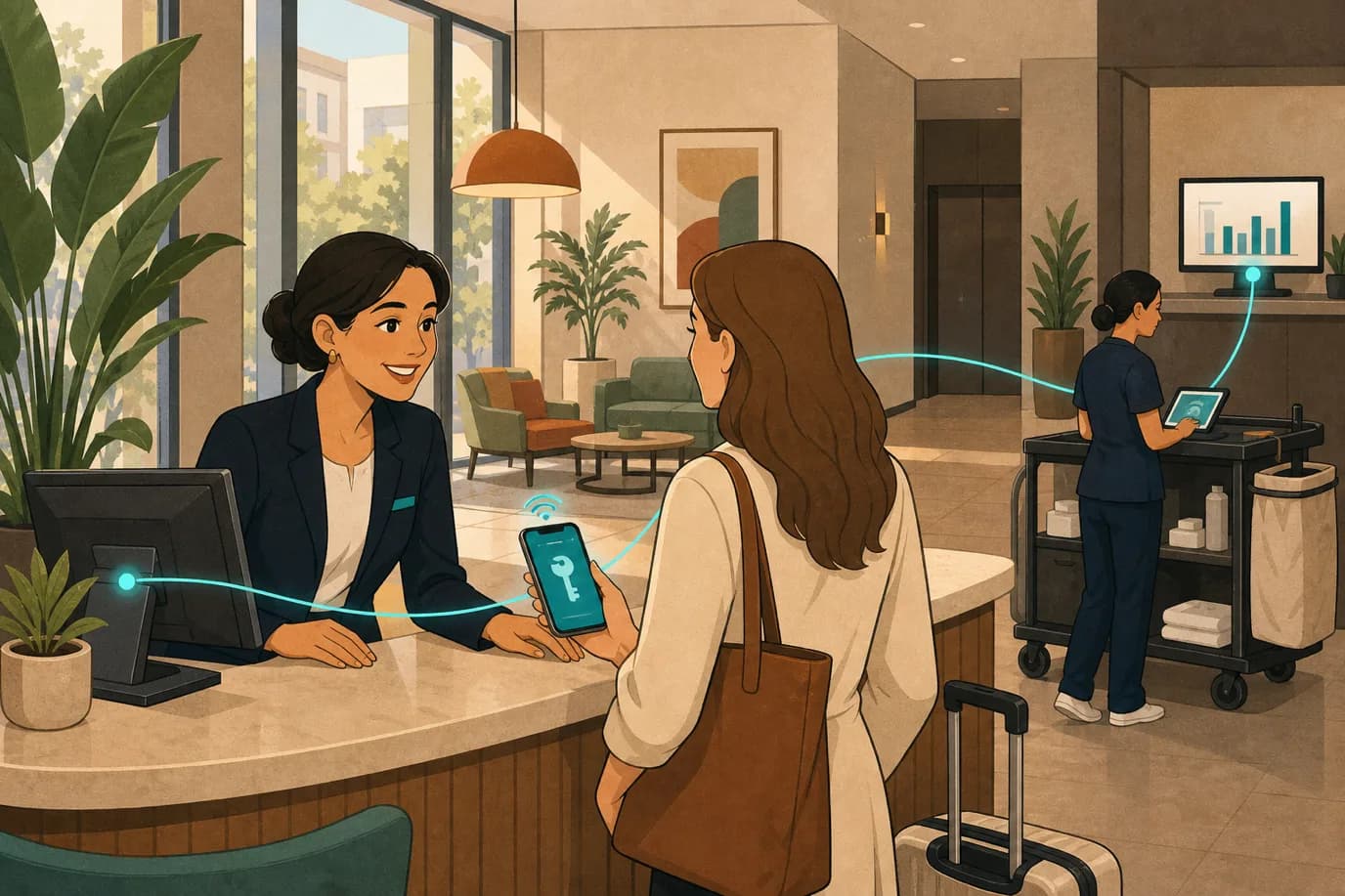

Hotel rooms are the textbook example of a perishable product: a night that goes unsold at midnight is revenue gone forever. What the textbook misses is that most hotels let the product expire twice. The room that will be occupied tonight sat empty from 11 a.m. checkout to 3 p.m. check-in, nineteen saleable room-hours, gone. And the rooms that never sold at all expired whole. Day-use bookings monetise the first kind of waste; a disciplined last-minute playbook rescues the second. Together they are the closest thing revenue management offers to found money, because the asset, the staff and the fixed costs are already paid for.
Day-use stopped being a curiosity years ago: dedicated marketplaces aggregate millions of daytime guests, business travelers book nine-to-five rooms the way they book meeting slots, and city hotels near airports and stations quietly add several points of revenue from hours that used to be dead. This guide covers how the product works in 2026, who books it, how to price it without eroding the overnight rate, the operational plumbing in the property management system that makes it safe to run, and, because the two problems are cousins, how to move tonight's unsold rooms without training your market to wait for discounts.
What Day-Use Rooms Are and Why They Took Off
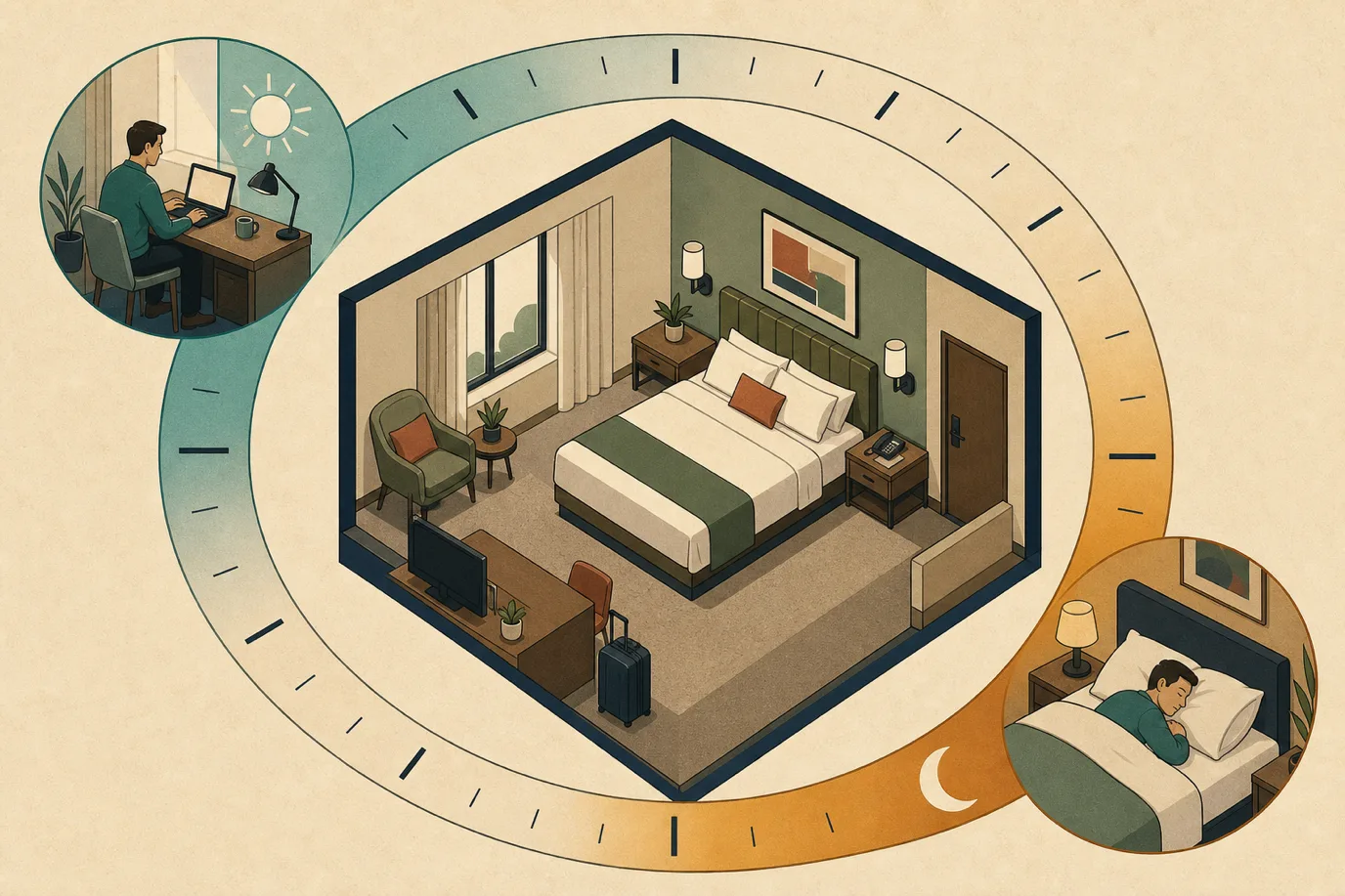
A day-use room is the room you already have, sold for the hours you were not using: check-in around 9 or 10 a.m., checkout by 5 or 6 p.m., cleaned and back in inventory before the overnight guest arrives. Same room, same standards; only the clock changes. The product has existed for decades under unfortunate connotations, but three shifts turned it mainstream. Remote work created a large population that will pay for a quiet, private, well-equipped room for a working day, a nicer office than the coworking space, with room service. Air travel patterns created layover demand near every major airport, crews and connecting passengers who need six horizontal hours at 11 a.m. And the marketplaces, Dayuse.com most prominently, gave that demand a shelf, doing for daytime rooms what OTAs did for overnight ones.
For the hotel, the appeal is structural: day-use guests occupy the building at its emptiest, spend on food, beverage and spa at hours when those outlets are quiet, and generate reviews and repeat visits like any other guest. Hotels with spa and wellness facilities have a second product in the same mold, the day pass, which our guide to hotel spa and wellness management covers in its own right.
The Economics: Revenue From Hours You Already Own
The arithmetic is what makes day-use worth the operational effort. Take a room that sells tonight for 160. A nine-to-five day booking at 55% of rate adds 88. The marginal cost is one additional clean, perhaps 15 to 25 including amenities, and a sliver of utilities. Everything else, the mortgage, the front desk, the insurance, was already being paid while the room sat empty. On the days it happens, that is a room earning roughly 1.5 times its normal daily revenue, which is why the practice is often summarized as selling the same room twice.
Scale it honestly and the numbers stay attractive without being miraculous: a 60-room city property converting four day-use bookings a day at a 75 average adds about 110,000 a year, at margins far above the overnight product's. The effect on the P&L resembles ancillary revenue more than room revenue: almost all of it drops through. And because day-use guests arrive in the occupancy troughs, midweek daytimes, shoulder seasons, the revenue lands exactly where the calendar is weakest, which is the same logic our shoulder season guide applies to whole months.
Who Actually Books a Room for the Day
Day-use demand is more varied than its reputation, and knowing the segments matters because they book different hours and respond to different messages. Business travelers and remote workers book the full nine-to-five band: they want a desk, fast Wi-Fi, coffee and silence, and they are the segment most likely to become weekly regulars. Layover passengers and airline crews near airports book to sleep, often morning to mid-afternoon, and value blackout curtains and late-morning quiet over any amenity. Locals book short afternoon blocks for rest, privacy or a change of scene, the staycation-for-hours segment that grew steadily through the decade. Event attendees and wedding guests book to change, rest and regroup between daytime functions and evening ones, a segment worth remembering for properties that host functions, as our MICE guide details. And parents of young children book the nap-and-pool combination on travel days more often than most revenue managers expect.
The segments share one trait: none of them was going to book an overnight room. That is the cannibalization answer in one sentence, the alternative to a day-use booking is an empty afternoon, not a lost night.
Pricing Day-Use: Time Bands, Not Discounts
The pricing mistake that sinks day-use programs is treating the day room as a discounted overnight room. It is a different product with its own reference point: hours of private space. Price it as time bands anchored to the live overnight rate. A full-day band, roughly 9 a.m. to 6 p.m., typically clears at 50% to 70% of that day's overnight price; a half-day block of three to five hours at 30% to 50%. Anchoring to the live rate matters because it keeps day-use inside your dynamic pricing strategy: when Saturday's overnight rate compresses upward, the day rate rides along instead of becoming the cheap back door into the building.
Two guardrails complete the pricing design. First, availability rules: day-use sells only on dates and room types where the daytime genuinely would be empty, closed automatically on sell-out dates, high-early-arrival dates, and whenever the forecast says the room could sell twice over anyway; this is a rules job for the revenue management system, not a daily manual decision. Second, rate fences: day-use rates are for day-use products, never visible as a cheaper way to spend the night, with the band's checkout time enforced by the system. Inside those fences, the usual craft of rate optimization applies, and the tactics in our ADR playbook translate almost one-for-one to the daytime product.
Operations: The Housekeeping Window Decides Everything
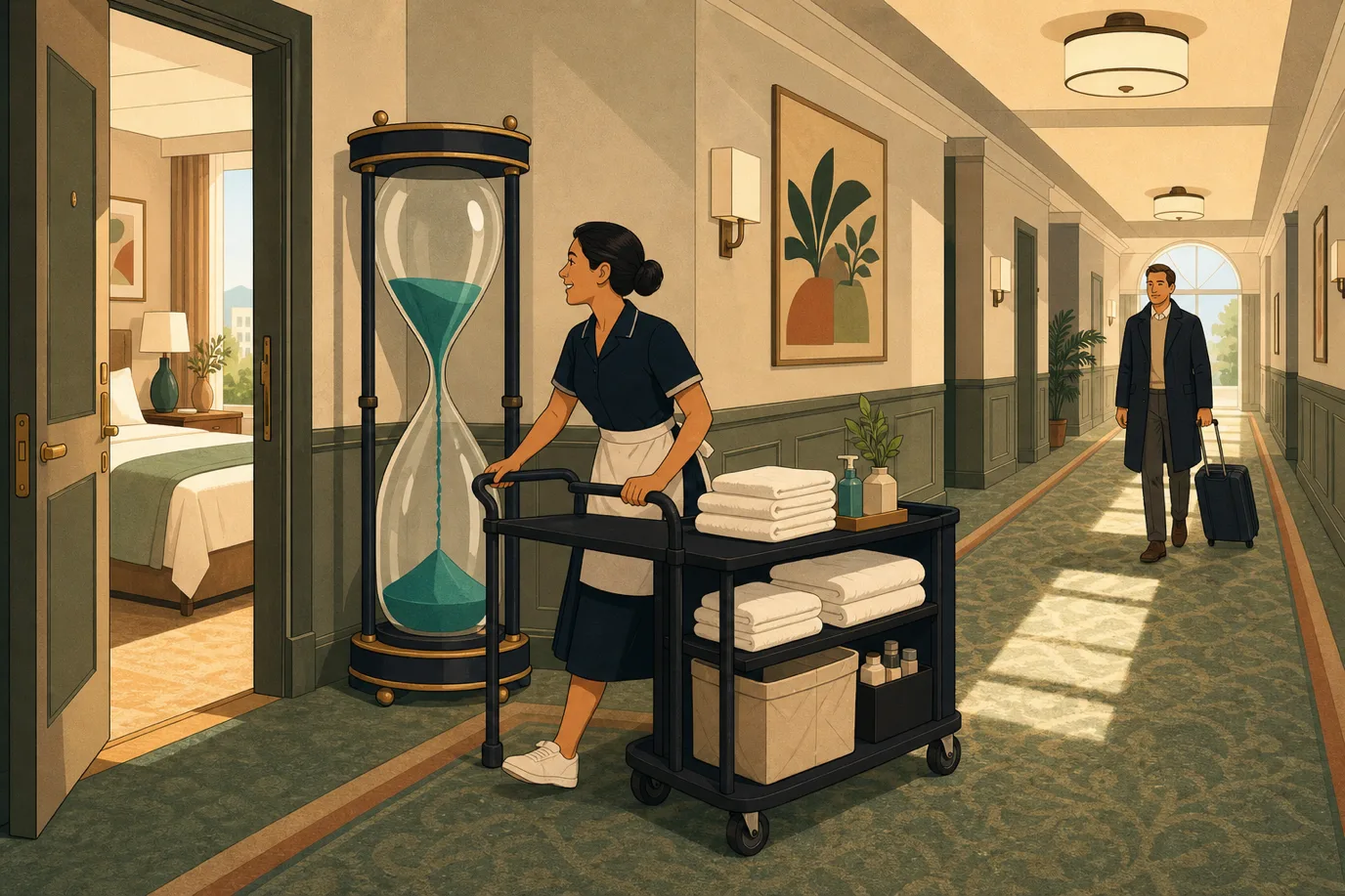
Day-use succeeds or fails in the ninety minutes after the day guest leaves. The room must be fully serviced and back in inventory before the evening arrival, every time, because the one failure mode that can genuinely damage the overnight business is a 4 p.m. arrival walking into a used room. That makes the housekeeping schedule the heart of the program: day-use checkout times staggered ahead of the arrival curve, a defined turnaround slot in the afternoon board, and real-time room status so the desk knows the moment the room is clean. Properties running a live housekeeping board fed by the PMS, the setup described in our housekeeping software guide, already have the machinery; day-use just adds an afternoon wave to it.
The system setup is equally decisive. Day-use must live in the same inventory calendar as overnight stays, as a same-day-in, same-day-out reservation against the real room, so availability, forecasting and reporting all see it. A day booking held in a spreadsheet or a separate tool is a future double-booking with a timestamp. Modern platforms handle this natively: a day-use rate product with enforced checkout, its own cleaning task trigger, and folio, payment and invoicing exactly like any stay. Front desk flow deserves a sentence too: day guests check in and out during the desk's quietest hours, which is why properties that automate the routine parts of arrival, the approach covered in our hotel automation guide, absorb a day-use program without adding headcount.
Distribution: Where Day-Use Demand Lives
Daytime demand is aggregated, so distribution starts where the audience already is. Dayuse.com dominates globally, with regional players like HotelsByDay in North America and ResortPass for amenity day passes; commissions are comparable to OTAs, listing is fast, and for the first months a marketplace is the cheapest market test you will ever run: if the airport-adjacent demand exists, it will find you there. The strategic pattern then mirrors overnight distribution: prove the volume on the marketplace, then build the direct channel. A booking engine that sells the time bands on your own website converts the regulars, the weekly remote worker, the airline crew coordinator, commission-free, and your business travelers will book the nine-to-five room on the same page where they book the night.
Package day-use with the outlets it feeds: a day room plus lunch, a day room plus spa access, a park-sleep-fly variant with the parking spot. Packaging lifts the effective rate, differentiates against the marketplace listing, and pushes daytime spend into F&B at its quietest hours, the same systematic logic our guide to hotel upselling applies to the overnight journey.
The Other Perishable: Selling Tonight's Unsold Rooms
Day-use rescues the empty daytime; the second rescue operation is the room that will not sell tonight at all. The two problems reward the same mindset, monetise what is about to expire, but the unsold-room playbook has its own discipline, and its cardinal rule is that the rescue starts days out, not at dusk.
Layer one is pricing that responds early. Weak pickup for a date two weeks away is a pricing problem you can still solve gracefully; the same gap discovered the night before is a fire sale. This is the core argument for continuous, forecast-driven pricing, covered in depth in our guides to hotel demand forecasting and revenue management strategies. Layer two is restriction hygiene: minimum-stay and closed-to-arrival rules set for a demand pattern that did not materialise will quietly block the bookings that would have come; loosening them for soft dates is free revenue. Layer three is targeted, fenced discounting: mobile-only rates, member rates on the direct channel, and last-minute visibility programs on the OTAs move inventory to price-sensitive segments without printing a public discount that anchors next year's expectations. Layer four is the elegant one: use unsold premium inventory as upgrades. Selling a 40 paid upgrade into the empty junior suite monetises a room that had zero probability of selling at rack, frees a standard room that still might sell, and delights the guest, three wins from one email, which a systematic pre-arrival upsell flow generates automatically.
What the playbook conspicuously excludes is panic: public price cuts deep enough to make headlines teach your market that waiting is a strategy, damage rate integrity with the OTAs' pricing algorithms, and dilute the very dates that did not need help. The broader toolkit for filling the calendar, demand generation, segmentation, direct channel work, lives in our guide to increasing hotel occupancy.
What to Measure
Day-use gets its own small KPI set, because burying it in nightly RevPAR hides both its success and its failures. Track day-use revenue per available room-day to see the program's real contribution; day-use conversion by segment and source to learn whether the airport, the remote worker or the marketplace drives volume; the turnaround failure rate, any instance of a room not ready for the evening arrival, as the program's hard quality gate; and ancillary capture, what share of day guests spend in F&B or the spa. For the unsold-room playbook, watch the last-minute pickup curve (how much of final occupancy arrives inside 48 hours) and the fenced-rate share of it, so you know whether rescue revenue is coming through controlled channels or public discounting. All of it belongs in the same reporting frame as the metrics in our hotel KPI guide, reviewed weekly, not admired annually.
Key Takeaways
A hotel room perishes twice a day, and most properties only mourn the second death. Day-use monetises the empty daytime hours with a product that costs one extra clean and cannibalises nothing, priced as time bands at 50% to 70% of the live overnight rate, fenced by availability rules, and sold first through the day-use marketplaces and then through your own booking engine. Operationally it lives or dies on the afternoon housekeeping window and on keeping day bookings inside the same inventory calendar as the nights.
The unsold overnight room is the same perishability problem on a different clock, and it rewards early, fenced, unpanicked action: responsive pricing weeks out, restriction hygiene, mobile and member rates, and paid upgrades that turn empty suites into revenue and free standard rooms. Both plays need systems more than heroics: live inventory, automated housekeeping triggers, rate products with enforced rules, and pricing that moves itself. If you want to see a day-use rate product, the upgrade flow and the pricing automation running in one platform, a Prostay demo takes half an hour.