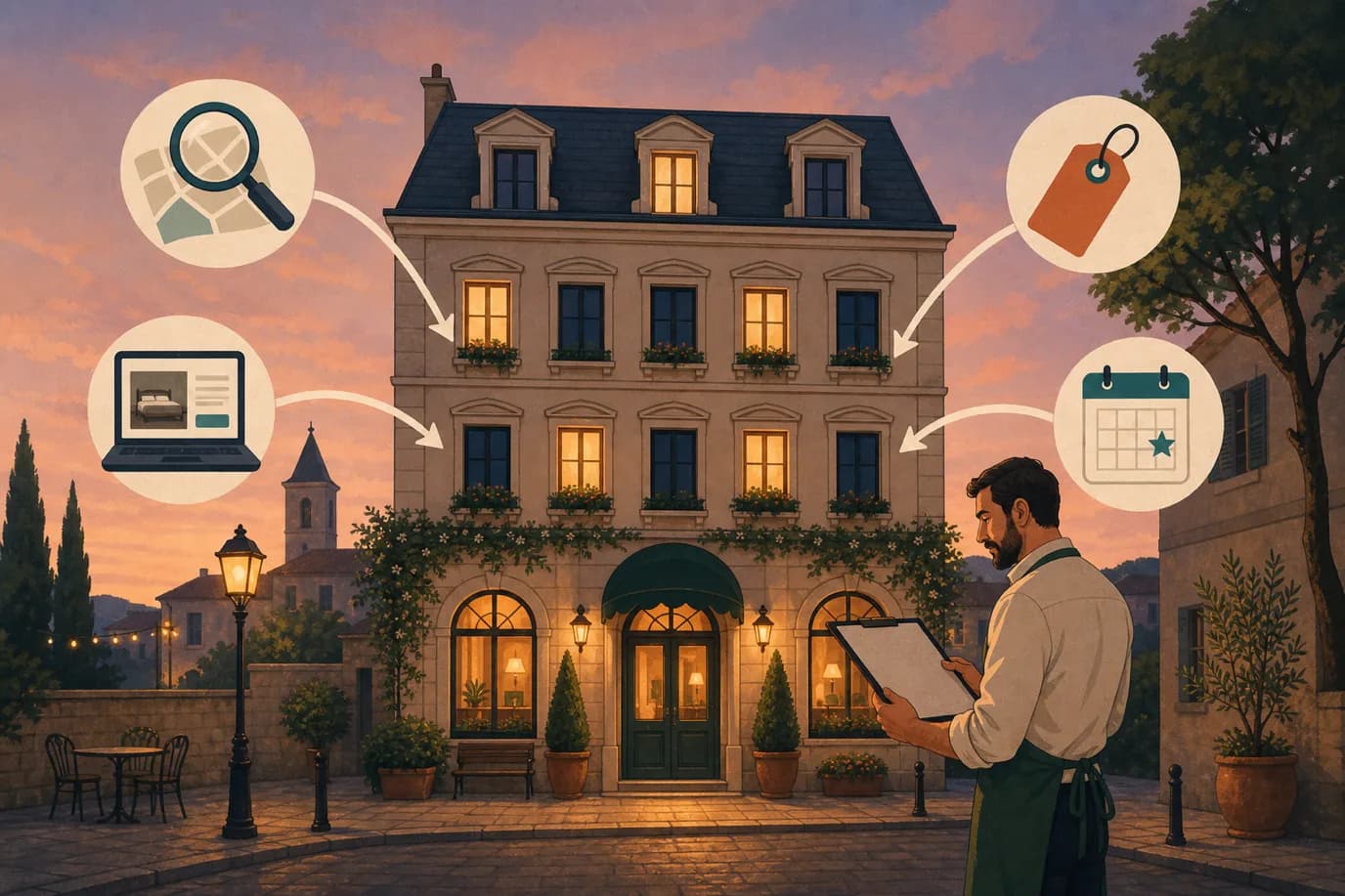
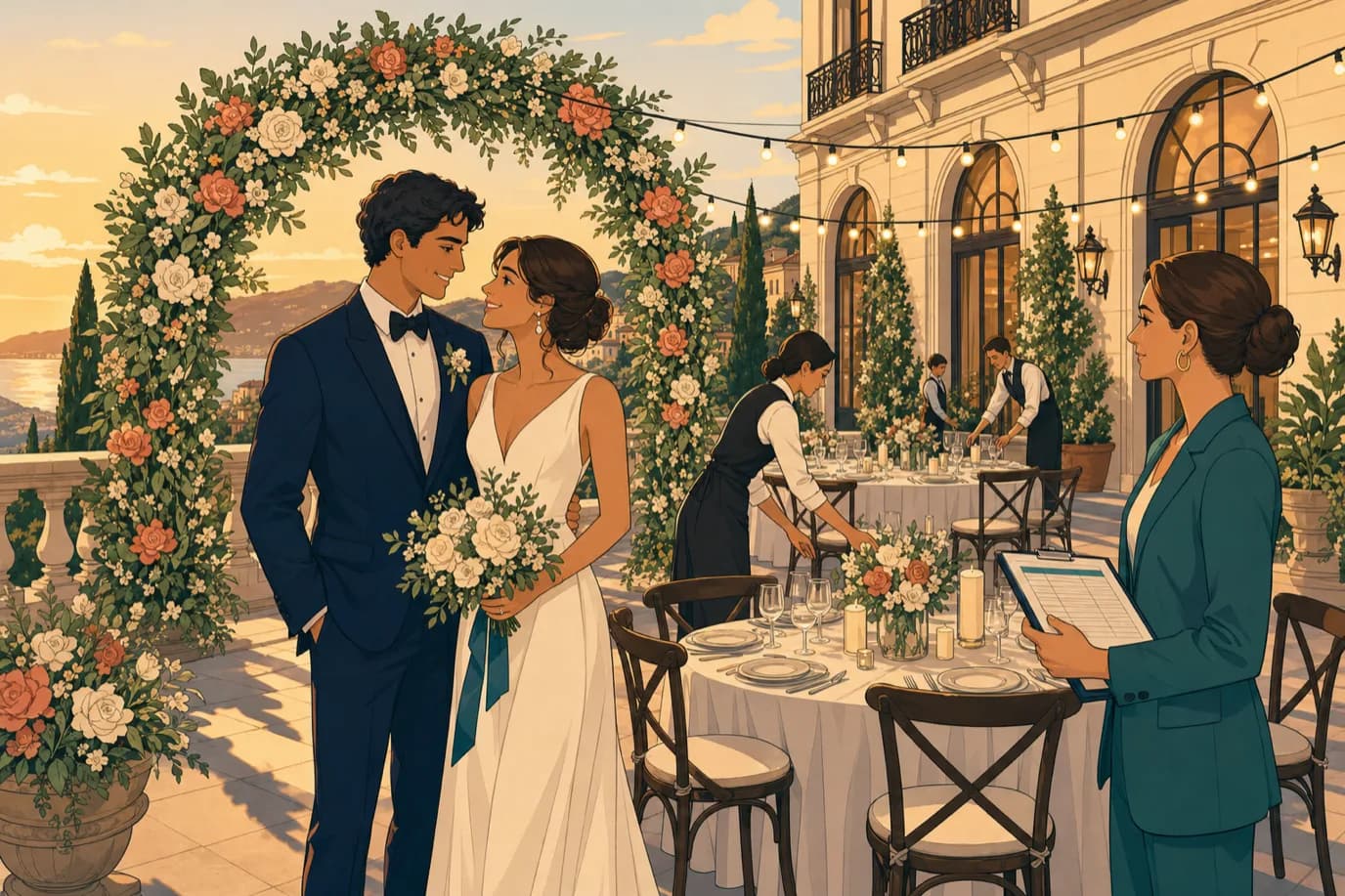
Somewhere in your market, this Saturday, a couple will spend more on one evening than your best corporate client spends in a quarter. A hundred guests, a ceremony, a five-hour reception, a sold-out room block, breakfast for sixty the next morning, and photographs that will circulate through every engaged couple in their extended network for years. The question is only whether that evening happens at your property or at the winery twenty minutes away, and the uncomfortable truth is that the winery probably answered the enquiry faster.
Most hotels are accidentally in the wedding business: an inherited PDF brochure, a banquet room that hosts whatever asks, prices last reviewed two general managers ago, and a vague sense that weddings are stressful. Meanwhile the properties that treat weddings as a business line, with designed packages, disciplined pricing, managed room blocks and a named coordinator, quietly book out their peak Saturdays eighteen months in advance at margins the restaurant can only dream about. This guide is the full playbook for getting from the first group to the second: what couples actually buy, how to package and price it, how to run the day without drama, and how each wedding you host sells the next three.
Why Weddings Are the Highest-Value Booking a Hotel Can Take
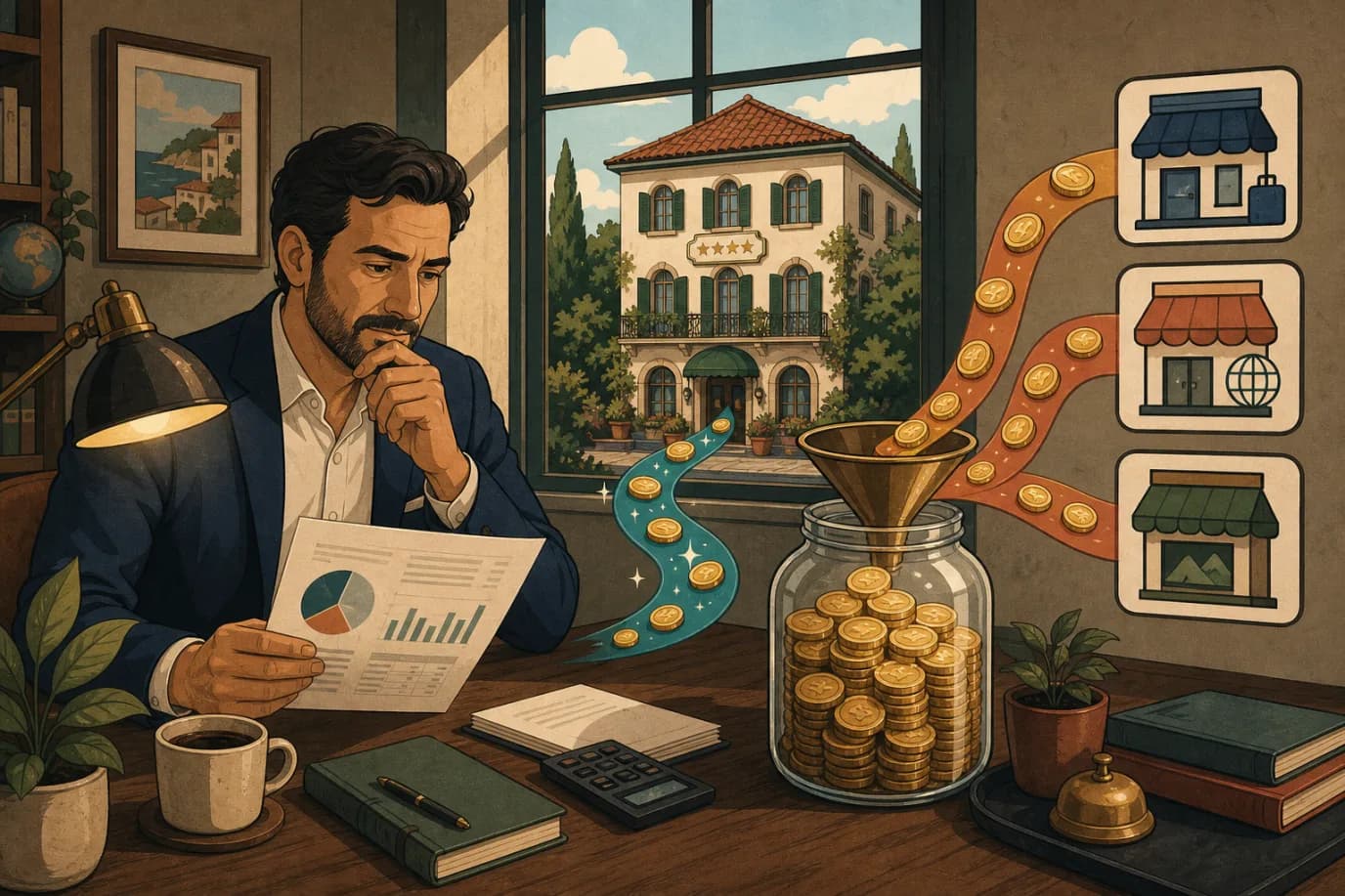
Stack the revenue of a single hundred-guest wedding and the case makes itself. The venue fee. Catering at banquet margins, which run structurally higher than à la carte because the menu is fixed, the covers are guaranteed and the kitchen produces one service instead of forty small ones. A bar spend that follows a predictable, generous curve. A room block of twenty to forty rooms, often across two nights, at rates you set. Spa bookings from the wedding party, breakfasts, a farewell brunch, and taxis' worth of incidental spend flowing through your point of sale all weekend. Total it and one Saturday routinely outearns a strong week of transient business, and it was contracted a year in advance with a deposit in your account.
The strategic value compounds beyond the invoice. Weddings book twelve to twenty-four months out, which means they land on your forecast as certainty in a business otherwise built on probabilities, smoothing exactly the revenue volatility that keeps owners awake. They fill shoulder-season Saturdays that transient demand never will. And they are the single most photographed, most shared, most emotionally loaded event your property will ever host: every wedding produces hundreds of images of your best spaces looking their best, distributed free of charge to precisely the demographic that books weddings, milestone birthdays and anniversary stays. No advertising budget buys what a good wedding gives away.
Venue Readiness: What Couples Are Actually Buying
Before packages and pricing, an honest audit, because couples are not buying square metres. They are buying three things: a place to say the words, a place to hold the party, and the certainty that the two will connect without anyone's grandmother crossing a car park in the rain. Walk your property with those three purchases in mind and the gaps announce themselves.
The Spaces: Ceremony, Reception and the Photo That Sells the Next Wedding
The ceremony space needs one strong axis, a place where two people stand framed by something worth framing: the garden pergola, the terrace against the view, the staircase, the orchard. It needs a wet-weather twin that you can describe without apologising, because every couple asks and the quality of your answer is a booking signal. The reception space needs honest capacity numbers, and honest means seated with a dance floor, not the theatre-style figure from the conference brochure; a room that holds 120 for a seminar holds perhaps 80 for a wedding, and a couple who discovers that at the tasting cancels loudly.
Then find your photograph. Every venue that books weddings consistently has one image that does the selling: the arch at golden hour, the long table under the trees, the staircase descent. Identify the strongest frame your property offers, invest in it, light it, and make sure it appears within the first three images of everything you publish. Couples shortlist venues from single photographs and rationalise afterwards; give them the photograph.
Licensing, Noise and the Boring Paperwork That Closes Deals
The unglamorous layer decides more weddings than the flowers. Can you legally host the ceremony itself, or only the reception? Civil ceremony licensing varies by country and region, and holding the licence, or the fast track to it, moves you up every shortlist because it removes a logistics problem from the couple's plate. What are your noise limits and until what hour, and is amplified music outdoors possible? What are the corkage terms, the vendor rules for external caterers and florists, the insurance you require of them, the accessibility path for elderly guests? None of this is romantic and all of it is asked in the first serious conversation. Venues that answer instantly, in writing, with numbers, read as safe; and safe, in a purchase this emotionally expensive, is the real luxury.
Wedding Packages: Three Tiers and a Blank Page
The couple planning a wedding is making roughly two hundred decisions they have never made before, and your commercial job is to remove as many as possible without removing the feeling of choice. The structure that does this best is three named tiers plus a bespoke option: an intimate package for small weddings, ceremony and dinner for a few dozen; a signature package that covers the classic hundred-guest day end to end, drinks reception, dinner, band-ready space and a menu with three choices per course; and an exclusive tier, full buyout where the property becomes the couple's house for the weekend. The blank page, priced by consultation, catches everything else and anchors the tiers as reassuringly reasonable.
Build each tier the way you build any hotel package: named, inclusive, priced per head above a base, and specific enough to be imagined. Vague packages generate meetings; specific ones generate deposits. Fold in the things your property does anyway at marginal cost but the couple would otherwise coordinate themselves, a menu tasting for four, the wedding-night suite, a discounted next-morning brunch, early check-in for parents, because every included item is a decision you have taken off their list, and decisions removed are what this segment actually pays for. Leave genuine flexibility inside the tier, menus, wine, timings, and keep the structure fixed; flexibility inside structure is hospitality, flexibility of structure is chaos with a deposit.

Pricing the Wedding: Venue Fees, Minimum Spends and Per-Head Rates
Wedding pricing has three levers, and mature venues pull all of them. The venue fee prices the space, the exclusivity and the coordination; it flexes hard by season and day, and it should, with a peak-Saturday fee at multiples of the Tuesday-in-November one. The per-head rate prices food and beverage and scales with the guest list. And the minimum spend, the most important and most neglected lever, guarantees that a peak date is never sold below what it is worth: calculate what the space, the displaced rooms and the team would earn that night from ordinary business, add the premium the certainty deserves, and make the number the floor for any Saturday between May and October. A wedding that cannot meet the peak-date minimum is not a bad wedding; it is a Thursday wedding, and your pricing should say so politely.
Two disciplines protect the margin after signature. First, contract everything that history says will move: the guaranteed minimum guest count and when it locks, the payment schedule, typically a booking deposit, a second instalment at the menu tasting and the balance before the day, the attrition terms on the room block, and the price of every likely addition, extra hour, extra course, upgraded pour, so that scope creep arrives pre-priced instead of pre-argued. Second, watch the drift between contract and wedding day, because eighteen months is long enough for costs to move and for a hundred small yeses to accumulate; a scheduled six-month review of the file, priced additions to date, catches the drift while it is still a conversation. Deposits and instalments belong in your payment processing flow as proper scheduled payments with receipts, not as bank transfers reconciled from memory.
Room Blocks: The Second Business Hiding Inside Every Wedding
A hundred-guest wedding travels, and the travelling guests need beds. The room block is where the event business and the rooms business meet, and handled well it sells out one or two nights at rates you chose without a single OTA commission. Handled badly it strands twenty rooms on a peak Saturday or produces an attrition invoice that poisons the goodwill the wedding built. The difference is entirely procedural, and the procedure lives in your property management system as a proper group block: an agreed allotment, a rate code, a cut-off date after which unclaimed rooms release automatically to general sale, and a weekly pickup review in the final month.
Size the block with pessimism and an option to grow. Couples overestimate how many guests will stay over, reliably and generously; a block of fifteen rooms with a clause to extend beats a block of forty with attrition penalties you will end up waiving anyway. Give guests a direct path to book it, a code or link straight into your booking engine with the wedding rate pre-applied, because every guest who books direct at the block rate is a guest the OTAs did not tax and a profile in your database for the anniversary campaign later. The mechanics of allotments, cut-offs and washes are the same as any group business; our guide to group block management covers the machinery in depth.
Operations: The BEO Is the Wedding
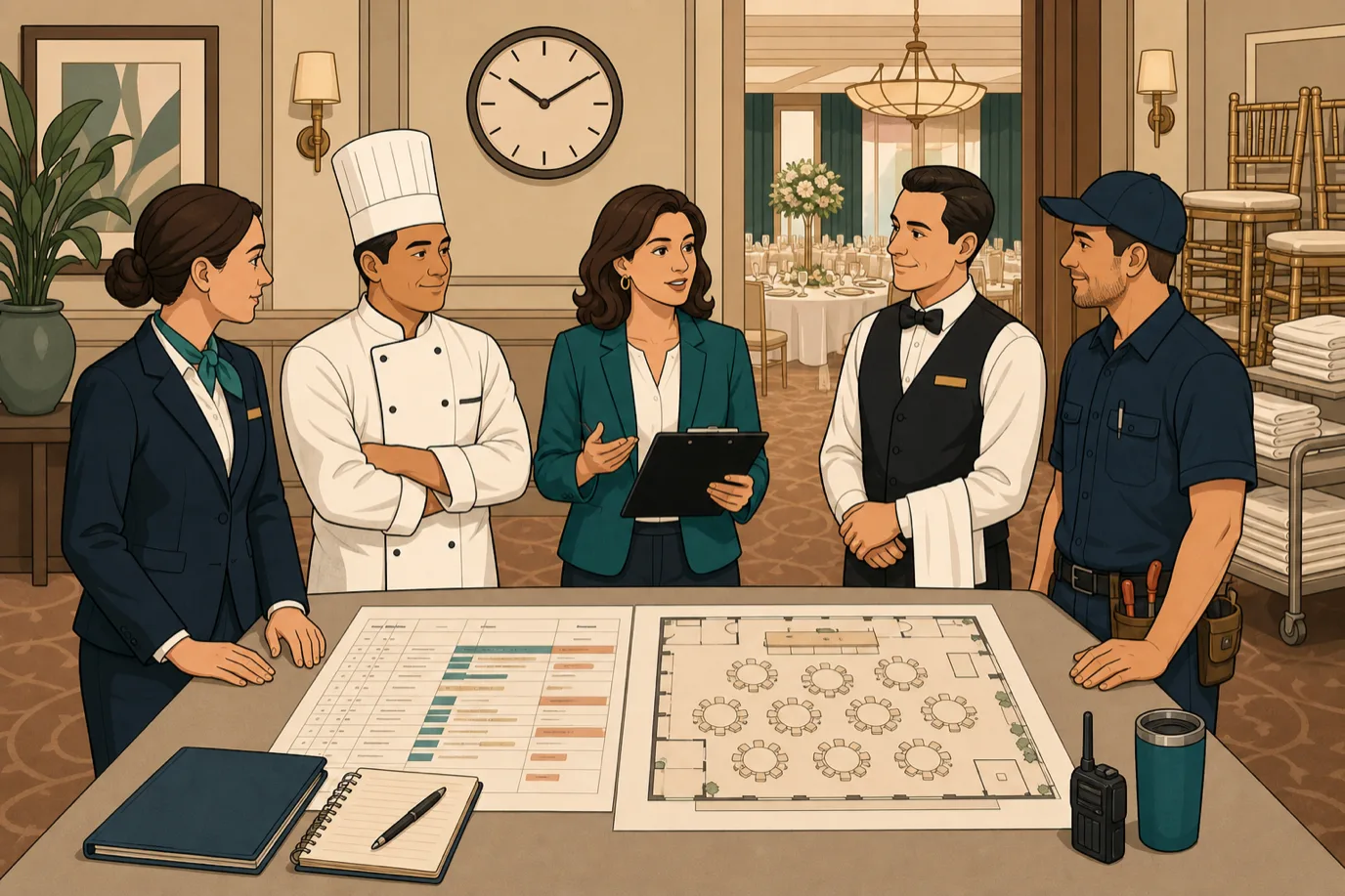
Every flawless wedding you have ever attended was running on a document. The banquet event order is the single source of truth that turns eighteen months of promises into a day of execution: spaces and their turn times, the timeline from vendor load-in to last dance, the menu with counts and every dietary flag, the floor plan, the bar package and when it switches, the vendor list with arrival times and contacts, the payment status, and the one line that prevents half of all wedding-day drama, who is authorised to approve changes on the day. If your property runs events without one, start there; our guide to banquet event orders is the template conversation.
The BEO earns its keep in the final-week briefing, where the coordinator walks kitchen, service, front desk, housekeeping and maintenance through the document page by page. The front desk knows the block arrivals and the suite upgrade. Housekeeping knows the bridal party needs the rooms at noon, not three. The kitchen has the final counts and the allergy map. Maintenance knows the terrace heaters matter tonight. On the day itself, the couple should experience the only acceptable form of magic, which is logistics rehearsed until it disappears; and the coordinator, with the BEO on a clipboard, should be the calmest person in the building. Staff the day with the same discipline: weddings are marathon shifts with an emotional audience, and a tired team improvising at hour eleven is how five-star reviews become three-star ones. The broader craft of running functions well is covered in our hotel event management guide.
Marketing the Venue: Directories, Real Weddings and Your Own Website
Wedding venue marketing runs on three channels, and the order matters. Directories first, because that is where structured searching happens: the regional and national wedding platforms where couples filter by capacity, region and budget. A complete profile, real photography from real weddings, transparent starting prices and a response time measured in hours will outperform a prestigious but vague listing every season, because couples in the enquiry phase are ruthlessly practical, and an unanswered enquiry is a booked competitor.
Second, your own website needs a dedicated, indexable weddings page, not a paragraph on the meetings page. It should target wedding venue plus your region, show the spaces with honest capacities, present the packages with starting prices, feature two or three real weddings with credited photographers, answer the licensing and wet-weather questions in a visible FAQ, and end in an enquiry form that reaches a named human. Structure the page properly for search and let it work the same query space your competitors leave to the directories; the wider machinery is in our guide to SEO for hotels. If adding and translating a page like this on your current site is a project instead of an afternoon, that is a platform problem rather than a marketing one; sites built with Prostay Instant Site make the weddings page an afternoon.
Third, the referral economy, which in weddings is not a metaphor but the primary channel. Photographers, planners, florists and celebrants are asked for venue recommendations weekly, and they recommend venues where the loading dock was easy, the coordinator was reachable, the staff fed them, and the day ran on time. Treat every vendor as a future salesperson, because they are. And treat every wedding as a showroom: dozens of guests, statistically several of them engaged, are experiencing your property at its absolute best, with champagne. The venue that gets the send-off right does not need to advertise to that room; it already has.
After the Cake: Anniversaries, Referrals and the Longest Loyalty Loop in Hospitality
The wedding is not the end of the relationship; it is the most expensive customer acquisition your property will ever be paid to perform. The couple now has a permanent, calendar-anchored reason to return, and the anniversary campaign practically writes itself: a note at eleven months with a rate for the anniversary weekend, the same table, the same corner of the terrace. Their guests, who spent a weekend experiencing the property at its best, are a mailing list of warm leads for ordinary stays, spa weekends and the next family occasion. And the wedding file itself, the tastes, the allergies, the champagne they chose, is the raw material of the kind of remembered-everything welcome that turns a returning couple into lifelong advocates; that only works if the details were captured as guest profile data rather than folklore, which is a guest experience discipline as much as a sentimental one.
Run the numbers once a year like any business line: weddings hosted, revenue per wedding across venue, catering, rooms and ancillaries, conversion rate from enquiry to contract, and where the enquiries came from. Most properties that measure it discover the same two things, that weddings are their highest-margin banquet business, and that the bottleneck is not demand but response speed and date availability. Fix the response speed this month, protect the peak dates with minimum spends, and let the flywheel turn. And if the machinery underneath, group blocks, scheduled payments, event-day task lists, guest profiles that remember the champagne, sounds like more system than your current stack offers, a Prostay demo will show you how a modern platform makes the wedding business, like most things in a hotel, mostly a matter of switching it on.