

The hospitality industry offers one of the most rewarding paths to entrepreneurship, combining the potential for substantial financial returns with the satisfaction of creating memorable experiences for travelers. With the global hotel market valued at over $950 billion in 2023 and projected to exceed $1.2 trillion by 2027, starting a hotel business presents an exceptional opportunity for ambitious entrepreneurs.
However, launching a successful hotel business requires more than just a dream of hotel ownership. It demands careful planning, significant capital investment, and a deep understanding of the hospitality industry’s complexities. Whether you’re considering a boutique hotel in a trendy neighborhood or a budget-friendly property near an airport, this guide will walk you through every aspect of starting a hotel business.
From conducting thorough market research to managing daily hotel operations, you’ll discover the essential steps needed to transform your hotel dream into a profitable reality. We’ll cover everything from securing financing and choosing the right business model to implementing effective marketing strategies and optimizing revenue streams.

What is a Hotel Business and Why Start One?
A hotel sells nights of lodging, meals, and the services around them. Underneath, it is two businesses operating in parallel. A real estate asset whose value moves with the local property market, and a service operation whose margin lives or dies on cost discipline. Revenue stacks in layers. Rooms, food and beverage, banquets, spa, parking. Each one carries its own P&L logic.
The global hotel market’s impressive valuation of $722 billion, with projections reaching $1.2 trillion by 2025, demonstrates the industry’s resilience and growth potential. This expansion is driven by increasing global travel, rising disposable income, and growing business travel demands across emerging markets.
Starting a hotel business offers several compelling advantages. The steady revenue potential from room bookings provides a reliable income foundation, while additional services create opportunities for revenue diversification. Unlike many other businesses, hotels can generate income 24/7, with well managed hotel properties often achieving occupancy rates between 60-80% annually.
The non-financial side of hotel ownership is real but easy to oversell. You host weddings, anniversaries, business deals, and family vacations every year. The work is in service, and the reward is the repeat guest who books direct on the next anniversary. Layered on top is asset appreciation in prime locations, which is where most hotel fortunes are actually made over twenty years.
the hotel business provides entrepreneurial freedom to implement your vision while building a lasting hospitality legacy. Many successful hotel owners expand their portfolios over time, creating hotel empires that span multiple locations and market segments.
Types of Hotel Business Models to Consider
Understanding different hotel business models is crucial when starting a hotel business, as each approach offers distinct advantages and challenges that will impact your operational strategy and financial outcomes.
Independent Hotels keep every decision on your side of the table. The brand, the rate strategy, the guest experience, the FF&E vendor list. Margin per room runs higher because there are no franchise royalties. Distribution is the catch. You build brand recognition the slow way, through SEO, OTA partnerships, and direct guest loyalty, without the booking firehose a chain plugs into on day one.
Franchise Hotels attach your property to a chain like Holiday Inn Express, Hampton, or Residence Inn. The benefits are immediate. Brand recognition, proven operating SOPs, and a central reservation system that drives bookings the day the property opens. The cost is structural. Initial franchise fees of $45,000 to $85,000, plus royalties of 4% to 6% of gross room revenue, plus marketing and loyalty program contributions on top.
Managed Hotels separate ownership from operations. You hold the asset. A third-party management company runs the day-to-day. Fees usually run 3% to 5% of gross revenue plus an incentive based on profit. The trade is operational expertise for fee load, which makes the model right for owners who treat the hotel as a real estate investment first and a service operation second.
Boutique Hotels represent unique themed properties targeting niche markets with distinctive design, personalized service, and local character. These small hotel business concepts often command premium pricing due to their exclusivity and personalized guest experience. Boutique hotels typically feature 20-100 rooms and focus on creating Instagram-worthy environments that appeal to younger travelers seeking unique experiences.
Budget Hotels sit at the value end of the lodging map. Hampton Inn, Holiday Inn Express, La Quinta. Clean rooms, free Wi-Fi, free breakfast, and the rest stripped out. Operating costs stay tight, ADR stays low, and occupancy typically runs higher than the segment average. Most road warriors who pay their own way book in this band.
Luxury Resorts sit at the opposite extreme. Top sites, full service, marquee design. RevPAR is high because the operator captures the room rate plus food, beverage, spa, and activities revenue. Staffing runs three to five times what a budget property pays. Capex looks heavy, but the per-key revenue carries it.
Step-by-Step Process to Start Your Hotel
Step 1: Conduct Market Research and Location Analysis
Thorough market research forms the foundation of any successful hotel business plan. Start by analyzing local demand patterns, including seasonality factors and economic growth trends in your target area. Understanding whether your market experiences consistent year-round demand or seasonal fluctuations will significantly impact your financial planning and operational strategy.
Study competitor occupancy rates, pricing strategies, and guest reviews to identify market gaps and opportunities for differentiation. Use online platforms like STR Global and local tourism boards to gather occupancy data for existing hotels in your area. Pay particular attention to guest complaints and unmet needs that your new hotel business could address.
Evaluate accessibility to key demand generators such as airports, business hubs, convention centers, and tourist attractions. Properties within 15 minutes of major airports typically achieve higher occupancy rates from business travelers, while hotels near entertainment districts attract leisure guests willing to pay premium rates for convenience.
The local market analysis should also examine transportation infrastructure, parking availability, and future development plans that could impact your hotel’s competitive position. Research local businesses that could provide steady corporate bookings, and assess the potential for group bookings from nearby event venues or wedding locations.
Step 2: Create a Comprehensive Business Plan
A hotel business plan is the document banks and investors read before they decide whether to fund you. Keep the executive summary tight, two to three pages, with the concept, the target guest, the competitive moat, and the projected returns. Reviewers skim. They give the rest of the deck the time the summary earns.
Financials run a five-year horizon at minimum. Year one cost stack, operating budget by department, and the revenue ramp. Lenders expect occupancy to land at 60-70% in year one and climb to 75-80% by year three. Add sensitivity scenarios. What happens if ADR falls 8%, or if occupancy stalls 5 points below pro forma? Banks fund plans that survive both.
For marketing, separate the channels by margin. Direct bookings through your own site keep the full ADR. OTA bookings hand back 15-25% as commission. Local partnerships with airports, conference organizers, and tour desks fill rooms cheaply. Search and meta ads close the gap when occupancy slips.
The operational plan answers staffing, service, and routine. Mid-scale properties run 0.8 to 1.2 employees per room. Luxury closer to 1.5-2.5. Spell out training hours, the GM's reporting cadence, and whoever owns guest complaints at 2 a.m. Investors read this section to find out if you've actually done the math.
Risk assessment and contingency planning demonstrate to potential investors that you’ve considered potential challenges like economic downturns, new competition, or changes in travel patterns. Include specific strategies for maintaining cash flow during low-occupancy periods and plans for adapting to market changes.
Step 3: Secure Financing and Calculate Startup Costs
Understanding construction costs and financing requirements is crucial for starting a hotel business successfully. Budget hotel development averages $79,000 per room for construction or major renovation, making a 100-room property require approximately $7.9 million in construction costs alone.
Mid-scale hotels targeting business travelers and families typically cost $139,000 per room, reflecting higher quality furnishings, larger rooms, and additional amenities like fitness centers or business facilities. A 75-room mid-scale property would require roughly $10.4 million in construction costs.
Luxury properties command the highest investment at $604,000 per room average, reflecting premium locations, high-end furnishings, extensive amenities, and larger room sizes. These hotels often feature spas, multiple dining venues, and concierge services that require substantial initial investment.
Land is the wild card. Coastal sites can run several million per acre. Inland sites a fraction of that. Once you own the dirt, expect 8-12% of construction costs in architects and engineers, then another 15-25% to furnish each room. Wi-Fi, locks, PMS, and cameras add $3,000 to $8,000 per key.
Most hotel deals get capitalized in one of four ways. Banks want 20-30% down and a clean personal credit history before they sign. SBA loans take longer to close but the terms are friendlier. Private investors move fast and expect 15-25% returns yearly. REITs come in once your project is large enough to interest them.

Step 4: Choose Location and Property
The decision between building a new hotel or purchasing an existing property significantly impacts your startup timeline and costs. Building new allows complete customization but requires 18-36 months from groundbreaking to grand opening. Purchasing an existing hotel can reduce timeline to 6-12 months but may require substantial renovation to meet modern guest expectations.
Zoning kills more deals than financing does. Pull the parcel's allowable use, height limits, parking ratios, and architectural overlay before signing the option. City staff will tell you what's blocked. Sometimes a variance fixes it. Sometimes it doesn't.
Demand generators decide occupancy more than the building does. A hotel walking distance to a convention center runs 10-15 percentage points higher in occupancy on group nights. Airport hotels capture predictable midweek business demand. Downtown blends business and leisure but pays a real estate premium that the operating model has to support.
Factor in competition density and market saturation levels when selecting your location. Markets with occupancy rates consistently above 75% may support new hotel development, while oversaturated markets with multiple new hotels opening simultaneously pose significant revenue risks.
Step 5: Obtain Legal Requirements and Permits
Starting a hotel business requires navigating complex legal requirements that vary by location but typically include business registration and tax identification numbers as the foundational step. Choose an appropriate business structure (LLC, corporation, or partnership) that provides liability protection while optimizing tax implications.
Hotel operating licenses and hospitality permits are mandatory in most jurisdictions and often require demonstrating compliance with safety, health, and accessibility standards. The application process can take 3-6 months, so begin this process early in your development timeline.
Liquor licenses for food and beverage operations can be particularly complex and expensive, with costs ranging from $5,000 to $50,000 depending on your location and license type. Some areas have limited liquor licenses available, requiring purchase from existing license holders at premium prices.
Inspectors will tour the kitchen, the water lines, and the waste setup before opening. Fire marshals check sprinklers, signed exits, and evacuation drills. Nothing else moves until those certifications hit your wall.
Hiring opens a second compliance front. Workers' comp, unemployment insurance, and your state's wage-and-hour rules all apply on day one. Most states also require recurring training on workplace safety and harassment prevention. Build the cadence into your HR calendar before the first paycheck runs.
Setting Up Hotel Operations
Property Management and Technology Systems
Modern hotel operations rely heavily on integrated technology systems that simplify operations and enhance guest experience. A robust Property Management System (PMS) serves as the central hub for reservations, guest management, billing, and reporting. Popular PMS options like Opera, Amadeus, or RoomMaster typically cost $3,000-10,000 for initial setup plus monthly fees of $200-500 per month.
Channel manager systems distribute your inventory across multiple online booking platforms including Booking.com, Expedia, and Airbnb while preventing overbooking situations. These systems automatically update availability and rates across all channels when room bookings occur, ensuring optimal revenue management and avoiding the costly mistake of double-booking rooms.
Hotel payment processing systems must handle multiple payment methods including credit cards, mobile payments, and digital wallets while maintaining PCI DSS compliance for guest data security. Modern systems also support contactless payments that have become increasingly important for guest safety and convenience.
Key card access technology and Wi-Fi infrastructure throughout the property are no longer luxury amenities but essential guest expectations. Plan for robust Wi-Fi systems that can handle high-bandwidth usage from multiple devices per room, as poor internet connectivity consistently ranks among top guest complaints.
Staffing and Training
Successful hotel operations depend on hiring and training exceptional hotel staff who embody your brand values and service standards. Core management roles include a hotel manager who oversees daily operations, front desk manager who ensures smooth guest check-in/check-out processes, and housekeeping supervisor who maintains cleanliness and room readiness standards.
Front-line staff including reception, housekeeping, maintenance, and food service employees directly impact guest experience and online reviews. Invest in comprehensive training programs that cover customer service excellence, emergency procedures, and technology systems. Well-trained staff reduce guest complaints and increase the likelihood of positive reviews that drive future bookings.
Competitive compensation packages are essential for attracting and retaining quality staff in the hospitality industry, which often experiences high turnover rates. Consider offering benefits like health insurance, paid time off, and employee discounts to improve staff retention and reduce training costs for new hires.
Creating a positive work culture through team building activities, recognition programs, and advancement opportunities helps maintain motivated hotel staff who provide exceptional guest service. Remember that happy employees typically provide better customer service, leading to higher guest satisfaction scores and repeat bookings.
Furnishing and Equipment
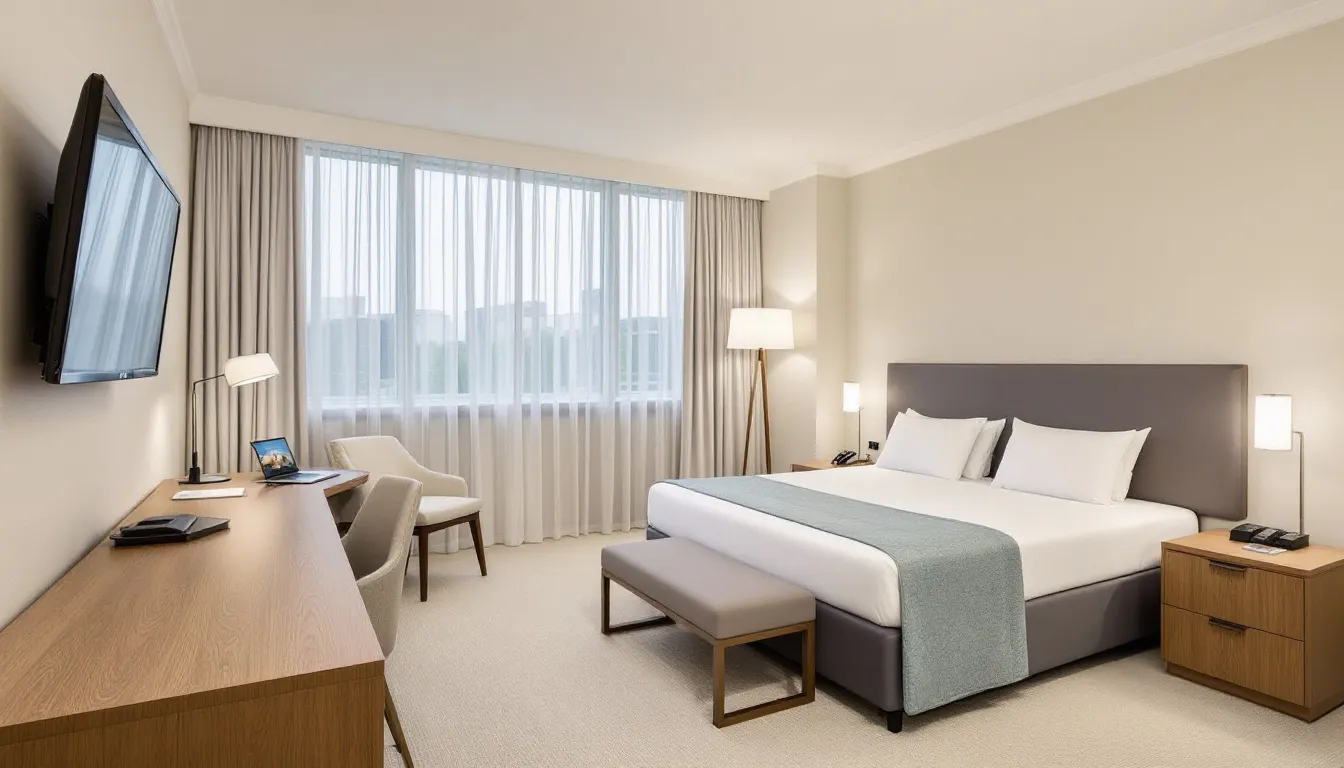
Guest room essentials form the foundation of your guests’ experience and should balance comfort, durability, and cost-effectiveness. Quality beds with comfortable mattresses, premium linens, flat-screen TVs, mini-fridges, and in-room safes are standard expectations across most hotel market segments.
Public area furniture and lobby design elements create first impressions that influence guest satisfaction and online reviews. Invest in durable, attractive furniture that reflects your brand positioning while considering maintenance requirements and replacement costs over time.
Kitchen equipment for food service operations requires careful planning based on your intended food and beverage offerings. Even hotels offering continental breakfast need commercial-grade equipment that meets health department standards and can handle high-volume service during peak breakfast hours.
Cleaning supplies and maintenance tools represent ongoing operational costs that impact your bottom line. Establish relationships with suppliers who can provide competitive pricing on bulk orders while ensuring consistent product quality that maintains your cleanliness standards.
Marketing and Guest Acquisition Strategies
Building a strong online presence is fundamental for attracting guests in today’s digital-first travel booking environment. Your professional website should feature high-quality photos, detailed room descriptions, local area information, and a user-friendly direct booking engine that offers competitive rates and exclusive perks to encourage guests to book directly rather than through online travel agencies.
Search engine optimization (SEO for hotels) helps potential guests find your hotel when searching for accommodations in your area. Focus on local SEO by claiming your Google My Business listing, encouraging guest reviews, and creating content about local attractions and events that positions your hotel as the ideal base for exploring your destination.
Social media presence on platforms like Instagram, Facebook, and TikTok allows you to showcase your property’s unique features and engage with potential guests. Share behind-the-scenes content, highlight local partnerships, and user-generated content from satisfied guests to build authenticity and trust with your audience.
Online travel agency partnerships provide access to broader distribution reach but come with commission fees typically ranging from 15-25% per booking. While these platforms can drive significant bookings, especially during your hotel’s early stages, work to convert these guests into direct repeat customers through exceptional service and targeted marketing.
Local business partnerships create mutually beneficial relationships that can drive steady bookings. Develop corporate rates for nearby businesses, partner with wedding venues and event planners, and create packages with local attractions or restaurants that add value for guests while generating additional revenue streams.
Your grand opening event generates community buzz and media attention that can drive initial bookings and establish your hotel’s presence in the local community. Invite local business leaders, tourism officials, and travel bloggers to experience your property firsthand and share their experiences with their networks.
Guest loyalty programs and referral incentives encourage repeat visits and word-of-mouth marketing, which often converts at higher rates than other marketing channels. Offer perks like room upgrades, late checkout, or dining credits to reward loyal guests and incentivize them to choose your hotel for future stays.
Financial Management and Revenue Optimization
Effective financial management starts with tracking key performance indicators that measure your hotel’s success. Revenue per available room (RevPAR) combines occupancy rates and average daily rates to provide a comprehensive view of your hotel’s performance compared to local competitors and industry benchmarks.
Dynamic pricing strategies based on demand patterns and seasonality help maximize revenue during peak periods while maintaining competitive rates during slower times. Modern revenue management software uses algorithms to analyze booking patterns, competitor pricing, and local events to recommend optimal rates that balance occupancy and profitability.
Diversifying income streams beyond room bookings reduces dependence on accommodation revenue and increases overall profitability. Food and beverage operations, event hosting, spa services, and parking fees can contribute 20-40% of total revenue in well-managed hotels.
Cost control measures for utilities, staffing, and maintenance directly impact your bottom line and ability to generate positive cash flow. Implement energy-efficient lighting and HVAC systems, cross-train staff to handle multiple roles during slower periods, and establish preventive maintenance schedules that extend equipment life and prevent costly emergency repairs.
Regular financial reporting and performance analysis help identify trends and opportunities for improvement. Monthly profit and loss statements, cash flow projections, and budget variance reports provide insights needed to make informed business decisions and adjustments to your operational strategy.
Benefits of Starting a Hotel Business
Hotel ownership provides entrepreneurial freedom and control over business decisions that many other business opportunities cannot match. As a hotel owner, you have the flexibility to implement your vision for guest service, design aesthetic, and operational procedures without answering to corporate headquarters or franchise requirements (if operating independently).
The steady income potential from consistent accommodation demand makes hotels attractive long-term investments. Unlike many businesses that experience significant seasonal fluctuations, well-located hotels can maintain relatively stable occupancy rates throughout the year, providing predictable cash flow for business planning and personal financial security.
Long-term asset appreciation in growing markets can create substantial wealth over time, especially for hotel properties in prime locations. Real estate values typically appreciate over decades, while improvements and renovations can increase property values beyond market appreciation rates.
The intangible side of hotel ownership is the repeat guest who knows the doorman by name. Owners who stay close to operations end up running anniversaries, family reunions, and the same business traveler's monthly stay every year. That relationship is what brand loyalty actually looks like at a property level.
The hospitality industry offers flexible lifestyle opportunities with potential for creativity and innovation in guest services, property design, and marketing approaches. Successful hotel owners often expand their portfolios, creating multiple revenue streams and building hospitality empires that provide both financial security and personal fulfillment.

Challenges and Risk Management
High upfront capital requirements represent the most significant barrier to starting a hotel business. Construction costs, furnishing expenses, and working capital needs often require multi-million dollar investments that must be carefully planned and financed through multiple sources.
Seasonal demand fluctuations can create cash flow challenges, particularly for hotels in tourist destinations or college towns where occupancy rates vary dramatically throughout the year. Developing strategies to attract different guest segments during slower periods helps mitigate these revenue variations.
Competition from short-term rentals like Airbnb and traditional hotels continues to intensify, putting pressure on occupancy rates and pricing power. Successful hotels differentiate themselves through superior service, convenient locations, or unique amenities that vacation rentals cannot replicate.
Staff recruitment and retention challenges in the hospitality industry require ongoing attention and investment in employee satisfaction. High turnover rates increase training costs and can impact service quality, making it essential to create positive work environments and competitive compensation packages.
Economic sensitivity affecting travel patterns and guest spending means hotel revenues can decline quickly during recessions or crisis events like pandemics. Maintaining adequate cash reserves and flexible cost structures helps hotels survive economic downturns and emerge stronger when travel demand recovers.
Regulatory compliance and maintenance responsibilities require ongoing attention and can result in unexpected expenses. Stay current with local regulations, maintain adequate insurance coverage, and budget for regular maintenance and capital improvements that preserve your property’s competitiveness and value.
Key Success Factors for Hotel Owners
Focus on exceptional customer service and guest satisfaction as the foundation of long-term success. Positive guest reviews drive future bookings through online travel agencies and direct referrals, while negative reviews can significantly damage your hotel’s reputation and revenue potential.
Continuous market analysis and adaptation to industry trends keeps your hotel competitive and relevant to changing guest expectations. Monitor competitor pricing, guest feedback, and industry publications to identify opportunities for improvement or expansion.
Strong financial planning and cash flow management ensure your hotel can weather seasonal fluctuations and unexpected challenges while investing in improvements that maintain competitiveness. Regular financial analysis helps identify cost-saving opportunities and revenue optimization strategies.
Investment in staff training and team development creates a culture of service excellence that differentiates your hotel from competitors. Well-trained, motivated employees provide better guest experiences and often generate positive word-of-mouth marketing that drives new bookings.
Regular property maintenance and facility upgrades preserve your investment value while meeting evolving guest expectations for comfort and technology. Plan for periodic renovations that keep your hotel fresh and competitive in your market segment.
Effective online presence and reputation management directly impact booking rates and revenue potential. Monitor review sites, respond professionally to guest feedback, and maintain active social media presence that showcases your hotel’s unique value proposition.
Starting a hotel takes capital, planning, and a stomach for the operational grind. The rewards are real for the operators who go in with clear expectations. Predictable cash flow once the property stabilises, asset appreciation that compounds in growing markets, and the day-to-day work of running a place where guests want to come back. It is not passive income. It is a business that pays the people who actually run it.
Success in the hotel industry comes from understanding your local market, providing exceptional guest service, and maintaining financial discipline while adapting to changing travel trends. Whether you choose to develop a boutique hotel, acquire an existing property, or franchise with an established brand, focus on creating value for your guests while building a sustainable business that can thrive in both good times and challenging market conditions.
The hospitality industry rewards those who combine passion for service with strategic business planning and operational excellence. With proper preparation and dedication to guest satisfaction, your hotel dream can become a profitable reality that provides both financial success and personal fulfillment for years to come.