
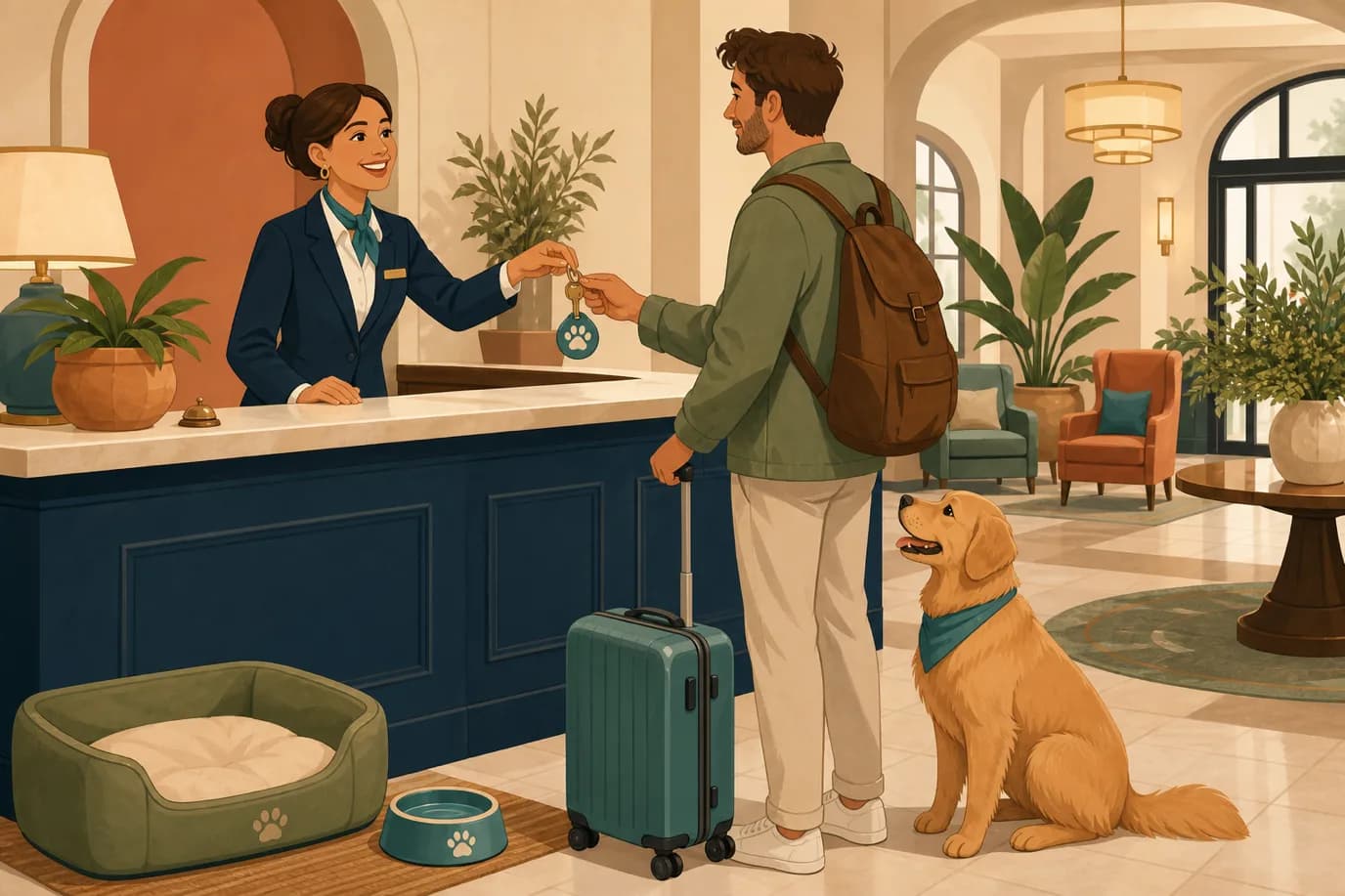
Watch the lobby of any hotel for an afternoon and count the guests who left somebody at home: the dog at the neighbour's, the cat with the feeder, the family member whose absence was negotiated before the trip was booked. Nearly half of households in Europe and well over half in the United States own a pet, and a fast-growing share of them has stopped negotiating. They travel with the animal or they do not travel at all, and every booking platform has noticed: pet-friendly is now a first-class filter on Booking.com, Expedia and Google Hotel Search, sitting alongside parking and breakfast as one of the boxes that silently removes you from consideration when unticked.
Yet most hotels treat the question as a nuisance to be minimised rather than a segment to be won. The policy is three grudging lines written after an incident five years ago, the fee is whatever the manager said that day, the housekeeping protocol is folklore, and the marketing is nonexistent. This guide is the full playbook: the market and the money, the policy decisions that prevent ninety percent of problems, fee structures and benchmarks, room designation and cleaning protocols, the legal line around service animals, and the marketing that turns a reluctant checkbox into a durable revenue stream.
The Pet Travel Market: Too Big to Leave to Competitors
The numbers deserve a moment of respect. Pet ownership surged during the pandemic years and never receded: roughly 90 million European households and 85 million American ones now include at least one animal, with dogs leading and millennials and Gen Z the most pet-attached generations in history. Surveys of dog owners consistently find that a majority take the animal on at least some trips, that a large minority refuses to book anywhere the pet cannot come, and that pet-owning travellers check the pet policy before they check the price. This is not a niche; it is a demographic wave arriving at your booking engine with a leash in hand.
The segment also behaves in ways hoteliers should find attractive. Pet travellers skew toward car travel, which makes them regional, repeatable guests rather than one-off flyers. They stay longer on average, because the logistics of travelling with an animal reward fewer, longer trips. They travel outside school holidays, filling exactly the shoulder-season gaps that keep revenue managers awake. And they are startlingly loyal: a property that welcomed the dog once becomes the default for every future trip in the region, because the owner is not gambling a stressful arrival on an unknown front desk. Understanding which of these guests your property naturally attracts is classic market segmentation work, and the pet dimension cuts across almost every other segment you already serve.
The Business Case: What Pet-Friendly Actually Earns
Pet-friendly revenue arrives through four doors at once. The first is the fee itself: charge a defensible 15 euros a night for the average two-night stay across a modest 300 pet stays a year and the line item pays for a housekeeper's quarter. The second is incremental occupancy: every filtered search you now appear in is demand you previously never saw, and unlike most demand, it concentrates in the weeks you need it most. The third is length of stay, since pet bookings run measurably longer than the property average almost everywhere it is measured. The fourth is ancillary spend: pet guests eat at your restaurant more often because leaving the animal alone in the room limits their options, and they buy the pet package, the late checkout and the extra night with less resistance than any comparable segment.
Against this stand the costs, and they are real but consistently overestimated. A pet room turnover needs twenty to forty extra minutes of housekeeping. Genuine damage, a chewed skirting board, a scratched door, arrives rarely and is covered by the fee structure over any reasonable horizon. The occasional noise complaint needs a front-desk script. That is broadly the whole downside, and every element of it is controllable through policy, which is why the properties that lose money on pets are almost always the ones that never wrote one. The economics reward hotels asymmetrically here: a bounded operational investment buys access to a large, loyal, shoulder-season-heavy segment that your unticked checkbox currently hands to the property down the road.
Designing the Pet Policy: Decide Everything Before the First Bark
A pet policy is a set of decisions made calmly in advance so they never have to be made angrily at the desk. The test of a good one is that a new receptionist can answer any pet question a caller asks without fetching a manager, and that a guest can read it on your website in under a minute and know exactly what their stay will look like. Ambiguity is the enemy: every gap in the policy becomes a negotiation, and every negotiation becomes a review.
Which Pets, How Many, How Big
Start with species. Most properties sensibly limit the program to dogs and cats; exotic animals introduce insurance and safety questions that no pet fee covers. Then set a count, typically one or two animals per room, and decide honestly about size. Weight limits around 20 to 25 kilograms are common in city hotels with small rooms and busy elevators, while resorts and country properties often skip them entirely and win the large-dog families that city hotels turn away, a segment with remarkably few options and correspondingly high loyalty. Whatever you choose, write it as a number, not an adjective: small pets welcome is a negotiation, up to 25 kg, maximum two per room is a policy.
Add the behavioural clauses that give your staff standing when something goes wrong: pets must be leashed in public areas, must not be left unattended in rooms unless crated and the front desk is informed, and disruptive noise that other guests report gives the hotel the right to require boarding or end the stay. You will almost never enforce the last clause, but its existence converts a crisis into a procedure.
Where Pets Can and Cannot Go
Decide the map before guests test it. The standard pattern: pets are welcome in designated guest rooms, the lobby and outdoor areas, and excluded from the restaurant interior, the spa, the pool deck and the gym, with the terrace as the pet-friendly dining option. This satisfies both the traveller who wants the dog nearby and the guest at the next table who chose your restaurant precisely because dogs were not part of the picture. Signal the map physically: a water station at the entrance says welcome, a discreet sign at the restaurant door says boundaries, and together they say competence.
Publish all of it, in full, on a dedicated page of your website. The pet policy page is one of the most searched and least built pages in hospitality, and it does double duty: it converts the pet traveller who needs certainty before booking, and it quietly informs the allergic guest who needs the opposite certainty that non-pet floors exist. If your website makes adding a page a project rather than an afternoon, that is a platform problem; sites built with Prostay Instant Site let you publish and translate a policy page in the same afternoon you write it.
Pet Fees: What to Charge and How to Frame It
Benchmarks first. Per-night pet fees across Europe and North America mostly land between 10 and 35 euros or dollars, with city boutiques at the top and roadside properties at the bottom. Flat per-stay cleaning fees run 25 to 100. Refundable damage deposits of 50 to 200 appear mostly in apartment-style properties where the room contains more to damage. And a meaningful minority of properties, especially in the upper segment, charge nothing at all and treat the pet welcome as a differentiator that earns its keep in loyalty and rate premium rather than fees.
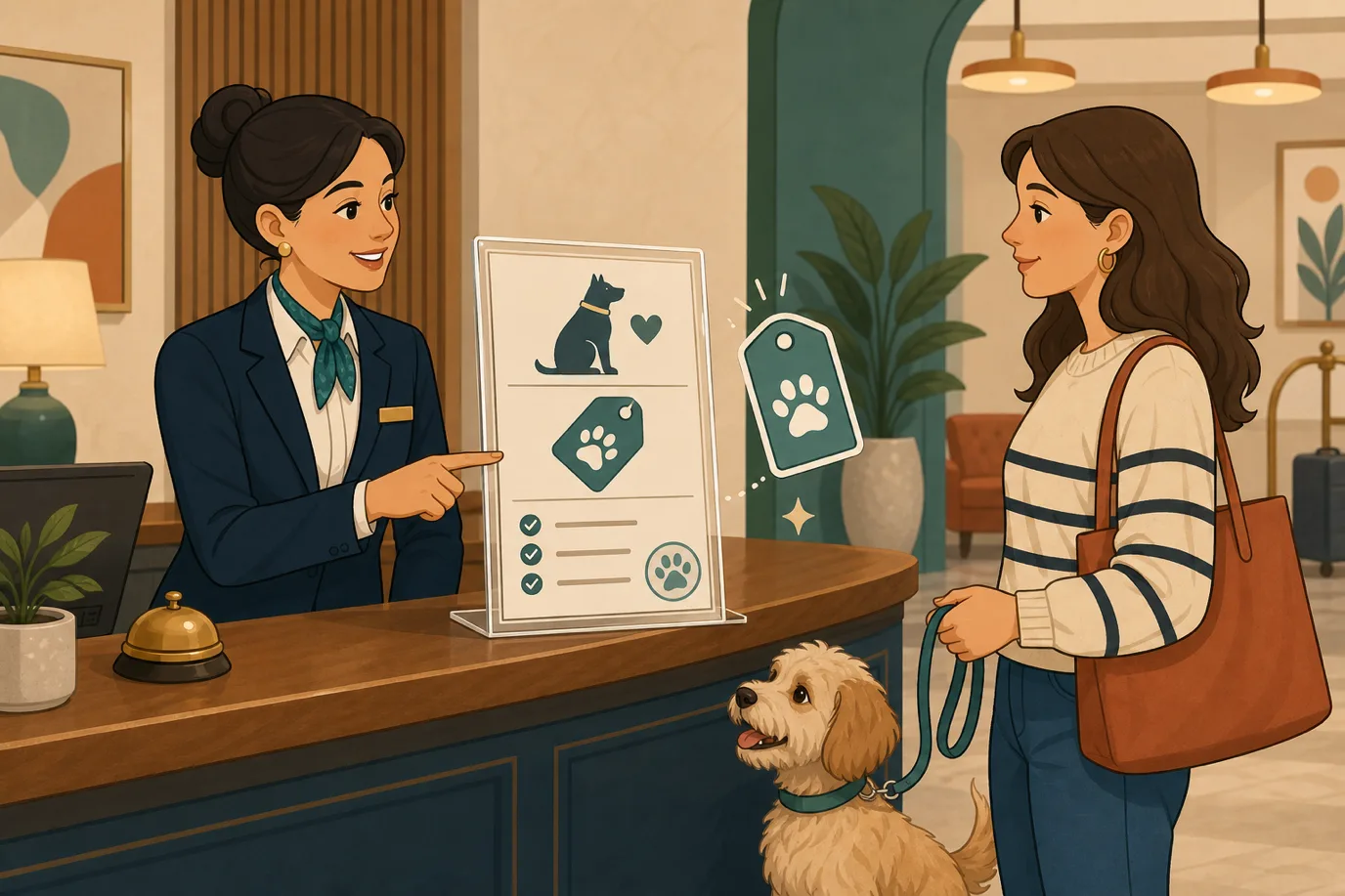
Structure matters more than level. Per-night fees suit short urban stays but feel punitive by night five; if your average pet stay is long, cap the fee or flatten it. Whatever the structure, two rules are non-negotiable. First, disclose everywhere: on the website, in the booking engine as a visible add-on, in the confirmation email, in the OTA listing. The angriest pet reviews in the industry are not about fees; they are about fees discovered at check-in. Second, frame the fee as service rather than penalty. A cleaning surcharge reads as suspicion; the same amount presented as the pet stay, including bed, bowls and welcome treat reads as hospitality, and hospitality is upsellable. Selling the pet stay as a proper add-on through your booking engine also means it is priced, tracked and reported like any other revenue line instead of living in a notes field.
Designated Rooms and Housekeeping Protocols
Concentrate pets; do not scatter them. Designating 10 to 20 percent of inventory as pet-friendly, ideally ground-floor rooms near an exterior door, solves half the operational puzzle in one decision: allergic guests can be guaranteed genuinely pet-free rooms, dogs reach the grass without three elevator encounters, and the deep-clean workload maps to a known set of rooms instead of the whole building. Choose rooms with hard flooring where possible, furnish them with washable fabrics, and skip the bed skirts and floor-length curtains that collect hair like they were designed for it.
Make the designation structural, not tribal knowledge. The pet-friendly attribute belongs on the room type and the individual room in your property management system, so reservations physically cannot assign a pet booking to a non-pet room, and so the room's cleaning schedule automatically includes the deep-clean turnover after every pet stay. That turnover deserves its own checklist entry: HEPA vacuum every soft surface including under the bed, treat upholstery and curtains, check mattress and pillow protectors, inspect the air filter, enzyme-treat any accident spots, and air the room properly. It is twenty to forty minutes of work that protects the next guest, your review score and the program itself, and it should live in your housekeeping checklist as a formal task type rather than a verbal tradition, because traditions get skipped on busy mornings and allergic guests notice with their airways.
Track pet stays as data, not memory. A pet flag on the reservation tells housekeeping which checkout triggers the deep clean, tells the front desk which arrivals need the welcome kit, and tells you, at the end of the season, exactly how many pet nights you sold, what they earned and whether the designated allocation should grow. Properties are routinely surprised in both directions, and the reservation flag is what turns the surprise into a plan.
Amenities and Packages: From Tolerated to Celebrated
The gap between allows pets and loves pets is about forty euros of equipment per room, and the entire marketing value of the program lives inside that gap. The baseline kit: a washable pet bed, two bowls with a mat, waste bags, a towel for wet paws and a welcome treat at check-in. That is the whole cost of transforming the arrival moment from administrative to photogenic, and the photogenic part matters commercially, because pet owners photograph everything and tag generously, and every tagged arrival is an advertisement delivered to precisely the audience that filters for pet-friendly.
From the baseline, build upward into packages where your property can support them: a pet menu in the restaurant, even three items long; a map of walking routes a staff member actually walks; partnerships with the local groomer, dog-sitter and vet, which cost nothing and complete the stay; and for resorts, the full pet holiday package with sitting during spa hours and a photo session. Structure these the way you structure any hotel package: named, priced, bookable, and sold at the moments guests already say yes, in the booking flow and the pre-arrival email. The pet package attaches to a decision the guest has already made emotionally, which is why its conversion embarrasses most other upsells.
Service Animals Are Not Pets: The Legal Line
One distinction must sit above the whole program, in bold, in every staff briefing: service animals are not pets, and pet policy does not apply to them. In the United States, the ADA requires hotels to accommodate service dogs, including in properties that ban pets outright, forbids pet fees for them, restricts staff to two questions, whether the animal is required for a disability and what task it performs, and prohibits demanding documentation. European law varies by country but protects assistance dogs broadly, and the direction of travel everywhere is toward stronger protection. Emotional support animals occupy a legal middle ground that differs by jurisdiction; decide your position deliberately, write it down, and apply it consistently rather than desk by desk.
Train for the encounter, because it will happen. The receptionist who confidently waives the fee for a guide dog and mentions the grassy area by the parking lot creates a guest for life from a community that shares recommendations intensively. The one who demands papers creates a legal exposure and a viral post in the same gesture. Put the two permitted questions on a card by the desk, brief every new hire, and audit the knowledge twice a year. This is the cheapest risk management in the entire program.
Marketing a Pet-Friendly Hotel: Be Findable, Then Be Photographed
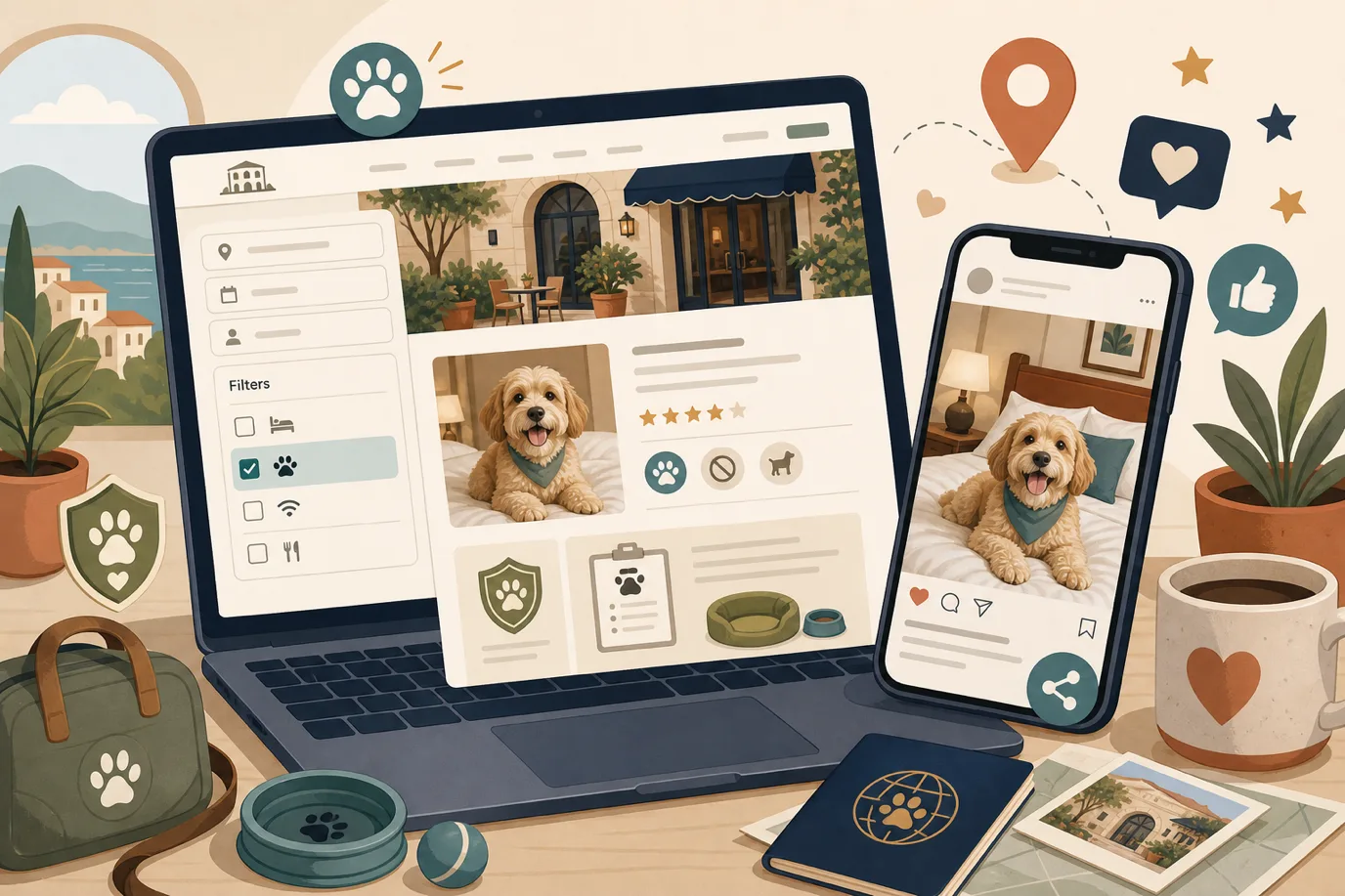
Pet-friendly marketing starts with plumbing, not creativity. The pet-friendly attribute must be switched on in every OTA extranet and in your channel manager, because the filter is binary: unticked means invisible to every search that uses it, and a large fraction of pet owners never browse without it. Check Booking.com, Expedia, Google Business Profile and your metasearch listings in one sitting, then confirm the fee is disclosed in each so the platforms do not bury you for surprise charges. Ten minutes of checkbox hygiene routinely outperforms months of content marketing for this segment.
Then make your own website answer the searches the OTAs cannot. A dedicated, indexable pet policy page targeting pet-friendly hotel plus your destination, with the policy in full, the fee, photos of the designated rooms and a dog actually enjoying the property, will rank for a query with unusually high booking intent and very thin competition in most markets. Link it from the footer and the FAQ, mark the property up with structured data that includes the petsAllowed attribute, and route the page's visitors straight into the booking engine with the pet add-on preselectable. This is the same direct-booking logic that applies everywhere else on your site, pointed at a query space competitors ignore; the broader machinery is covered in our guide to direct booking strategies.
Finally, let the guests do the creative work, because no agency shoots pet content as convincing as a real dog on your real terrace. Encourage the tag with a small, genuine gesture, the treat at check-in with a card carrying the property hashtag, repost generously, and keep a gallery of guest pets on the policy page. Pet owners trust other pet owners with an intensity that no branded photography earns, and the content compounds: every reposted labrador is a durable, zero-cost advertisement addressed to exactly the right audience.
Incidents, Noise and Reviews: Managing the Downside
The failure modes of a pet program are few, predictable and script-able. Noise is the most common: the dog that barks when left alone. The policy clause about unattended pets exists for this moment; the front-desk script is a courteous call to the owner, an offer of the local sitter's number, and, on repetition, a firm conversation the policy has already authorised. Damage is next: document with photos, charge against the disclosed fee or deposit, and treat genuinely damaged items as a cost of the program the fees already funded, not a moral event. Accidents in public areas need a spill-kit and a shrug; the property that handles a puddle gracefully in front of other guests wins more goodwill than the incident cost.
Reviews deserve specific attention, because pet programs generate them in both directions. Pet travellers review effusively when the welcome is real, and they mention the water bowl by name. Non-pet guests review sharply when the program leaks: hair on the blanket, barking at midnight, a dog at the breakfast buffet. Every negative pattern maps to a specific control in this guide, designated rooms, the deep-clean turnover, the unattended-pet clause, the restaurant boundary, which means the review stream is your program audit, delivered free. Read it that way, fix the control rather than apologising for the symptom, and the program improves itself season by season. The properties that thrive with pets are not the ones without incidents; they are the ones whose guest experience machinery treats an incident as data.
Pet-friendly, done with intention, is one of the rare moves in hospitality that grows revenue, loyalty and shoulder-season occupancy simultaneously, using inventory you already own and a segment that arrives pre-disposed to love you. Write the policy this week, designate the rooms, put the fee in the booking engine as a proper add-on, tick the filters everywhere, and publish the page. And if the operational side, the room attributes, the reservation flags, the housekeeping task types, the add-on pricing, sounds like more system than your current stack offers, a Prostay demo will show you how a modern platform makes a pet program, like most things in a hotel, mostly a matter of switching it on.