

The hotel duty manager is central to smooth day to day operations. They handle guest issues, support staff, and keep the property running when the general manager is not on site. Understanding what a duty manager does, their responsibilities, and how the role fits into the hotel structure helps both aspiring managers and employers.
This guide explains what a duty manager is, typical duty manager job descriptions, core responsibilities, and how the role supports hotel operations.
What Is a Duty Manager?
A duty manager is a senior operational role in hospitality who oversees hotel daily operations during a shift. They act as the main point of contact for guests and staff, handle problems as they arise, and ensure company policies are followed. In hotels, the hotel duty manager is often the most senior person on site outside core business hours.
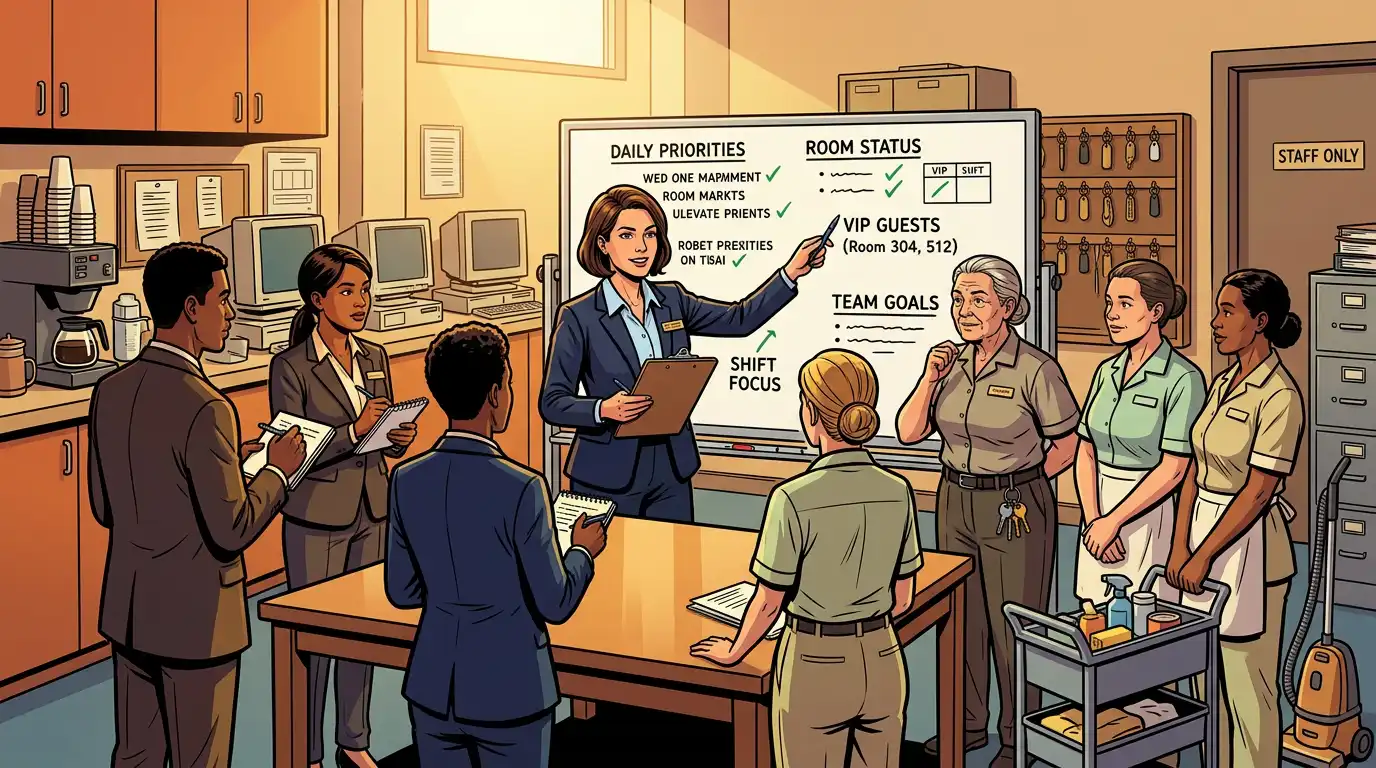
The duty manager bridges hotel front line staff and senior leadership. They report to the general manager or operations manager but have the authority to make decisions during their shift. They coordinate front desk, housekeeping, maintenance, and sometimes F&B to keep the property running smoothly.
Hotel Duty Manager vs. General Manager
The general manager has overall responsibility for the property: strategy, budgets, hiring, and long term performance. The hotel duty manager focuses on shift-level operations: guest experience, staff coordination, and immediate problem-solving.
General Manager, Strategic, long-term, full P&L and team leadership
Duty Manager, Tactical, shift-based, operational execution and guest/staff support
The duty manager implements the general manager’s policies and standards. They don’t usually set strategy but are responsible for applying it during their shift. A strong duty manager makes the general manager’s job easier by handling operational issues before they escalate.
Duty Manager Job Description: Key Elements
A typical duty manager job description includes:
Job Title and Level
- Hotel Duty Manager
- Front Office Duty Manager
- Operations Duty Manager
- Assistant Manager (Duty)
Titles vary by property size and structure. The core duty manager responsibilities are the same: oversee operations during assigned shifts.
Summary
The duty manager ensures smooth day to day operations, delivers a high standard of guest service, and supports staff. They handle guest complaints, coordinate departments, and act as the senior manager on duty when the general manager is not present.
Duties and Responsibilities
- Oversee front desk, reservations, and check-in/check-out
- Handle guest complaints and special requests
- Coordinate with housekeeping, maintenance, and F&B
- Monitor cash handling and end-of-day procedures
- Ensure company policies and procedures are followed
- Support and supervise staff during the shift
- Manage incidents and emergencies
- Report to the general manager on operational issues
Qualifications
- Experience in front office or hotel operations
- Strong communication and problem-solving skills
- Ability to work under pressure and irregular hours
- Familiarity with PMS and hotel systems
- Leadership and team management skills
Reporting Structure
The duty manager usually reports to the general manager or front office manager. They may supervise front desk agents, concierge, and sometimes night auditors, depending on the property.
Duty Manager Responsibilities in Detail
1. Guest Experience and Customer Complaints
A major part of the duty manager job is managing the guest experience and resolving customer complaints. They:
- Intervene when front desk staff cannot resolve an issue
- Handle escalated complaints calmly and professionally
- Offer solutions (room changes, upgrades, compensation) within policy
- Follow up to ensure guest satisfaction
- Document incidents for hotel staff training and improvement
Customer complaints can range from room issues to billing disputes. The duty manager decides when to escalate to the general manager and when to resolve on the spot. Good judgment here protects revenue and reputation.
2. Day-to-Day Operations
The duty manager oversees day-to-day operations during their shift. This includes:
- Front desk, Check-in/check-out, reservations, guest inquiries
- Housekeeping, Room status, turnaround times, special requests
- Maintenance, Repairs, room defects, equipment issues
- F&B, When applicable, coordination with restaurant and room service
They ensure departments work together, priorities are clear, and nothing falls through the cracks. They also handle unexpected events: no-shows, overbookings, maintenance emergencies, and staff shortages.
3. Cash Management
Cash management is a core duty manager responsibility. They:
- Oversee front desk cash handling and floats
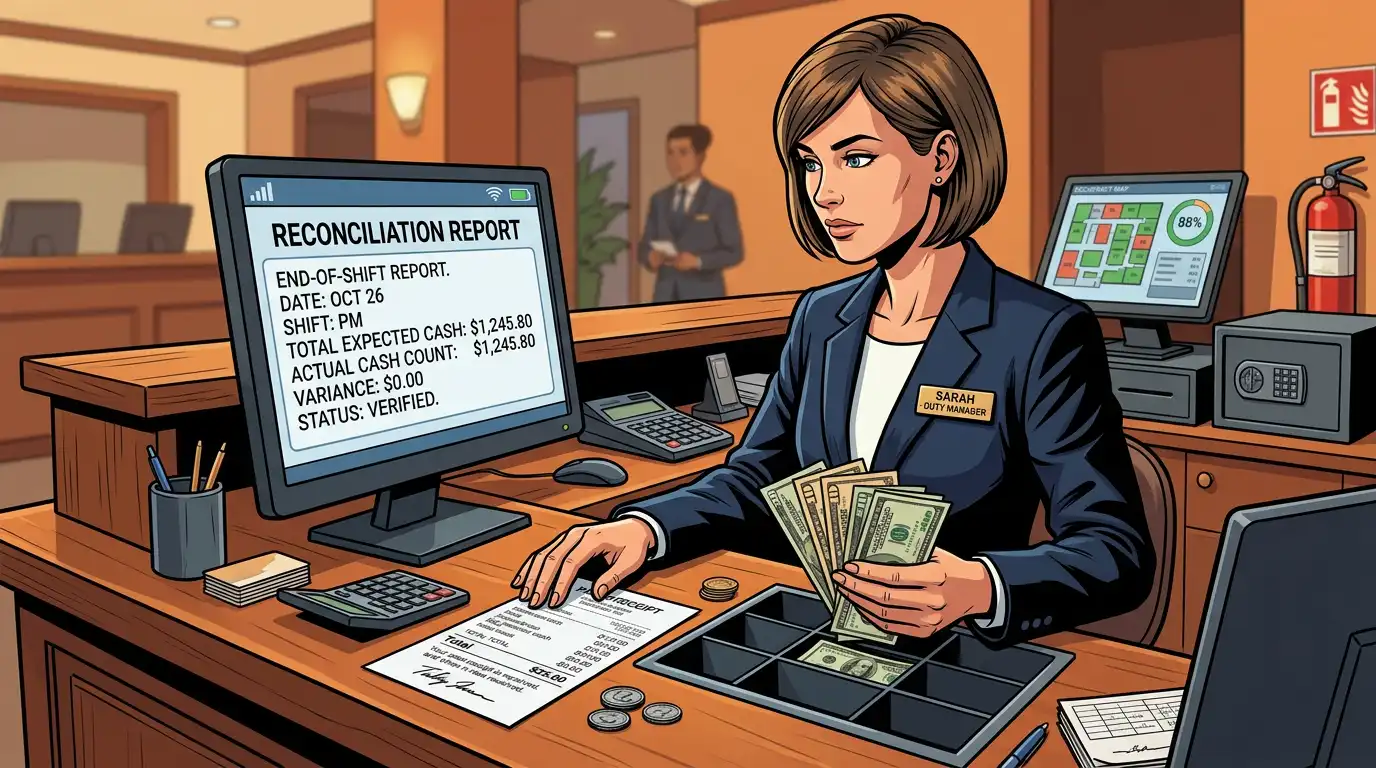
- Verify end-of-shift cash counts and reconciliation
- Ensure secure storage of cash and sensitive items
- Spot and report discrepancies
- Support night audit and closing procedures
Proper cash management protects the hotel from loss and supports accurate financial reporting. Duty managers must understand cash procedures and work closely with accounting.
4. Team Management Skills and Ensuring Employee Productivity
The duty manager needs strong team management skills to keep staff focused and productive. They:
- Assign tasks and balance workload
- Support staff with questions and problems
- Address performance issues in the moment
- Ensure breaks and coverage are managed
- Model service standards and company policies
Ensuring employee productivity means clear expectations, timely feedback, and removing obstacles so staff can do their jobs. The duty manager is both supervisor and support for the team.
5. Monitoring Efficiency
Monitoring efficiency involves watching how well operations run during the shift. The duty manager:
- Tracks check-in/check-out times and wait times
- Monitors room readiness and housekeeping progress
- Watches for bottlenecks and delays
- Identifies process improvements
- Reports trends to the general manager
Efficiency affects guest satisfaction and labor costs. The duty manager uses observation and data (from the PMS and other systems) to spot issues early.
6. Upholding Company Policies
The duty manager ensures company policies are followed. They:
- Apply rate and upgrade policies consistently
- Enforce safety and security procedures
- Follow refund and compensation guidelines
- Ensure staff adhere to dress code and conduct standards
- Escalate policy exceptions when appropriate
Consistency builds trust with guests and staff. The duty manager must know policies and apply them fairly while using judgment when exceptions are warranted.
7. Incident and Emergency Response
When something goes wrong, the duty manager leads the response. They:
- Manage medical emergencies, security incidents, and natural events
- Coordinate with emergency services when needed
- Communicate with guests and staff
- Document incidents and follow-up actions
- Debrief with the general manager
Calm, clear decision-making under pressure is essential. The duty manager should know emergency procedures and escalation paths.
8. Communication and Coordination
The duty manager communicates across departments and shifts. They:
- Brief incoming shifts on issues and follow-ups
- Coordinate with housekeeping on room status and priorities
- Liaise with maintenance on urgent repairs
- Update the general manager on significant events
- Communicate with guests during disruptions
Good communication prevents misunderstandings and keeps operations aligned.
Skills Required for the Duty Manager Job
Technical Skills
- PMS proficiency, Confident use of the property management system for reservations, check-in, billing, and reporting
- Cash handling, Understanding of floats, reconciliation, and secure procedures
- Basic accounting, Reading reports, understanding revenue and occupancy
- Office software, Email, spreadsheets, and property-specific tools
Soft Skills
- Communication, Clear, professional communication with guests and staff
- Problem-solving, Quick, practical solutions under pressure
- Leadership, Guiding and motivating the team
- Conflict resolution, De-escalating and resolving disputes
- Time management, Prioritizing and handling multiple tasks
- Emotional intelligence, Reading situations and responding appropriately
Team Management Skills
- Delegating effectively
- Giving constructive feedback
- Supporting and developing staff
- Handling difficult conversations
- Building trust and respect
How Technology Supports the Hotel Duty Manager
Modern hotel systems help duty managers with day-to-day operations. A cloud-based PMS gives:
- Real-time visibility, Room status, reservations, and occupancy at a glance
- Faster check-in/check-out, Simplified processes and less manual work
- Accurate reporting, Occupancy, revenue, and operational metrics
- Multi-department coordination, Housekeeping and front desk sharing the same data
- Mobile access, Ability to respond from anywhere in the property
Tools like Prostay centralize reservations, room status, and reporting so duty managers can focus on guests and staff instead of manual updates. Efficient systems support monitoring efficiency and better decision-making.
Typical Duty Manager Shift Patterns
Duty managers often work rotating shifts, including:
- Morning, 7 a.m.–3 p.m. (check-outs, housekeeping coordination)
- Evening, 3 p.m.–11 p.m. (check-ins, dinner service, guest issues)
- Night, 11 p.m.–7 a.m. (security, late arrivals, night audit support)
Larger properties may have duty managers for each shift. Smaller ones may have one duty manager covering key hours with support from a senior front desk agent at night.
Career Path for Hotel Duty Managers
The duty manager role is often a step toward:
- Front Office Manager, Full responsibility for front desk and reservations
- Operations Manager, Broader operational oversight
- General Manager, Full property responsibility
- Regional or Corporate Roles, Multi-property or group-level positions
Experience as a duty manager builds operational knowledge, problem-solving skills, and leadership. Many hotel general managers have served as duty managers earlier in their careers.

Challenges of the Duty Manager Job
Long and irregular hours, Shifts can include nights, weekends, and holidays.
Guest pressure, Dealing with upset or demanding guests can be stressful.
Balancing priorities, Juggling guest needs, staff support, and operational tasks.
Limited authority, Some decisions require general manager approval.
Staff issues, Managing performance, conflicts, and absenteeism.
Strong support from the general manager, clear policies, and good systems help duty managers manage these challenges.
Best Practices for Hotel Duty Managers
Know the property, Walk the hotel regularly and understand layout, systems, and procedures.
Build relationships, Get to know staff in all departments to improve coordination.
Document everything, Log incidents, complaints, and follow-ups for handover and improvement.
Stay calm, Model composure during busy or difficult situations.
Communicate clearly, Be specific in handovers and when giving instructions.
Use data, Use the PMS and reports to monitor performance and spot trends.
Escalate when needed, Know when to involve the general manager or other senior staff.
Writing a Duty Manager Job Description
When hiring for a duty manager job, a clear job description helps attract the right candidates. Include:
- Job title, e.g., Hotel Duty Manager
- Reports to, General Manager or Front Office Manager
- Summary, 2–3 sentences on the role and its importance
- Key responsibilities, 8–12 bullet points covering the main duties
- Qualifications, Experience, education, and skills
- Working conditions, Shift patterns, weekends, holidays
- Benefits, Salary range, perks, development opportunities
Be specific about duty manager responsibilities so candidates understand expectations. Mention systems (e.g., PMS) and any property-specific requirements.
Conclusion
The hotel duty manager is essential to smooth day-to-day operations. They handle guest issues, coordinate departments, manage cash, support staff, and uphold company policies. Strong team management skills, clear communication, and the ability to work under pressure are central to the role.
Understanding what a duty manager is and what the duty manager job involves helps both those pursuing the role and those hiring for it. With the right skills, support, and tools, the duty manager helps deliver consistent guest experiences and efficient operations.