
In today’s digital world, where 92% of bookings begin with a Google search or a quick scroll through social media, many hotels find themselves spreading their advertising budget thinly across multiple channels without clear goals or measurable results. The real difference between campaigns that bring in profit and those that drain your budget comes down to one thing: a smart, strategic approach focused on revenue optimization.
Instead of scattering your efforts, a well-planned online advertising strategy for hotels means setting clear performance goals, using data to guide where your budget goes, and keeping a close eye on how your campaigns perform. This method turns your marketing from a cost into a powerful engine that drives direct bookings and boosts your revenue per available room (RevPAR).
This guide is designed to help hotel owners and marketing teams take a systematic approach to maximize their advertising ROI. You’ll learn how to manage your channels wisely, target the right audiences, and optimize based on real performance data.
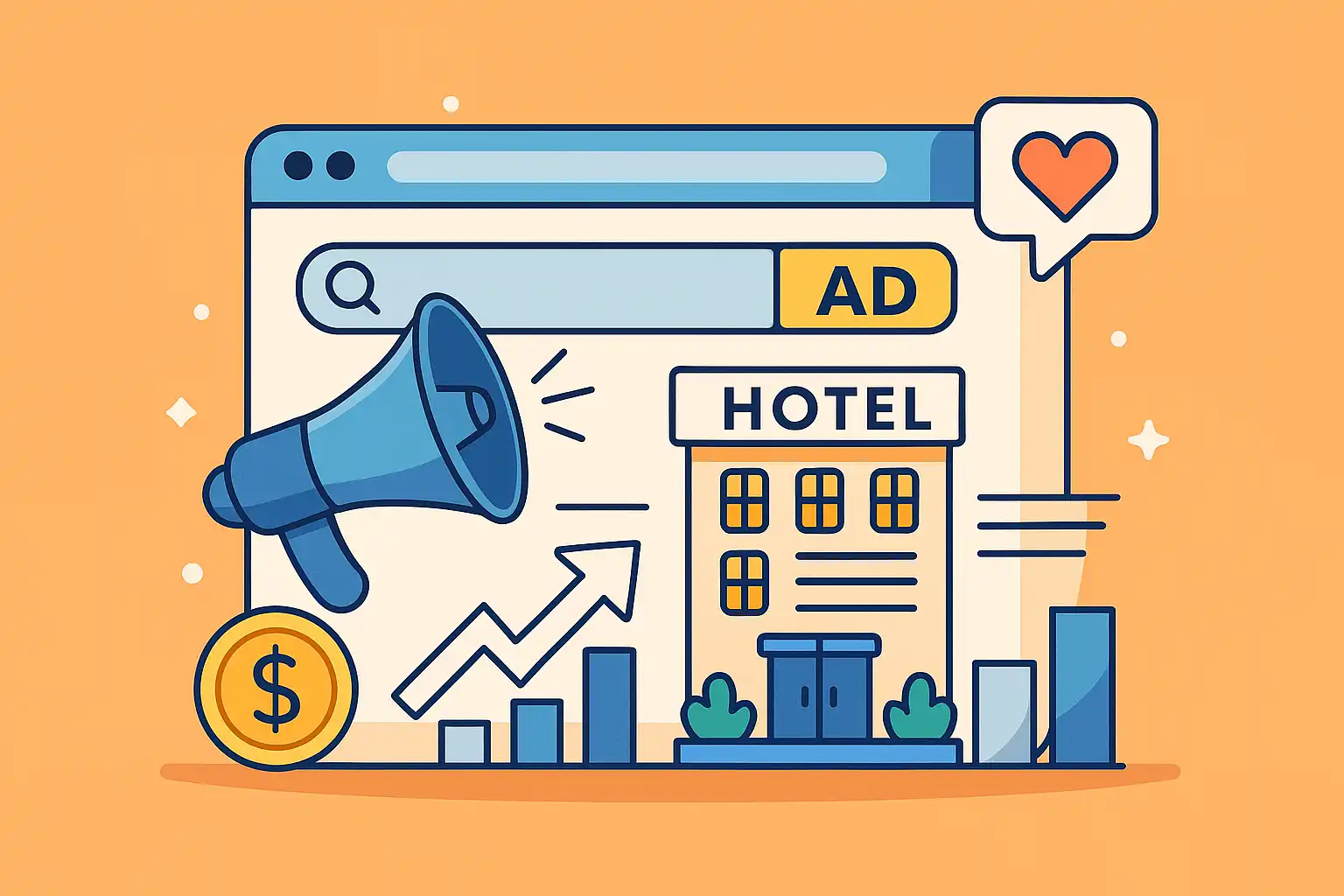
The Strategic Foundation of Hotel Online Advertising
Starting strong means knowing exactly what success looks like. Before launching any campaign, top-performing hotels set clear ROI targets, aiming for at least a 3:1 return on ad spend to ensure their efforts are worthwhile.
Begin by gathering your current performance data: occupancy rates, average daily rate (ADR), and RevPAR over the past year. These numbers become your baseline, helping you measure the real impact of your advertising.
Next, get to know your guests deeply. Build detailed buyer personas based on actual booking data, not just assumptions. Look at demographics, booking habits, length of stay, and spending patterns to identify your most valuable customers. Focus on high-value guests who spend $300 or more per night, and use these insights to create lookalike audiences for your hotel digital marketing.
For budgets, aim to allocate 8-12% of your total revenue to advertising each month for a strong market presence. Newer or highly competitive properties might lean toward the higher end, while established hotels can operate effectively closer to the lower range.
Why does this strategic approach work better than just spreading your budget everywhere? Because it holds you accountable with measurable results, cuts waste by making data-driven decisions, and creates sustainable growth by continuously optimizing your campaigns.
Revenue-Optimized Channel Portfolio Management
To get the most bang for your buck, spread your advertising budget thoughtfully across channels based on what actually works and where growth opportunities lie, not just what’s trendy.
| Channel Category | Budget Allocation | Primary Objective | Expected Performance |
|---|---|---|---|
| High-Converting Channels | 40% | Immediate bookings | 4:1+ ROAS |
| Emerging Platforms | 30% | Brand awareness & growth | 2:1+ ROAS |
| Retargeting Campaigns | 20% | Conversion optimization | 6:1+ ROAS |
| Testing & Seasonal | 10% | Future opportunity identification | Variable |
Put 40% of your budget into high-converting platforms like Google Ads and Meta (Facebook and Instagram) advertising. These channels deliver quick, measurable results by reaching potential guests who are actively searching for places to stay, with targeting options based on location, demographics, and booking intent.
Set aside 30% for emerging platforms such as TikTok Ads and Pinterest Business. These are fantastic for reaching younger travelers and those who love visual content, helping you showcase your hotel’s unique vibe and nearby attractions with engaging, shareable content that builds brand awareness.
Reserve 20% for retargeting campaigns aimed at people who visited your site but didn’t book. These warm leads often convert at higher rates and cost less to acquire.
Finally, keep 10% for testing new opportunities and seasonal campaigns tied to local events, peak travel times, or emerging trends.
Performance-Based Channel Selection
Google Hotels should be a top priority for immediate visibility. When optimized well, it can deliver conversion rates around 15%. These ads appear right in Google Search and Maps, showing your rates and availability alongside competitors, making it easy for travelers to book directly.
Facebook and Instagram ads excel at telling your hotel’s story visually. With an average click-through rate of 2.5%, these platforms let you showcase your property’s ambiance, amenities, and unique selling points through high quality photos and video content that connect with your target audience.
TikTok is an exciting channel for hotels targeting Gen Z and millennial travelers, especially those promoting experiences over traditional luxury. Short-form videos here get 1200% more shares than other content types, offering huge viral potential.
YouTube pre-roll ads work well for luxury and destination marketing, letting you show off video tours and virtual reality experiences that appeal to business travelers and extended-stay guests.

Advanced Targeting and Segmentation Strategies
The key to turning broad reach into real bookings is precise targeting. Use behavioral data, location insights, and booking intent signals to connect with those most likely to book and become loyal guests.
Create lookalike audiences based on your highest-value guests who book repeatedly. This helps you find new customers with similar profiles, boosting conversions and lowering acquisition costs.
Geo-fencing around competitor hotels within a 5-mile radius lets you reach travelers already considering your market, offering your hotel as the better choice.
Launch seasonal campaigns about 45 days before peak travel times to catch early planners and price-sensitive guests before the market fills up.
Set up remarketing sequences tailored to where users dropped off in the booking funnel. Someone who abandoned their cart needs a different message than someone who just browsed room rates.
Behavioral Targeting Implementation
Target users who visited travel review sites recently, as they’re actively planning trips and more likely to respond to your offers.
Reach out to people searching for local attractions and events, positioning your hotel as the perfect base for their adventures.
Segment business travelers by LinkedIn data and weekday search habits to deliver messaging that highlights corporate-friendly amenities and flexible booking options.
Use your email marketing data to create audiences of previous guests, who often have the highest lifetime value and respond well to loyalty-focused campaigns. This is one of the most effective strategies for online advertising for hotels.
Cross-Platform Campaign Integration
Keeping your messaging consistent across Google Ads, Facebook, and OTA listings builds trust and reinforces your hotel’s brand. Conflicting offers or mixed messages can confuse travelers and hurt bookings.
Use unified creative assets that work well on display ads, social media, and video formats to save on production costs and strengthen brand recognition.
Implement cross-platform tracking with tools like Google Analytics 4 and Facebook Pixel to see the full customer journey, from first click to final booking, and allocate your budget where it counts most.
Coordinate your campaigns to avoid overlapping audiences and wasted impressions. Use sequential messaging to guide guests smoothly from awareness to booking.
Technical setup includes installing tracking pixels, configuring conversion events, and standardizing UTM tags for accurate attribution across platforms.
Data-Driven Optimization and Performance Monitoring
Keep a close eye on key metrics to ensure your campaigns stay profitable and spot opportunities to improve.
Monitor cost per acquisition weekly, aiming for under $75 per booking. Adjust bids quickly if costs creep higher to avoid wasting budget.
Track return on ad spend monthly, targeting at least 4:1. Pause or optimize campaigns falling below this benchmark.
| Metric | Monitoring Frequency | Target Benchmark | Action Threshold |
|---|---|---|---|
| Cost Per Acquisition | Weekly | <$75 | >$100 |
| Return on Ad Spend | Monthly | 4:1+ | <3:1 |
| Conversion Rate | Daily | 3%+ | <2% |
| Click-Through Rate | Weekly | 2.5%+ | <1.5% |
Use heatmap tools like Hotjar to understand where visitors drop off on your booking pages and improve those spots to boost engagement.
Run A/B tests on your ad creatives with at least 1,000 views per version to find what resonates best, improving relevance and lowering costs.
Seasonal Performance Analysis
Boost your ad spend by 25% during shoulder seasons to attract price-conscious travelers when competition is lower.
Shift your messaging during peak season to focus on availability and urgency rather than discounts, appealing to travelers eager to secure their spot.
Analyze year-over-year data to fine-tune your campaign timing and budgets for maximum impact.
Set automated rules in Google Ads to pause campaigns when occupancy hits 85%, conserving budget when rooms are scarce.
Advanced Attribution and Revenue Tracking
Use multi-touch attribution models to see how all your advertising touchpoints, from first impression to booking, contribute to revenue.
Track the lifetime value of guests acquired through each channel to focus your budget on platforms that bring the most valuable customers over time.
Factor in the difference between direct bookings and OTA commissions to get a clear picture of true profitability.
Go beyond last-click conversions by measuring incremental revenue, comparing periods with and without advertising, to understand your ads’ full impact.
Implement advanced tracking codes, configure goal values in analytics, and integrate booking data with advertising platforms for comprehensive insights.
Competitive Intelligence and Market Positioning
Keep an eye on your competitors to spot opportunities and adjust your strategy to stand out.
Use tools like SEMrush and SpyFu monthly to analyze their keywords, ad copy, and budget trends.
Monitor competitor pricing and promotions in real time to stay competitive.
Check Facebook Ad Library weekly to see what social ads your rivals are running and get inspired.
| Competitive Analysis Element | Monitoring Tool | Review Frequency | Key Insights |
|---|---|---|---|
| Paid Search Keywords | SEMrush | Monthly | Keyword opportunities |
| Social Media Ads | Facebook Ad Library | Weekly | Creative trends |
| Pricing Strategies | Rate shopping tools | Daily | Market positioning |
| Content Themes | Social monitoring | Weekly | Engagement strategies |
Be ready to launch counter-campaigns if competitors ramp up promotions to keep your hotel top of mind.
Create quarterly reports summarizing market trends and competitor moves to inform your long-term plans of online advertising for hotels.
Technology Stack and Automation
Use marketing automation to simplify campaigns and keep guests engaged throughout their journey.
Platforms like HubSpot or Marketo help nurture leads from initial interest to booking with personalized email sequences.
Use Google Ads scripts to adjust bids automatically based on occupancy, ensuring you spend wisely.
Set up automated emails triggered by behaviors like cart abandonment or repeat visits to encourage bookings.
Deploy chatbots on your site to answer guest questions 24/7, capturing leads even outside business hours.
Key tech tools include:
- Customer Relationship Management (CRM): Centralizes guest info and communication history
- Marketing Automation Platform: Runs email campaigns and lead nurturing
- Analytics Dashboard: Tracks performance across channels
- Booking Engine Integration: Links ad data with actual reservations
- Review Management System: Automates review requests and responses
While some tools are easy to set up, advanced attribution may require developer help. Choose solutions that integrate smoothly with your hotel systems for accuracy and efficiency.
Automation frees your team to focus on delivering great guest experiences while keeping your marketing effective and consistent.
By following this strategic, data-driven framework for online advertising for hotels, you can turn your hotel marketing spend into a powerful investment. Setting clear goals, targeting the right audiences, and continuously optimizing your campaigns will help you increase direct bookings, improve revenue, and grow your hotel’s brand visibility.
Start by measuring your current performance, then gradually implement these strategies one step at a time, validating results as you go. With patience and focus, you’ll see meaningful improvements in your advertising ROI within the first few months.