Guide to Micro Hotels: Everything You Need to Know
 Mika Takahashi
Last updated Dec 9, 2025
Mika TakahashiAs urban hotel prices soar past $300 per night in major cities worldwide, a new accommodation trend is reshaping how travelers experience city stays. Micro hotels are revolutionizing the hospitality industry by offering compact, efficiently designed rooms that deliver essential amenities without the premium price tag of traditional accommodations.
This comprehensive guide will walk you through everything you need to know about micro hotels, from their origins and key features to practical tips for choosing the right property for your next urban adventure. Whether you’re a budget-conscious traveler, a business professional seeking efficient accommodations, or simply curious about this growing trend, you’ll discover how these compact spaces are changing the way we think about hotel stays.

Micro hotels represent a fundamental shift in accommodation design, featuring compact hotel rooms typically ranging from 90-200 square feet compared to standard 300-350 square feet rooms found in traditional hotels. These properties prioritize functionality and efficiency over expansive space, creating intimate yet comfortable environments that meet essential traveler needs.
The concept traces its roots to 1970s Japan with the emergence of capsule hotels, which addressed the need for affordable, private sleeping quarters in densely populated urban areas. However, the modern micro hotel movement gained significant momentum in 2007 with the opening of Pod 39 in New York City, which introduced Western travelers to the benefits of compact, well-designed accommodations.
Today’s micro hotels focus on maximizing functionality while minimizing both space and cost, making them an attractive option for travelers who spend minimal time in their rooms. These properties are strategically located primarily in high-density urban areas and near transportation hubs, placing guests at the heart of city activity while offering significant cost savings compared to traditional hotel rooms.
The micro hotel concept challenges conventional hospitality wisdom that associates larger spaces with superior value. Instead, these properties demonstrate that thoughtful design, quality materials, and strategic amenities can create satisfying guest experiences within compact dimensions.
Understanding the specific characteristics that define micro hotels helps travelers set appropriate expectations and make informed booking decisions. Most micro hotels feature room sizes averaging around 150 square feet, though some properties push the boundaries even further.
The Jane Hotel in New York represents one of the most extreme examples, offering rooms as small as 50 square feet arranged in a cabin-style configuration reminiscent of ship quarters. More typical micro hotel rooms measure approximately 10x10 feet, providing enough space for essential functions while requiring creative spatial solutions.
Despite their compact footprint, most micro hotels maintain essential amenities including private bathrooms, comfortable beds, multiple power outlets, and smart storage solutions. This represents a significant advantage over hostel accommodations, which often require shared facilities and communal sleeping arrangements.
Many micro hotels cater to diverse travel patterns by offering flexible booking options beyond traditional overnight stays. Some properties provide hourly rates ranging from 3-12 hours, making them ideal for business travelers with extended layovers, day-use visitors exploring the city, or professionals needing rest between meetings.
The design approach emphasizes minimalist aesthetics with multi-functional furniture and vertical storage solutions. Every element serves multiple purposes - beds may include built-in storage, desks fold into walls, and bathrooms maximize efficiency through compact fixtures and clever layouts. This purposeful design ensures that despite limited square feet, guests have access to all necessary amenities.
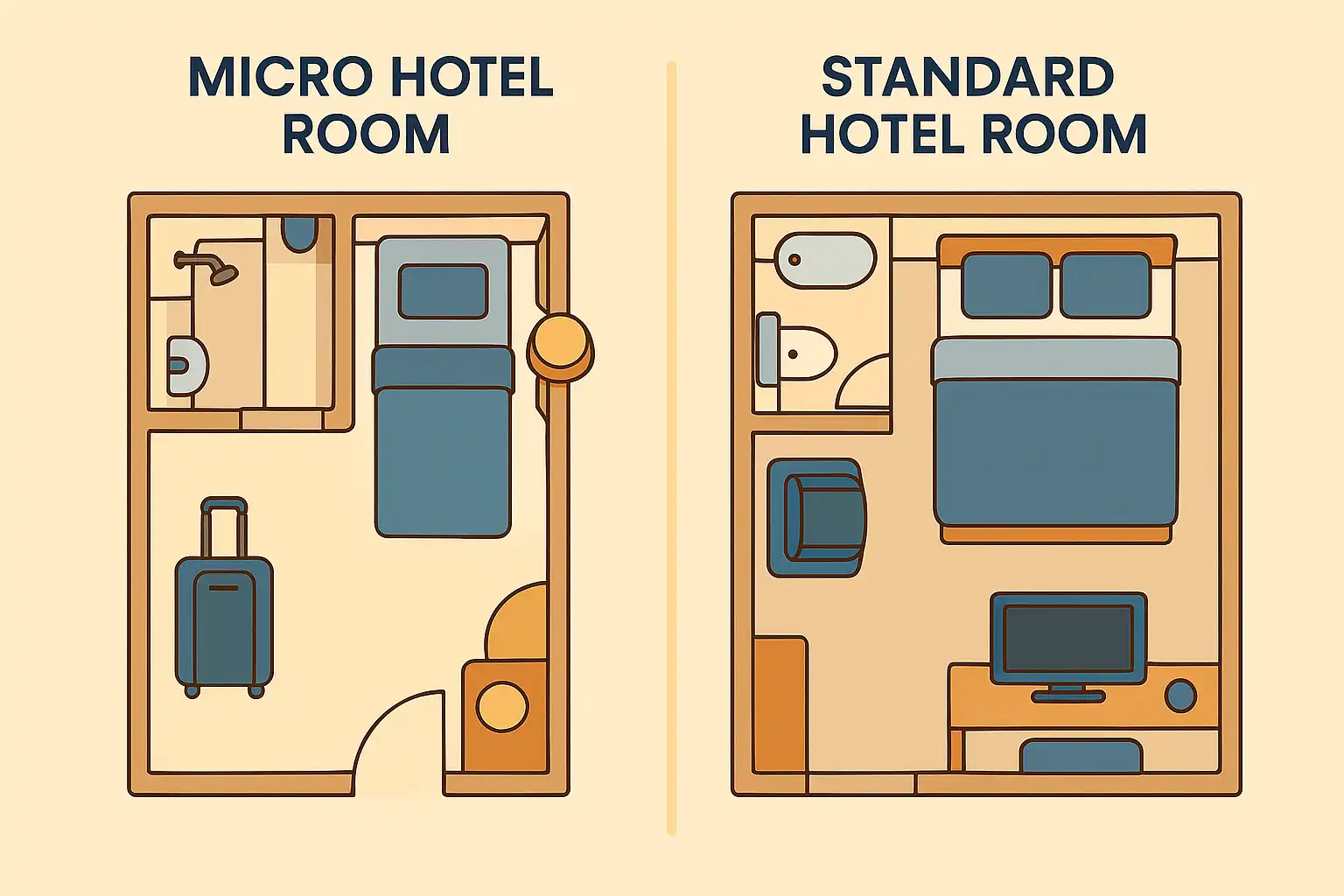
Micro hotels offer compelling advantages that explain their growing popularity among modern travelers, particularly those who prioritize experiences over expansive accommodations.
The most immediate benefit is financial - micro hotel rooms typically cost up to 50% less than standard hotel accommodations in the same locations. This cost reduction stems from reduced real estate footprint, streamlined operations, and efficient space utilization that allows properties to offer competitive rates while maintaining quality standards.
Micro hotels excel at securing prime real estate in expensive city centers where traditional hotels would struggle to offer affordable rates. Properties in Manhattan, Tokyo, Amsterdam, and other major cities provide guests with walking access to business districts, cultural attractions, and transportation networks that would otherwise require premium pricing in conventional accommodations.
Unlike hostel dormitories that sacrifice privacy for affordability, micro hotels provide private rooms with en-suite bathrooms. Solo travelers particularly benefit from this arrangement, gaining personal space and security without paying for unused room area typical in standard hotel accommodations. This is a bit of a difference compared to pod hotels.
The compact format perfectly serves short-term stays, business trips, and urban exploration where guests spend minimal time in their rooms. Business travelers appreciate efficient spaces optimized for productivity, while leisure travelers benefit from affordable access to expensive city centers.
Most micro hotels embrace innovative technology including self check-in systems, digital keys, and smart room controls accessible through mobile apps. These features often surpass traditional hotels in convenience and efficiency, allowing guests to bypass front desk interactions and customize their environment through their smartphones.
While micro hotels offer significant benefits, travelers should understand their limitations to make informed accommodation choices.
The primary challenge involves limited physical space that may feel claustrophobic, especially for travelers accustomed to spacious accommodations. Windowless rooms, which some properties offer to maximize building efficiency, can exacerbate feelings of confinement and impact guest comfort during extended stays.
Couples may find micro rooms challenging for comfortable cohabitation, particularly if both travelers need simultaneous access to bathroom facilities or workspace areas. Similarly, guests with mobility issues may struggle with compact bathroom layouts and limited maneuvering space around furniture.
Minimal storage space presents practical challenges for travelers with multiple luggage pieces or extended stay requirements. The emphasis on efficient design often means sacrificing closet space, drawer capacity, and surface area for personal belongings.
Micro hotels typically operate with fewer amenities compared to traditional hotels, often eliminating room service, concierge services, and extensive dining options. Guests seeking comprehensive hotel services or leisure amenities may find these properties insufficient for their needs.

The best micro hotels transform spatial limitations into design opportunities through creative solutions that maximize functionality and visual appeal.
YOTEL pioneered many innovative approaches including adjustable SmartBeds that transform from seating areas to full sleeping quarters and built-in work desks that fold seamlessly into wall units. These multi-functional pieces allow single spaces to serve multiple purposes throughout the day.
Designers employ various visual tricks to create perceived spaciousness within compact dimensions. Light colors, strategic mirror placement, and floor-to-ceiling windows help rooms feel larger than their actual square footage. These techniques prove particularly effective in windowless rooms where natural light cannot contribute to spatial perception.
Wall-mounted shelves, hidden compartments, and overhead storage maximize available space without encroaching on floor area needed for movement and comfort. Some properties incorporate storage directly into bed platforms, stair systems, and even bathroom fixtures.
The most successful micro hotel designs create rooms that adapt to different activities throughout the day. Sleeping areas convert to workspace environments, entertainment zones transform into dining spaces, and storage systems adjust to accommodate varying guest needs and travel styles.
Modern micro hotels use technology to enhance limited physical space and improve operational efficiency in ways that often exceed traditional hotel capabilities.
Many properties operate with 24/7 self-service check-in kiosks that eliminate front desk interactions while reducing staffing costs. These systems allow guests to complete registration, access room assignments, and resolve basic issues without human intervention, creating streamlined experiences that appeal to tech-savvy travelers.
Comprehensive mobile apps enable guests to control lighting, temperature, and entertainment systems directly from their smartphones. This technology effectively extends guest control beyond traditional hotel room capabilities while compensating for limited physical space through digital convenience and customization options.
Digital keys and contactless payment options eliminate traditional pain points while improving security and efficiency. This is how typically pod hotels and capsule hotels operate. These features became particularly valuable during health-conscious travel periods and continue attracting travelers who prioritize minimal-contact experiences.
Select properties experiment with robot butlers and AI assistants that provide services traditionally handled by human staff. While still emerging, these innovations demonstrate how technology can enhance guest experience within compact environments and streamlined operations.
Several established brands have successfully implemented the micro hotel concept across international markets, each bringing unique approaches to compact hospitality.
Operating 30+ locations across 20 cities worldwide, citizenM maintains uniform 150 square feet rooms that prioritize consistency and quality. Their properties feature distinctive design elements including oversized beds, floor-to-ceiling windows, and curated art collections that create memorable experiences despite spatial constraints. The brand emphasizes sustainability and renewable energy, appealing to environmentally conscious travelers.
Drawing inspiration from first-class airline cabins, YOTEL operates capsule-inspired pods in major cities including NYC, London, Paris, and Amsterdam. Their SmartBed technology and space-saving innovations set industry standards for functional design. Properties often feature communal spaces that extend the guest experience beyond individual rooms.
Marriott’s micro hotel brand targets younger demographics with 150-350 square feet rooms across the US, Europe, and Asia. Moxy Hotels emphasize artistic designs, social atmosphere, and vibrant common areas that encourage guest interaction. The brand benefits from Marriott’s extensive loyalty program and operational expertise.
Focusing on lifestyle experiences, Arlo operates properties in NYC, Chicago, and Miami featuring rooftop terraces, complimentary bike loans, and neighborhood-specific programming. Their approach demonstrates how micro hotels can provide experiential value beyond room accommodations.
This historic property offers one of the most extreme micro hotel experiences with 50 square feet cabin-style rooms that evoke maritime travel heritage. The Jane Hotel proves that ultra-compact accommodations can maintain character and appeal through thoughtful theming and historical significance.
Micro hotels attract specific traveler demographics whose preferences align with compact, efficient accommodations and urban experiences.
Generation Z and Millennial travelers between ages 18-40 represent the core micro hotel demographic. These travelers prioritize experiences over material possessions and demonstrate comfort with minimalist living arrangements. They often value Instagram-worthy design elements and tech-forward amenities over traditional luxury features.
Professional travelers who spend minimal time in hotel rooms benefit significantly from micro hotel efficiency and prime locations. Business travelers appreciate streamlined check-in processes, reliable wifi, and proximity to business districts without paying for unused space and amenities.
Travelers seeking affordable access to expensive cities find micro hotels enable exploration of destinations previously beyond their budget ranges. This includes students, young professionals, and international travelers who prioritize location and experiences over spacious accommodations.
Modern backpackers and digital nomads often prefer micro hotel privacy and amenities over hostel compromises while maintaining budget consciousness. These travelers appreciate flexible booking options and technology integration that supports mobile lifestyles.
Travelers experiencing extended layovers, flight delays, or requiring rest during transportation connections benefit from micro hotels’ proximity to airports and transportation hubs. Hourly booking options provide perfect solutions for these specific needs.

Selecting appropriate micro hotel accommodations requires evaluating specific factors that impact comfort and satisfaction within compact spaces.
Check actual room dimensions and examine multiple photos to avoid misleading marketing representations of the average hotel room. Some properties may exaggerate spaciousness through wide-angle photography or selective imaging. Reading guest reviews specifically commenting on space comfort provides realistic expectations.
Prioritize rooms with natural light and windows whenever possible. Windowless micro rooms can feel significantly more confining than their dimensions suggest, particularly for guests sensitive to enclosed spaces. Properties with floor-to-ceiling windows create better experiences despite identical square footage.
Look for bedside surfaces and multiple charging stations positioned near sleeping areas. Micro hotel rooms require strategic placement of power outlets and flat surfaces for devices, beverages, and personal items. Inadequate surface space creates frustrating experiences in already-limited environments.
Consider access to communal spaces like lounges, bars, or rooftop areas that extend the usable space beyond individual rooms. Properties with well-designed common areas can compensate for compact private accommodations by providing additional space for relaxation, work, and social interaction.
Verify storage options for luggage and personal belongings through detailed room descriptions and guest photos. Inadequate storage significantly impacts comfort in compact spaces, making organization and accessibility crucial factors in property selection.
Read reviews focusing specifically on space comfort rather than only location and price factors. Guest comments about claustrophobia, storage adequacy, and room functionality provide valuable insights into daily comfort levels within compact accommodations.
The micro hotel trend represents a significant evolution in urban hospitality, offering travelers new ways to experience cities without traditional accommodation costs. As major cities continue growing more expensive and travelers increasingly prioritize experiences over space, micro hotels provide practical solutions that align with modern travel preferences.
These compact accommodations prove that thoughtful design, strategic technology integration, and prime locations can create satisfying hotel stays within dramatically reduced square footage. For travelers willing to embrace minimalist accommodations in exchange for significant cost savings and urban access, micro hotels offer compelling value propositions that traditional hotels struggle to match.
Whether you’re planning a short business trip, exploring an expensive city on a budget, or simply curious about this innovative accommodation format, micro hotels provide unique opportunities to experience urban travel differently. Start with established brands like citizenM or YOTEL for your first micro hotel experience, and discover how compact can be comfortable when designed with purpose and precision.