Key Card Entry System for Hotels: Modern Access Control
 Mika Takahashi
Last updated Feb 11, 2026
Mika TakahashiA key card entry system is an electronic access control system that has changed the way hotels keep their guests' rooms safe and let them inside the building. These systems use programmable cards or fobs instead of regular keys. These cards or fobs talk to electronic door locks using radio frequency identification (RFID) or magnetic stripe technology. Key card access systems are the most common way for modern hotels to meet security needs while also making things easy for guests.
This guide talks about hotel-specific key card entry systems, such as the many types of systems, how they can work with property management systems like Prostay, the security benefits they offer, and things to think about while setting them up. The article is only about hospitality applications and doesn't include residential or general commercial property security applications. Hotel owners, property managers, hospitality IT specialists, and decision-makers who are looking at modern access control solutions will find useful advice on how to choose and set up a system.
When guests check in, key card entry systems encode temporary credentials into cards. This lets guests get into their allocated rooms and other approved areas until check-out, when the system automatically takes away their access rights.
You will discover more about key card access systems by the end of this guide, as well as
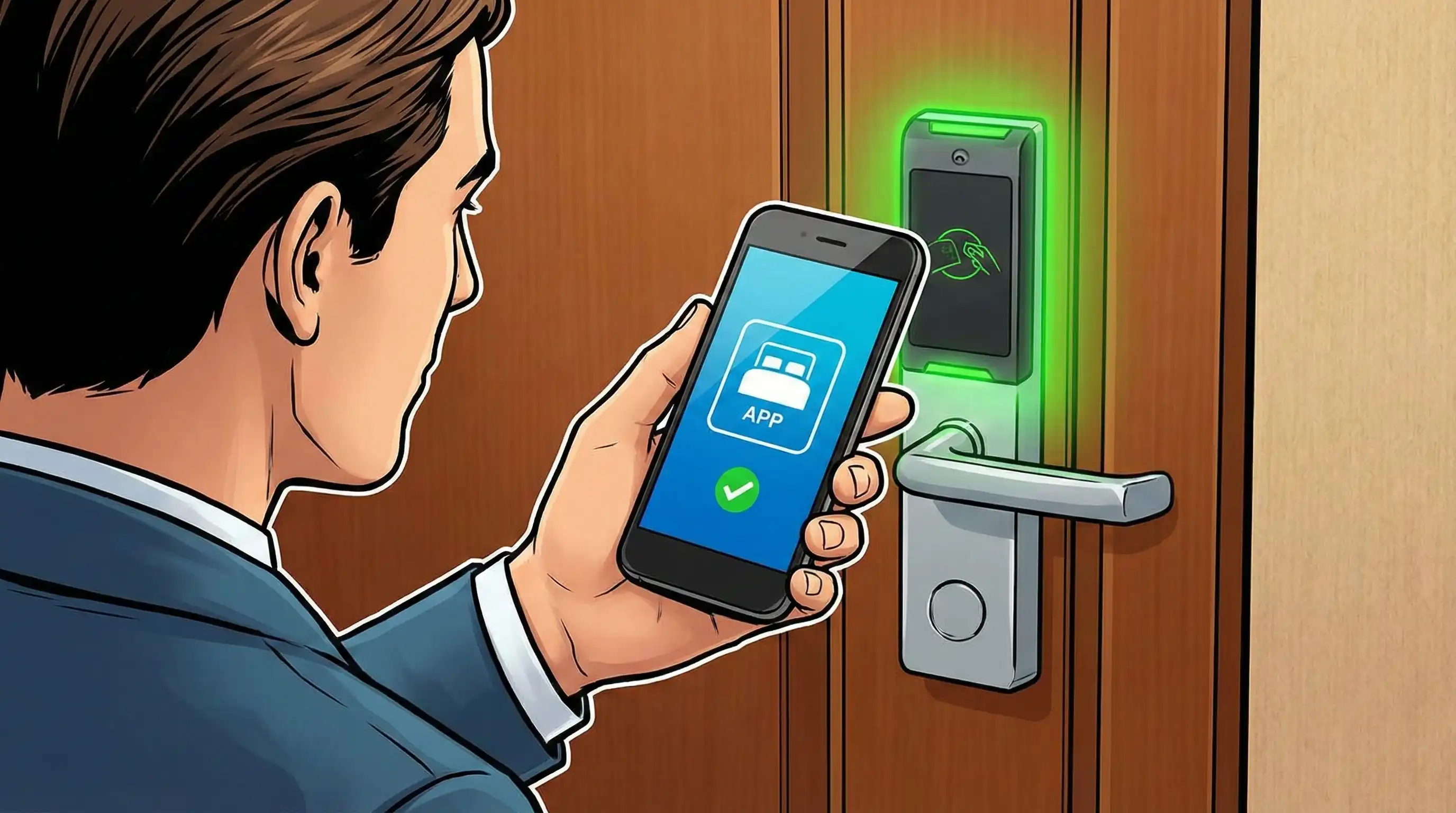
A key card entry system is a way to regulate who can get into guest rooms, common areas, and restricted areas by using programmed electronic cards instead of regular keys. The system keeps track of access rights digitally, so hotel workers may give, change, and take away permits without having to exchange keys.
This method solves a number of ongoing problems for hotel operations, such as getting rid of the cost and security risk of lost keys, allowing flexible access scheduling, and making audit trails of entrance and exit processes throughout the property.
Four parts that work together make up a comprehensive door access card system. Hotel key cards keep digital credentials on a magnetic stripe, in an RFID microchip, or using NFC technology. When a guest shows their card, card readers at the entry points pick up and read these credentials. Controllers are the brains of the system. They check credentials against the access database and decide whether to let someone in or not. Electronic door locks get signals from controllers to unlock doors and keep guest rooms safe.
Encrypted communication protocols let these parts talk to each other. The reader takes the credential data and sends it to the controller when a guest touches or swipes their card. The controller checks the credential against stored rights, which include validating the room assignment, valid dates, and time limits. If the credential is legitimate, the controller tells the lock to open.
There is a set way that most guests go through a key card door entrance system. When a guest checks in, the front desk staff programs a blank card with the guest's room key and any other privileges, like access to the pool or fitness facility. The programming gives each guest a unique identifier that is linked to their reservation in the property management system.
When the guest gets close to their room, they show the card to the reader. The system checks the credential, makes sure the current date is inside the reservation period, and unlocks the door, usually in one to two seconds. The system keeps a digital record of every access attempt during the stay for security reasons.
The system immediately turns off the card's access rights after you check out. If a guest loses their card while they are staying, staff can quickly cancel the lost credential and provide them a new one without having to rekey the lock.
In the past, if you lost your keys, you had to replace the lock to keep your home safe. This automated lifecycle management is a big change from that.
Hotels have a choice of many key card systems, each of which has its own benefits for different types of properties and business needs. Property managers can choose card access control systems that fit their security needs and budget by knowing about these possibilities.
With RFID technology, guests don't have to touch the scanner; they may just hold or tap their card near it instead of inserting or swiping it. The reader creates an electromagnetic field that powers a passive chip inside the card. This chip then sends its unique identifier back to the reader.
RFID key card access has a number of operational benefits for hotels. Cards survive longer since they don't have to deal with the wear and tear that comes with swiping mechanisms. Guests find the tap-and-go interaction easy to understand, which cuts down on the aggravation that comes with swiping in the wrong direction. RFID systems also offer more advanced encryption, which makes them safer against credential cloning.
Industry forecasts suggest that the utilization of RFID technology will see exponential growth in the coming years, propelled by its escalating popularity in the hospitality sector and other industries necessitating safe access control solutions.
Magnetic stripe cards store credential information on a strip of magnetic material that runs down one edge. When guests swipe their card through a slot reader, the reading head picks up the encoded information as the stripe passes over it.
These swipe card entry systems are a cheap way for smaller hotels or properties with a lot of cards to let people in. The cards are cheap to make, which makes them useful in places where cards are lost often and often. But cell phones and other everyday goods can demagnetize magnetic stripes, which could be a problem for guests.
Near Field Communication (NFC) builds on the ideas behind RFID to let smartphones connect. Instead of carrying actual key cards, visitors utilize the hotel app on their phones to get in using digital credentials.
Mobile key integration is the part of hotel access control that is increasing the fastest. Guests like that they don't have to go to the front desk at all; they can get their credentials before they arrive, which lets them go straight to their room. Hotels save money on card inventory and make check-in easier for guests.
NFC systems can work with regular key cards, which lets properties meet the needs of their guests. Some guests want physical cards, while others anticipate mobile access to be commonplace.
This new technology is directly related to how hotels combine access control with their property management systems.
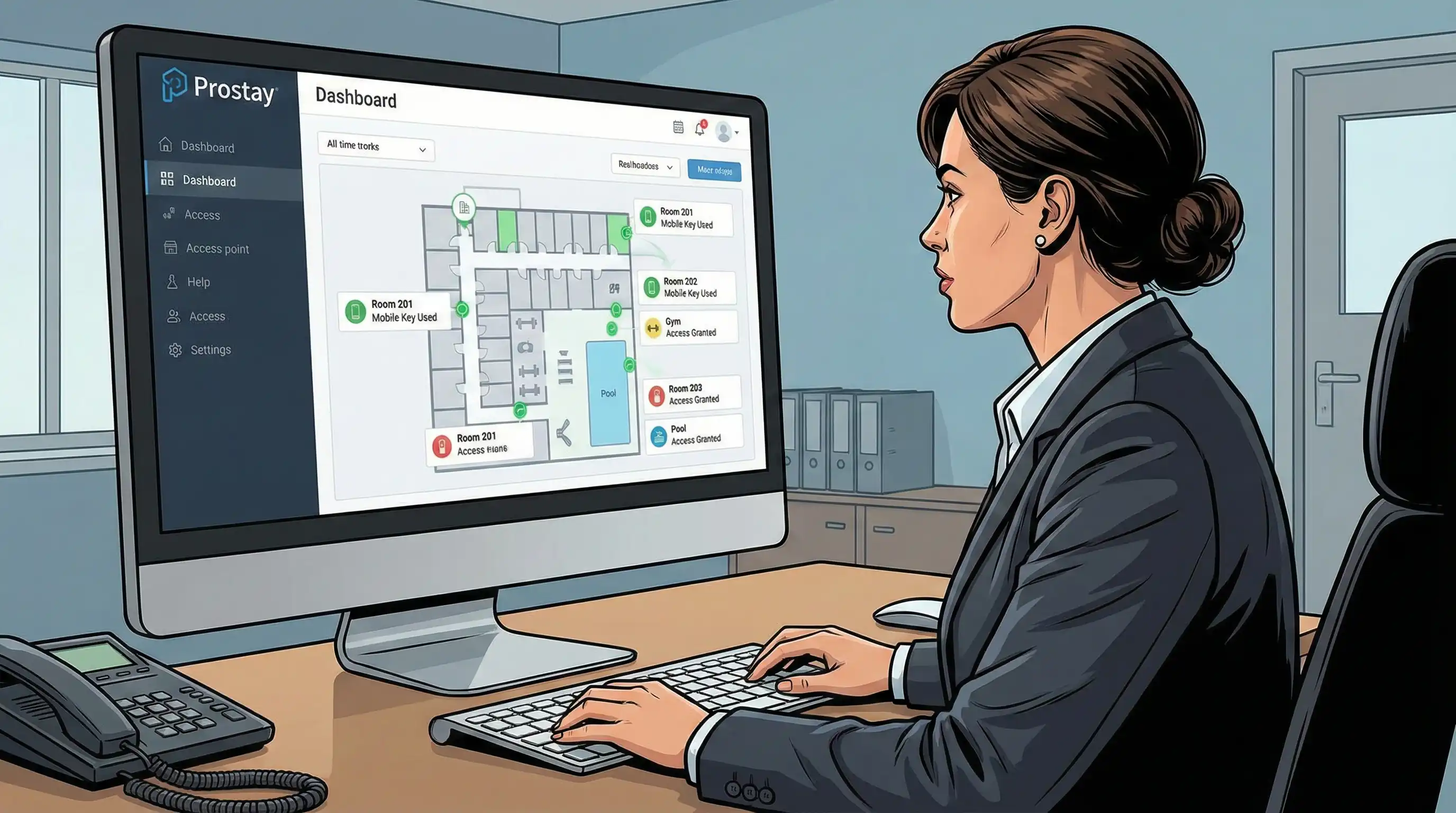
Key card access control really works best when it is linked to hotel property management systems. When access card systems software works with PMS platforms, properties may automatically manage credentials, keep guest data in sync, and combine operational reports.
When key card access systems and PMS platforms like Prostay work together, it gets rid of manual tasks that slow down check-in and make mistakes possible. When a reservation is confirmed, the PMS sends the access control solution the room assignment and stay dates automatically. The front desk workers just encode a blank card; the credential settings are already set.
This synchronization lasts for the whole time the guest is there. Changes to rooms instantly update access rights. Leaving early means that credentials are immediately revoked. Late check-outs make access windows longer without staff help.
Integrated systems not only make operations more efficient, but they also allow for tracking access, which helps with revenue management. Properties may keep track of how often and when guests use the amenities at their facilities. This information helps people decide what services to offer, how many staff members to hire, and when to offer upsells.
There is a set order for connecting key card entry systems to the current IT architecture:
| Criterion | Traditional Keys | Integrated Key Card Systems |
|---|---|---|
| Guest experience | Manual key pickup required; lost key requires locksmith | Automated credential delivery; instant replacement available |
| Security features | Physical key copying possible; lost keys compromise security | Immediate revocation; encrypted credentials resist cloning |
| Operational efficiency | Manual tracking; rekey costs for turnover | Automated programming; digital audit trails |
| Cost management | Ongoing rekey expenses; key inventory overhead | Higher initial investment; lower ongoing maintenance |
For most properties with more than 20 rooms, the initial cost of integrated card key access systems is worth it within 18 to 24 months because they make the property safer and more efficient.
Knowing what problems can come up during implementation helps properties get ready for a successful launch.
Installing key card door locks in a hotel that is already open takes careful planning to keep guests happy and staff working during the changeover. There are some problems that are likely to come up during implementation.
When there are a lot of visitors checking in, card programming issues or reader problems can make things hard for both guests and front desk staff. Proactive mitigation includes setting up backup encoding stations, teaching personnel how to use manual override, and planning reader installations at times when there aren't many people around. Keeping a limited stock of pre-programmed master cards on hand lets guests in right away while you work on fixing problems with the main system.
The front desk, housekeeping, and maintenance departments all employ key card entry systems in different ways. Good training focuses on workflows that are relevant to a person's job instead of giving a general overview of the system. Staff at the front desk need to know how to program and fix problems with credentials. Housekeeping needs to know about time and sector access limits. Maintenance staff have to control who has access to the hardware and fix any problems that come up. When you first set up a system, the technical support services from the providers should include training on-site.
Older property management systems might not have modern API features, which makes it harder to connect them to newer access control systems. Some solutions are middleware platforms that connect older PMS installations to newer card access systems, phased migration approaches that keep both systems running during the change, and vendor alliances that offer integration support. To make sure that the new entrance system works with the current security systems, such as integrated video surveillance and visitor management platforms, all system providers need to work together early on.
Planning ahead for these problems avoids expensive delays and speeds up staff adoption.

Compared to regular keys, key card entry systems make hotels safer, more efficient, and better for guests. Automated credential management, PMS integration, and digital access logging all work together to solve recurring problems with security in the hospitality industry while also lowering ongoing costs.
Properties that are thinking about key card access should do these things right away:
Hotels should keep an eye on changes in mobile key expansion, biometric control systems, and cloud-based administration platforms as hotel access control technology continues to change. These technologies will increasingly work with key card credentials to add extra security and make things easier for guests.
Vendor Evaluation Checklist
PMS Integration Requirements Template
ROI Calculation Considerations