Hotel Room Layout Design: Functional & Profitable Guest Spaces
 Mika Takahashi
Last updated Dec 17, 2025
Mika TakahashiHotel room layout refers to the thoughtful arrangement of walls, pathways, furniture, fixtures, and amenities within guest rooms. Unlike room configuration, which focuses on bed types, or styling, which deals with colors and fabrics, layout zeroes in on how the physical space is organized to enhance both the guest experience and operational efficiency.
A great layout strikes a balance among several important factors: guest comfort, smooth housekeeping, adherence to safety regulations, brand identity, and maximizing revenue. Think about the difference between a cozy 28 m² city hotel room in London with a king bed set perpendicular to the window and a compact work desk, versus a spacious 42 m² resort suite in Bali that boasts a separate lounge and a private balcony overlooking lush gardens. Both work well because their spatial design is tailored to their guests’ unique needs and market positioning.
This guide dives into the key principles of designing hotel room layouts—from legal requirements to the latest trends. While hotel floor plans cover the entire property, here we focus on optimizing the guest room itself—the space that most directly influences daily guest satisfaction and how efficiently the hotel operates.
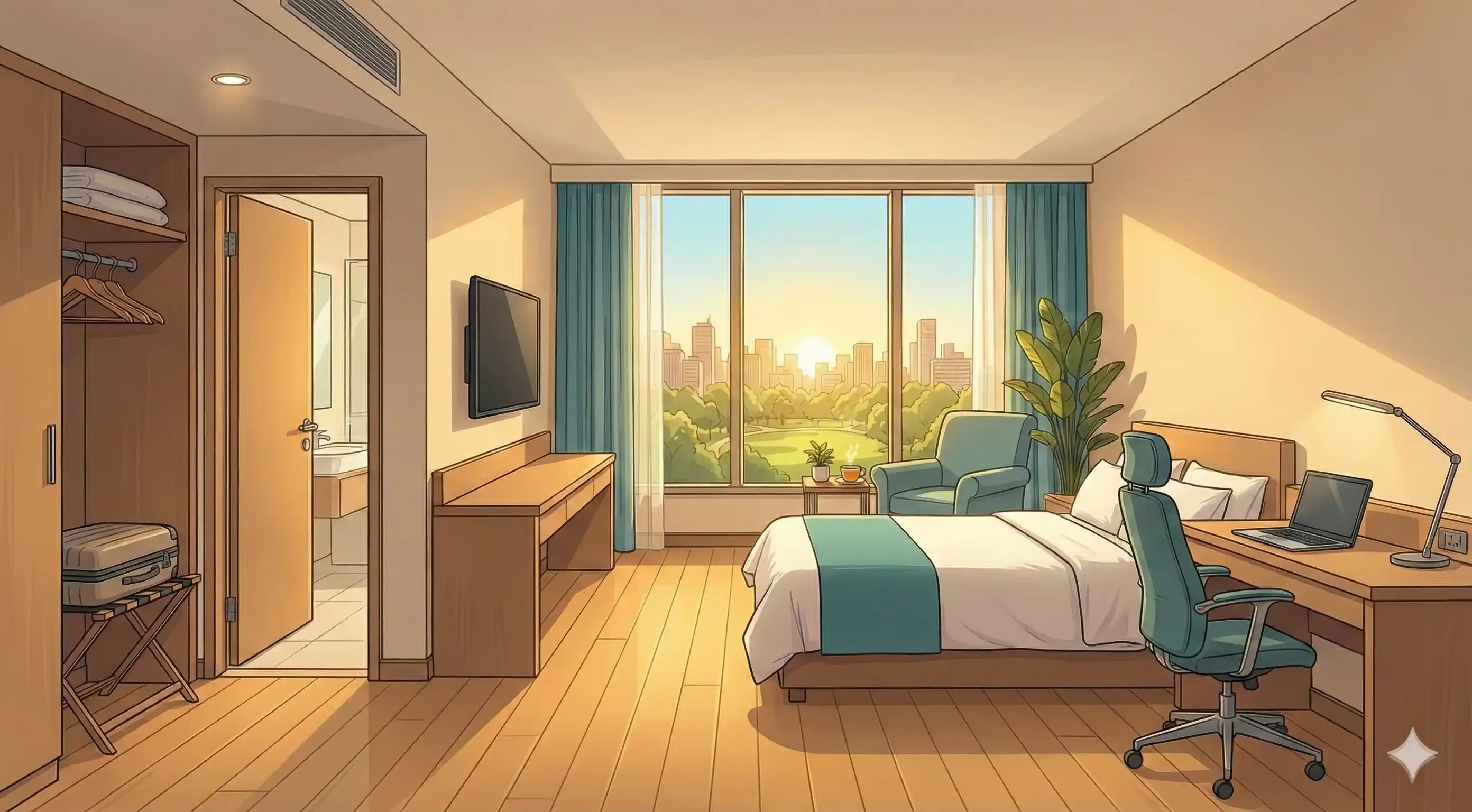
The way a hotel room is laid out can make or break guest reviews, affect average daily rates (ADR), and influence how long guests choose to stay—especially now in the post-2020 “work from anywhere” world. Today’s travelers expect rooms that effortlessly shift between restful sleep, productive work, and relaxing downtime. A poorly planned layout simply won’t cut it.
Consider some real-life guest scenarios: Two business travelers sharing a room need separate laptop workspaces without getting in each other’s way. Parents want clear sightlines to their kids’ beds while keeping their own privacy intact. Remote workers require dedicated spots for video calls with professional-looking backgrounds and solid connectivity. These examples show how smart spatial organization directly boosts guest satisfaction and encourages repeat visits.
Here are four big reasons why layout matters:
For example, US business travelers often expect dedicated work surfaces with multiple power outlets near both beds and desks. This shapes layout choices across midscale and upscale hotels. A clever 20 m² room with smart zoning and easy flow can feel more luxurious than a cramped 30 m² space where guests constantly dodge awkward furniture or struggle with poor lighting.
Whether you’re looking at a tiny 15 m² budget room in Tokyo or a sprawling 60 m² luxury suite in Dubai, most hotel rooms revolve around a similar set of core functional areas. Knowing these basics lays the groundwork for smart layout planning no matter the market or property type.
Entry and circulation zone is the gateway from the hallway to the guest’s private space. It needs durable flooring to handle luggage and wet shoes, plus features like keycard power switches, coat hooks, luggage spots, and clear sightlines so guests can orient themselves without the bed immediately in view.
Sleeping area anchors the room, with bed placement carefully considered in relation to doors, windows, TVs, and reading lights. Power outlets on both sides of the bed, blackout curtains, sound insulation, and temperature control all play vital roles in guest comfort.
Storage and luggage area must handle hanging clothes and open suitcases without blocking pathways. Wardrobe door swings, luggage bench spots, and accessibility for guests with different mobility levels are key considerations.
Work/dining zone offers a dedicated surface for laptops, meals, and personal items, complete with task lighting and connectivity. Positioning near natural light, glare control, and ergonomic seating all affect how functional and satisfying this space feels.
Bathroom and dressing zone varies widely—from fully enclosed to partially open or integrated with the bedroom—depending on guest expectations and available space. Privacy, safety, ventilation, and maintenance access drive these layout choices.
Optional balcony or outdoor area requires smooth indoor-outdoor transitions, weatherproofing, security, and maximizing views and natural light.
Comfort and accessibility standards typically call for clearances like:
These zones and clearances can be mixed and matched to create standard rooms, studios, suites, and extended-stay apartments—each tailored to different guest behaviors and lengths of stay.
Designing a hotel room layout means more than just placing furniture—it requires strict adherence to building codes, fire safety rules, and accessibility standards that can vary widely depending on where you are. These aren’t just guidelines; they’re legal must-haves that protect guests and shield property owners from liability.
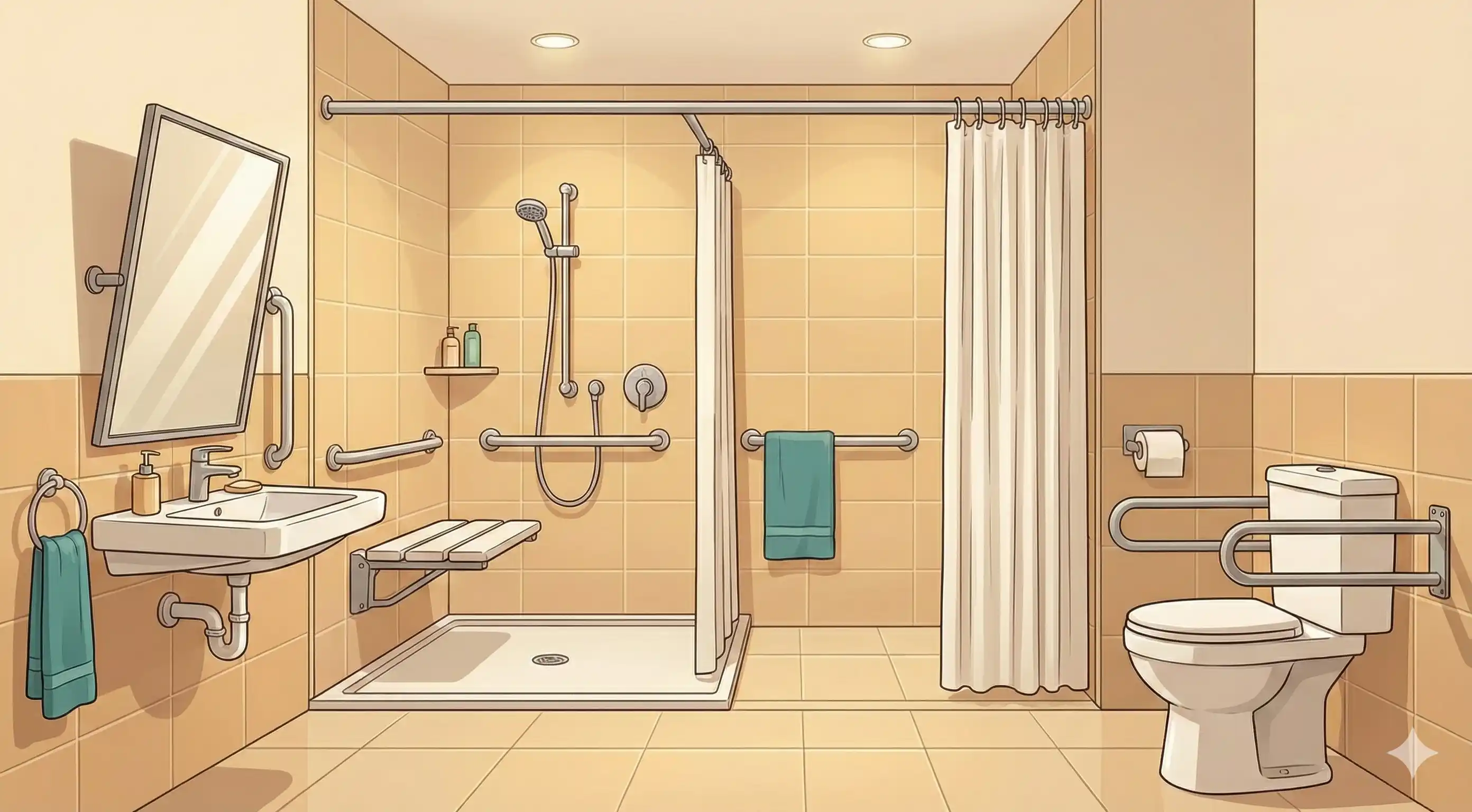
When it comes to accessibility, certain layout details are essential. Doors usually need to be at least 32–36 inches (81–91 cm) wide to comfortably accommodate wheelchairs. Spaces where guests need to turn around, like bathrooms or beside beds, require about 150 cm of clear floor area. Roll-in showers must be designed without curbs and include grab bars placed at specific heights for safety.
Fire safety also plays a big role in room design. It’s crucial to keep exit paths clear—no furniture blocking the way. Smoke detectors and sprinklers influence ceiling heights and can limit how tall furniture can be. Electrical appliances, especially in extended-stay rooms, must be positioned carefully to avoid interfering with safety systems.
Take, for example, an accessible king room in a New York City hotel from 2024. It features a spacious bathroom with a roll-in shower and fold-down seat, plenty of room to move around the bed, lowered closet rods and light switches for ease of use, and furniture arranged to meet clearance requirements—all while maintaining a functional and welcoming space.
Beyond the room itself, building codes also specify corridor widths—usually between 1.5 and 2 meters—to ensure smooth guest movement and safe emergency exits. The layout inside each room must align with these circulation rules, balancing turning radii and safety clearances.
To avoid costly surprises during construction, it’s wise to consult local code experts or brand technical teams early on. Accessibility and safety regulations are always evolving, so professional guidance is key to staying compliant and managing risks effectively.
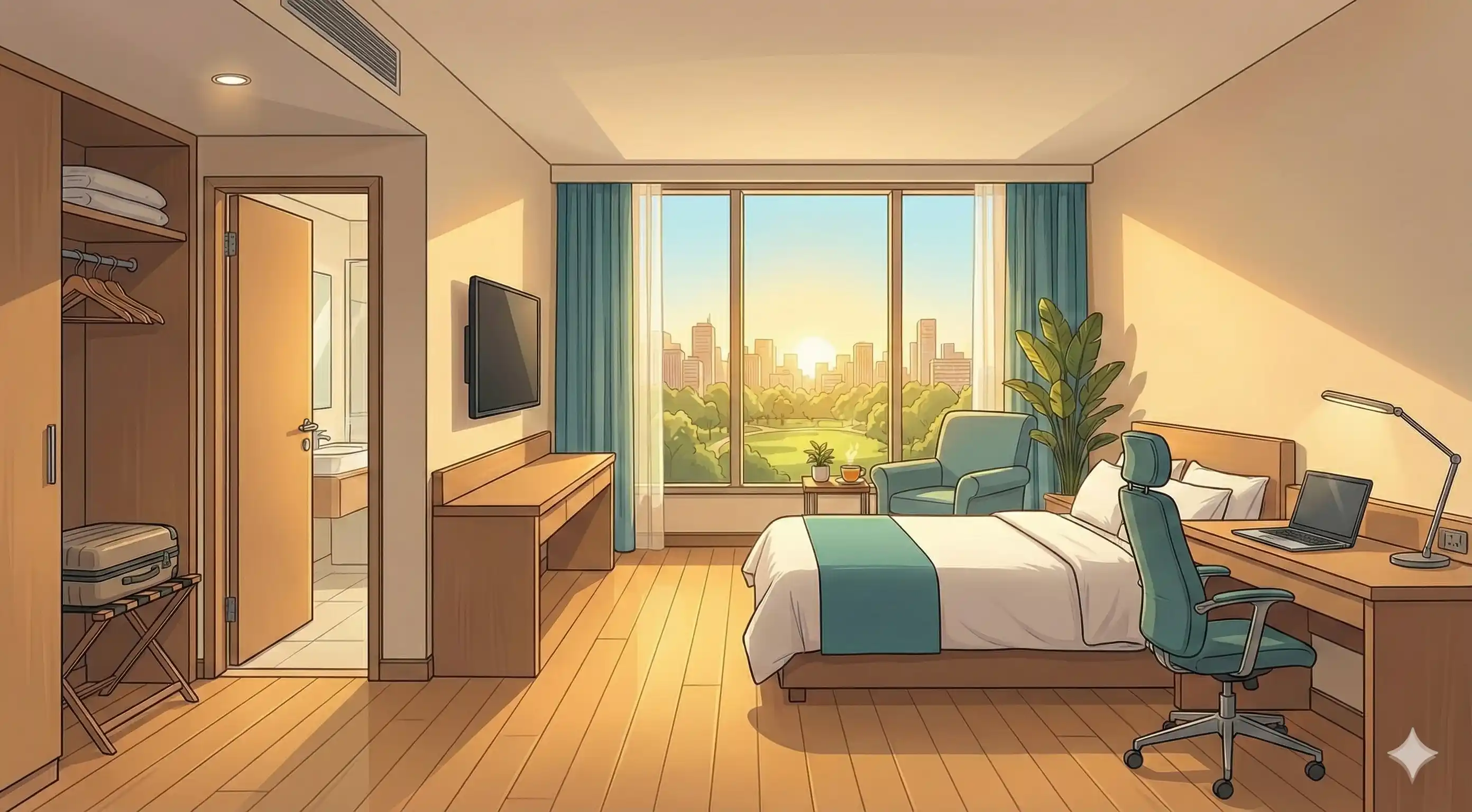
How a hotel room feels isn’t just about its size—it’s about how the space is shaped and how you move through it. Getting these spatial principles right lets interior designers craft rooms that feel comfortable and practical, even when square footage is tight.
Proportions affect how roomy a space feels and how flexibly you can arrange furniture. For instance, a narrow 3 x 7 meter room (21 m²) limits bed placement options and natural light flow, while a squarer 4 x 5.25 meter room of the same size offers more layout possibilities and better light distribution. Neither is better outright; each needs a tailored approach to maximize comfort.
Flow is all about the natural path guests take as they move—from the door to the wardrobe, bathroom, bed, and work areas. A good flow avoids awkward corners and blocked walkways, letting guests move effortlessly. It also matters for housekeeping and maintenance staff, who need logical routes to clean and service rooms efficiently.
Gaps mean the clearances between furniture and walls that make a big difference in comfort and accessibility:
Modern digital floor plan tools help designers test these clearances quickly. Using accurate furniture dimensions (not just generic icons) and 3D walkthroughs lets teams check sightlines, spaciousness, and storage access before building begins.
These spatial guidelines apply equally to small budget rooms and large suites alike—attention to proportion, flow, and gaps is essential to deliver both guest satisfaction and smooth operations.
A well-designed hotel room layout breaks the space into clear zones that cater to different guest activities: sleeping, working, relaxing, grooming, storing belongings, and sometimes cooking or dining. Defining these zones helps guests intuitively use the room while making the most of limited space through smart furniture placement and lighting.
The sleeping zone usually occupies the quietest corner, tucked away from hallway noise and service areas. It gains definition with headboards, bedside lamps, area rugs, or ceiling details. Sometimes, the bathroom or wardrobe acts as a sound buffer to keep the sleeping area peaceful.
The working zone needs a dedicated desk or table with good task lighting, plenty of power outlets, and ergonomic seating. Business hotels often give this zone equal importance as the sleeping area, while leisure-focused properties may keep it smaller or optional.
The relaxation zone centers around comfy seating like armchairs or sofas, oriented toward windows, TVs, or other focal points. Side tables nearby provide handy spots for drinks and personal items, complemented by layered lighting for both reading and ambiance.
The grooming zone might be fully enclosed in the bathroom or partially open with vanities in the bedroom. Whether it’s private or integrated depends on cultural norms and the hotel’s market positioning.
The storage zone is usually near the entry for easy access to luggage and coats. Efficient storage keeps clutter out of sight and circulation paths clear.
For example, a 26 m² business hotel room in Frankfurt smartly zones entry and wardrobe with durable flooring, places a compact bathroom pod along the corridor wall, positions the bed and TV with acoustic separation, and maximizes natural light for the window-side work and lounge areas. Each zone has a clear purpose while supporting smooth movement between them.
In smaller rooms, zones often overlap thanks to multifunctional furniture—like a wall-mounted desk that doubles as a vanity or storage ottomans that also serve as seating and hide sofa beds. Acoustic zoning becomes even more important here to keep work areas quiet and separate from noisy building systems.
Hotel room layouts usually fall into a few familiar categories, each designed to meet different guest needs, lengths of stay, and market demands. Knowing these types helps developers and designers pick the right layout approach to suit their guests and optimize operations.
Standard room layout is the classic choice for most 3-4 star business and leisure hotels, typically sized between 18 and 28 m² in city settings. These rooms focus on efficiency and consistency, making them ideal for high-turnover properties catering to short-term visitors.
Studio layout blends sleeping, living, and sometimes cooking areas into one open space, usually around 20–30 m². This style is popular in compact urban hotels and trendy micro-hotel concepts. The key to success here lies in smart multifunctional furniture and clear, unobstructed pathways.
Suite layout steps up the luxury with separate sleeping and living spaces ranging from 35 m² to 60 m² or more. Junior suites offer partial separation within a larger room, while full suites provide completely distinct rooms. These layouts appeal to guests staying longer, celebrating special occasions, or simply seeking extra space.
Family and connecting room layouts are designed for groups or families, featuring twin beds, bunk beds, or adjoining rooms connected by interior doors. Sizes vary from 28 to 40 m², depending on bed count and safety requirements, providing flexibility without sacrificing comfort or privacy.
Extended-stay and aparthotel layouts cater to guests staying a week or more, offering full kitchens, dining areas, and ample storage in studios or one-bedroom setups sized between 25 and 40 m². These spaces focus on residential comfort and practical self-sufficiency.
Many hotels mix and match these types on the same floor to meet diverse guest preferences and maximize revenue. For example, a floor might have 70% standard rooms, 20% suites, and 10% accessible rooms, balancing operational efficiency with guest convenience.
Market positioning plays a big role in layout choice—luxury resorts lean heavily on suites and specialty rooms, while budget-conscious business hotels often stick to streamlined standard layouts to keep costs down and operations simple.
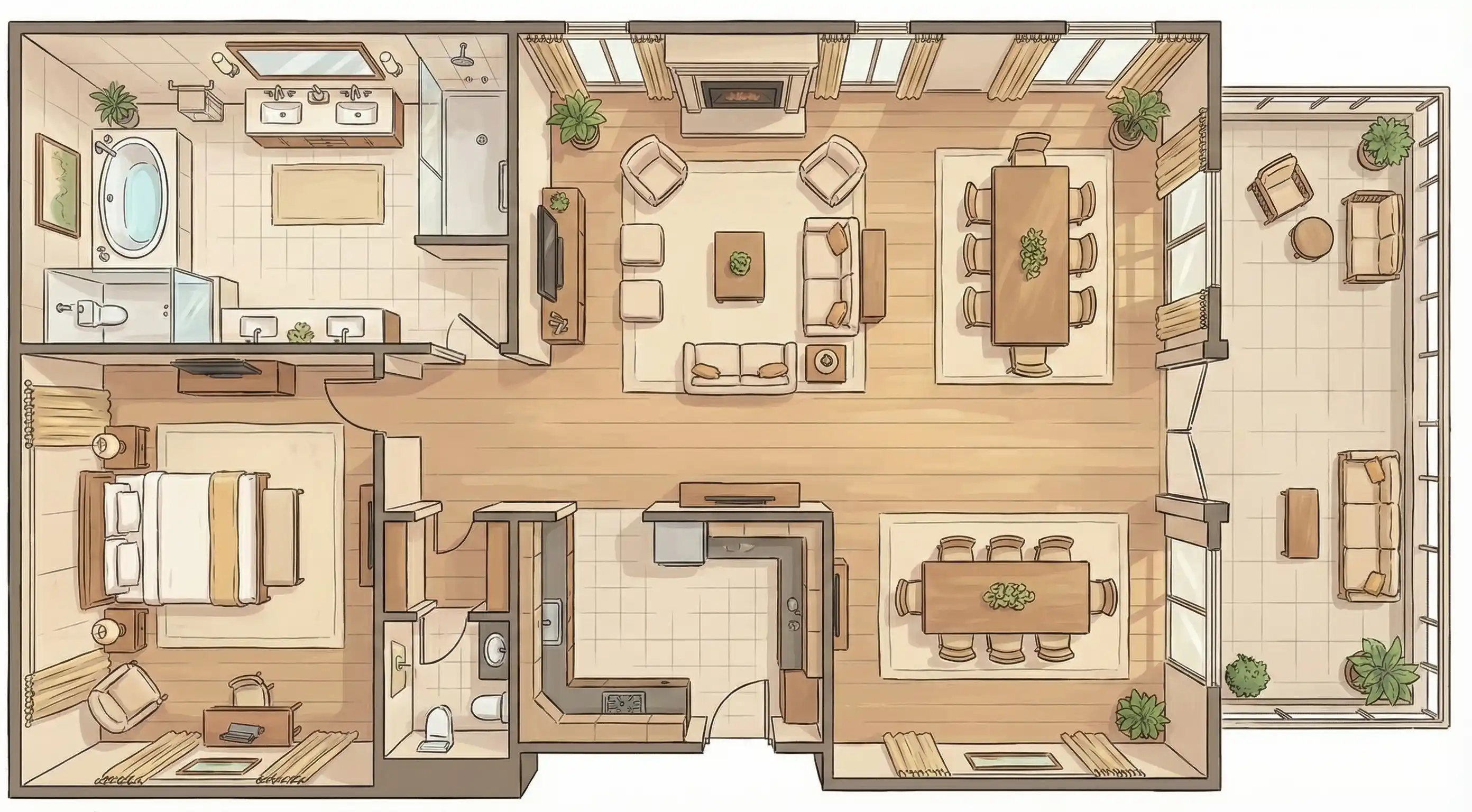
Standard hotel rooms are the workhorses of the hospitality world, especially in 3-4 star business and leisure hotels. Typically sized between 18 and 26 m² in urban locations, these rooms serve the majority of short-stay guests. Their layouts emphasize operational efficiency, cost control, and guest familiarity rather than bold design statements.
The typical rectangular layout features an entry corridor with wardrobe and bathroom along one side. The bed usually sits perpendicular to the window wall, with the TV mounted opposite. A compact desk and seating area near the window take advantage of natural light. This setup creates a clear path from the door to the window while maintaining privacy by keeping the bed out of direct view from the corridor.
For example, a 24 m² king room in a Chicago 4-star hotel built in 2019 places the bed centered along the long wall, leaving a 1.2 m circulation space at the foot leading to a work area by the window. The bathroom occupies 3.5 m² along the corridor, and a compact wardrobe near the entry keeps the circulation route clear.
Key design choices in standard rooms include desk placement—whether under the wall-mounted TV, on a separate wall, or replaced by multifunctional consoles that double as dining, work, and storage surfaces. Wardrobe options range from full closets with doors to open rails with integrated shelving, each affecting cost and perceived space.
Standard layouts offer many benefits: predictable guest expectations, streamlined housekeeping, efficient mechanical and electrical setups, and easier staff training. However, they can feel a bit generic and offer limited chances for brand differentiation or premium positioning compared to suites or specialty rooms.
That said, lifestyle hotel brands have started to evolve standard layouts by adding features like platform beds, integrated tech panels, and flexible furniture systems—keeping the operational advantages while injecting fresh style.
Studio layouts pack sleeping, living, and sometimes kitchen functions into one open space, usually between 20 and 30 m². They’re growing in popularity in dense urban hotels, micro-hotels, and lifestyle brands targeting younger travelers and shorter stays.
Success in studios hinges on smart zoning without physical walls. Beds are often placed against one wall to maximize open floor space. Compact kitchenettes near entries allow easy restocking and proper ventilation. Dining and work tables are positioned to soak up natural light, while open wardrobes along circulation paths maintain visual flow.
Take a 21 m² studio in a 2023 Amsterdam micro-hotel: it features a wall bed that folds up during the day to reveal a sofa, creating a versatile space for both rest and relaxation. The kitchenette sits near the entry with an overhead exhaust system tied into the building’s ventilation, and a mobile work table doubles as a dining surface.
Circulation must remain clear—from door to window—without obstacles like chairs or luggage blocking the way. Storage solutions like under-bed drawers, wall shelves, and hidden compartments keep clutter at bay.
Special considerations include managing noise and odors since kitchenettes share space with sleeping areas. Good ventilation, quiet appliances, and smart placement of cooking zones relative to beds ensure guest comfort during longer stays.
Studios appeal especially to budget travelers, digital nomads, and urban professionals who want hotel amenities without paying for extra square footage. In expensive cities, every square meter counts, making studios a smart choice.
Suites represent the upscale end of hotel room layouts, offering more space and sophisticated zoning to create luxurious experiences that command higher rates. Junior suites keep sleeping and living functions within a larger single room, while full suites provide separate bedrooms and living areas, often exceeding 55 m².
A 40 m² junior suite in a 5-star Paris hotel might position the bed near windows for views, with a seating area of sofa and armchair at the foot. A freestanding bathtub visible from the sleeping area serves as a design highlight, while a separate enclosed water closet ensures privacy.
Full suites get more complex: a 55 m² one-bedroom suite in a Dubai business hotel might feature a foyer leading into a living room with sofa, armchair, and executive desk; a powder room accessible from the living area; a separate bedroom wing with walk-in closet and en-suite bathroom; and service doors allowing housekeeping access without disturbing guests.
Luxury feels come from generous circulation spaces that evoke a residential vibe, dual bathroom access, dedicated luggage and dressing areas separate from social zones, and carefully planned sightlines that balance privacy with openness.
Service circulation is key in suites—room service, housekeeping, and maintenance need efficient access to multiple zones without crossing private sleeping areas. Living spaces should accommodate service carts, while bedrooms have independent access for turndown and maintenance.
Suites also allow for extras like wet bars, wine fridges, advanced tech systems, and dedicated work areas. These features justify premium pricing and create memorable stays that encourage guest loyalty and positive reviews.
When it comes to family and group stays, hotel room layouts need to be flexible enough to comfortably and safely accommodate multiple guests without sacrificing privacy or personal space. These setups cater to a wide range of needs—from business colleagues sharing costs to families with kids who need supervision and safety features.
Twin layouts are designed for two guests with separate beds, so spacing is key. Ideally, beds should be 60–90 cm apart to give each guest their own comfort zone while still allowing easy access. A shared nightstand between beds offers convenient storage, and individual reading lights and power outlets make sure everyone can enjoy their personal space without disturbing the other.
Connecting rooms take this a step further by linking two standard rooms with an interior door. This arrangement is perfect for families or groups who want both shared social space and private retreats. When planning these layouts, soundproofing around the connecting door is crucial, as is thoughtful placement to avoid noise disruptions, especially near sleeping areas.
For example, imagine a 32 m² family room at a Mediterranean resort: parents have a king bed tucked away from the entry, kids sleep safely in custom bunk beds with built-in safety rails and their own reading lights, blackout curtains on tracks create flexible separation, and there’s plenty of floor space for play and extra luggage storage.
Safety is a top priority in family layouts. Heavy furniture should be securely anchored and kept away from play areas, especially around bunk beds. Bathrooms need childproof features like slip-resistant floors and rounded corners. And clear emergency exit paths must be maintained, even with the extra occupants and belongings.
Storage needs also grow with families. Multiple wardrobes, expanded luggage space, and easy access to children’s items help keep things organized without disrupting adult belongings. Some hotels go the extra mile by providing cribs, high chairs, and safety gear, all integrated thoughtfully into the layout without blocking circulation or safety exits.
Extended-stay guests, who typically stay for a week or more, expect more home-like comforts. Layouts for these stays often include full kitchens, dining areas, and extra storage, usually within studios or one-bedroom setups ranging from 25 to 40 m². The challenge is balancing hotel-level service standards with the functionality and durability of apartment-style living.
Take a 30 m² aparthotel studio in Berlin as an example: the entry features larger closets for longer wardrobes, a galley kitchen with full-size appliances and ample counter space, a compact dining table that doubles as a workspace, a bed positioned to catch views while staying separate from cooking areas, and smart storage solutions like under-bed drawers and built-in shelves.
Key layout priorities include designing efficient kitchen work triangles that connect cooking, cleaning, and storage; creating clear separation between work and rest zones to keep productivity high; and providing ample storage for clothing, groceries, and personal items accumulated during longer stays.
These rooms also need specialized storage for items like vacuum cleaners, ironing boards, cleaning supplies, and extra linens—things traditional hotel rooms don’t usually require. The layout must accommodate these without crowding living spaces or creating clutter that detracts from the guest experience.
Durability is another consideration. Extended-stay guests use rooms more intensively, cooking and rearranging furniture regularly. So, furniture and finishes need to be sturdy and easy to maintain, placed logically to withstand daily wear and tear.
Laundry facilities, whether in-room or shared, add another layer of planning. Stackable washers and dryers might be tucked into enlarged bathrooms or closets, requiring careful coordination with plumbing, electrical, and ventilation systems to keep things functional without disrupting the room’s flow.
In many urban hotels, guest rooms can be as small as 15–18 m², making layout optimization absolutely essential for guest comfort and operational success. The goal is to make these compact spaces feel spacious and functional despite their size.
Smart strategies include wall-mounted desks that fold away when not in use, sliding or pocket bathroom doors to save space, and open wardrobe systems that keep the room feeling airy while still providing storage. Vertical space is a lifesaver here—think ceiling-height wardrobes, wall shelves, and under-bed storage that reclaim valuable floor area.
Choosing slightly narrower beds, like 140–160 cm wide instead of the standard 180 cm king, can free up precious space in tight rooms. Positioning beds against short walls opposite windows maximizes natural light and views while creating more room for circulation and furniture.
A great example is a 17 m² Tokyo business hotel room featuring a murphy bed that folds into wall storage during the day, an integrated work surface extending from the headboard wall, a compact bathroom with sliding door and corner fixtures, and vertical storage reaching up to the ceiling—all designed to keep the space uncluttered and functional.
Lighting plays a huge role in making small rooms feel inviting. Layered lighting with under-bed LEDs, wall sconces, and hidden strips adds depth and interest while providing practical task lighting. Strategically placed mirrors reflect natural light and create the illusion of more space.
Technology also helps optimize these layouts: smart controls replace physical switches, wireless charging cuts down on cords, and wall-mounted entertainment systems free up surface areas for guest belongings.
The key to success in small hotel room layouts is balancing comfort with functionality—guests should never feel cramped or struggle to do basic activities, even in limited square footage.
Since 2020, the rise of remote work and digital connectivity has completely changed how guests use hotel rooms. Today’s layouts need to support not just rest but also productivity—think video calls, long hours on laptops, and streaming entertainment.
Modern rooms are designed with plenty of power and USB outlets within easy reach of both sides of the bed. Dedicated workspaces come with task lighting that minimizes screen glare, plus comfy seating options for video meetings or extended computer use. It’s important that work areas offer good backgrounds for video calls while still giving guests privacy from others in the room.
Technology is thoughtfully placed: TVs are often mounted opposite beds with adjustable arms so you can watch from bed or the seating area; desks have built-in cable management to keep cords tidy; charging stations near the door let you power up phones and devices as you come and go; and some rooms even have special docking spots for laptops and tablets.
Take a look at a 2024 smart hotel room in Singapore, where bedside control panels let guests adjust lighting, climate, and curtains with a simple touch. Wall-mounted desks come equipped with power and data ports, nightstands offer wireless charging, and ceiling lights are designed for professional-quality video conferencing from anywhere in the room.
Sound matters too. Work zones are placed away from noisy corridors and building systems whenever possible, with sound-absorbing materials and smart furniture placement helping block out distractions from HVAC, neighbors, or hallway activity.
Strong connectivity is a must. Wi-Fi access points are carefully positioned to provide reliable signals throughout the room, and hardwired internet options are available for guests who need guaranteed bandwidth. Power systems are designed to handle multiple devices running at once without tripping breakers or causing issues.
How a room is laid out has a huge impact on how guests feel about their stay—from the natural light they enjoy to the noise levels and their sense of privacy. Thoughtful planning helps create a comfortable environment that keeps guests coming back.
Where windows and beds are placed can make all the difference. Some guests love waking up to sunrise views, while others prefer beds positioned so they can enjoy natural light without being blinded or losing privacy. Curtain tracks need enough space so guests can easily open and close them without blocking window access.
Bathrooms also play a big role in privacy. Some hotels opt for fully enclosed bathrooms for maximum discretion, while others embrace glass walls or open vanities to create a feeling of spaciousness—though cultural preferences vary widely.
Noise control starts early in the design process. Beds are ideally placed away from noisy elevator shafts, plumbing stacks, or mechanical rooms. Walls between rooms, bathrooms, and wardrobes help buffer sound, and soft furnishings like carpets and upholstered furniture further reduce noise.
Simple tweaks can make a big difference. Creating short entry alcoves keeps beds out of direct sight from hallway doors, while privacy screens or furniture arrangements add visual separation. Even mirror placement is carefully considered to avoid awkward sightlines into private areas.
Maximizing natural light not only brightens rooms but can reduce energy costs by cutting down on artificial lighting. Furniture should be arranged so it doesn’t block windows, while work and seating areas benefit from plenty of daylight for reading and productivity.
One of the biggest sources of guest frustration is inadequate storage, making smart wardrobe and luggage planning absolutely crucial for a positive stay and good reviews. The challenge is to find a balance between easy access, enough capacity, and efficient use of space that works for all kinds of travelers and lengths of stay.
Wardrobes come in many styles—from full closets with doors to open rail systems with built-in shelves—each with its own pros and cons. Full closets keep things neat and dust-free but require space for doors to swing open, which can eat into precious floor area. Open systems feel more spacious and accessible but need guests to keep things tidy to avoid a messy look.
Luggage storage is just as important. Thoughtful placement of luggage benches near the entrance makes packing and unpacking a breeze. Having dedicated spots for suitcases that don’t block pathways, plus under-bed storage that’s easy to reach without moving furniture, keeps the room feeling spacious and organized. Ideally, large suitcases can be opened flat in these areas without causing clutter or blocking doors.
Effective storage solutions cater to a variety of guest needs. Nightstand drawers hold personal items and documents, shallow shelves near the entry offer a handy spot for keys and devices, under-sofa compartments in suites hide extra linens and pillows, and bathroom storage keeps toiletries within easy reach.
Where the hotel is located also plays a role in storage design. Business-heavy cities in the US and Europe often require more hanging space for suits and dresses, while short-stay urban hotels in Asia focus on suitcase storage. Resorts might need space for sports gear, and extended-stay properties often include pantry areas for food and kitchen supplies.
Accessibility is key, too. Wardrobes and storage should be easy to use for guests with mobility challenges, with lower hanging rods, reachable shelves, and drawers designed to be user-friendly without sacrificing style or consistency.
The bathroom’s size, layout, and position within the guest room have a big impact on the overall flow, comfort, and guest happiness. Bathrooms usually take up about 15–25% of the room’s total area and play a vital role in privacy, convenience, and operational ease.
Common designs include compact “pod” bathrooms around 2.5–3.5 m² that line up the shower, toilet, and sink efficiently to save space, as well as larger luxury bathrooms over 5 m² with separate tubs, walk-in showers, double sinks, and sometimes separate toilet rooms for extra privacy and comfort.
Where the bathroom sits in relation to the bedroom and living areas affects both privacy and how the rest of the room can be arranged. Bathrooms along corridor walls make plumbing easier and create sound buffers between rooms but can limit wardrobe and entryway options. Placing bathrooms centrally can improve bedroom privacy and window access but might raise construction complexity and costs.
For example, a 3.2 m² bathroom in a 22 m² midscale hotel room in Toronto uses a sliding door to save space, a corner shower to maximize floor area, a wall-mounted toilet for easier cleaning and a light feel, and a single basin with storage that keeps things efficient without eating into bedroom space.
Open-concept bathrooms are a modern trend, aiming to make rooms feel bigger by partially blending bathroom and bedroom spaces. These might have glass shower walls visible from the bed and open vanities, while still keeping toilets in enclosed areas for privacy. Cultural preferences and hotel market positioning heavily influence how well these designs are accepted.
When planning bathrooms, safety is a must—think slip-resistant floors and grab bars that meet accessibility standards while also protecting all guests. Privacy is managed through smart sightline control and soundproofing. Plumbing needs to be coordinated to minimize wall thickness and maximize usable space, and maintenance access is essential for keeping things running smoothly over time.
The way a hotel room is laid out can subtly tell a story about its location, culture, and climate, creating a memorable experience that feels authentic and connected to the destination.
Where a hotel sits geographically influences major layout decisions. Coastal Mediterranean hotels often blend indoor and outdoor spaces with sliding doors opening to balconies, orient beds and seating toward sea views, and use natural ventilation to cut down on air conditioning. Mountain resorts might focus on window seats with views, storage for winter gear, and circulation paths that handle bulky clothing.
Travel habits and cultural norms shape how space is used and what gets prioritized. European cities with lots of train travelers favor compact, efficient storage since guests pack light. American car-centric destinations need room for large suitcases and multiple bags. Asian hotels might include floor seating and shoe storage near the entry, while Middle Eastern properties may incorporate prayer spaces and extra privacy features.
Local architectural styles can be woven into the layout itself rather than just decorations. Japanese-inspired hotels might use sliding panels like shoji screens to create flexible spaces. Scandinavian designs often feature built-in seating and storage inspired by regional furniture traditions. Middle Eastern hotels might have built-in benches along walls reflecting traditional architecture.
Climate also affects window placement, natural light, and ventilation. Hot climates benefit from layouts that keep direct sun off beds while maximizing cross-ventilation. Colder places focus on capturing daylight and creating cozy seating near heat sources without compromising safety or comfort.
Local lifestyle habits influence space and furniture choices, too. Business hubs need enhanced workspaces and strong connectivity, while leisure spots emphasize relaxation areas and views. Dining customs determine whether rooms include formal dining spaces or just casual snack areas.
Flexible layouts that adapt to varying guest needs without major reconstruction provide operational advantages and enhanced guest satisfaction, particularly valuable in markets serving diverse travelers with different space requirements and usage patterns.
Key multi-functional elements include sofa beds that transform living areas into additional sleeping space for families or colleagues, ottomans with internal storage for bedding and seasonal items, desks that convert between work surfaces and dining tables through height adjustment or fold-out extensions, and modular seating systems that rearrange for different group sizes and activities.
A concrete example demonstrates these principles: a 25 m² room in a 2022 Lisbon lifestyle hotel features a wall-mounted table system that folds down to create dining surface for two guests and folds up to reveal integrated mirror and vanity lighting for grooming activities. Electrical outlets and lighting circuits anticipate both configurations, while floor space accommodates chairs that store beneath the table when not in use.
Lighting systems must anticipate functional changes through multiple circuit controls and adjustable fixtures. Sconce lighting serves both bed reading and sofa seating depending on furniture configuration, while overhead systems provide task illumination for dining and ambient lighting for relaxation. Technology integration includes outlet placement that serves multiple furniture arrangements without requiring extension cords.
Storage flexibility accommodates different guest types through modular closet systems, adjustable shelving, and convertible surface areas. Business travelers require hanging space and document organization, while leisure guests need recreational equipment storage and souvenir accommodation. Families benefit from flexible toy storage and child safety adaptations.
Hotel housekeeping procedures must account for furniture reconfiguration requirements, including training staff on proper arrangements for different guest types and providing adequate time for room resets. Simple reconfiguration systems work better than complex mechanisms that may require maintenance or confuse guests.
Accessibility considerations ensure flexible elements remain usable by guests with varying mobility levels, avoiding configurations that create barriers or require excessive reach ranges for operation and adjustment.
Layout decisions directly impact daily operational efficiency, maintenance costs, and long-term profitability through their effects on housekeeping productivity, equipment durability, and service accessibility. Understanding these relationships enables designs that optimize both guest experience and operational performance.
Housekeeping circulation affects daily labor costs and room turnover efficiency. Clear paths for vacuuming without moving furniture, accessible corners that don’t trap dust and debris, and logical cleaning sequences that minimize travel time between tasks all contribute to reduced servicing costs. Bed placement against walls requires additional time for linens changes, while beds accessible from both sides enable faster, more thorough cleaning.
Maintenance layout considerations include access panels for plumbing and electrical systems, clearances above suspended ceilings for mechanical equipment service, and coordination between built-in furniture and building systems for long-term serviceability. Concealed plumbing connections must remain accessible for repairs without requiring furniture removal or wall demolition.
A specific operational example illustrates these principles: relocating minibar units from corner positions near windows to built-in cabinetry near entry doors reduced restocking time by 30% across an entire hotel floor while eliminating furniture damage from service cart contact and improving guest access to refrigerated items.
Equipment placement affects both functionality and maintenance efficiency. HVAC systems require proper clearances for filter changes and coil cleaning, while their location influences furniture arrangement and noise control strategies. Electrical distribution must anticipate guest device loads and cleaning equipment requirements without creating trip hazards or accessibility barriers.
Brand technical standards often specify detailed layout requirements including minimum distances between beds and entry doors, bathroom fixture clearances, and mechanical system coordination that streamline approvals and reduce construction risks. Aligning with these standards prevents costly redesigns and ensures compatibility with established operational procedures.
Durability considerations affect furniture selection and placement, particularly in high-turnover markets where rooms experience intensive daily use. Built-in elements reduce maintenance compared to loose furniture while providing theft deterrence and consistent appearance standards.
Contemporary design practice increasingly relies on digital planning and visualization tools that enable rapid layout iteration, accurate dimensional control, and experiential evaluation before construction commitments. These technologies streamline coordination while improving design quality and reducing costly changes.
Digital floor planning software allows immediate testing of different bed orientations, bathroom configurations, and furniture arrangements with precise dimensional feedback. Tools can quickly evaluate space efficiency, circulation adequacy, and accessibility compliance while maintaining accurate scale relationships and real-world furniture dimensions rather than generic symbolic representations.
Three-dimensional modeling and virtual reality capabilities enable stakeholders to experience proposed layouts from guest perspectives, evaluating sightlines, perceived spaciousness, and storage accessibility that traditional drawings cannot effectively communicate. Walking through virtual rooms reveals circulation conflicts, lighting adequacy, and proportional relationships that may not be obvious in plan view.
Recommended workflow includes working at consistent metric or imperial scales throughout the design process, using furniture blocks that represent actual manufacturer dimensions and clearances, testing multiple layout alternatives for each hotel room type before selection, and coordinating with mechanical, electrical, and plumbing consultants through shared digital models that identify potential conflicts early.
Virtual reality presentations prove particularly valuable for client approval processes and stakeholder coordination, allowing non-technical decision makers to understand spatial relationships and make informed choices about layout alternatives. These tools also facilitate international project coordination where team members cannot easily visit physical mock-ups.
However, digital tools supplement rather than replace physical mock-up construction for final layout validation. Real-world prototypes remain essential for evaluating material interfaces, testing operational procedures, and fine-tuning details like outlet placement, lighting levels, and storage accessibility that affect daily guest experience and staff efficiency.
Successful digital planning requires team members trained in both design software and hospitality functional requirements, ensuring that technological capabilities serve practical layout optimization rather than becoming obstacles to effective communication and decision-making.
Guest expectations and technology continue reshaping room layouts as the hospitality industry adapts to post-pandemic travel patterns, evolving work styles, and advancing building technologies. Understanding emerging trends enables forward-thinking layout decisions that remain relevant throughout property development and operational lifecycles.
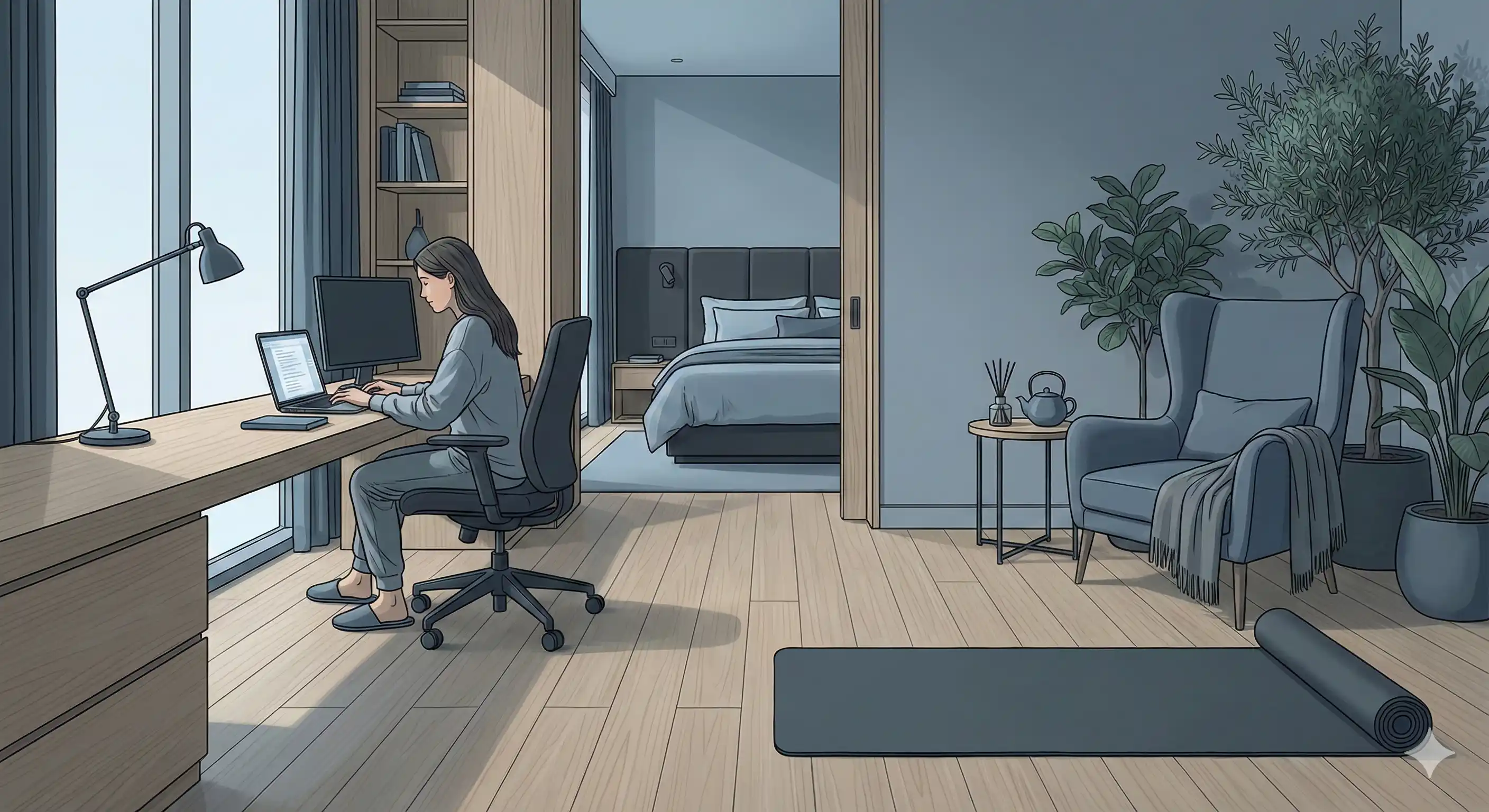
Flexible work-wellness spaces represent a growing trend toward rooms that seamlessly transition between professional productivity and personal restoration activities. Future layouts may incorporate yoga and exercise areas that clear for sleeping, video conference backgrounds that adjust throughout the day, and integrated air purification and circadian lighting systems that support both work focus and sleep quality.
Sustainability considerations increasingly influence layout through passive environmental control strategies including natural ventilation planning, daylighting optimization, and reduced material consumption through simplified built-in systems and modular furniture approaches. Cross-ventilation layouts reduce mechanical cooling loads while strategic window placement minimizes artificial lighting requirements.
Technology integration continues advancing through contactless control systems, mobile device interfaces, and automated environmental management that responds to occupancy patterns and personal preferences. Future layouts must anticipate infrastructure requirements for these systems while maintaining timeless spatial relationships that don’t become obsolete as technology evolves.
Smart building integration enables responsive room environments that adapt to guest behaviors and preferences, potentially reconfiguring lighting, temperature, and even some furniture elements based on reservation data and real-time occupancy patterns. Layout planning must accommodate these systems while preserving human-scale comfort and intuitive operation.
Wellness-focused design trends emphasize indoor air quality, natural material integration, and spatial configurations that support mental health and stress reduction. Future layouts may incorporate meditation areas, enhanced air filtration systems, and biophilic design elements that connect guests with natural environments even in urban settings.
Modular construction and prefabrication technologies enable more flexible layout approaches through standardized room components that can be reconfigured or upgraded without major reconstruction. These systems may allow seasonal layout modifications or market-responsive room type conversions that optimize revenue throughout changing demand cycles.
Successful hotel room layout design balances multiple complex requirements through systematic attention to guest needs, operational efficiency, regulatory compliance, and brand positioning. Even modestly sized spaces can deliver exceptional experiences when layout decisions are thoughtful, disciplined, and tested thoroughly before implementation.
Key principles include understanding target guest behaviors and expectations, respecting accessibility and safety requirements that protect both guests and operators, designing clear functional zones that support intuitive room use, and testing spatial proportions and circulation flows carefully through both digital tools and physical prototypes.
Thoughtful layout transforms limited square footage into memorable guest experiences that justify premium pricing and encourage return visits, while also supporting efficient housekeeping operations, maintenance accessibility, and long-term brand consistency that protects property investment values.
Smart developers and operators invest in full-scale room mock-ups and gather comprehensive feedback from actual guests and operational staff before finalizing layouts for entire properties, recognizing that layout decisions affect every guest experience and operational cost throughout the building lifecycle.
Hotel room layout remains an ongoing optimization process that should be reviewed and refined as guest expectations evolve, new technologies emerge, and market conditions change – positioning properties for continued success in an increasingly competitive hospitality landscape.