Hotel Public Relations: 2026 Strategies & Creative Examples
 Mika Takahashi
Last updated Jan 23, 2026
Mika TakahashiThere is a true resurgence in travel, but there is also considerable competition. Independent hotels, resorts, and vacation rentals are currently under a lot of pressure from all sides. Airbnb is expanding into boutique-style stays, branded chains are putting a lot of money into loyalty programs, and guests are more knowledgeable and suspicious than ever. In this situation, hotel public relations isn't just a nice thing to have; it's the difference between being found and being ignored.
Think about this: more than 80% of people who travel read reviews and look at social media before making a reservation. A study from 2024 found that 78% of tourists said that social media was their main source of inspiration when arranging vacations. This means that your property's reputation is always changing, even if you aren't actively maintaining it. Proactive hotel public relations are just as important in the hospitality industry as managing your money or your distribution plan.
"Reputation is the money of hospitality." Hotels that spend money on expressing their story will always do better than those that wait for people to find them.
With Prostay our goal was always clear: to assist independent hotels, hostels, resorts, and vacation rentals compete with big companies without spending a lot of money on technology. This guide is all about low-cost, realistic, and data-driven hotel PR strategies that properties like yours can utilize without paying a big agency. We'll teach you how to link your hotel PR work directly to your PMS, booking engine, and guest message tools so you can see what really works.
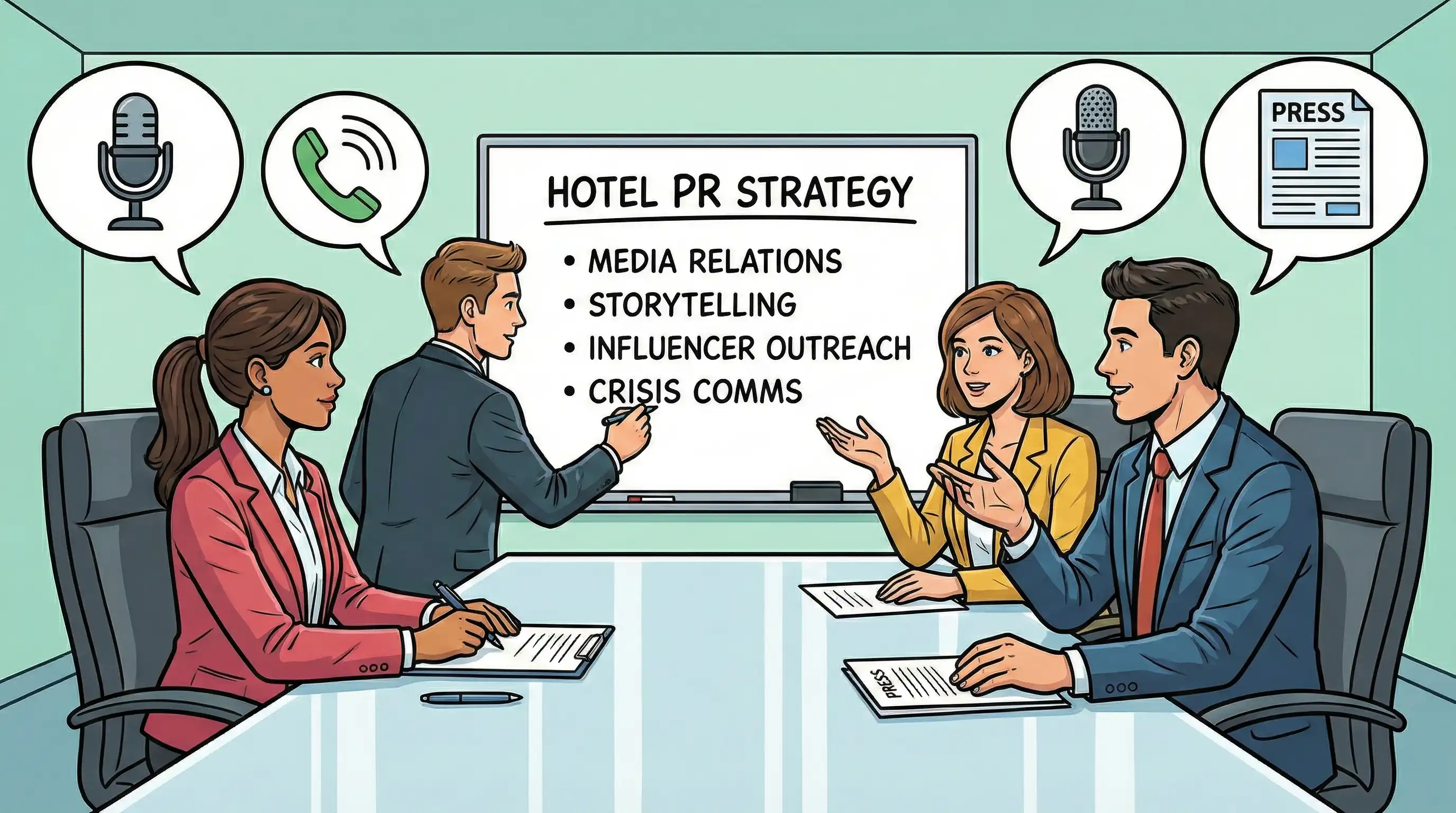
Hotel public relations is the continual process of managing how visitors, media, online travel agencies (OTAs), and the local community see your resort. Hotel PR is more than just advertising or marketing; it's about getting people to pay attention to you instead of paying for it.
The main difference is that marketing buys or owns attention through hotel ads, your website, and email campaigns. Sales turns that interest into room nights, events, and food and drink sales. Hotel PR gets attention through media coverage, guest advocacy, social proof, and building ties with the community. That's PR when a travel writer writes about your place. When a happy customer writes a great review, that's PR. That's PR when your GM talks at a tourism event in your area.
In real life, this could mean announcing the inauguration of a new rooftop bar, changing the name of a 40-room boutique hotel to appeal to younger guests, starting a program for pets in 2026, or telling industry journals about your property's net-zero carbon commitment. Each of them makes it possible to get attention in ways that advertising can't.
There are two parts to hotel public relations: proactive (press releases, community events, thought leadership, and influencer alliances) and reactive (crisis response, addressing complaints, and handling viral social posts). The finest hotel public relations plans find a balance between the two: capitalizing on success while becoming ready for the problems that will come up.
| Hotel PR | Marketing | Sales |
|---|---|---|
| Earns media mentions and guest advocacy | Creates and distributes owned content | Converts interest into bookings |
| Press coverage, reviews, word-of-mouth | Website, email campaigns, paid ads | Direct outreach, group sales, events |
| Builds long-term credibility | Drives awareness and traffic | Generates immediate revenue |
| Example: Feature in regional travel magazine | Example: Instagram ad campaign | Example: Corporate rate negotiation |
You need to know what you want to achieve before you start any hotel public relations effort. Goals that are too broad, like "get more press," make it hard to know if you're making progress. Here are some tips for setting goals that will really help your business grow.
Your hotel public relations goals should be different for each type of property. Business hotels in cities could put a lot of value on being seen in corporate media and being a thought leader on LinkedIn. Before the busiest booking times, seasonal resorts should work on getting people talking about them. Hostels frequently get the most out of hotel social media and community activities that make it easy for people to share. No matter what kind of property you have, your public relations goals must be in line with your revenue management and distribution plans. For example, you can use media relations to fill soft periods, encourage midweek stays, or push shoulder dates.
Sample PR Objectives for Independent Properties:
The idea is to turn ambiguous goals into SMART goals: Specific, Measurable, Achievable, Relevant, and Time-bound.
Five things make up a modern hotel PR plan: dealing with the media, helping guests, having a digital presence, becoming involved in the community, and being ready for a crisis. For smaller teams, the goal isn't to learn all five at once; it's to choose three or four based on your budget, staff, and property location.
One thing that makes PR in the hospitality industry different is how closely it is related to operations. Your PMS makes data that can be used for PR stories, like occupancy statistics, booking trends, and guest satisfaction scores. Your channel manager tells you which markets respond to your messages. Your guest message options provide connections that can make everyday conversations into special moments that people will want to share.
This article will go into great depth about how you use these parts, media coverage, promotions, events, thought leadership, and awards, in a tactical way. But first, make sure you have the basics down.
Does your hotel have these PR basics in place?
The next parts talk about unique hotel public relations campaigns that are different from regular hotel internet marketing since they don't use purchased reach; instead, they rely on earned attention, credibility, and storytelling. You don't buy these strategies; you build them via relationships, knowledge, and real value.
It's important to think about the seasons here. You need to plan your hotel PR calendar around travel demand patterns if you want to promote ski packages from December to February, festival stays in August, or city weekend getaways during the quieter months. Your website analytics, Prostay booking engine, and PMS revenue reporting should all be able to track each technique. That's how you can tell what's working and where to put more effort.
Finding perspectives that journalists want to write about is the first step to getting media coverage. In 2025–2026, the tales that get people talking are about sustainability certifications, technology updates (such switching to Prostay Nexus for guest messaging), finishing renovations, working with chefs, or launching a co-working area for people who work from home.
It's important to make a list of media outlets. Focus on local and specialty media, such travel bloggers in your area, regional lifestyle magazines, hospitality trade media, and podcasts that talk about travel or starting a business. Write down the name, beat (what they usually cover), recent articles, and preferred way to get in touch with each contact.
Quality is better than quantity. Send 4-6 targeted media pitches per quarter rather than mass mail-outs that get ignored. You should mention real numbers and how your guests will be affected in your pitches. Look at these two ways of doing things:
Every pitch should have high-resolution pictures. Make a simple online press room that is linked to your hotel website. Include your logo, pictures of your property, a fact sheet, and a media contact. You can do this even if you don't have a designer utilizing tools like Canva.
Standard offers like weekend specials or rates for longer stays don't usually get a lot of media attention on their own. But if you tell them a good tale, they'll be worth covering.
For digital nomads, think about a "Work From Lisbon Winter 2026" package that includes high-speed Wi-Fi, access to a co-working space, weekly cleaning, and discounts at local coffee shops. That's a narrative about trends in remote employment, not just a lower price. A "Culinary Weekend with [Local Chef Name]" package gives food journalists a chance to cover the event. A "Wellness Reset" package that starts in January takes advantage of the New Year's resolution energy.
Short movies, Reels, and behind-the-scenes footage on social media make these advertisements even bigger. Instagram and TikTok are great for telling stories with pictures. Show the chef making a dish that is their specialty. Take a time-lapse video of the sunset from your roof. Take a picture of how a guest reacts to a surprise room upgrade.
Prostay's booking engine can host promo landing pages, keep track of conversion rates, and make promo codes for campaigns that are talked about in press and influencer articles. This ties together PR work and actual bookings.
Package Ideas by Season:
| Package Theme | Best Timing | PR Angle |
|---|---|---|
| Romance Escape | February, anniversary months | Valentine’s Day features, couple travel roundups |
| Wellness Retreat | January, September | New Year’s resolutions, autumn reset content |
| Remote Work Stay | November–March (low season) | Digital nomad publications, work-life balance stories |
| Culinary Weekend | October, spring months | Food media, chef profile opportunities |
Your GM, owner, or revenue manager has skills that industry events and podcasts are often looking for. Speaking engagements make your property look like a leader and give you a chance to get more press coverage.
Begin with events held by area tourism boards, meetings of hospitality associations, and panels put on by local chambers of commerce. As you gain trust, go to bigger events like ITB Berlin, World Travel Market London, or regional hospitality summits. You can use podcast search engines like Listen Notes to identify episodes about travel, hospitality, and entrepreneurship that are looking for independent hotel voices.
Talk about things that people are interested in when you share your knowledge: "Using AI to Personalize Guest Stays," "Sustainable Operations for Small Properties," or "Managing Multi-Property Portfolios With Centralized Technology." These themes show what you know and naturally bring up your new ways of doing things.
To get more out of your hotel public relations, use the same content in blog posts, LinkedIn articles, and short social media snippets. Prostay clients can leverage data from their dashboards, such as occupancy trends, direct booking increases, and review scores, as proof in presentations to make their points more credible with real figures.
Awards give you proof from someone else that you can't purchase with money. An impartial source gives a "Best Boutique Hotel in Austin 2026" award more weight than any commercial.
Step-by-step approach to awards:
When you send in your application, be sure to highlight specific gains, such as higher review scores after using new software, fewer complaints after staff training, or less energy use as a result of sustainability efforts. Judges for awards respond to details.
Keep an eye on how award announcements affect online sessions, direct bookings, and the average day rate (ADR) for 30 days after they come out. This helps you figure out which awards are worth applying for again in the future.
Small, well-planned press events or excursions for travel writers, tour operators, and content creators can receive a lot of increased brand awareness, especially during shoulder season when you have time and they have time to travel.
Make themed itineraries that show off your real offers, such a chef's table meal with local ingredients, a guided walk around the neighborhood, a health class, or a local craft workshop that fits with travel trends for 2025–2026, such as cultural immersion or sustainable tourism.
Set clear expectations from the start for partnerships with influencers:
Be careful with logistics. Room assignments, welcome gifts, Wi-Fi performance throughout the resort, and a dedicated host staff member all have an impact on the quality of the content. An influencer who has trouble with slow internet or feels neglected won't make the content you need to aspire to.
Use Google Alerts and social media monitoring tools to keep track of the attention you get. Use UTM URLs for influencer codes that are linked to your booking engine to find out how many real bookings they made.
Not every change at a hotel needs a formal press release. Save them for real noteworthy events, such big renovations, new management hires, technological partnerships (like moving to Prostay), reaching sustainability goals, or opening new properties.
Press release structure:
An online press room saves journalists time and makes more people read what they write. Include high-quality photographs that can be downloaded, a property fact sheet, and easy-to-find contact information. Put it on a simple page that links to your main website.
For active boutique or resort hotels, try to release 3 to 4 well-written pieces each year. Here is a headline for trends in 2026–2027:
"XYZ Eco-Lodge Becomes First Carbon-Neutral Property in [Region] Using Smart Tech and Local Partnerships"
Every email, WhatsApp message, and review response is a part of your continuous public relations. There is no longer a clear border between customer service and public relations. In 2026, your internet reputation on Google, TripAdvisor, and OTA reviews will reach potential guests far before any news stories do.
This means that digital hotel PR is intimately linked to operational excellence. Fixing problems while guests are still there can lower the number of bad reviews and turn guests who are at danger into fans. A guest who complains about a maintenance problem and gets a quick, honest answer is generally more loyal than one who never had a problem.
This "always-on" manner of doing PR for hotels is supported by modern tech solutions like Prostay Nexus guest communications and centralized dashboards. Your front desk can make moments that get shared instead of complaints that go viral if they can access a guest's history, preferences, and any problems they've had in the past.
Every message is PR: 5 touchpoints you can optimize this month
One of the best ways to get your home seen is to respond quickly and personally to reviews on Booking.com, Airbnb, Expedia, Google, and TripAdvisor. Thousands of people who are thinking about booking read these reviews.
Review response guidelines:
Sending guests proactive messages while they are there stops problems before they become public complaints. You can check in with guests and talk to them about their problems in real time via Prostay Nexus, WhatsApp, SMS, or in-app chat.
Before/After Scenario: Overbooking Crisis
| Mishandled (PR Damage) | Handled Well (PR Recovery) |
|---|---|
| Guest arrives to no room, waits 45 minutes for explanation | Guest receives call before arrival explaining situation |
| Relocated to distant hotel with no apology | Offered upgrade at nearby partner property with transport |
| No follow-up or compensation | Receives apology email, future stay credit, and personal call from manager |
| Posts 1-star review mentioning chaos | Posts 3-star review praising recovery efforts |
Every social media site has its own use. Instagram is great at telling stories with pictures and Reels that look great. TikTok records real clips and behind-the-scenes moments. LinkedIn helps businesses and groups get more visibility for business-to-business (B2B) bookings. Facebook is still important for getting people involved in their communities and promoting events.
Make public places more photo-friendly by adding mural walls, rooftop views, lobby art, or specialty cocktails that will be available in 2025–2026. This will encourage people to make their own content. When visitors share these events, your target audience sees real endorsements.
Make a posting plan that makes sense for your property. Most properties post 3 to 4 times a week. Mix online advertising for hotels with instructive posts or local advice. People don't pay attention to posts that say "Book now!" all the time.
When looking for influencers to work with, make sure that the micro-influencers you choose (with 5,000 to 50,000 followers) have an audience that fits your ideal guest profile. You can keep track of your return on investment (ROI) with unique booking codes in the Prostay booking engine. A micro-influencer with followers who are interested in what they have to say usually does better than a celebrity with millions of followers who don't care.
Use social listening tools like Mention to swiftly respond to both good and bad comments on all of your social media accounts. How fast and how you respond changes how everyone sees it.
You don't need a big budget for a PR agency to execute a good job. A small team in-house can handle a lot of tools that are free or cheap. The most important thing is to use these tools along with Prostay's statistics to see how they really work.
Essential PR Tools for Independent Properties:
Services like HARO, PitchRate, and Qwoted let hotel owners and journalists get in touch with one other when they need expert opinions or examples of properties for travel articles. These sites bring out daily or weekly lists of requests from journalists.
Respond well by giving concise, factual answers. Add reliable data from your PMS or booking engine, and make sure to connect to a clean media page with pictures. Journalists have very short deadlines, so a response that comes within hours is really impressive.
Choose one person to handle media queries so that they can respond quickly no matter what time zone they are in. Make "evergreen" response templates regarding your hotel's story, sustainability efforts, and how you want guests to feel that can be changed fast.
A mountain lodge answers a request for a winter 2026 ski feature within two hours. The journalist adds them in a list of "Hidden Gem Lodges," which leads to a 40% increase in direct website visitors over the next two weeks.
Set up Google Alerts for your hotel name, restaurant name, and destination-plus-brand keywords. For example, "boutique hotel in Porto + [Hotel Name]." This picks up on formal mentions in blogs and news.
Mention and other systems like it track mentions across social networks, forums, and review sites for more general social monitoring. Put references into groups based on whether they are favorable, neutral, or bad. Tell your team about the best parts of the week.
Connect alerts to action:
To see how buzz affects business, keep an eye on increases in mentions along with bookings and inquiries in Prostay's reporting dashboards.
Make excellent media kits, fact sheets, and image bundles that fit your hotel's brand using Canva. Templates make this possible, even if you don't have any design skills.
Essential press kit components:
Make one version for leisure media that focuses on guest experiences and another for MICE/corporate media that focuses on meeting spaces and technology. Put press materials on a light media page that is linked to your website.
Check the kit at least twice a year, and more often if you make big modifications to the design or make repairs.
A systematic hotel PR plan stops "random acts of publicity" and makes sure that the story stays the same throughout all social media channels and seasons. If you don't have a plan, you'll be scrambling for ideas as chances come along and miss deadlines for prize submissions or seasonal presentations.
Make a yearly hotel public relations calendar that is split up by quarter. Map out releases, seasonal deals, deadlines for awards, and events that happen every year. This might include a wellness push in January, a notification of the end of spring renovations, collaborations for summer festivals, and exposure throughout the fall conference season.
Set aside at least four to six hours a month for outreach, updating material, and creating relationships with journalists and partners. Collaboration between departments is very important. The marketing, operations, front desk, food and beverage, and revenue teams all give story ideas and data.
Sample Annual PR Calendar:
| Quarter | Focus Areas | Key Activities |
|---|---|---|
| Q1 (Jan-Mar) | Wellness, corporate travel | Wellness package launch, submit spring awards, pitch remote work stories |
| Q2 (Apr-Jun) | Summer prep, renovations | Announce renovations, partner with local events, update press kit |
| Q3 (Jul-Sep) | Peak season, festivals | Influencer hosted stays, local event coverage, social media push |
| Q4 (Oct-Dec) | Awards, holiday packages | Submit year-end awards, holiday package PR, year-in-review content |
Once a month, look through the calendars of local tourism boards, city events, and hospitality organization newsletters for hotel PR ideas. Make a spreadsheet of possible prizes, including the due dates, the podcasts they want to reach, and the associated brands (restaurants, tour companies, wellness studios).
Make sure that at least one PR push happens during each significant local event, like a music festival in July, a marathon in October, and a food fair in the spring. Make custom packages and pitches that connect your property to the event's excitement.
You may find podcasts about travel, hospitality, and entrepreneurship by using Listen Notes. LinkedIn is a great way to find thought leadership opportunities and get in touch with people that host conferences.
Every three months, look over your list of opportunities and add new ones. Connect it to your PMS's occupancy estimates so that you can get people talking about your business when you need bookings the most.
For a single marketer or a small group, regular practices every month are more important than major pushes every now and then. Here's a useful list:
Your 2-Hour Monthly PR Tune-Up:
Set short, doable goals like "one new media contact per week" or "two journalist relationships deepened per month." Automation capabilities in platforms like Prostay, such as automated guest messaging and performance dashboards, free up time for more important PR work.
Every hotel should have a written strategy for what to do in case of a health emergency, a data breach, an overbooking, bad weather, or a false claim on social media. This isn't being negative; it's getting ready.
Core crisis plan elements:
At least once a year, practice a crisis scenario. Get the front office and management involved to check the response time and uniformity of messages. The idea is to build muscle memory so that you know exactly what to do when you're stressed.
Use PMS and channel manager data to swiftly find guests who are affected by a crisis. If your resort is affected by a sudden city-wide blackout, you can get reservation information, message guests who are affected using Prostay Nexus, and control the story before bad press spreads.
Like revenue management, modern hotel public relations should be based on data. If you don't measure, you don't know what works. You can immediately link strategic communication initiatives to revenue if you keep track of them correctly.
Core PR metrics:
Use UTM parameters to tag your hotel PR campaigns so you can see how many sessions and bookings they bring in through your booking engine analytics tools. Look at how well things went throughout PR campaign windows (30 days after substantial coverage) and compare them to similar baseline periods from previous months.
PR-to-Booking Examples:
Make a basic PR dashboard that combines data from your website's analytics, booking engine reports, and PMS income. This lets you see all of your hotel PR initiatives in one place and how they affect your business.
Recommended KPIs:
| Metric Category | Specific KPIs | Measurement Frequency |
|---|---|---|
| Media & Visibility | Volume of media hits, quality of placements, share of voice | Monthly |
| Traffic & Engagement | Referral traffic from articles/influencers, social engagement rates | Weekly |
| Conversion & Revenue | Direct booking growth, promo code redemptions, ADR during PR windows | Monthly |
| Reputation | Net Promoter Score (NPS), average review score, sentiment trends | Monthly |
Small properties can look at hotel public relations KPIs once a month, whereas larger groups with more than one property may look at them once a week at the brand or regional level. Prostay's consolidated dashboards break down results by property, channel, rate plan, and campaign, so you can see exactly where your PR efforts are working best.
The main purpose of PR is not to show off numbers; it's to get more people to know about your business so you can make more money. Attribution is figuring out how PR actions, traffic, and bookings are all related.
Use promo codes and referral URLs to see how well certain coverage does. Look into how PR changes the balance of channels: a story in a national newspaper can temporarily send more business to direct bookings, which would lower OTA commissions.
Make sure that PR and distribution choices happen at the same time. During times when your brand is getting a lot of attention, such when it's in the news, when it wins an award, or when it runs an influencer campaign, think about offering exclusive direct booking deals or temporarily relaxing OTA limits to get the most out of the PR boost.
Make internal case studies that show what succeeded, including the campaign's goals, strategy, media outcomes, revenue impact, and lessons learned. These can be used to plan future campaigns and turned into external hotel public relations stories about growth and innovation.
Having a lot of money or hiring an agency to do your public relations for your hotel isn't the key to success. It's about telling the same message over and over, doing your job well, and having the discipline to measure what counts. How the world sees your property is shaped by every interaction with a guest, from the first booking confirmation to the follow-up after their stay.
Independent hotels that do well in a competitive market see PR as a regular part of their business, not just a one-time initiative. They make real connections with reporters, create experiences that are worth talking about, and use analytics to figure out what's working.
Are you ready to learn how to turn your business and interactions with guests into interesting PR stories that make money? Ask for a Prostay demo to see how our PMS, booking engine, and guest communications features will help you build a strong PR base that will help you succeed in the long run.