Eco Friendly Hotels: Systems & Strategies for Hoteliers
 Mika Takahashi
Last updated Apr 10, 2026
Mika TakahashiThe conversation around eco friendly hotels has shifted. Five years ago, sustainability in hospitality was a marketing angle, a badge on the website, a towel reuse card in the bathroom, a line in the annual report. Today it is an operational reality that affects booking decisions, staff retention, regulatory compliance, energy bills, and long-term asset value. Guests are not just asking whether your hotel is sustainable. Corporate travel programmes are requiring it. OTA filters now sort by it. And the properties that treated sustainability as a checkbox are discovering that the ones who built it into their operations are pulling ahead on RevPAR, guest satisfaction, and owner returns simultaneously.
This guide is written for hospitality professionals, hotel owners, and general managers who want to move beyond surface-level green initiatives and build genuinely eco-friendly hotel systems that reduce environmental impact, lower operating costs, and create a guest experience that feels elevated rather than compromised. Whether you are managing a boutique property, a mid-scale chain, or positioning toward the luxury eco-friendly hotels segment, the strategies here are practical, measurable, and designed for properties that need to operate profitably while operating responsibly.

Traveller surveys consistently show that sustainability influences booking decisions, particularly among guests under 45 and among corporate travel managers who are required to report on carbon impact. A property that cannot demonstrate genuine environmental commitment is not just missing a marketing opportunity. It is losing bookings to competitors who can.
The key word is "genuine." Guests have become sophisticated enough to distinguish between a hotel that has removed plastic straws and one that has fundamentally rethought its energy consumption, water management, waste systems, and supply chain. Greenwashing, the practice of marketing superficial initiatives as deep sustainability, is increasingly called out in reviews and social media, and the reputational cost of being exposed as performative is higher than the cost of doing nothing at all.
Environmental regulations affecting hotels are tightening across most markets. Energy performance certificates, waste diversion mandates, single-use plastic bans, water usage reporting, and carbon disclosure requirements are becoming standard in the European Union, parts of Asia Pacific, and increasingly in North American jurisdictions. Properties that invest in eco-friendly systems now are building compliance into their operations proactively rather than retrofitting under deadline pressure.
This is where the conversation gets interesting for owners and asset managers. Eco-friendly operations are not a cost centre. They are a cost reduction strategy that also happens to improve guest satisfaction and brand positioning. LED lighting retrofits pay for themselves within 12 to 18 months. Water-efficient fixtures reduce utility bills permanently. Waste reduction programmes lower hauling costs. Solar installations in suitable climates generate energy at below-grid rates within five to seven years. Heat pump systems reduce heating and cooling costs by 30 to 60 percent compared to conventional HVAC.
The properties achieving the highest returns on sustainability investment are the ones that treat it as an operational improvement programme with environmental benefits, not an environmental programme with hoped-for operational benefits.
How to make my hotel eco-friendly is a question that deserves a structured answer rather than a list of random tips. Sustainability in a hotel touches every department, every process, and every supplier relationship. Approaching it systematically, by category, ensures that efforts are coordinated, measurable, and cumulative rather than scattered and symbolic.
The following sections break eco-friendly hotel operations into seven systems. Each system includes strategic context, specific implementation ideas, and guidance on measurement.
Energy is typically the largest utility cost for a hotel and the area where eco-friendly investments generate the fastest financial returns. It is also the area where guests are least likely to notice changes, which means improvements can be made without any impact on experience.
Replace all incandescent and halogen bulbs with LED equivalents. This is the single simplest, fastest-payback sustainability measure any hotel can take. LED bulbs use 75 to 80 percent less energy than incandescent equivalents and last 15 to 25 times longer. For a 100-room hotel operating 24 hours a day, the annual energy savings from a full LED retrofit can reach thousands of dollars, with the investment typically recovering within 12 to 18 months.
Install occupancy sensors in corridors, back-of-house areas, storage rooms, and public bathrooms so lights are not burning in empty spaces. In guest rooms, integrate lighting with the key card system so that lights, air conditioning, and non-essential power outlets switch off automatically when the guest leaves the room. This single integration can reduce guest room energy consumption by 20 to 30 percent.
HVAC systems account for 40 to 60 percent of a hotel's total energy consumption. Upgrading to high-efficiency systems, whether heat pumps, variable refrigerant flow systems, or modern chiller plants, delivers substantial savings. Even without full system replacement, operational improvements make a difference:
Solar photovoltaic installations are viable for hotels in most climates and are increasingly affordable. A rooftop solar array on a mid-scale hotel can offset 15 to 40 percent of electricity consumption depending on location, roof area, and local solar irradiance. In markets with net metering or feed-in tariffs, excess generation can be sold back to the grid.
Solar thermal systems for water heating are particularly cost-effective for hotels because hot water demand is consistent and high. A solar thermal installation dedicated to domestic hot water can reduce gas or electric water heating costs by 50 to 70 percent in suitable climates.
For properties where on-site generation is not feasible, purchasing renewable energy certificates or contracting with green energy suppliers provides a credible alternative, though guests and certification bodies increasingly distinguish between on-site generation and off-site purchasing.
You cannot manage what you do not measure. Install sub-metering on major energy systems (HVAC, lighting, kitchen, laundry, hot water) so you can identify where energy is being consumed and where waste is occurring. A property management system like Prostay can integrate with building management systems to provide operational dashboards that correlate energy use with occupancy, enabling managers to spot anomalies and track improvement over time.
Hotels consume significantly more water per guest than residential properties due to laundry, kitchen operations, landscaping, swimming pools, and the expectation of abundant hot water. Water conservation reduces both utility costs and the environmental impact of extraction, treatment, and wastewater processing.
Low-flow showerheads (rated at 7 to 9 litres per minute versus the standard 15 to 20) and low-flow faucet aerators reduce water consumption by 30 to 50 percent with minimal impact on guest experience. Modern low-flow fixtures are engineered to maintain pressure and coverage, so the shower does not feel weak. Dual-flush toilets that offer a reduced flush option for liquid waste save 3 to 5 litres per flush compared to single-flush models.
The hotel towel reuse card is the most visible eco-friendly hotel initiative and, implemented well, it works. Encouraging guests to reuse towels for more than one night and offering linen changes every other day rather than daily can reduce laundry volume by 20 to 30 percent. The savings in water, energy (for heating wash water and running dryers), detergent, and labour are cumulative and significant.
The key is framing the programme as a genuine environmental initiative rather than a cost-cutting measure disguised as virtue. Guests respond to honesty. "We wash over 500 kilograms of linen every day, and reducing that by even 20 percent saves 40,000 litres of water per month" is more compelling than a generic plea to "save the planet."
Commercial laundry is one of the most water-intensive hotel operations. High-efficiency commercial washing machines use 40 to 50 percent less water than older models. Ozone laundry systems inject ozone into wash water, allowing effective cleaning at lower temperatures with less detergent and shorter cycle times, reducing water, energy, and chemical consumption simultaneously.
For properties with grounds, transitioning to drought-resistant native planting reduces irrigation demand dramatically. Drip irrigation systems deliver water directly to root zones rather than broadcasting it across surfaces where evaporation wastes 30 to 50 percent of the volume. Rainwater harvesting systems that collect roof runoff for irrigation and non-potable uses (toilet flushing, cooling tower makeup) can offset thousands of litres of municipal water consumption monthly.
Advanced properties are implementing greywater recycling systems that treat water from showers, sinks, and laundry for reuse in toilet flushing and irrigation. These systems require capital investment and regulatory compliance but can reduce total municipal water consumption by 30 to 40 percent in larger properties.
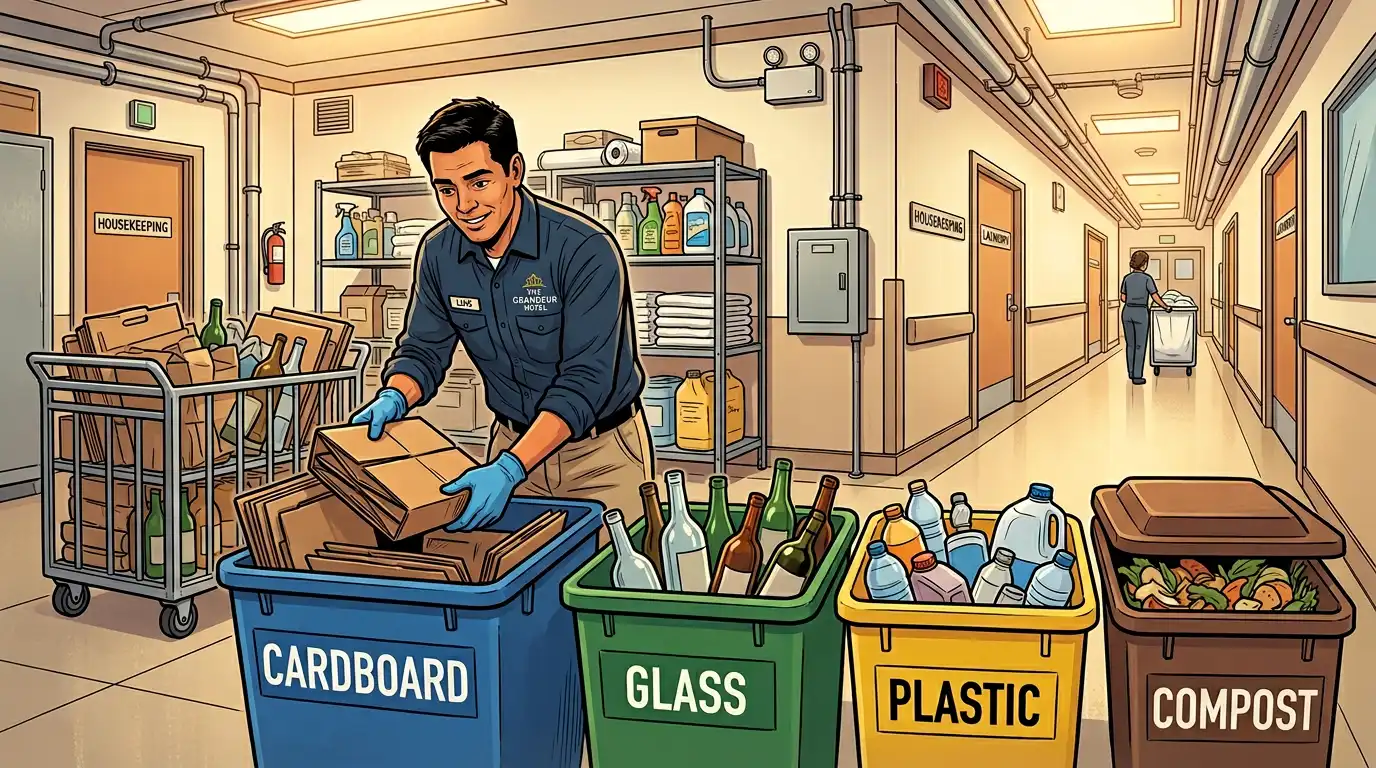
Hotel waste streams include food waste, packaging, single-use amenities, guest room consumables, back-of-house materials, and construction or renovation debris. A comprehensive waste strategy addresses each stream with specific reduction, reuse, and recycling measures.
Replace miniature shampoo, conditioner, and body wash bottles with wall-mounted refillable dispensers. This single change can eliminate thousands of plastic bottles per year in a mid-size hotel. Choose dispensers with a design standard that matches your property's positioning. Luxury eco-friendly hotels use high-quality, branded dispensers that feel elevated rather than institutional.
Replace plastic water bottles with glass carafes and filtered water stations. Eliminate plastic straws, stirrers, and cutlery in food and beverage outlets. Replace plastic laundry bags and bin liners with compostable or recycled-content alternatives.
Food waste is the largest single component of hotel waste by weight. Strategies for reduction include:
Establish clearly labelled recycling stations in every back-of-house area: kitchen, housekeeping, maintenance, offices, and receiving. Separate cardboard, paper, glass, metal, and plastics according to local recycling programme requirements. Assign responsibility for recycling compliance to specific staff members and audit compliance regularly.
Choose suppliers who minimise packaging or use recyclable and compostable materials. Purchase in bulk where possible to reduce individual packaging waste. Select amenities (pens, notepads, slippers, robes) made from sustainable, recycled, or biodegradable materials. Every purchasing decision is a waste decision.
What a hotel buys determines much of its environmental footprint. Sustainable procurement means choosing suppliers and products that align with environmental goals across the categories of food and beverage, operating supplies, furniture, fixtures, and equipment.
Source locally where quality and reliability allow. Local sourcing reduces transportation emissions, supports regional economies, and often delivers fresher products. It also creates a story that guests value: "Our breakfast eggs come from a farm 30 kilometres from here" resonates more than any certification logo.
Choose sustainably certified seafood (MSC, ASC, or equivalent). Offer plant-based menu options not as a concession to dietary trends but as genuinely appealing dishes that happen to have a lower environmental footprint. Reduce red meat dependency on menus where possible, as beef and lamb carry significantly higher carbon footprints per portion than poultry, fish, or plant-based proteins.
Switch to concentrated, biodegradable cleaning products that reduce both chemical impact and packaging volume. Electrolysed water cleaning systems generate effective sanitising solutions from water and salt, eliminating the need for many conventional chemical cleaners entirely.
When renovating or replacing, choose FSC-certified timber, recycled-content materials, and energy-efficient appliances. Specify equipment with strong energy ratings and long service lives rather than defaulting to the cheapest upfront option. The total cost of ownership, including energy consumption over a 10-year lifespan, often favours higher-quality, more efficient equipment.
Eco-friendly hotel systems only achieve their full potential when guests participate. The challenge is engaging guests without lecturing them, inconveniencing them, or making sustainability feel like a sacrifice.
Replace printed compendiums with digital guest directories accessible via QR code or through the property management system's guest-facing interface. This eliminates paper waste, allows real-time updates, and enables you to communicate your sustainability initiatives in a format guests actually read.
Use in-room signage (designed to match your brand, not generic environmental posters) to explain specific initiatives: why the water dispenser replaces plastic bottles, how the key card energy system works, what the towel reuse programme saves. Specificity works better than vague environmental appeals. "This dispenser eliminated 12,000 plastic bottles last year" is more compelling than "Please help us protect the environment."
Communicate your sustainability commitment during the booking process. If you hold green certifications (Green Key, EarthCheck, LEED, Green Globe), display them prominently. For corporate bookers and travel managers who must report on sustainability compliance, make your environmental data easily accessible, carbon per guest night, water consumption metrics, waste diversion rates. Prostay PMS can facilitate this by integrating operational data into guest communications and corporate reporting workflows.
Offer guests the option to contribute to local environmental projects, reef restoration, tree planting, wildlife conservation, through a voluntary addition to their bill. Frame it as an opportunity rather than an obligation. Properties that handle this transparently, showing exactly where the money goes, achieve participation rates of 15 to 30 percent.
Sustainability systems fail without staff buy-in. Housekeepers who leave lights on in cleaned rooms, kitchen staff who ignore recycling stations, and front desk agents who cannot answer guest questions about environmental initiatives all undermine the programme.
Every new hire should receive sustainability training as part of onboarding, covering the property's environmental commitments, the specific systems in place, and each department's role in making them work. This training should be practical rather than philosophical: here is how the recycling station works, here is why we use these cleaning products, here is what to say when a guest asks about our environmental practices.
Assign sustainability champions within each department, individuals who monitor compliance, identify improvement opportunities, and serve as the point of contact for sustainability-related questions. These roles work best when they carry genuine authority and recognition rather than being add-on responsibilities that nobody takes seriously.
Share sustainability performance data with staff regularly. Monthly updates on energy consumption, water usage, waste diversion rates, and cost savings make the abstract concrete. When the team can see that their efforts reduced the water bill by 15 percent or diverted two tonnes of waste from landfill in a quarter, the programme becomes something they own rather than something imposed on them.
Consider tying sustainability performance to team incentives. A bonus linked to achieving waste reduction or energy saving targets gives staff a financial stake in the outcome.

Technology is the backbone that connects all eco-friendly hotel systems and makes them measurable, manageable, and scalable. A modern property management system is not just a reservation and billing tool. It is the operational platform that enables data-driven sustainability management.
PMS platforms that integrate with building management systems can correlate energy and water consumption with occupancy data, identifying waste patterns that would be invisible without the connection. A room block that is unoccupied but fully heated, a conference floor consuming peak energy on a day with no events, a laundry schedule misaligned with actual linen demand, these inefficiencies only become visible when operational data flows between systems.
Prostay's housekeeping management module enables room-by-room scheduling that aligns cleaning with actual occupancy and turnover rather than blanket daily servicing. When housekeeping knows which rooms are stayovers, which are checkouts, and which are vacant, cleaning resources (labour, water, chemicals, energy) can be allocated precisely. Offering guests the option to decline daily cleaning through the PMS guest interface reduces housekeeping rounds, saves resources, and is increasingly preferred by guests who do not need their room serviced every day.
Replacing paper-based communication with digital alternatives managed through the PMS eliminates printing costs and paper waste while improving the guest experience. Digital check-in and checkout, electronic invoicing, QR-code room compendiums, and hotel app-based service requests all reduce paper consumption while streamlining operations.
Eco-friendly hotel certifications (Green Key, EarthCheck, LEED for Hospitality) require ongoing data collection and reporting on energy, water, waste, and procurement metrics. A PMS that consolidates operational data into accessible reports simplifies the certification process and makes annual renewals manageable rather than burdensome. Prostay's reporting capabilities provide the data foundation that certification auditors require, reducing the administrative load on property managers.
The perception that sustainability and luxury are incompatible is outdated. The fastest-growing segment of the luxury eco-friendly hotels market demonstrates that environmental responsibility, executed with design sophistication and operational excellence, enhances rather than diminishes the luxury experience.
Multiple studies show that guests are willing to pay a premium of 10 to 25 percent for genuinely sustainable accommodation, with the premium increasing among younger demographics, corporate travellers, and guests booking directly rather than through OTAs. When sustainability reduces operating costs (energy, water, waste) and increases revenue (premium pricing, higher direct booking rates, stronger guest loyalty), the financial case is not marginal. It is compelling.
For hotel owners and general managers asking how to make my hotel eco-friendly in practical terms, the following roadmap provides a phased approach that balances investment, impact, and operational disruption.
Improvement requires measurement. Track these metrics monthly and report trends quarterly:
These metrics normalised per occupied room night allow meaningful comparison across seasons, occupancy levels, and property sizes.
Eco friendly hotels are not a niche category anymore. They are the direction the entire industry is moving, driven by guest expectations, regulatory requirements, cost pressures, and the simple reality that finite resources demand more thoughtful management. The properties that act now, building genuine eco-friendly systems rather than applying green labels to unchanged operations, will hold the competitive advantage as these pressures intensify.
The good news for hotel owners and hotel general managers is that the financial case and the environmental case point in the same direction. Lower energy bills, reduced water consumption, less waste, better guest satisfaction, stronger brand positioning, and premium pricing potential are all outcomes of the same set of operational improvements. The tools exist, from LED bulbs and low-flow fixtures to integrated property management systems like Prostay that make sustainability measurable and manageable. The question is not whether to start. It is how fast you move.