
The 4 Key Types of Hotel Door Lock Systems Explained
Oct 14, 2025
 Mika Takahashi
Popular Categories
Hotel Technology & InnovationHotel Operations OptimizationDigital MarketingIndustry TrendsRevenue ManagementHospitality Industry
Popular Categories
Trending Post
Hotel Walk Letter Template: Professional Guest Communication
Online Travel Agents: What They Are and How They Work
Hotel Security Systems: Modern Protection Solutions

Hotel Advertising: Complete Guide to Boost Bookings and Revenue
25 Hotel Marketing Strategy Ideas for 2025: Complete Guide

AI Reservation Agent: Revolutionizing Hotel Booking and Guest Experience

PMS Communication: Streamlining Property Management Through Effective Guest Messaging
Table of contents
In the hospitality world today, guest safety and property security aren’t just checkboxes—they’re vital to your business’s success. On average, hotel security incidents can cost properties over $50,000 a year. But here’s the good news: hotels with modern door lock systems experience 75% fewer security-related problems and enjoy much higher guest satisfaction. Choosing the right hotel door lock system isn’t just about locking doors—it’s about protecting your reputation, simplifying operations, and providing the smooth experience guests expect.
Whether you’re running a cozy boutique hotel or managing a sprawling resort, knowing the ins and outs of hotel door locks will help you make smart choices that benefit both your guests and your bottom line. This guide covers everything—from traditional mechanical locks to the latest biometric technology—to help you find the perfect fit for your property.
What is a Hotel Door Lock System and Why Your Property Needs One
A hotel door lock system is more than just a lock on a door. It’s a complete security solution that combines physical locks, digital credentials, and access control management to keep guest rooms safe while making hotel operations easier. These systems integrate with your property management software to give guests secure, hassle-free access and give you full control over who can enter different areas of your property.
These systems are the frontline defenders of your guests’ safety and the backbone of your security setup. When properly installed, modern electronic hotel locks can reduce security incidents by up to 75% compared to old-fashioned mechanical locks, according to recent data from the hospitality industry.
Guest satisfaction is closely tied to how safe and convenient they feel. Hotels with smooth, reliable door lock systems consistently get better reviews, with guests often praising easy room access and peace of mind. This translates into real business benefits—hotels with up-to-date access control systems see 12% higher occupancy rates and 8% higher average daily rates than those sticking with outdated locks.
Besides protecting guests and assets, these systems streamline daily tasks. Front desk staff spend 30% less time dealing with key-related issues when electronic systems replace traditional locks. Housekeeping can get to rooms faster, maintenance can respond quickly to emergencies, and management gets real-time insights into who’s accessing what areas.
Types of Hotel Door Lock Systems
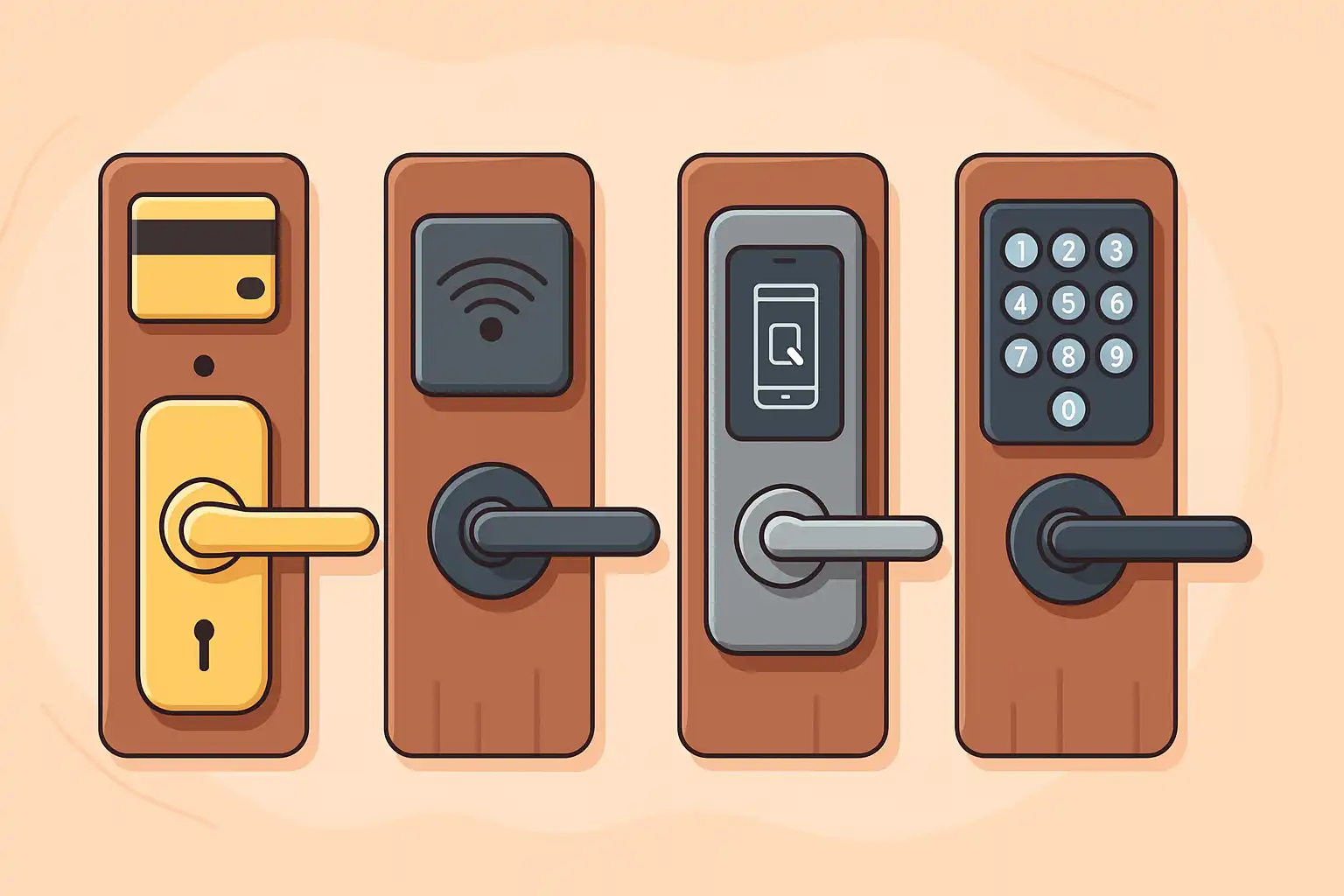
The market offers four main types of hotel door lock systems, each designed to meet different needs, budgets, and guest expectations. Knowing the strengths and limits of each will help you choose what suits your property best.
These days, 85% of new hotels opt for electronic or smart systems over mechanical locks. This trend reflects both guest expectations and the clear operational advantages of modern technology. Here’s a closer look:
| System Type | Initial Cost Per Door | Annual Maintenance | Best For | Market Share |
|---|---|---|---|---|
| Mechanical | $25-50 | $15-25 | Small B&Bs, budget properties | 8% |
| Electronic Keycard | $150-300 | $40-60 | Mid-tier hotels, most properties | 60% |
| Mobile/Smart | $200-400 | $50-80 | Tech-forward brands, urban hotels | 25% |
| Biometric | $400-800 | $80-120 | Luxury properties, high-security areas | 7% |
Traditional Mechanical Key Systems
Mechanical key systems use simple cylinder locks and metal keys to secure rooms. They’re often the cheapest upfront option, costing between $25 and $50 per door, but the long-term costs of managing keys, replacing lost ones, and dealing with security risks usually add up.
These locks work with pin-tumbler or mortise mechanisms where uniquely cut keys align internal parts to open the door. Since they don’t need power or software, they’re straightforward but come with serious downsides. Keys can be copied, master key systems can fail, and there’s no way to track who entered a room or when.
Managing keys is the biggest headache. Lost keys mean changing locks immediately, and keeping track of who has which key gets complicated as your property grows. Staff keys can be duplicated without permission, and you can’t set time-limited access for guests or temporary workers.
Today, mechanical locks are mostly used in storage rooms, staff-only areas, or as emergency backups. Small B&Bs with fewer than 20 rooms sometimes still use them, especially if the owner handles guest check-ins personally.
For example, a 15-room boutique hotel in Vermont uses mechanical locks because the owner personally greets guests and uses the key handover as a chance to offer personalized recommendations. Still, even this property plans to upgrade to electronic locks as guest expectations evolve.
Electronic Key Card Systems
Electronic key card systems are the most popular choice, covering about 60% of the market. They use RFID and magnetic stripe cards for secure, programmable access control. These systems strike a great balance between cost, features, and reliability.
RFID technology lets guests tap or wave a card near a reader for contactless access. It’s more durable than magnetic stripe cards, which require swiping and can be demagnetized by phones or wallets.
You can program guest cards instantly through your property management system. When guests check in, their cards are set up with room access, expiration dates, and permissions for amenities like gyms or pools. Once they check out, the card is deactivated immediately, cutting security risks from lost or unreturned keys.
These systems integrate smoothly with popular PMS software like Opera, Maestro, and Cloudbeds, syncing guest access, tracking entries, and generating audit reports for security and operations.
Costs usually run from $150 to $300 per door, depending on brand and features. Top manufacturers include Vingcard, Onity, and Saflok. Vingcard is favored by luxury hotels, while Onity is popular with mid-market properties looking for dependable, budget-friendly options.
Maintenance includes cleaning card readers, replacing batteries every 12–18 months, and updating software regularly. Most systems warn you ahead of time when batteries run low. Maintenance contracts typically cost $40–60 annually per door, making these systems more affordable over time than mechanical locks.
Mobile Key and Smart Lock Technology
Hotel mobile key systems let guests unlock doors with their smartphones using Bluetooth Low Energy (BLE) or Near Field Communication (NFC). This is the fastest-growing segment in hotel door lock technology and does away with physical key cards entirely.
Companies like Assa Abloy, Salto, and OpenKey provide mobile solutions that integrate with major hotel brands and PMS platforms. These systems cover everything from room assignment to checkout, creating a fully contactless guest experience that became especially popular during the COVID-19 pandemic.
Beyond unlocking doors, mobile key apps offer conveniences like mobile check-in, letting guests skip the front desk. They can get push notifications with their room number, Wi-Fi password, and hotel info right on arrival. Some apps even let guests extend stays or request services directly.
Challenges include ensuring solid Wi-Fi coverage throughout your property and handling device compatibility. Some older phones don’t support the needed Bluetooth or NFC, so you’ll need backup access methods. Training your staff is key since troubleshooting mobile keys requires different skills than card systems.
ROI studies show mobile keys can cut front desk labor costs by 15-25% because guests manage their own key issuance through the app. Hotels also save on physical key cards, which typically cost 50 cents to a dollar each, including programming and replacement.
Biometric Access Control Systems
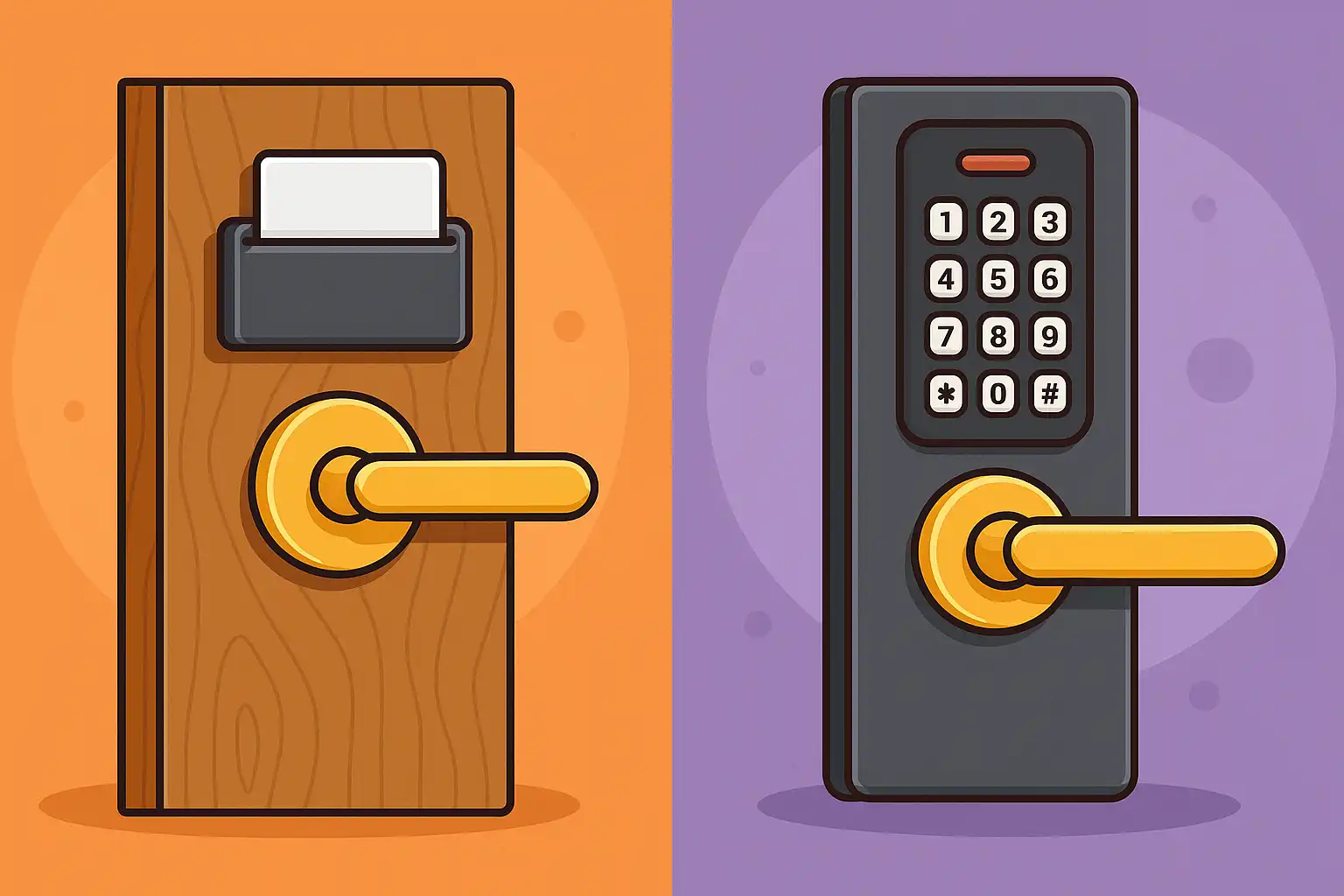
Biometric locks use fingerprint or facial recognition for top-tier security. They cost between $400 and $800 per door but offer unmatched control and audit trails for sensitive areas.
These are mostly used for VIP suites, executive floors, server rooms, and other high-security zones, not standard guest rooms. Biometric credentials can’t be shared or lost, making these locks ideal for protecting valuable assets or confidential information.
Privacy laws like GDPR add complexity. Properties must have clear policies for collecting, storing, and deleting biometric data. Guests need to consent to biometric enrollment and alternative access options should be available for those who opt out.
Typical uses include luxury resorts with private villas, urban hotels with valuable art, or locations with heightened security needs. Some hotels use biometrics for exclusive spa or club areas to keep unauthorized guests out.
Future tech may include voice recognition and retinal scanning, but adoption is limited due to cost, privacy, and guest acceptance.
Essential Features Every Hotel Door Lock System Must Have
No matter which system you pick, certain features are must-haves to keep your property secure, compliant, and running smoothly.
- Audit Trails: Every door opening should be logged with the user’s identity, time, and whether access was granted or denied. This helps with security investigations and operational insights.
- Emergency Overrides: Staff like housekeeping, maintenance, and security need emergency access with proper authorization levels. All override uses should be logged for accountability.
- Battery Backup: Locks must work during power outages with at least 8 hours of backup. Low battery warnings and emergency power options prevent lockouts.
- Weather Resistance: Exterior locks should have at least IP54 ratings to withstand rain, humidity, and temperature changes.
- Integration APIs: Your lock system should connect with PMS, building management, and security platforms for seamless data flow.
- Automatic Locking: Doors should lock automatically within 5-10 seconds after closing to prevent human error.
Security and Compliance Requirements for Hotel Lock Systems
Hotel door lock systems must meet a range of security and compliance standards that vary by location and property type.
- Fire Safety: Locks must unlock automatically during emergencies and integrate with fire alarms.
- ADA Compliance: Locks should be easy to operate for guests with disabilities, including height and force requirements.
- Data Encryption: Guest credential data must be encrypted (AES-128 minimum) during transmission and storage.
- Insurance: Certified security systems may qualify for premium discounts.
- Local Codes: Requirements differ widely; check early to avoid costly retrofits.
- PCI DSS: If your locks integrate with payment or reservation systems, they must meet data security standards.
Implementation and Installation Considerations
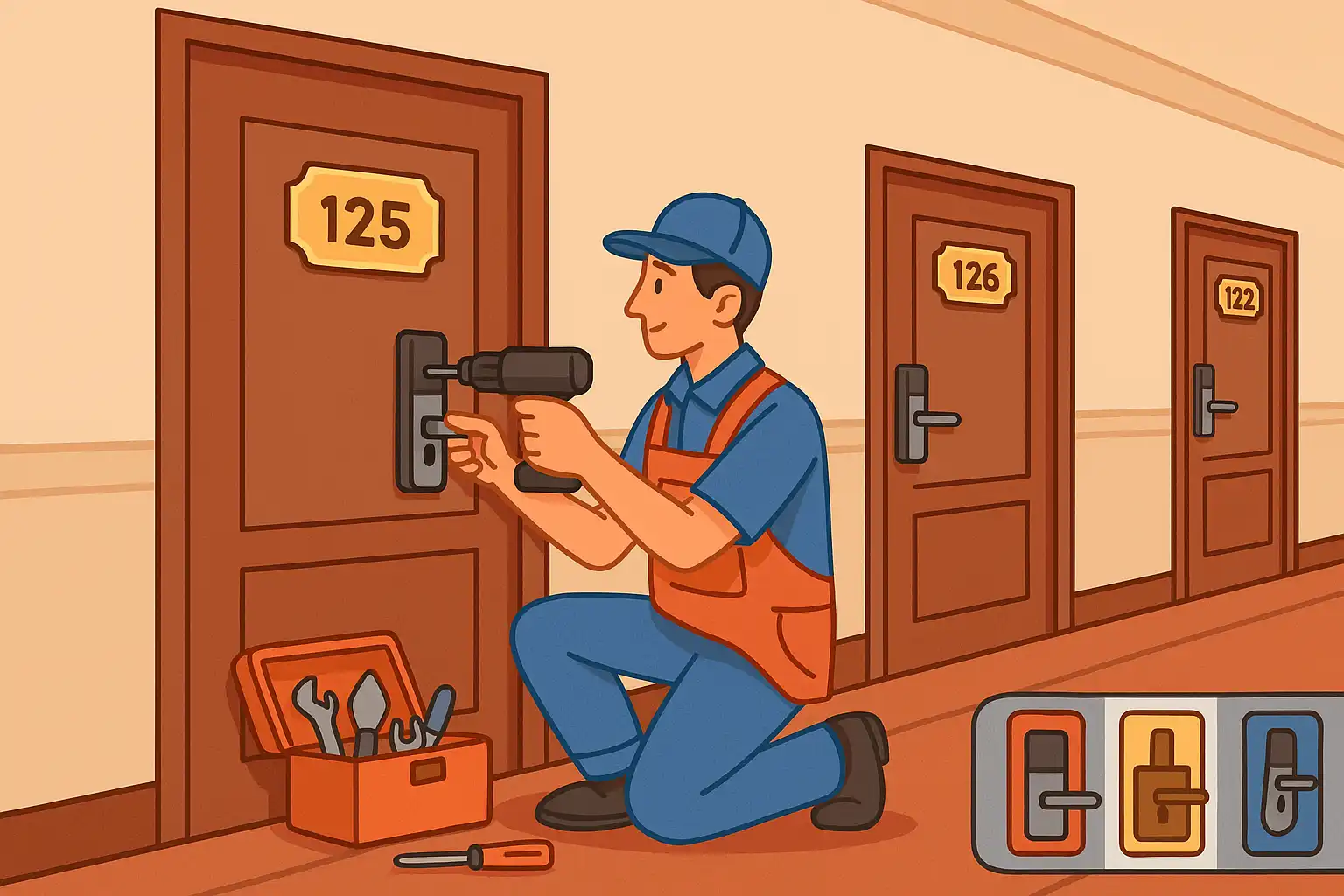
Installing a hotel door lock system takes planning, professional installation, and staff training to keep everything running smoothly.
- Site Surveys: Measure doors, check existing hardware, and plan infrastructure needs.
- Installation Time: Expect 2-4 hours per door for electronic systems. Consider phased rollouts to minimize guest disruption.
- Staff Training: Cover front desk operations, housekeeping, maintenance, and troubleshooting.
- System Testing: Simulate guest workflows and emergency scenarios before going live.
- Warranties and Service: Look for 2-3 year hardware warranties and clear service agreements.
- Phased Rollouts: Start small, monitor, train, and expand gradually.
Choosing the Right Hotel Door Lock System for Your Property
Picking the best system means balancing your property’s size, budget, guest preferences, and long-term goals.
- Property Size: Smaller hotels (<100 rooms) may prefer simpler electronic systems; large resorts (>500 rooms) need advanced platforms.
- Budget: Plan to spend 2-4% of annual revenue on security upgrades, which often pay off in 18-24 months.
- Guest Demographics: Business travelers like mobile keys; leisure guests may favor key cards. Make sure your system is user-friendly for all.
- Integration: Choose systems that work smoothly with your existing PMS, POS, housekeeping, and building automation.
- Vendor Support: Local support, quick response times, and good training are crucial.
- ROI: Consider labor savings, fewer lost keys, reduced security incidents, better guest satisfaction, insurance discounts, and lower maintenance costs.
Future Trends and Technology Developments
Hotel door lock technology is evolving fast, driven by AI, IoT, sustainability, and guest expectations.
- AI & Machine Learning: Predict security risks, automate access, and optimize maintenance.
- IoT Connectivity: Real-time monitoring, remote troubleshooting, and smart building integration.
- Sustainability: Recycled materials, energy-efficient designs, and solar charging.
- 5G Networks: Faster, more reliable mobile keys and enhanced guest apps.
- Blockchain: Secure credential management and guest privacy protection.
Experts predict 90% of hotels will use smart locks by 2030. Properties that delay risk falling behind in security and guest experience.
The future is all about seamless security and convenience, blending physical and digital experiences. By choosing the right hotel door lock system now, you’re setting your property up for success for years to come.