Virtual Concierge Guide for Modern Hospitality
 Mika Takahashi
Last updated Dec 12, 2025
Mika TakahashiHotel guests today expect quick, around-the-clock service, but traditional staffing just can’t keep up. Rising labor costs, the demand for 24/7 availability, and travelers who are more tech-savvy than ever are pushing hotels to rethink how they deliver guest services. Enter the virtual concierge—a revolutionary technology that’s changing the game by helping properties serve guests better while boosting operational efficiency and driving revenue growth.
This guide covers everything you need to know about virtual concierge technology—from how it works to tips on getting it up and running. Whether you manage a cozy boutique hotel or a sprawling resort, understanding digital concierge services is key to staying competitive in today’s fast-paced hospitality world.
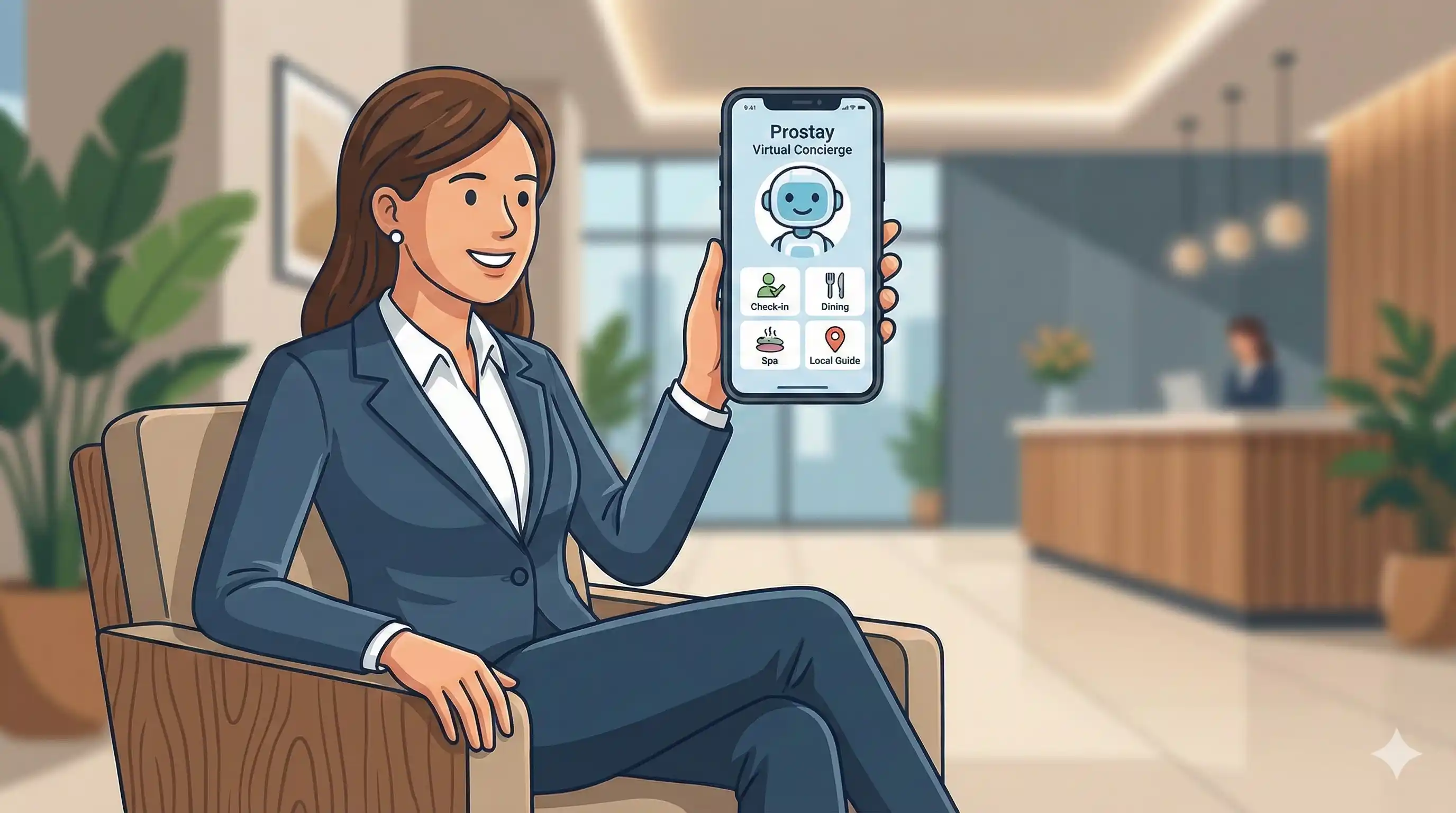
Think of a virtual concierge as your hotel’s AI-powered digital assistant, ready to help guests anytime, anywhere—via messaging platforms, mobile apps, or interactive displays. But it’s much more than a simple chatbot. A modern virtual concierge integrates deeply with your property management system and operations to deliver a full suite of guest services.
At its heart, a digital concierge acts like a personal assistant for hotel guests, automating routine requests and questions using natural language processing and smart algorithms. It understands what guests need, pulls real-time booking and room info, and either provides instant answers or smoothly connects them with the right hotel staff.
Today’s digital concierge solutions serve as an intelligent bridge between guests and hotel operations. They tap into hotel databases, PMS, and third-party tools to deliver accurate, timely info—and they get smarter with every interaction, tailoring responses to each guest’s preferences.
What really sets advanced virtual concierge systems apart from basic automated replies? Their ability to take action—not just answer questions. They can handle room service orders, book spa treatments, manage maintenance requests, and even facilitate online check-in—all while keeping that personal touch guests expect from a hotel concierge.
This technology breaks free from the old limits of traditional business hours, offering guests instant access to services anytime they need. For hotel guests, it means getting help and booking services whenever they want, making their stay smoother and more enjoyable.
Digital concierges rely on sophisticated AI algorithms that analyze guest messages and figure out the best response based on context, intent, and available info. Using conversational AI and decision trees, they can handle increasingly complex requests while keeping interactions natural and human-like.
At the core is natural language processing, which helps the system understand free-form questions. Whether a guest says, “I need extra towels” or “Can someone bring more bathroom amenities to room 315,” the virtual concierge knows this is a housekeeping request and kicks off the right process.
One of the best things about digital concierge service is their flexibility—they let guests connect however they like:
This means guests can reach out wherever they are and however they prefer, making the experience seamless.
The magic comes from integrating with core hotel systems. A well-built digital concierge taps into:
This integration means the virtual concierge delivers truly personalized service based on each guest’s stay, preferences, and history. For example, if a returning guest asks for restaurant recommendations, it can suggest places similar to their past favorites.
Smart virtual concierge solutions know when it’s time to bring in human help. They monitor how complex a conversation is, guest satisfaction signals, and the type of request to decide when to escalate. If the AI can’t fully resolve an issue, it hands off the conversation to hotel staff—complete with all context and chat history.
Machine learning keeps improving this process, making sure guests get the right kind of attention when they need it, while automation handles the rest.

Today’s virtual concierge platforms offer way more than just answering questions. Here’s what you should look for when evaluating solutions:
They provide 24/7 hotel automated messaging that responds instantly and supports multiple languages—key for hotels welcoming international guests. The system remembers conversation context, personalizes replies based on guest history, and keeps interactions smooth over time.
Rich media support lets guests see photos, videos, interactive buttons, and quick replies. So when ordering room service, they might view menu images; when booking amenities, they can check facility photos; or when asking for directions, they get maps.
Virtual concierges handle a full range of guest requests:
Arrival and Departure Services: Online check-in and check-out streamline the guest journey and lighten the front desk load. Guests can register, set preferences, and get digital room keys without waiting.
Food and Beverage Services: Room service orders flow directly to the kitchen, with real-time updates on availability and delivery times. The system also manages restaurant reservations, dietary needs, and special occasions.
Housekeeping and Maintenance: Guests can request extra towels, cleaning, or report issues through simple chat. The system creates tickets, assigns tasks, and keeps guests updated.
Amenity Management: Spa bookings, gym reservations, pool access, and activity scheduling become easy self-service options available 24/7.
Smart virtual concierge systems don’t just serve guests—they help boost revenue. By analyzing guest profiles and stay patterns, they offer relevant upsells and cross-sells at just the right time.
For instance, business travelers might see late checkout offers on Sunday nights, while leisure guests get spa promotions after booking activities. The AI learns what works best for different guest types and fine-tunes its approach.
Local recommendations and activity bookings open up additional revenue streams beyond the hotel, earning commissions while enhancing the guest experience.
Behind the scenes, virtual concierge platforms offer powerful tools:
Automated Task Distribution: Requests automatically route to the right departments with clear priorities and deadlines, so nothing slips through the cracks.
Real-Time Analytics Dashboard: Managers get insights into request volumes, response times, guest satisfaction, and revenue impact—helping them make smarter staffing and service decisions.
Staff Notification Systems: Urgent requests trigger immediate alerts, while routine tasks integrate smoothly into existing workflows.
Virtual concierge technology adapts to all kinds of properties, each benefiting in unique ways.
Big hotels and resorts with multiple restaurants, amenities, and activities rely on virtual concierge systems to manage complex guest needs. They handle hundreds of requests daily, making automation key to maintaining high service standards and smooth operations.
These systems coordinate restaurant bookings across outlets, manage spa and recreation reservations, and provide real-time info on weather-dependent services and activity schedules.
Boutique hotels gain a competitive edge by offering personalized service without needing a large staff. Virtual concierges shine here by delivering tailored recommendations and 24/7 availability.
They help these properties provide concierge-level service during off-hours, offering guests unique local insights and cultural experiences that reflect the hotel’s personality.
Corporate travelers expect efficient, tech-driven service that fits their busy schedules. Virtual concierges deliver fast access to business services, transportation, and last-minute meeting support.
Extended-stay hotels benefit from ongoing guest support, with AI learning preferences and proactively suggesting relevant services for longer visits.
Without on-site staff, vacation rentals rely heavily on virtual concierge technology for professional guest support. The system becomes the main communication point, handling everything from arrival instructions to local tips.
Centralized virtual concierge solutions help operators manage multiple properties across locations while maintaining consistent service.
Even budget hotels face rising guest expectations for tech-enhanced experiences. Virtual concierge systems let them compete by offering self-service options and 24/7 guest support.
For limited-service properties with minimal front desk staff, virtual concierges handle routine requests, freeing staff to focus on check-in and complex needs.
The scale of virtual concierge use varies by property size, each with its own challenges and benefits.
Small hotels see big value, often cutting guest service calls by 30-50% while expanding service capabilities. With limited staff, 24/7 guest support is tough without automation.
They focus on professional guest communication and essential services, with easy integration and minimal technical overhead.
Revenue impact can be surprisingly strong, turning local recommendations and activity bookings into profit centers.
Medium-sized properties balance operational efficiency with service quality, reducing front desk inquiries by 40-60% and boosting upsell revenue.
Peak periods are easier to manage as virtual concierge systems keep response times steady regardless of occupancy.
Integration gets more complex but pays off with smoother workflows and better guest experiences.
Large hotels rely on virtual concierges to handle massive guest interaction volumes, automating 50-70% of routine requests.
This frees staff to focus on high-value services and helps maintain brand standards across departments.
Advanced analytics identify trends, optimize staffing, and drive revenue through targeted promotions.
Enterprise-level hotels treat virtual concierge technology as essential infrastructure.
They use it to standardize service across properties, customize branding, and integrate deeply with corporate systems.
Scalable and reliable, these solutions support complex operations worldwide.
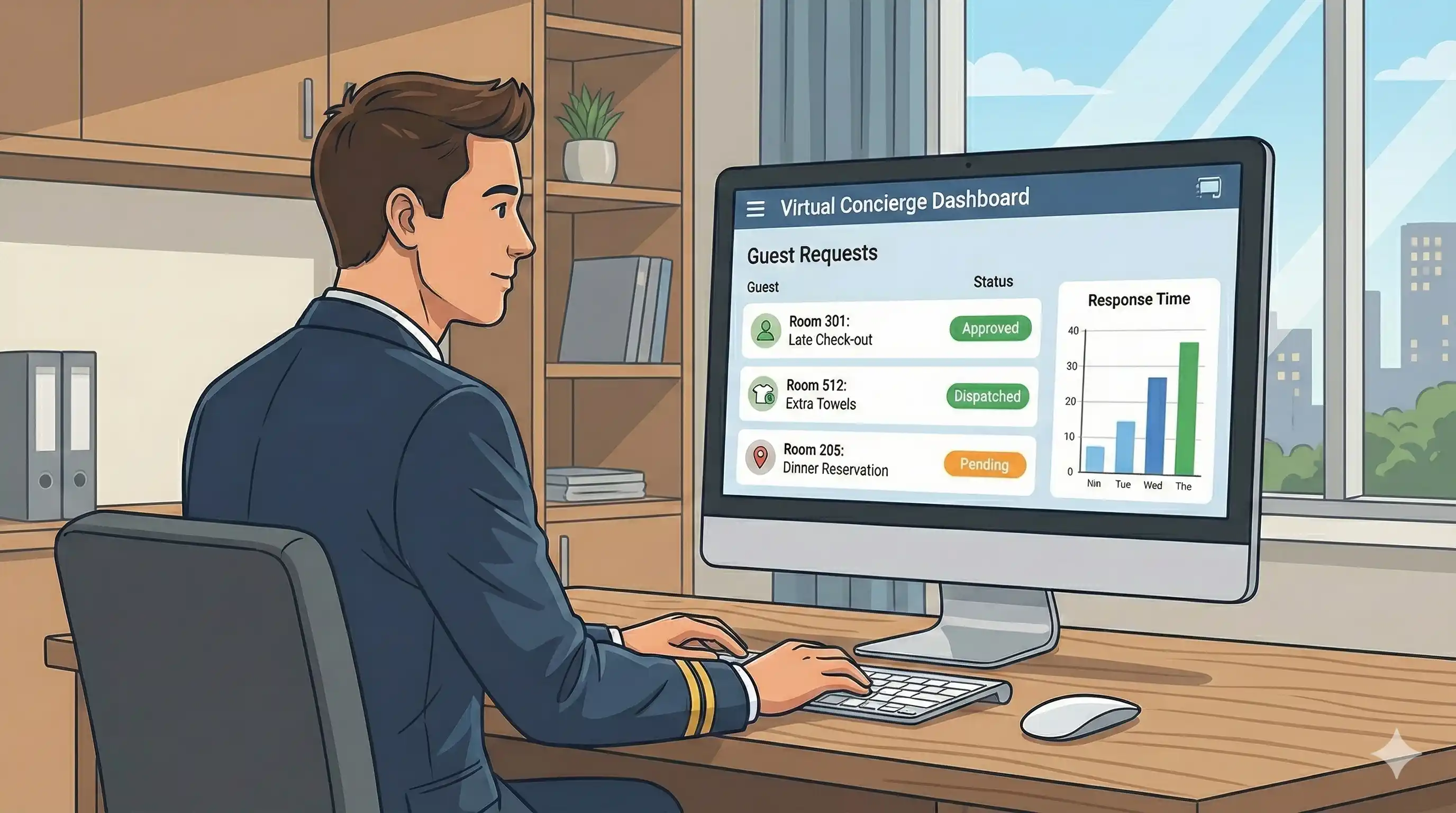
Virtual concierge technology delivers wins across operations, guest experience, and revenue—making a strong case for adoption at any property size.
By automating repetitive guest service tasks, virtual concierges cut operational costs and reduce front desk call volume.
Staff can focus on complex, high-value interactions, boosting productivity—especially during busy times.
Standardized request handling reduces miscommunication and ensures clear accountability.
Today’s travelers want instant answers and service, and virtual concierges deliver 24/7 availability.
They provide consistent, detailed info about amenities, local attractions, and services—helping maintain brand standards across multiple locations.
Guest satisfaction scores typically rise thanks to faster responses, comprehensive availability, and convenient self-service.
Multilingual support makes international guests feel right at home.
Virtual concierges drive revenue by offering timely, relevant upsells and promotions based on guest data.
Hotels report increased sales in spa services, dining, room upgrades, and extended stays.
Visual offers and easy booking boost conversion rates compared to traditional verbal upselling.
Local activity and tour bookings add new income streams and enhance guest experiences.
Digital interactions generate rich data on guest preferences, peak request times, and successful upsell tactics.
Hotels use these insights to improve amenities, optimize staffing, and refine guest experience strategies.
Analytics also support revenue management by identifying high-value guests and ideal promotion timing.
Getting the most from a virtual concierge means planning carefully and aligning your team.
Set clear goals upfront—whether improving guest satisfaction, cutting costs, or growing revenue.
Analyze current workflows to spot automation opportunities and pain points.
Plan realistic timelines for integration, training, and guest adoption to avoid rushed rollouts.
Ensure smooth integration with PMS, point-of-sale, and operations software for accurate, real-time data.
Test thoroughly before launch to catch issues early and reduce costly fixes later.
Check your network infrastructure to support reliable virtual concierge access across your property.
Train front desk, housekeeping, and food service teams on how to handle virtual concierge escalations and digital tasks.
Set clear protocols for managing complex requests and taking over conversations when needed.
Communicate clearly with guests about how to use the virtual concierge and what to expect.
Track key metrics like response time, resolution rates, guest satisfaction, and revenue impact.
Review chat logs and feedback regularly to fine-tune responses and expand services.
Create feedback loops with guests and staff to continuously improve the system.
Many vendors offer standalone virtual concierge tools, but Prostay AI stands out by seamlessly integrating with the full Prostay ecosystem—eliminating the headaches of patchwork tech setups.
Prostay AI hooks directly into Prostay PMS, giving instant access to guest and booking data without complex APIs or syncing issues. It knows guest preferences, loyalty status, and stay history from the moment they arrive.
Integration with Prostay Nexus connects housekeeping, maintenance, and guest services workflows, ensuring smooth execution of requests with full visibility.
Prostay Accounting handles billing automatically for all virtual concierge services, from room service to spa bookings, keeping financials accurate and up-to-date.
Prostay AI’s algorithms are trained specifically for hospitality, understanding industry jargon and guest expectations better than generic chatbots.
It handles complex requests and keeps the right service tone throughout conversations.
Multilingual support covers 40+ languages with cultural nuances, perfect for international guests.
Machine learning adapts responses based on your property’s unique guest interactions and service patterns.
Integrated with Tableview restaurant management, Prostay AI offers real-time table availability, personalized dining suggestions, and smooth booking.
Upselling algorithms analyze guest data to present the right offers at the right time, refining strategies to maximize conversions and satisfaction.
Revenue tracking shows which virtual concierge sales come from which departments, helping optimize promotions and operations.
Prostay AI guarantees 99.9% uptime with robust cloud infrastructure, ensuring continuous service worldwide.
Its scalable design supports everything from boutique hotels to large resorts without performance drops.
24/7 monitoring, regular updates, and dedicated account management keep your system running smoothly and improving over time.
Prostay AI lets you keep your brand front and center with full customization of conversation style and service flows.
It supports multi-property portfolios with centralized control and local flexibility, delivering consistent guest experiences everywhere.
Ready to transform your guest experience and streamline operations? Contact Prostay AI today to see how our fully integrated virtual concierge platform can help your property shine—boosting guest satisfaction and revenue like never before.