Property Management System (PMS): Complete Guide for Hotels and Hospitality
 Mika Takahashi
Last updated Aug 3, 2025
Mika TakahashiIn today’s fast-paced hospitality world, running your property efficiently is more important than ever. Whether you manage a cozy boutique hotel or oversee several properties across different locations, how you handle bookings, guest services, and daily tasks plays a huge role in your success and guest happiness.
A property management system acts as the digital backbone of modern hospitality, replacing tedious manual work with smart automation that streamlines everything from check-in to financial transactions. This guide will walk you through how PMS technology works, highlight the must-have features, and explain why picking the right system can truly transform your business.
Simply put, a property management system software is designed to bring all your property's operations under one roof. Whether you run hotels, resorts, vacation rentals, or serviced apartments, a PMS connects everything on one easy-to-use platform.
Gone are the days of juggling paper records and disconnected tools that slow you down and invite errors. Today’s cloud-based PMS solutions combine all your essential tools into a single dashboard accessible from anywhere with an internet connection.
At its core, a property management system handles:
Unlike older systems that worked in isolation, modern PMS platforms integrate seamlessly with other hospitality tech like point of sale systems, channel managers, and payment processors.
Today’s PMS solutions offer much more than just reservation tracking. They provide a powerful suite of features designed to optimize every part of your hotel’s operations while boosting the guest experience.
A strong PMS includes advanced reservation management that handles direct bookings from your website’s integrated booking engine and keeps inventory synced across all distribution channels. This helps prevent overbookings and ensures real-time availability everywhere.
The system automatically adjusts room assignments and rates based on demand, seasons, and your revenue goals. It also manages confirmation emails, booking changes, and cancellations, lightening your staff’s load.
Modern front desk tools make the guest journey smoother from start to finish. Staff can quickly check guests in using mobile devices, assign rooms based on customer preferences, and efficiently handle special requests.
Detailed guest profiles store stay history, preferences, and special needs, enabling your team to deliver personalized service that keeps guests coming back.
Housekeeping modules help coordinate cleaning schedules and track room status in real-time via hotel mobile apps. Staff can update room conditions instantly using mobile phones or tablets, so the front desk always has the latest info.
This instant communication cuts down wait times for arriving guests and boosts room turnover efficiency. Housekeeping teams get prioritized tasks based on arrival times and guest preferences.
Integrated payment terminals and connections to multiple payment processors allow for smooth transactions throughout the guest’s stay. The system creates itemized bills, processes payments, handles refunds, and supports various payment methods like cash, cards, and digital wallets.
Multi-currency support is crucial for international guests, while automated tax calculations keep you compliant with local laws. Payment reminders and automated billing reduce manual accounting work.
Channel management tools help you avoid double bookings and increase your property’s visibility on popular travel sites like Booking.com and Expedia. The PMS keeps rates and availability updated across all channels automatically.
This ensures your pricing is consistent no matter where guests book, and detailed reports show which channels bring in the most revenue.
Built-in guest messaging lets you stay connected throughout the guest’s stay. Automated messages confirm bookings, provide check-in info, offer upgrades, and request feedback after checkout.
Your staff can also chat directly with guests through the system, handling requests, sharing local tips, and resolving issues quickly.
Powerful reporting tools give you insights into occupancy rates, revenue, guest demographics, and operational efficiency. Custom dashboards highlight the key metrics that matter most, while detailed reports help with strategic planning and finances.
Revenue management features analyze past data and market trends to suggest pricing strategies that maximize both occupancy and daily rates.
If you manage multiple hotels or properties, full multi-property support lets you oversee everything from one dashboard. Standardized processes improve consistency, while still allowing local flexibility.
Multi-currency and localization features support international operations, and consolidated reports offer both group-level and individual property insights.
Knowing your deployment options helps you pick the best fit for your property’s needs, tech setup, and operations.
Cloud-based PMSs are popular for their flexibility, cost savings, and easy maintenance. They run on remote servers managed by your provider and can be accessed from any device with internet.
Benefits include automatic updates, less IT hassle, remote access, and usually lower upfront costs via subscription pricing. Cloud solutions also offer strong disaster recovery and easy scaling as your business grows.
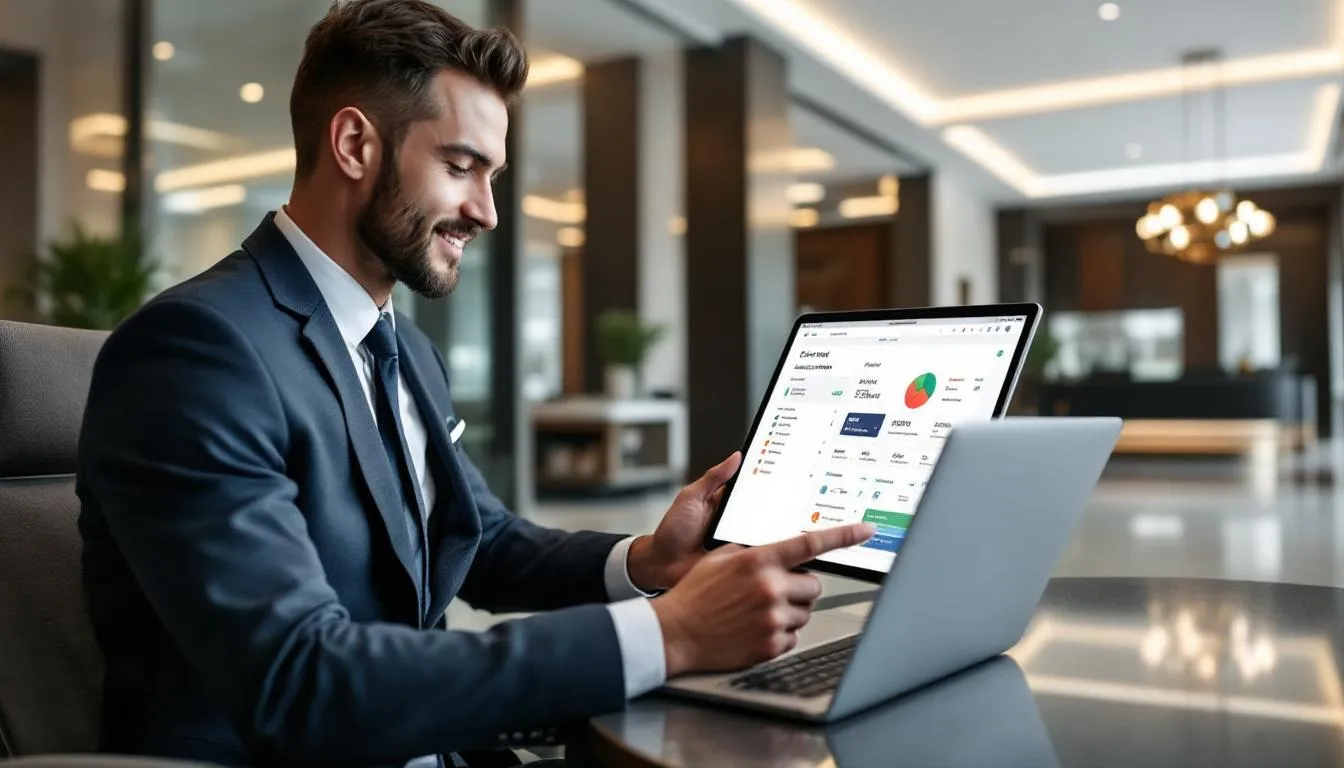
On-premise systems are installed on your own servers and computers. This gives you full control over your data but requires more IT expertise and infrastructure.
Properties in remote locations or with strict security needs might prefer this, though it comes with higher maintenance costs and more complex updates.
Hybrid setups mix cloud and on-premise, often keeping sensitive data local while offering cloud access to user interfaces and reports. It balances security and flexibility.
Mobile apps are essential for today’s hotel teams. They let staff access powerful tools anywhere on the property. Housekeeping can update room status, front desk can handle walk-ins, and managers can monitor operations remotely.
Mobile features also support contactless check-in and digital keys, which guests now expect for convenience and safety.
Properties in remote or low-connectivity areas benefit from offline mode. These systems store key data locally and sync with the cloud once online, so operations keep running even during outages.
However, offline mode has limits, especially for real-time inventory and multi-property syncing.
Using a modern PMS brings real improvements across your hotel’s operations, from saving staff time to boosting guest satisfaction and revenue.
Automation cuts down repetitive tasks that eat up time and cause errors. Hotels with advanced PMS solutions report up to 20% less admin work, freeing staff to focus on guests and revenue.
Tasks like room assignments, billing, inventory updates, and guest messaging become smoother and faster.
Quick check-ins and check-outs reduce wait times and make great first impressions. Digital tools personalize service using guest history and preferences, while mobile options enable contactless interactions guests appreciate.
Real-time messaging helps staff respond quickly to requests, keeping guests happy. Many properties see guest satisfaction scores jump by 15 points or more after adopting a full PMS.
Smart revenue tools help you set prices based on demand, market trends, and past performance. Real-time inventory control prevents overbooking and maximizes occupancy rates.
Integrated booking engines encourage direct bookings, which usually yield higher profits than third-party sites. Many properties boost direct bookings by 10-20% with modern PMS features.
Tracking room status in real-time minimizes downtime and helps housekeeping work efficiently. Automated maintenance requests get issues fixed fast, and predictive analytics spot problems early.
Better inventory control means accurate availability everywhere, reducing overbooking risks and operational headaches.
Integrated reports pull data from all areas, giving you insights for smart decision-making. Many hotels improve revenue per available room (RevPAR) by 5-15% thanks to data-driven pricing and inventory management.
Advanced analytics reveal guest trends, seasonal patterns, and efficiency gains, supporting both daily operations and long-term plans.
Modern PMS platforms connect easily with third-party tools like pos systems, accounting software, CRM, and marketing platforms. This creates a unified tech ecosystem that cuts down on data silos and boosts efficiency.
Open APIs allow custom integrations, while pre-built connectors simplify setup with popular hospitality software.
Different hospitality properties have unique needs that shape PMS choice and setup. Knowing these helps you pick the right fit.
Full-service hotels and sprawling resorts need PMS features that handle multiple outlets like restaurants, spas, and conference centers. They benefit from group booking tools, event management, and integration with native pos systems across outlets.
Large-scale properties require robust reporting and full multi-property support for managing multiple locations.
Vacation rentals focus on channel management syncing with platforms like Airbnb and VRBO. Features include automated guest communication, self-check-in, and efficient housekeeping coordination.
Pricing adjusts automatically based on local events and seasons, and damage deposits and maintenance integration ensure consistent property care.
Hostels need PMS features for managing shared rooms, bed-level inventory, and group bookings. Simplified billing and cost-effective solutions provide essential tools without extra complexity.
Social features that encourage guest interaction and budget-friendly channel integrations help maximize occupancy.
Extended stay properties require long-term billing, recurring payments, and detailed guest account management. PMS often integrates lease administration and maintenance coordination.
Customer relationship management is key for long-term guests, with flexible billing options to suit varied stays.
Boutique hotels focus on personalized guest experiences through detailed profiles, preference tracking, and customizable service options. Flexible communication and loyalty program integration help maintain their unique charm.
Custom workflows and guest interaction processes keep service standards high and distinctive.
Hotel chains need centralized management for consistency across locations, with flexibility for local needs. Standardized reporting, group analytics, and centralized purchasing are essential.
Brand management tools ensure uniform guest experiences, supported by centralized training and procedures.
Picking the right PMS means weighing your needs, operations, and growth plans carefully. Here are key points to consider.
Room count, operation complexity, and expansion plans shape PMS needs. Small properties may want simple, affordable systems, while larger ones need robust, integrated solutions.
Scalability is vital if you plan to grow, helping avoid costly system changes later.
PMS costs vary by features, deployment, and size. Cloud-based systems often charge per room monthly, while on-premise may require big upfront investments.
Consider total costs including setup, training, support, and integrations. The priciest system isn’t always best, nor is the cheapest always most cost-effective.
Check your current tech and what integrations you need with pos systems, accounting, payment processors, and more. Integration costs and complexity can affect success.
Prostay property management system offers wide integration options that work smoothly with most hospitality tech.
Ease of use impacts staff productivity and adoption. Complex systems need more training and may face resistance; intuitive designs reduce training time and boost efficiency.
Think about your team’s tech skills and available training resources. Modern, user-friendly interfaces lead to quicker adoption and happier users.
Reliable support is crucial during setup and daily operations. Look for providers with good availability, fast response, and skilled technical help.
24/7 support matters for multi-time zone operations or properties with limited local IT.
Switching from old systems requires careful planning and solid data migration help. Check providers’ experience with your current system and their ability to keep your data intact.
Running both systems in parallel during transition reduces risks.
Ensure your PMS meets security standards, data protection laws, and compliance rules. PCI compliance is a must for credit card transactions. Data protection varies by location.
Ask about the provider’s security track record, backups, and disaster recovery. Cloud systems should share info on data center security and certifications.
Rolling out a new PMS takes planning, resources, and realistic timelines. Knowing the steps helps keep things smooth.
Start by auditing your current data and deciding what must move to the new system—guest profiles, bookings, rates, finances.
Experienced teams help transfer data accurately and spot issues early. Prostay PMS offers full migration support to keep your history safe and accurate.
Cleaning data during migration also improves long-term quality.
Good training blends online modules, hands-on workshops, and ongoing support. Front desk staff need full system knowledge; housekeeping may focus on mobile apps.
Training usually takes 2-4 weeks, with extra support as staff get comfortable. Advanced features might need extra sessions later.
Running both old and new systems side-by-side helps staff learn while keeping service smooth. Test all scenarios including busy times and emergencies.
Make sure integrations with pos and payment systems work flawlessly.
Go live during slow periods to minimize guest impact. Have support staff ready for early issues.
Post-launch support should include regular check-ins, performance checks, and ongoing training for new hires. Many providers offer extended help to ensure success.
Issues with data migration, staff resistance, and integration are common. Tackling these with good planning, training, and tech support reduces disruptions.
Communicate with guests about any service impacts during the switch to manage expectations and show commitment to better service.
Hospitality tech is evolving fast, and new trends are shaping PMS platforms. Staying informed helps you invest wisely.
AI features are becoming standard, offering demand forecasting, pricing optimization, and personalized guest recommendations. Machine learning finds patterns to support smart decisions.
Chatbots handle routine guest questions, freeing staff for complex tasks.
Voice controls are entering staff operations and guest services. Staff can update info hands-free; guests control room features by voice.
Smart room tech lets PMS control lighting, temperature, and entertainment based on preferences and occupancy, enhancing comfort and saving energy.
Mobile-first design drives PMS development, with native apps offering full features on mobile devices. Contactless check-in, digital keys, and mobile payments are now expected, not extras.
These improve efficiency and meet guest safety preferences.
Next-gen reporting uses big data to reveal deeper insights on guests, markets, and operations. Predictive analytics help with maintenance, staffing, and revenue opportunities.
Real-time dashboards give instant access to key metrics, while automated reports cut admin time.
IoT lets PMS connect with building systems to monitor equipment, optimize energy, and predict maintenance needs. Sensors detect occupancy and air quality, adjusting controls automatically.
This boosts efficiency and supports sustainability goals valued by guests and owners.
Though early-stage, blockchain offers secure payment processing, guest identity verification, and loyalty management. Decentralized records can enhance data protection and streamline operations.
Initial uses focus on payments and profile security, with broader applications expected as tech matures.
Choosing the right property management system is one of the most important tech decisions for any hospitality business. The right PMS streamlines daily tasks, improves guest satisfaction, and drives revenue growth, often paying for itself within 12-18 months.
Modern cloud-based solutions bring unmatched features, integration, and scalability to support today’s needs and tomorrow’s growth. Whether you manage a boutique hotel, vacation rentals, or a sprawling resort, pick a system that fits your operations and can grow with you.
Prostay’s property management system combines all your essential tools in one intuitive platform, from advanced reservations and integrated payment terminals to powerful reporting. With full multi-property support, multi-currency handling, and seamless tech integrations, Prostay lays the foundation for operational excellence in today’s competitive hospitality market.
The industry keeps evolving fast, with changing guest expectations and operational demands. Investing in a future-ready PMS that adapts and delivers consistent value ensures your property stays competitive and profitable for years to come.