Running a Boutique Hotel: Owner Playbook
 Mika Takahashi
Last updated Jan 18, 2026
Mika TakahashiThis article is for people who own or need a better way for running a boutique hotel that is already open or about to open. This isn't the place to go if you want help coming up with an idea or developing your first business plan. Our main goals are to make money, keep things running smoothly, and create procedures that help you run a boutique hotel without being too tired.
Managing a property for a hotel chain is very different from running a boutique hotel with 20 to 80 rooms. There isn't a corporate office that sends out playbooks. No regional revenue manager changing your prices. No one at the phone center is taking care of guest complaints at 2 a.m. You control the business, make the decisions, and often fix the espresso machine when it breaks during breakfast service.
People in the hospitality business are interested in boutique hotel business like yours. The market for boutique hotels is predicted to grow to more than $40 billion by 2030. This is because travelers choose unique experiences over regular chain hotels. That's the chance. The hard part is getting it without becoming lost in spreadsheets, WhatsApp messaging, and manual tasks.
Prostay's all-in-one platform, which includes a Property Management System, channel manager, booking engine, and guest messaging, takes away a lot of the manual work that used to need to be done by bigger teams. But technology won't save you by itself. First, you need the correct operational base.
These are the primary problems that proprietors of boutique hotels have to deal with:

Without a firm position, you can't run a boutique hotel well. Who do you help? What do you believe in? What sets your hotel apart from others in your area or city? You're just a beautiful little hotel competing on pricing if you don't know the answers to these questions, and that's a losing game.
Think about how different a generic "nice 40-room hotel" is from a 32-room art-led hotel in Lisbon's Alfama district that is aimed at couples who care about design. The second location opened in 2023. It gets work from local artists for rotating exhibitions, works with neighborhood galleries, and charges 35% more than similar properties. Same number of rooms. A hotel business that is completely different.
Your idea, price level, and pricing structure must all work together. You can't offer a high-end experience—like turndown service, locally sourced products, and a 24-hour concierge—while charging midscale pricing. The numbers don't add up. Your staffing costs will be higher if your unique selling point is highly personalized service. Set the price accordingly.
Every owner of a boutique hotel should write a one-page "brand operating brief" for their staff. This paper talks about:
This brief will help you make decisions about who to hire, what to train them on, and how to give service every day. Without it, you have to trust each staff member's interpretation, which makes things less consistent.
This part is the most important part of running a successful boutique hotel. Your operations plan decides if guests depart happy or angry because of little problems that keep happening. Let's talk about how to organize each department and what a normal day looks like.
6:30 a.m. is the start of the day. The night auditor gives the front desk manager notes on three guests who left early, one visitor who complained about street noise in Room 204, and a VIP who will arrive at 2:00 PM. Housekeeping starts at 8:00 a.m. and focuses on the VIP suite and guests who arrive early. Breakfast is served till 10:30 a.m., and the average number of covers is 28. By noon, 22 rooms have been cleaned and checked. There are 31 arrivals scheduled between 15:00 and 18:00, which is when check-in is busiest. The evening manager takes care of two requests for late check-out, one for a room upgrade, and makes dinner reservations at a restaurant that works with the hotel. For those who signed up for it before they arrived, turndown service is available from 6:00 PM to 9:00 PM.
Every day, this rhythm repeats. The question is whether you handle it reactively or with written procedures.
Your front desk is where guest expectations meet reality. Standard operating procedures should cover:
Prostay is an example of a cloud PMS that brings together reservations, folios, and payments in one place. Your front desk staff shouldn't have to switch between three separate systems to check in a guest.
Housekeeping makes or breaks boutique properties. Your room assignment rules should prioritize:
Make a list of 25 to 30 things to check in a hotel, such as how the bed looks, how clean the bathroom is, where the amenities are, how often the minibar needs to be restocked, and how consistent the perfume is. Digital housekeeping boards, which can be accessed through a tablet or the PMS, replace paper lists and let you see the status of tasks in real time. The front desk can notice right away when a room is marked as clean.
It costs a lot to do reactive maintenance. If your air conditioner breaks down in August, you get a free night and a one-star review. Set up schedules for regular maintenance:
| Frequency | Tasks |
|---|---|
| Weekly | Check HVAC filters, test smoke detectors, inspect common area lighting |
| Monthly | Deep clean AC units, test all room safes, inspect plumbing for leaks |
| Quarterly | Service elevators, repaint high-traffic areas, deep clean carpets |
Use your PMS to keep track of problems in each room for better boutique hotel management. When Room 312 calls for plumbing help for the third time in two months, you'll recognize the pattern and fix the problem at its source.
If you don't want to be known as a place to eat, keep your food and drink choices minimal. A lobby bar with specialty cocktails and a carefully chosen wine list makes more money than a complete restaurant that needs a culinary staff. Think about:
The goal is profitable beverage options, not a Michelin star.
Every department in your boutique hotel management should participate in a 10–15 minute morning stand-up covering:
These meetings prevent the “nobody told me” failures that frustrate guests and staff alike.
Most boutique hotels have a small staff, usually less than 20 full-time employees for a hotel with 40 to 50 rooms. Automation is necessary at this level. It's how you keep your team from being burned out while still giving good service.
An all-in-one platform like Prostay consolidates what independent hotels previously managed across five or six different tools:
| Function | What It Does | Why It Matters |
|---|---|---|
| PMS | Reservations, check-in/out, folios, payments | Single source of truth for all guest data |
| Channel Manager | Real-time sync with OTAs | Prevents double bookings across Booking.com, Expedia, Airbnb |
| Booking Engine | Direct bookings on your website | Reduces commission costs, captures guest emails |
| Guest Messaging (Prostay Nexus) | SMS, WhatsApp, email automation | Pre-arrival communication, upsells, on-property requests |
| POS (Tableview) | Bar, restaurant, spa transactions | Unified billing posted directly to room folios |
| Reporting & AI Tools | Dashboards, forecasts, automated suggestions | Data-driven decisions without manual spreadsheet work |
Scenario 1: Avoiding Double Bookings A guest books straight on your website at 14:32. At 14:33, Prostay's channel manager refreshes the inventory on Booking.com, Expedia, and Airbnb. The room isn't available on any of the platforms. No calls that make you panic. Guests can't walk to other hotels that are competitors.
Scenario 2: Pre-Arrival Automation Three days before your client arrives, they get an automatic WhatsApp message with a digital check-in form, information about how to get to the hotel from the airport, and an offer for a room upgrade for €35 per night. They check in using their phones. Another communication lets them know their accommodation is ready at 14:00 on the day they arrive. Your front desk staff can spend less time on paperwork and more time helping each guest.
Scenario 3: After-Hours Guest Support It's 11:15 PM. A guest sends a message seeking about nearby places to eat late at night. Your AI-powered messaging tool promptly sends you three restaurant suggestions that are within walking distance, which you had already entered. Your night manager only deals with real crises.
| Task | Excel/WhatsApp | Modern Cloud PMS |
|---|---|---|
| Check room availability | 2–3 minutes (cross-reference multiple sheets) | 5 seconds |
| Process a booking modification | 8–10 minutes (update calendar, notify team) | 30 seconds |
| Generate weekly revenue report | 45–60 minutes | 2 clicks |
| Daily time saved | — | 2–3 hours |
Multiply that by 365 days. You’re looking at 700+ hours annually—equivalent to hiring a part-time employee.
The boutique hotel guests arriving this year expect:
For small groups—say, a 3-hotel collection in Croatia sharing one Prostay account—centralized rate management, inventory controls, and performance dashboards become essential.
Think of your technology as invisible infrastructure that supports every phase of the guest journey.
Search and Booking People who might want to stay with you can find you on Google, Instagram, or an OTA. Your website needs to make money. A design that works on all devices, good photos, and a Prostay-powered booking engine that offers rates that are the same as or better than OTAs, along with discount vouchers for people who book directly. Research on your target group suggests that guests who book directly are generally more loyal and spend more money on the resort.
Pre-Stay Confirmation emails sent automatically within 60 seconds of booking. A questionnaire on dietary requirements, pillow preferences, and any special occasions that will be celebrated three days before arrival. Upsell flows that include airport transfers, late check-out, or a private tour with a local guide. This is where you get money that would have gone to other people.
On-Property Staff can check in visitors anywhere, including the lobby, terrace, or poolside, using a tablet-based PMS. For things like extra towels, restaurant suggestions, and spa bookings, guests can now send messages instead of calling. After adding WhatsApp-based guest messaging, a 25-room hotel in Tulum cut the number of phone calls to the front desk by 40%.
Post-Stay Guests get a branded thank-you email within 24 hours of checking out. Automated invitations to review on Google and TripAdvisor come 48 hours later. A simple message that says, "Join your loyalty list and get 10% off your next direct booking." This is how you get people to come back without spending a lot on advertising.
Your boutique hotel management is what you sell. Guests in boutique hotels see the same people over and over again. A unpleasant front desk worker or a housekeeper who doesn't care ruins the carefully planned guest experience.
For a 20–70 room boutique hotel:
| Role | Full-Time Equivalents (40-room property) |
|---|---|
| Front Desk | 3–4 (covering morning, afternoon, night shifts) |
| Housekeeping | 4–6 (depending on occupancy patterns) |
| Maintenance | 1–2 (often cross-trained with other roles) |
| F&B | 2–4 (if breakfast and bar service) |
| Management | 1–2 (GM plus duty manager or AGM) |
Cross-training is really important. Your front desk staff should be able to handle basic concierge jobs, questions about reservations, and small guest complaints without having to call in a manager.
Many boutique hotel businesses make the mistake of looking for people with experience working for big hotel chains. Those candidates know how to follow set rules, not how to be flexible and personable like your property needs.
Hire people who have the right mindset, fit in with your culture, and really want to help others. In a European city in 2025–2026, being able to speak more than one language is more important than understanding the Marriott check-in script. During interviews, look for individuals who ask questions regarding the history of your hotel.
Create a written service playbook covering:
Forget complicated gamification. Independent hotels get results from:
A 28-room rural retreat in Tuscany had trouble getting consistent guest satisfaction scores, which ranged from 8.2 to 9.1 across several months. The owner saw that the experience of arriving was very different depending on which staff member was working.
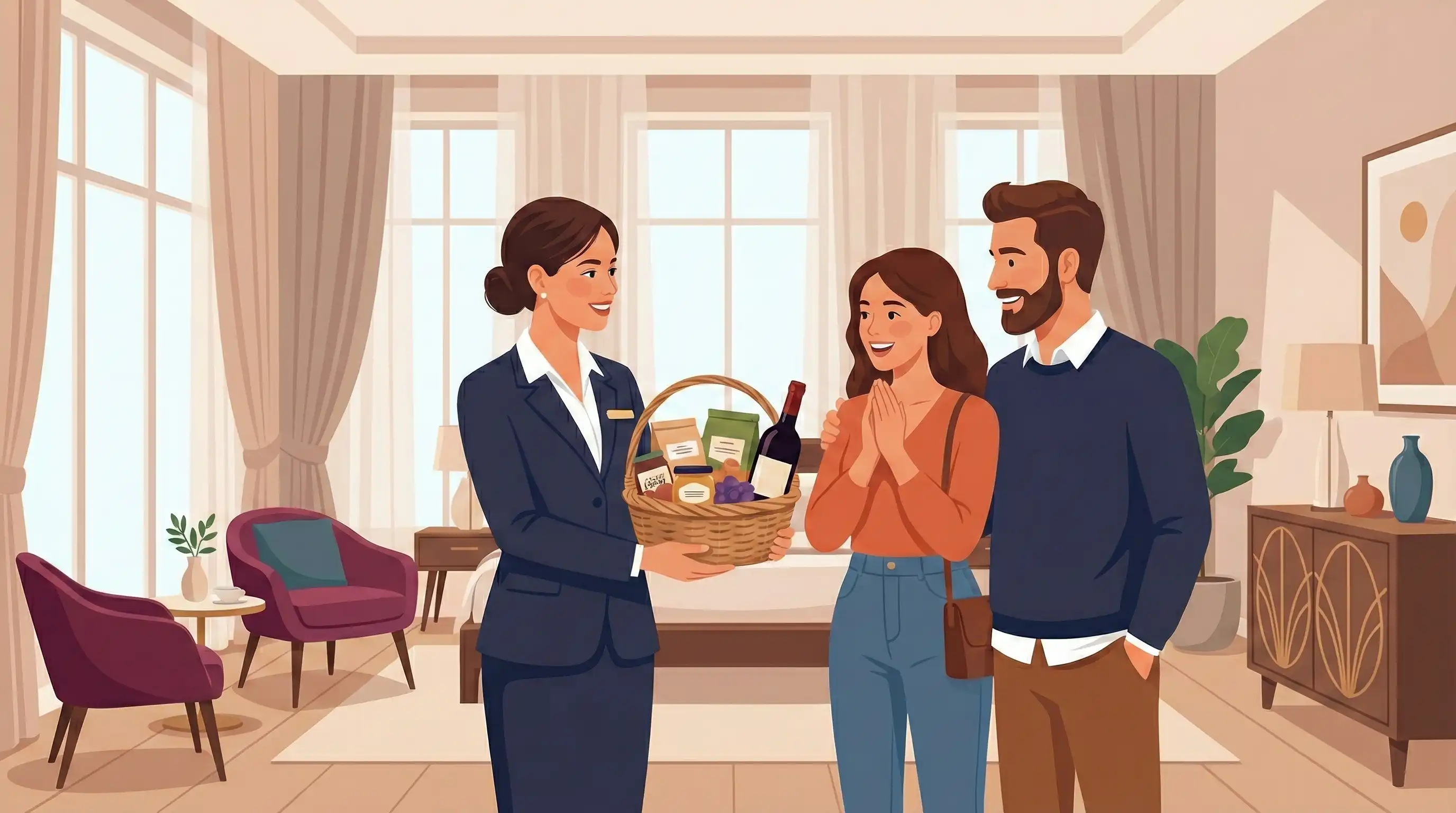
Solution: A common way to say hello. Each client gets a cold local wine or sparkling water, a three-minute tour of the property, a handwritten welcome card with the staff member's name, and a local products amenity (olive oil and cookies). Staff trained to do this all the time. After six months, review scores stayed over 9.0, and comments always talked about "the warm welcome."
The trade-offs between owner-operated and third-party managed boutique hotels are significant.
Owner-Operated Advantages:
Third-Party Management Advantages:
A 40-room city hotel that the owner runs for the first 18 months lets them learn about guest expectations, demand patterns, and cost drivers before determining whether to hire outside management.
Advice: Get involved immediately for at least your first high season. Even if you hire a management company, you should still be in charge of your IT contracts, such as your PMS, channel manager, website, and booking engine. Don't get stuck in systems that your operator controls.
Revenue management sounds intimidating. In plain language for independent properties: it means selling the right room, to the right guest, at the right price and time.
Every boutique hotel owner should track at least four KPIs with a 12-month rolling view:
| KPI | What It Measures | Target Direction |
|---|---|---|
| Occupancy | Percentage of rooms sold | Balance with rate |
| ADR (Average Daily Rate) | Average revenue per occupied room | Increase without sacrificing occupancy |
| RevPAR (Revenue Per Available Room) | Overall revenue efficiency | Primary performance metric |
| GOPPAR (Gross Operating Profit Per Available Room) | Profitability after operating costs | The number that actually matters |
A hotel opened in mid-2023 should be reviewing Jan–Dec 2025 performance data to set 2026 targets.
Booking.com, Expedia, and Airbnb are still important for getting the word out, especially for new hotels that need to create their reputation. But commissions of 15% to 20% quickly eat into profits.
A channel manager like the one incorporated into Prostay keeps track of inventory in real time on all platforms. You establish rates once, and they go everywhere. No updates by hand. No double bookings.
Meta-search channels like Google Hotel Ads and Trivago are another option that often costs less to get than traditional OTAs.
A modern booking engine on your own website can shift 5–15% of bookings away from OTAs in year one if supported by:
The math for the financial plan: if your 40-room hotel makes €800,000 a year from room bookings and moves 10% of that from OTAs (with an average commission of 17%) to direct bookings, you save €13,600 a year. That more than covers the costs of your booking engine.
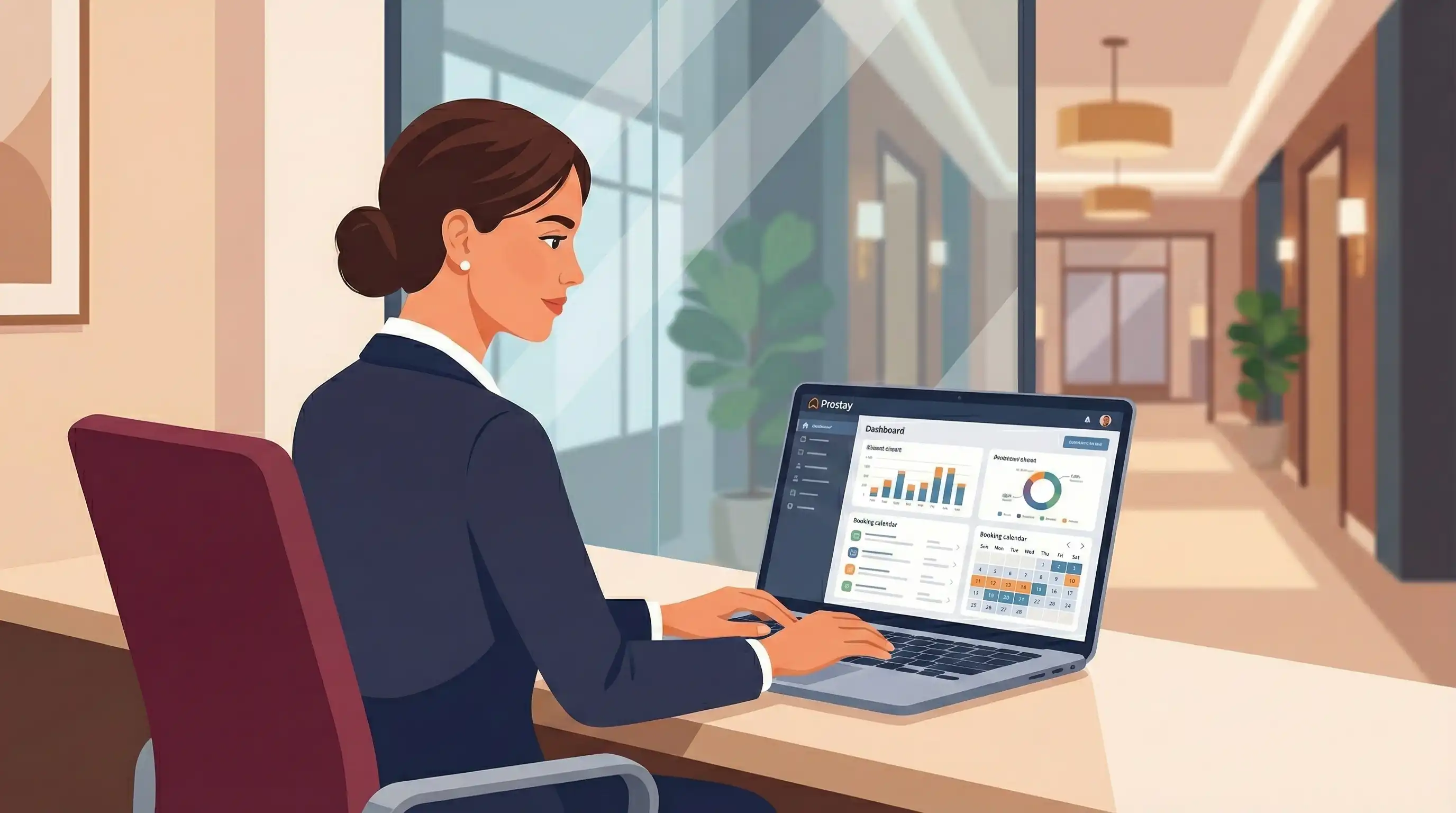
Build a simple monthly dashboard from your PMS:
Monthly Review Ritual (60 minutes max):
On the 1st of each month, review the prior month’s performance. Ask:
Change prices, promotions, and cost limits for the following 30 days based on the answers.
Prostay's multi-property reporting makes it easy for owners with several boutique properties in different places to see all of their statistics in one place, without having to log in separately and combine the data by hand.
“Boutique” is sustained daily through details—not just opening-week interior design or Instagram-worthy photos that fade as the property ages.
Guest experience at boutique properties comes from intentional choices:
Every year, a boutique hotel in Savannah works with three local artists to display and sell their work in common areas. Fifteen percent of online reviews mention the art. The hotel doesn't get a cut; it's just for promoting the brand.
Map and design repeatable “signature moments” that every guest experiences:
| Moment | Example | Cost |
|---|---|---|
| Welcome | Arrival drink with a 2-minute personal introduction to the property | €2–3 per guest |
| Evening | Turndown service with local chocolate and next-day weather card | €1–2 per guest |
| Midweek | Complimentary sunrise yoga on the terrace (Tues/Thurs/Sat) | Instructor fee shared across attendees |
| Departure | Handwritten thank-you note from the manager | Time only |
These moments become part of your unique selling point, something guests remember and share.
Guest messaging tools enable personalization without requiring encyclopedic staff memory:
Your ideal guests differ by day of week. Tailor accordingly:
| Segment | Service Focus |
|---|---|
| Weekday business travellers | Fast check-in, reliable free wi fi, quiet rooms, early breakfast |
| Weekend leisure guests | Local recommendations, F&B experiences, late check-out offers, activity partnerships |
Customer loyalty starts with listening. Proactively solicit reviews on Google, Booking.com, and TripAdvisor within 24–48 hours of checkout.
Post-Stay Survey Best Practices:
Use survey responses to identify recurring issues. If three guests mention slow Wi-Fi on the third floor in the same month, that’s not coincidence—it’s a maintenance priority.
Responding to Negative Reviews:
Be transparent. Acknowledge the issue. Explain what you’ve done.
“Thank you for your feedback about noise from the street in Room 204. Since your stay, we’ve installed upgraded soundproofing windows in all street-facing rooms. We hope you’ll give us another chance to exceed your expectations.”
Create a simple internal “guest issues log” tracking:
Patterns become visible. Problems get fixed. Guest satisfaction improves.
Not every boutique hotel should become a group. But if you’re considering expansion, here’s how to think about it from a boutique hotel business plan point of view.
You’re ready to explore opening a boutique hotel number two when:
Adding a second or third property introduces complexity that didn’t exist with one:
| Function | Single Property | Multi-Property |
|---|---|---|
| Reservations | One PMS, one inbox | Central reservations vs property-level handling |
| Marketing | Single brand, one website | Portfolio website plus individual property pages |
| Pricing | Owner sets rates directly | Central revenue management with property input |
| Reporting | Simple dashboards | Consolidated portfolio view plus property detail |
This is when a framework like Prostay that can handle several properties becomes quite useful. Having distinct channel managers, booking engines, and PMS for each property makes work duplication and guest experiences inconsistent.
In 2022, a boutique hotel business began with one 22-room facility on the lake in Slovenia. The owner worked on making the hotel operations more organized, developing a strong brand identity, and making sure that guests were always happy (an average of 9.2 on Booking.com).
By the end of 2024, occupancy was more than 80% every year. The owner opened a second 35-room hotel in a nearby coastal town instead of hiking rates again and risking how people see the value. The portfolio got a third mountain retreat with 28 rooms in 2026.
All three properties share:
Each property maintains its own identity and team—but the owner manages the profitable business through consolidated dashboards and standardized systems.
Smart outsourcing accelerates growth. Consider bringing in specialists for:
What should remain in-house:
For a boutique hotel opened between 2022–2024 that wants to modernise in 2026, here’s a month-by-month focus:
| Months | Focus Area | Key Actions |
|---|---|---|
| 1–3 | Technology Foundation | Implement integrated PMS/channel manager; eliminate double bookings; centralise payments |
| 4–6 | Operational Standardisation | Document SOPs; launch guest messaging; train staff on new systems |
| 7–9 | Revenue Optimisation | Analyse KPIs; grow direct bookings; test pricing strategies |
| 10–12 | Experience Refinement | Design signature moments; improve review scores; evaluate scale readiness |
Pick 3–5 targets for the year:
Getting rid of double bookings and scaling across numerous properties are just two examples of things that depend on having the right IT base.
Prostay is not made just for small and independent hotels. It's not a basic version of business software. It's made for properties like yours, where owners want to be in charge, teams need things to be simple, and guests demand customized care without any problems.
If you own a boutique hotel and want a better way for running a boutique hotel, all you have to do is ask for a demo and show us your facility. We'll show you exactly how the platform works with your hotel's business plan and operational needs.
Owners of boutique hotels that do well will be those who standardize their operations, use technology that works with other systems, and stay involved with their brand. That's how you do it. It's time to do it now.