Multi-Property Management Software for Hotel Chains
 Mika Takahashi
Last updated Jan 12, 2026
Mika TakahashiIf you run more than one hotel, you already know how hard it is to enter into different systems for each property, fix guest profiles that don't talk to one other, and spend hours putting together reports that should only take minutes. The answer is to use multi-property management software that was made for this purpose.
This guide explains what multi-property management software is, how it works behind the scenes, and what hotel chains should look for when comparing systems. We'll also talk about Prostay, a hospitality-first solution made just for chains, and how it works with Tableview POS and Prostay Accounting to create a completely connected ecosystem.
This post will help you decide whether to invest in a new property management software, whether you have three properties or three hundred.
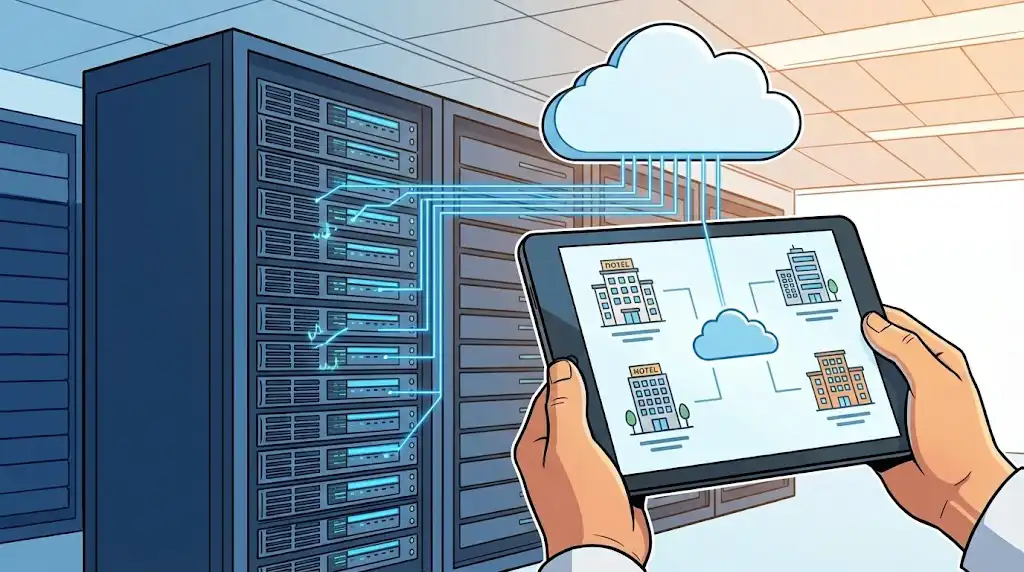
Multi-property management software is a centralized Property Management System (PMS) for hotel groups and chains that own and operate anywhere from 2 to 500+ properties in multiple cities or countries. This type of software is different from standalone systems that just handle one site. It gives head office a single platform where they can monitor inventory, rates, visitors, users, and reports for all of the hotels in the portfolio from one login.
It's crucial to know the difference between multi-property management software for hotels and other types of property management software used in residential real estate. Hotels work in quite different ways than multifamily businesses like apartment complexes and student housing, which need systems for collecting rent, renewing leases, and making maintenance requests. A hotel PMS needs to be able to keep track of room inventory in real time, change prices, guest folios, outlet charges, night audit processes, and work with channel managers and OTAs. None of this is possible with residential property management software.
Think about a regional chain that has eight hotels in London, Manchester, and Edinburgh. The revenue manager would have to log into each property separately to change weekend rates, verify on-the-books data, or get segment performance reports if they didn't have multi-property management software. Setting up corporate accounts with businesses like PwC or Deloitte would have to be done by hand at each hotel, and there would be no guarantee that they would all be the same. Do you recognize guests? Almost difficult when profiles are stored in separate databases.
Now think of a global company that runs both metropolitan and resort hotels. Their business contracts cover several nations, their loyalty program needs to identify visitors whether they're checking into a beachfront house in Bali or a business hotel in Singapore, and their finance team needs to be able to report on all currencies and tax jurisdictions at once. Multi-property management software is made to deal with this kind of complexity.
You can see and manage the whole portfolio from one place. You can set up rate plans, market codes, tax settings, and user rights once and utilize them on certain properties. When a new hotel joins the chain, it doesn't have to start from scratch; it gets the same configuration as the other hotels in the group.
The basic idea behind multi-property management software is that it works on a "single source of truth" architecture. This usually means that there is a central database that is always connected to property-level instances, so that all the information—reservations, room inventory, rates, packages, and guest profiles—syncs between the corporate headquarters and each hotel right away.
The data flows go both ways. When a front desk agent at one hotel changes a guest's preferences, that information is sent to all the other hotels in the chain. When the company sends out a new summer promotional rate, it spreads to all the right properties in seconds. This gets rid of the manual tasks that chains with separate systems have to deal with.
The ability to make central reservations is a key feature. A call center agent or the chain's website booking engine can look for availability and prices in several buildings in the portfolio at the same time. If a guest calls and asks for a stay in Dublin and their favorite hotel is full, the agent may quickly check availability at sibling hotels in Cork or Galway and make the reservation without having to transfer the call or log into a different system. Multi-property itineraries are easy to make—someone visiting Ireland can book three hotels in one go.
Automation makes things work better on a large scale. Changes to rates for the whole group that would take hours of manual adjustments on different systems can be made in seconds. There are predetermined blackout dates for all chain locations during busy times, such New Year's Eve. Common templates for room types, packages, and taxes make guarantee that things are the same and cut down on mistakes while setting up a new hotel.
When you have to manage more than one property, it's important to give users access based on their roles. A head-office revenue manager can see performance data for all hotels, but a property GM can only see data for their own hotel. For budgeting and forecasting, finance teams can see all the numbers in one place.
At both the property and portfolio levels, the integration layer connects the property management software to other systems. This includes POS systems for restaurants and stores, accounting software for managing finances, channel managers for distributing OTA content, payment gateways for safe transactions, and business intelligence tools for advanced analytics. Modern multi-property management software employ APIs to provide data in real time, so there is no need for batch uploads or overnight syncs.
In a multi-property setting, the way things are done every day is different. At check-in, the front desk may see that a guest has stayed at five other properties in the chain, what kind of accommodation they prefer, and whatever loyalty perks they still have. Consolidated batch posting runs night audit operations throughout the whole portfolio. Monthly reporting automatically combines performance data instead of making finance personnel manually combine exports from eight distinct systems.
A property management software for a single property is great for independent hotels that just care about their own four walls. On the other hand, a multi-property PMS is built from the bottom up for chains with common standards, centralized teams, and guests who travel across properties.
The difference in structure is basic. Single-property systems keep one database for each hotel, with guest profiles, reservations, and financials stored in separate places. Multi-property systems work from a central portfolio database that stores master data for all properties, such as rate plans, corporate accounts, user roles, and configuration templates. This isn't just linking together a few single-property installations; it's a whole new way of organizing data.
The difference is clear right away when it comes to operations. With a single-property PMS, personnel who manage more than one hotel have to log into each one separately, remember different passwords, and deal with setups that may not be the same. Users just have to log in once to a multi-property PMS, and they may switch between properties or work on their entire portfolio from a single interface. A cluster revenue manager can change rates at all five of their hotels in one session without having to close any browser tabs.
The experience of guests is also very different. With multi-property PMS, all hotels in the network can see shared guest profiles that include preferences, stay history, and loyalty status. Staff can detect a platinum member as soon as they check in to any property and give them the right rewards right away. Single PMS maintains data separate at the property level. For example, a guest might stay at your London hotel 50 times and then check into your Manchester property without knowing anyone there.
Reporting shows the difference in the most clear way. Single PMS only makes reports for one property at a time. To make a monthly board pack with all the numbers, you have to export data from each property, fix any problems with the codes, and then write summary by hand. With just a few clicks, Multi PMS gives you consolidated P&L, RevPAR, ADR, and segment reporting by brand, region, or whole group. It only takes a few minutes to make a performance report for a 15-hotel portfolio for the fourth quarter of 2025.
The discrepancies in practice affect all areas of operations. For operations, a single PMS implies having to set up the same configuration twice, whereas a multi PMS means having to set up the same configuration once and have all the work done in one place. Single systems need manual coordination of rates among properties for revenue management, however multi systems allow for yield strategies across the whole portfolio. For finance, single PMS needs a lot of labor to reconcile accounts, while multi PMS does this automatically and creates reports. For IT and security, having several installations means having to keep and safeguard multiple systems. On the other hand, multi PMS enables centralized management and consistent compliance. Single PMS has trouble with chain-wide contracts for corporate sales, whereas multi PMS helps with corporate agreements that cover the whole portfolio.
Some single-property systems can technically "stack" many hotels, but a real multi-property PMS is built from the bottom up to run multiple hotels with shared intelligence and economies of scale.
This part is a checklist for hotel organizations who want to improve their PMS in 2025–2026 or roll it out to all of their locations. The best property management software will have features in all of these areas.
With portfolio-wide rate and inventory management, property managers can set corporate, BAR, and package rates once and then apply them to certain properties right away. Check to see if you can make changes to many seasons, events, and promotions at once. When your chain needs to load summer pricing for 20 hotels, it should only have to do it once, not 20 times.
Central reservations and cross-selling functionality give you a central booking engine and call center tools that check availability at all hotels at once. The system should automatically suggest other sister hotels when one facility is filled. Being able to arrange a journey from Dublin to Cork to Galway all at once shows that the system is sophisticated enough to handle many properties.
A single guest database with shared guest profiles and loyalty means that every property can see a guest's preferences, stay history, and loyalty status. This is the basis for consistent recognition and upselling. Without the passenger having to say it again, hotel staff should be able to tell that the guest wants a high floor, hypoallergenic pillows, and an early check-in.
With multi-property user and role management, you can set up roles for front office, revenue, finance, food and beverage, housekeeping, and cluster managers once and utilize them in all of your hotels. Single sign-on cuts down on password fatigue, and detailed audit trails help with governance and compliance needs.
Portfolio reporting and analytics gives you both summary and detailed reports on daily pickups, on-the-books numbers, segment performance, and channel mix. There should be reports for each property, cluster, brand, region, and group. This feature turns data that is spread out into performance insights that help you make better choices.
Modern API connections to POS, accounting, channel managers, OTAs, payment gateways, revenue management systems, and corporate data warehouses are possible because of a strong integration layer. Integration shouldn't be an afterthought; it decides if your technology stack works as a single system or as a bunch of separate tools.
Inter-property processes help with situations such when visitors transfer between hotels on the same reservation, when group bookings cover more than one property, and when charges need to be sent between sister hotels. A guest from a convention who checks into your downtown hotel but goes to events at your airport facility should have a smooth experience.
Role-based access control, two-factor authentication, SSO support, GDPR-compliant guest data processing, PCI-DSS-ready payment flows, and centralized logs for audits are all security and compliance requirements. Centralizing visitor and payment data makes security more important, thus your PMS needs to be built that way.
Cloud-based architecture makes it possible to add additional hotels in days instead of months, thanks to its scalability and deployment. Using templates for brand and region settings speeds up the onboarding process. The system should be able to manage your three-year growth plan without needing to be completely rebuilt.
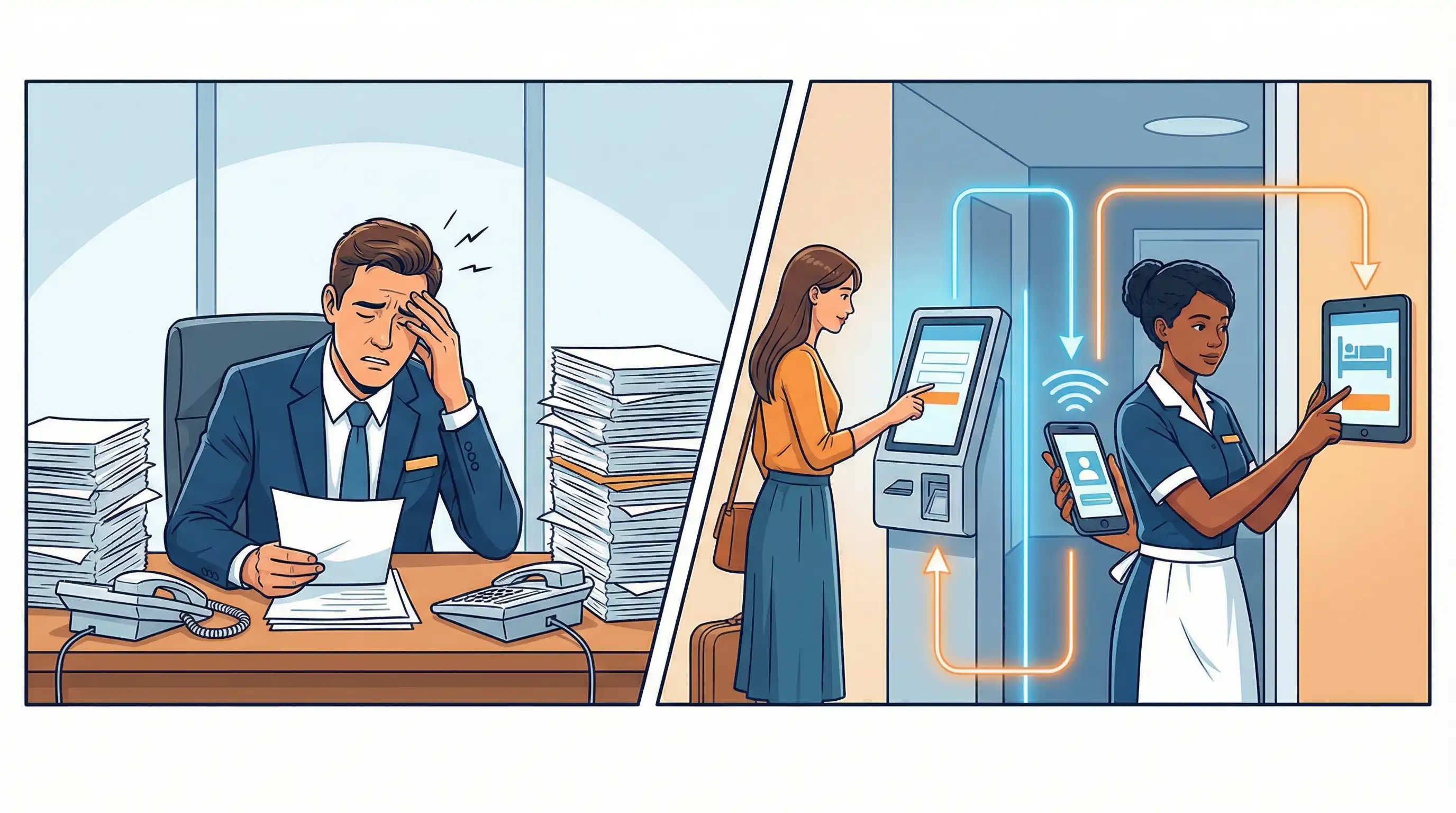
Prostay is a cloud-based PMS made just for hotel chains that run more than one property. It is a great choice for hotel companies who want a modern, hospitality-first way to manage many properties. Prostay was created from the ground up with portfolio management at its core, unlike other systems that were modified to work with several hotels.
Prostay gives corporate teams a single view of their portfolio, allowing them to keep an eye on and manage all of their properties from one place. Some of the benefits of central portfolio management are the ability to control rates and restrictions at the group level, search for availability across many properties, use brand and regional templates, and copy settings for new hotel openings. With Prostay's templated approach, your chain can get a new property up and running on your standardized configuration in only a few days.
The operational tools cover all of the daily tasks in the whole portfolio. With a consolidated reservations desk, you can book and rebook across properties without having to transfer systems. Unified guest profiles make sure that every property knows who you are. Standardized workflows for the front desk, housekeeping, and night audit save down on training time and make ensuring that every guest has the same experience, whether they are checking out in Cork or Dublin.
Prostay can manage situations that single-property systems have trouble with. You may make corporate contracts that can be used by more than one hotel, and you can keep track of production at both the property and portfolio levels. Group and MICE handling is available across the portfolio, so a conference that takes place in three different venues in the same city can be managed smoothly. You can use the same technology for city hotels, resorts, and serviced apartments in the same chain, which is called a "mixed portfolio."
Think about a chain with 12 hotels in Dublin, Cork, and Galway that handles corporate rates for a tech company with clients all over the world. With Prostay, the contract is made once at the group level, immediately synced to all relevant properties, and production is measured against the agreement throughout the whole portfolio. Changes to rates and extensions are handled from a central location, so there is no chance of pricing being uneven or updates being overlooked.
Prostay makes everyday chores easier for operations teams by automating and centralizing them. Teams that work on revenue get reliable, up-to-date information on the entire portfolio to help them make yield decisions. IT personnel have an easier time keeping things up to date and secure when they only have to deal with one system instead of many. As we'll see in the next section, finance teams receive something even more useful.
The fact that Prostay has a fully connected ecosystem is what really sets it apart from competing multi-property management software. The Prostay PMS, Tableview POS (a product from a sister firm), and Prostay Accounting all work together as one hospitality platform. They are not loosely connected systems that need middleware; they are natively linked components that share a similar data model.
The Prostay and Tableview POS connection lets costs for restaurants, bars, spas, and stores be posted to guest folios in real time. Item masters and tax rules that are shared make sure that things are always the same. Charge routing between rooms and outlets works perfectly, even amongst hotels in the same chain.
For example: A guest at Hotel A goes to the rooftop bar at Hotel B. Both hotels are in the same city and are part of the same chain. The guest puts their beverages on their room bill. When Prostay and Tableview work together, those fees go straight to the right room folio at Hotel A without anyone having to do anything, like exports or reconciliations. This workflow between properties is handled naturally.
Prostay Accounting is an accounting and finance system for hotels that works with both Prostay PMS and Tableview POS. This gets rid of the manual exports and reconciliations that are a pain for chains that use generic accounting software. PMS and POS automatically post revenue journal entries to the ledger. Property accounting fulfills chain needs without having to do any spreadsheet tricks for a better property accounting and financial reporting and financial performance.
For chains and other property types, Prostay Accounting offers a cloud based user friendly interface multi-property chart of accounts, consolidated financial statements for the whole portfolio, and postings across properties. When a guest at Property A utilizes credits they earned at Property B, or when head office spreads expenditures across properties, the accounting works appropriately without anyone having to do anything.
The efficiency benefits at the end of the month are really big. Automatic posting from PMS and POS every day means that finance doesn't have to rush to import data at the end of the period. Centralized management of VAT and GST makes ensuring that the rules are followed. Standardized reporting makes auditors and owners happy because the forms are always the same. With the integrated Prostay stack, chains can close month-end for 15 or more hotels in five business days. Before, this procedure took two weeks or longer with separate systems.
This means that financial teams will spend less time sorting through data and more time analyzing it. For operations, it means that charges go through accurately without having to teach employees how to do complicated tasks. For IT, a multi property management software it means having to keep up with only one vendor and one integration instead of a fragile web of connections across several systems.
Picking a multi property management software is a strategic choice that will affect how your chain works for the next 5 to 10 years. You need to go beyond feature checklists when you evaluate anything to see if it fits with your organization's specific goals, growth path, and way of doing things.
To begin, make a list of your needs and compare them to important evaluation criteria:
Total cost of ownership: Don't just think about license; also think about IT overhead, integration maintenance, training for turnover, and the expense of workarounds.
Hold structured sessions with people from the front office, revenue, finance, and IT. Map out the present problems: having duplicate visitor profiles across properties, having to manually combine reports, having rates load inconsistently, and having PMS and accounting not agree on numbers. Then, in a Prostay demo setting, try out those same situations to observe how the system handles them.
Most Prostay installations are done in steps. Start with 1–2 pilot properties and improve templates for rates, user roles, and reports based on input from real operations. Once the pilot properties are stable, roll out to the rest of the hotels in waves, maybe by region or brand tier. It usually takes 6 to 9 months for a 10 to 20 hotel chain to fully roll out, although this can alter depending on how complicated the process is and how well the company can handle changes.
No matter what system you use, you should follow best practices for change management. Train cluster champions so they can help their peers through the change. Before going live, practice on sandbox systems. Plan parallel runs where both the old and new systems run at the same time for a short time, usually one to two weeks, to find any differences. When possible, plan go-live dates for times when occupancy is low. Early January is better than Christmas week.
If you're a hotel group looking for a modern, fully integrated multi-property management system, you should choose Prostay. This is especially true if seamless POS and accounting integration with Tableview and Prostay Accounting are important to you.
The correct software will make all of your work more efficient, give you better data to work with, and save your team time on things that they presently spend a lot of time on. When you're teaching workers across several properties with different degrees of technological competence, it's important to have a platform that is easy to use and has a user-friendly layout.
Are you ready to see how Prostay can meet the needs of your chain? Get in touch with the Prostay sales team for a portfolio-wide demo and an estimate of your return on investment (ROI) based on the size and complexity of your property portfolio.