Core Market Segmentation of the Hotel Industry Explained
 Mika Takahashi
Last updated Oct 29, 2025
Mika TakahashiThe hotel industry has come a long way from the days of treating every guest the same. Today, successful hotels know that their guests are a mix of unique groups, each with their own preferences, needs, and spending habits. That’s where market segmentation of hotel industry shines as a powerful tool to boost revenue and create happier guests.
Studies from McKinsey reveal that hotels using smart market segmentation strategies can see revenue jump by as much as 40%. How? By tailoring pricing, marketing, and services to specific guest groups instead of using a one-size-fits-all approach.
Today’s hotel market segmentation digs deeper than just demographics. It uses data to uncover booking habits, price sensitivity, and what guests truly want. With the help of property management systems and customer relationship management tools, hotels can spot their most profitable segments and fine-tune their marketing efforts for maximum impact.
In this guide, we’ll cover everything from the basics of core market segments to the tech solutions that help hotels unlock their full revenue potential.
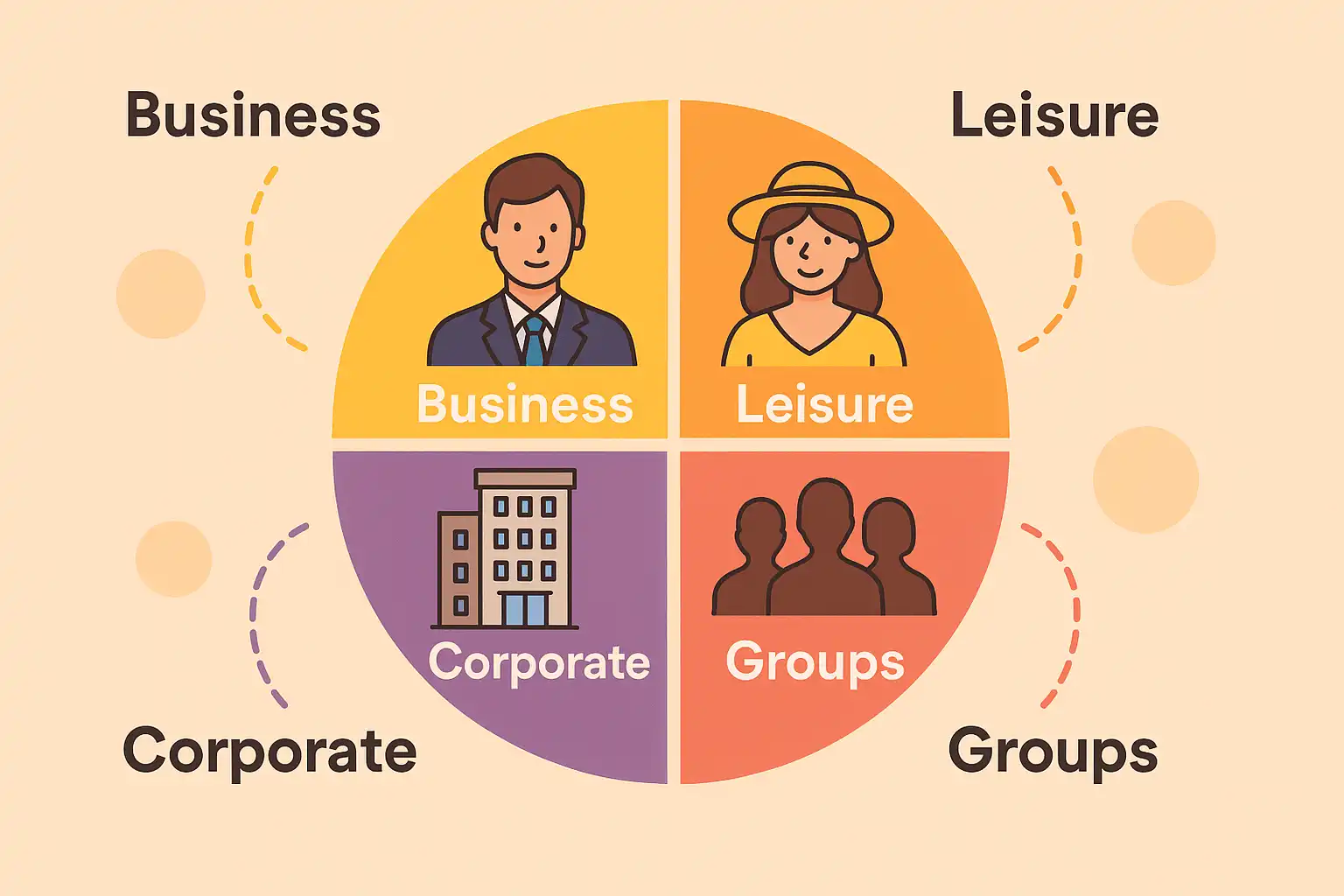
Simply put, market segmentation of hotel industry is the process of grouping guests based on shared traits, booking behaviors, and travel reasons. This approach moves hotels away from generic service and into delivering personalized experiences that guests appreciate—and that boost profits.
But it’s more than just sorting guests into categories. Market segmentation lays the groundwork for smart pricing, sharper marketing campaigns, and smarter resource use. When hotels truly understand their hotel’s target market, they can better manage everything from room availability to staff training.
Here are some of the key ways hotels slice their market:
The numbers speak for themselves: hotels that use data-driven segmentation often see a 15-25% bump in average daily rate by tailoring prices to each segment. And their targeted marketing campaigns can convert 3-5 times better than broad, generic ads.
Market segmentation transforms the old “one-size-fits-all” mindset into a dynamic way to serve guests better. Business travelers have different needs than leisure travelers, and group bookings require a different touch than individual stays. Understanding these differences helps hotels operate more efficiently and delight more guests.
The process starts by digging into data from property management systems, booking channels, and guest feedback. This treasure trove reveals who the most profitable guests are and how each segment contributes to the bottom line.
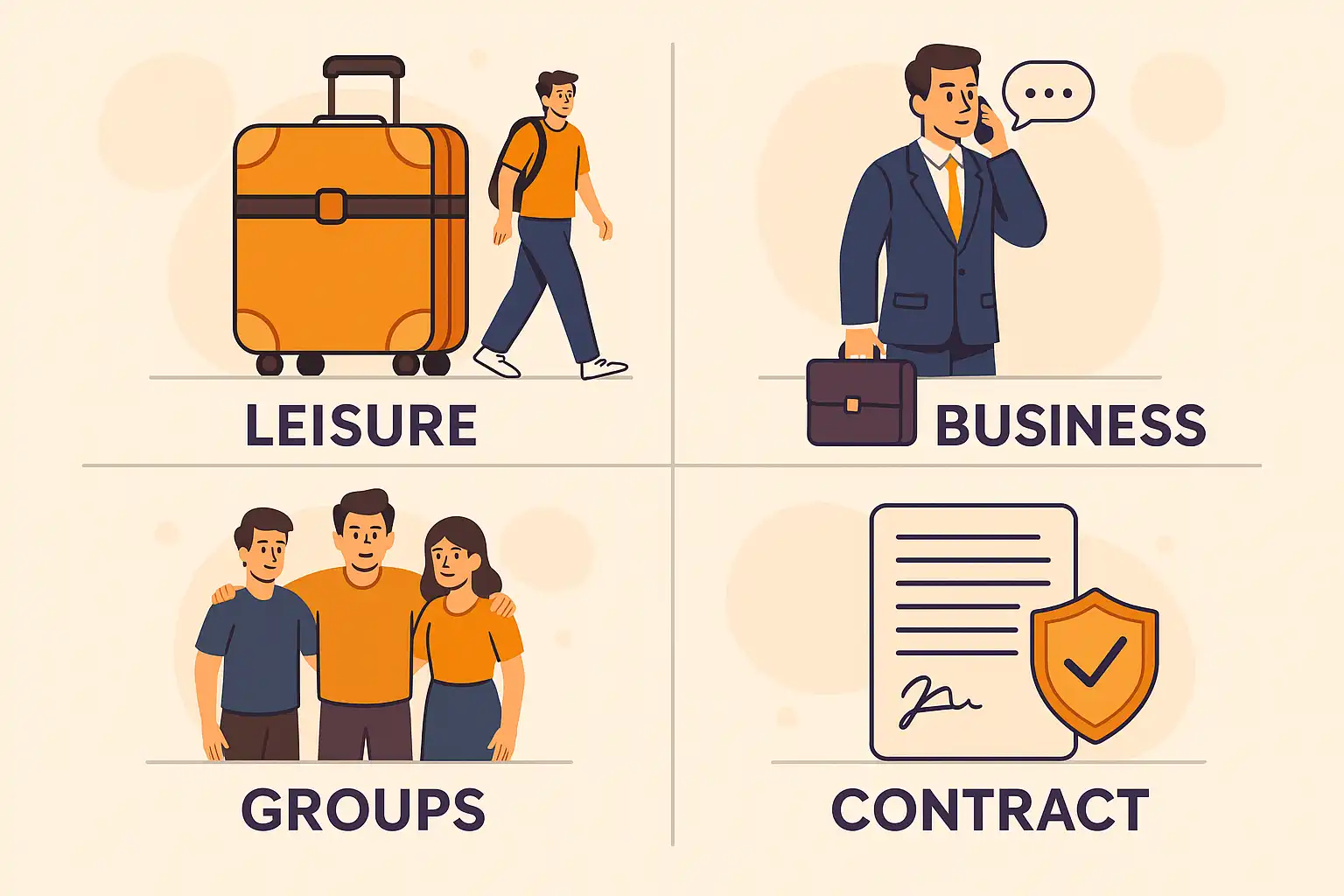
Knowing the main hotel market segments is key to crafting smart marketing and revenue strategies. The hospitality world usually breaks guests into four big groups, each with their own booking styles and service expectations.
Transient travelers are your everyday solo or small-group leisure and business guests booking at standard rates. They often make up 40-60% of bookings and are the backbone of many hotels.
Their booking habits vary: business travelers might book through global distribution systems or corporate travel companies, while leisure travelers often use online travel agencies or book directly on hotel websites. Walk-ins, though fewer, can bring valuable last-minute business.
Transient guests tend to have flexible travel dates and stays averaging 1-4 nights. Business travelers usually book weekdays and are less price sensitive during those times, while leisure travelers tend to book earlier and are more price conscious.
But transient travelers don’t just bring room revenue—they often spend on extras like dining, spa visits, parking, and local experiences. Hotels can boost revenue by offering upsells like room upgrades, late checkouts, and curated local packages.
To reach transient travelers effectively, hotels focus on optimizing direct booking channels with personalized offers, while maintaining strong partnerships with OTAs to capture price-sensitive leisure guests.
This segment includes business travelers whose companies have negotiated special rates and terms with hotels. These contracts usually guarantee a minimum number of room nights annually—often over 100—and come with specific cancellation policies and perks.
Corporate bookings flow through global distribution systems, travel management companies, and direct corporate accounts handled by hotel sales teams. While many trips are planned in advance, last-minute bookings for urgent business travel also happen.
Contracts often include benefits like complimentary breakfast, premium internet, or flexible check-in/check-out times. Corporate travelers expect reliable business amenities, smooth check-in, and loyalty program perks.
Though corporate rates may be lower than rack rates, the steady volume and weekday demand help hotels maintain occupancy during slower periods, providing valuable revenue stability.
Group bookings cover blocks of rooms reserved for events like conferences, weddings, sports teams, and more. Typically, groups reserve 6-10 rooms or more, sometimes up to 50-100+ depending on event size.
Groups usually book months in advance, giving hotels time to forecast demand and tailor pricing. Contracts often include meeting space, catering, and other amenities that drive additional revenue beyond rooms.
Within groups, SMERF segments (Social, Military, Educational, Religious, Fraternal) are important, especially in destination markets. These groups often book during shoulder seasons or weekdays, helping fill rooms when demand is low.
Group business offers hotels guaranteed room blocks, strong food and beverage revenue, and chances for repeat bookings. Weddings, corporate retreats, and annual events often become loyal customers.
Wholesale partners are intermediaries like tour operators and travel agencies who buy bulk room blocks at discounted rates to resell through various channels. This helps hotels reach markets they might not access directly, especially international travelers and package tours.
Wholesale rates are net, meaning hotels offer significant discounts in exchange for guaranteed volume. Guests booked through wholesalers include tour groups, free independent travelers booking via agencies, and production crews.
Distribution for wholesale business happens through OTAs, travel agencies, and packaged deals combining lodging, transport, and activities. Tour companies often create local experience bundles, adding revenue opportunities for hotels.
Wholesale contracts usually require substantial room block commitments—sometimes 10-30% of annual inventory—and include clauses for performance and seasonal adjustments.
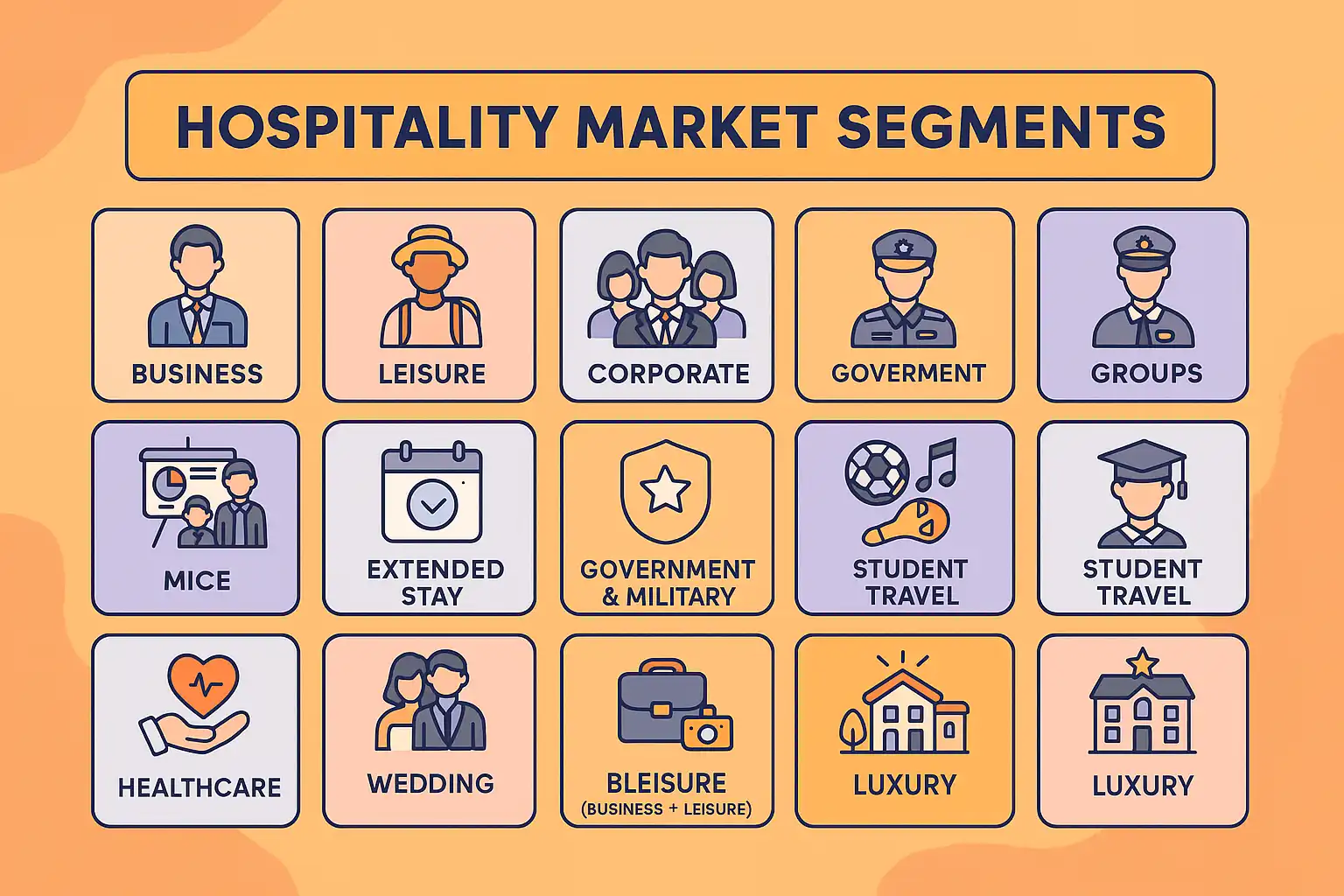
Think of the MICE segment as the go-to group for big events—conventions, trade shows, and incentive trips that bring lots of guests together. These travelers usually plan months ahead and tend to spend generously. Hotels welcoming MICE guests need to offer spacious meeting rooms, great catering, and top-notch tech support to make every event a success.
These guests are in it for the long haul—staying a week or more, often for work assignments, relocations, or projects. They look for value-packed stays with comfy in-room perks like kitchenettes and workspaces. Hotels that cater to them often feel more like a home away from home, with loyalty perks to keep them coming back.
Government and military folks stay for official duties, training, or moves. They’re usually mindful of budgets and need hotels to follow specific per-diem rates and security rules. For these guests, reliability and compliance are key, alongside solid accommodations.
This group includes pilots, flight attendants, train staff, and shipping crews who need quick, flexible stays near transport hubs. They often book in blocks, and hotels that offer convenience, flexible check-ins, and negotiated rates win their loyalty.
Travelers seeking medical care, treatments, or rehab—and their companions—are a growing crowd. They prefer hotels close to hospitals with longer stays and special amenities like diet-friendly meals and mobility assistance. Countries like Thailand and Mexico are hotspots for this segment.
From wedding parties to family reunions and milestone celebrations, this segment books group packages that combine event spaces, catering, rooms, and leisure activities. Hotels need to be ready with customizable services to make these special occasions unforgettable.
Whether it’s a sports team gearing up for competition or artists on tour, these groups require coordinated group lodging, meal plans, and secure logistics. Hotels that handle their unique demands smoothly earn repeat bookings.
Academic conferences, exchange programs, and student tours fall here. These price-conscious travelers often book through agencies or schools, so competitive rates and group-friendly policies are a must.
Pilgrims heading to sacred sites like Hajj or Lourdes need large group coordination, modest pricing, and cultural sensitivity. Hotels serving them must respect traditions and provide supportive services.
Long-term stays for workers on projects like construction or oil rigs make up this segment. Booked mostly by companies, these guests value dependable, no-frills comfort and negotiated long-term rates.
A post-pandemic favorite, bleisure travelers blend work and play in one trip. Hotels that offer flexible check-in/out, dedicated workspaces, and leisure packages cater perfectly to their hybrid lifestyle.
Seeking exclusivity and personalized service, these guests book suites, villas, or boutique resorts. They expect high-end experiences and often show strong loyalty to brands that deliver.
Driven by environmental values, these travelers choose eco-certified hotels and sustainable local experiences. Millennials and Gen Z are leading this charge, making sustainability a smart focus.
This emerging group thrives on strong Wi-Fi, co-working spaces, and long-stay deals. Hotels that foster community and flexible accommodations attract these remote professionals.
Guests in this segment stay briefly before or after cruises or tours. They need convenient locations near ports, luggage storage, and flexible timing to fit their travel schedules.
Adopting market segmentation brings a host of benefits beyond just boosting revenue. It improves guest satisfaction, streamlines operations, and sharpens a hotel’s competitive edge.
Segment-specific pricing lets hotels fine-tune rates based on each group’s price sensitivity. Revenue managers can move beyond blanket pricing to tailor strategies by segment, boosting average daily rates by 15-25%.
Understanding guest preferences also opens doors for targeted upselling—business travelers might want premium Wi-Fi or room upgrades, while leisure guests may prefer spa or local experience packages.
Tracking performance by segment helps hotels spot their most profitable guests and growth areas. This data-driven approach improves forecasting and inventory allocation, like reserving weekend availability for leisure travelers and weekdays for corporate guests.
Personalizing services based on segment needs leads to happier guests and stronger loyalty. Business travelers appreciate efficient check-in, business centers, and fast internet, while families look for connecting rooms and kid-friendly amenities.
Tailored communication is key—pre-arrival emails for business guests might highlight meeting facilities, while leisure travelers receive info on local attractions. Offering a mix of tech and personal service caters to different preferences and boosts satisfaction.
Hotels that clearly define their value for each target segment stand out. Whether it’s being known for top-notch corporate services or excellent group event hosting, this focus builds brand strength and justifies premium pricing.
Analyzing market share by segment helps hotels spot growth opportunities and adjust strategies to capture more business. Segment-specific loyalty programs also deepen guest relationships and reduce marketing costs.
Getting segmentation right means combining solid data, smart analysis, and clear strategy. It’s an ongoing process that helps hotels stay nimble and competitive.
Property management systems are the backbone, capturing booking patterns, guest behavior, and spending. Integrating CRM data adds guest preferences and communication history for a fuller picture.
Surveys and guest feedback provide qualitative insights, revealing motivations and satisfaction levels beyond the numbers. External market reports and competitor data add valuable context.
Analyzing this data uncovers patterns in profitability, seasonal demand, and booking channels, guiding smart segment definitions.
Start with demographics like age and income, then layer in geography, booking behavior, and psychographics—think eco-conscious travelers or luxury seekers.
Limit yourself to 5-6 primary segments to keep marketing focused and operations manageable.
Evaluate segments by profitability, size, growth potential, accessibility, and seasonality. Allocate marketing and resources to those offering the best return on investment.
Modern hotels rely on technology to collect, analyze, and act on guest data in real time.
Property management systems store guest profiles and booking data. CRM systems help with personalized marketing and service. Revenue management systems enable dynamic pricing by segment. Business intelligence tools visualize performance and trends.
Channel managers automate inventory distribution across OTAs and booking platforms, allowing segment-specific rates and availability.
Direct booking engines offer tailored packages to encourage bookings on hotel websites.
Google Analytics tracks website behavior by segment, helping optimize digital marketing.
Email marketing platforms enable targeted campaigns and ongoing guest engagement.
Successful segmentation requires clear marketing strategies, operational excellence, and ongoing performance monitoring.
Craft messages that resonate with each segment—efficiency for business travelers, relaxation for leisure guests.
Choose channels wisely: LinkedIn for corporate clients, social media for leisure travelers.
Create content that addresses segment-specific interests and needs.
Partner with organizations and event planners aligned with your target segments.
Train staff to recognize and serve different guest segments effectively.
Allocate room types and amenities based on segment demand.
Track service quality and guest satisfaction metrics by segment.
Continuously refine your segmentation based on data and market shifts.
Keep an eye on key metrics like RevPAR, ADR, occupancy, and satisfaction by segment.
Regularly report on booking trends and market share.
Benchmark against competitors to identify opportunities.
Measure ROI on marketing spend per segment.
Adjust strategies quarterly to stay ahead of market changes.
As you embark on or refine your hotel market segmentation journey, remember that it’s about more than just revenue—it’s about creating meaningful guest experiences, running efficient operations, and carving out a strong place in a competitive market.
With the right data, tools, and strategies, your hotel can harness the full power of market segmentation to drive growth and delight every guest who walks through your doors.