10 Key Hotel Performance Metrics & How to Measure Them
 Mika Takahashi
Last updated Dec 11, 2025
Mika TakahashiIn today’s fast-paced and competitive hospitality industry, truly understanding your hotel’s performance is more important than ever. As the sector bounces back from recent challenges and adapts to changing guest expectations, hotel owners and operators need to master the art—and science—of measuring performance in a comprehensive way.
While RevPAR growth averaged a modest 1.8% CAGR in 2025, inflation climbed higher at 4.2% CAGR, putting real pressure on hotel profitability. The gap between top-performing and struggling brands has also widened—from a difference of 5 to 7 percentage points—making strategic performance optimization absolutely essential.
This guide will take you through the must-know metrics, strategies, and tools to measure and improve your hotel’s performance across every key area. From financial benchmarks to guest satisfaction, operational efficiency to digital innovation, you’ll learn how to build a solid framework that supports long-term success.

Hotel performance today goes way beyond simple financial numbers. In the post-pandemic world, successful hotels excel not just in revenue but also in operational efficiency, guest satisfaction, and embracing new technology. Performance now means optimizing revenue, controlling costs, delivering great guest experiences, and running sustainable operations.
Recent data shows a “two-speed” recovery in the hospitality industry. Higher-priced hotels are bouncing back faster, buoyed by strong spending from affluent travelers and group bookings. Meanwhile, lower-priced properties are still catching up. This split creates new challenges—and opportunities—for benchmarking and improving performance.
In 2025, average occupancy rates hover around 66.2% nationally, but this masks big regional differences. The top 25 markets enjoy occupancy north of 70%, while many secondary markets struggle to hit 60%. This makes it clear: knowing your market and tailoring your strategy accordingly is critical.
To get a true picture of hotel performance, you need to look at multiple factors at once. Focusing only on traditional metrics like occupancy and average daily rate (ADR) means missing out on opportunities to boost guest loyalty, operational efficiency, and total revenue.
Financial hotel performance remains the heart of hotel success, but today’s metrics dig deeper to reveal profitability and revenue optimization insights. Understanding these hotel key performance indicators (KPIs) lets hotel owners make smarter decisions about pricing, cost control, and investments.
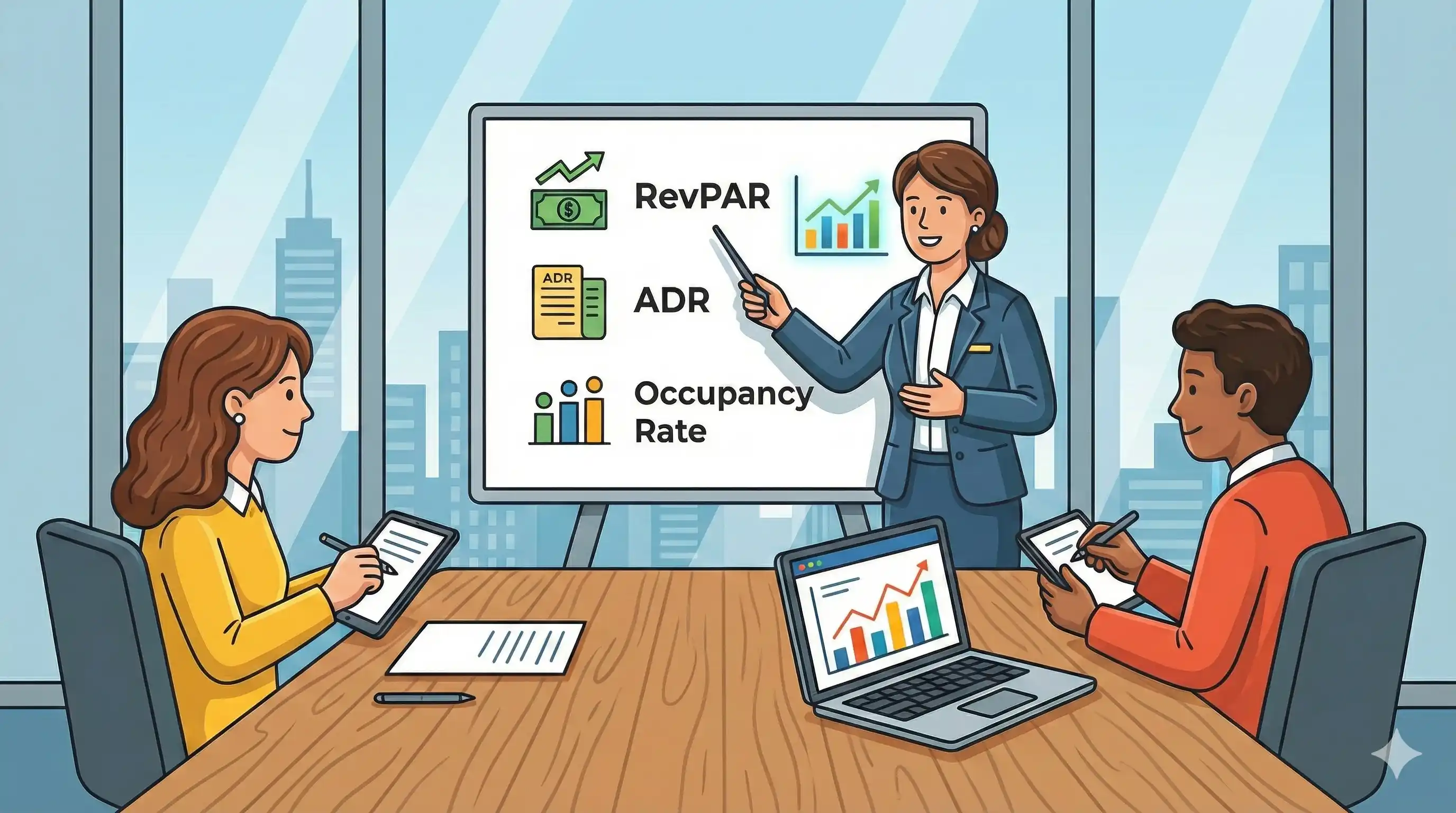
RevPAR is still the go-to benchmark of hotel performance in the industry. It’s simple to calculate: multiply your occupancy rate by your average daily rate, or divide total room revenue by available rooms. For example, if you have 100 rooms, 70% occupancy, and $150 ADR, your RevPAR is $105.
Keep in mind, RevPAR varies widely by segment and location. Luxury hotels in major cities might hit over $200, while economy hotels in smaller markets may aim for $60-80. The trick is knowing your competitive set and tracking your RevPAR growth against the market.
ADR measures the average revenue earned per occupied room. You calculate it by dividing total room revenue by the number of rooms sold. ADR tells you how much guests are willing to pay on average, giving insight into your pricing power and market positioning.
Seasonality plays a big role here—summer months often bring 15-25% higher ADR in leisure destinations, while business hubs peak during weekdays. Hotels that base their pricing strategies on detailed market analysis tend to outperform those that don’t.
GOPPAR goes beyond revenue to show actual profitability per available room. With RevPAR growth slowing industry-wide, GOPPAR is becoming the ultimate measure of operational success. It factors in all revenues minus operating expenses, divided by total available rooms.
Top performers hit GOPPAR margins between 35-45% of RevPAR, while those struggling may fall below 25%. Labor efficiency, energy management, distribution costs, and revenue optimization across all services all impact GOPPAR.
TRevPAR gives you the full picture by including revenue from food and beverage, spa, parking, and other amenities. This metric is especially important for full-service hotels where non-room revenue can make up 40-60% of total income.
You calculate TRevPAR by adding all revenue sources (room, F&B, others) and dividing by available rooms. Properties that excel here show how much they earn per guest beyond just the room stay.
Operational efficiency is a key driver of both guest satisfaction and your bottom line. Tracking these metrics helps you spot areas for improvement and benchmark your hotel against industry standards. Staying on top of operational performance means you can manage costs proactively and deliver a better guest experience.
In 2025, the average occupancy rate is around 66.2%, up slightly from pre-pandemic levels. But remember, averages hide big differences by property type, location, and season. Knowing your market’s unique patterns helps you set realistic targets and spot performance gaps.
Average length of stay (ALOS) affects operational costs and revenue opportunities. Extended stay hotels naturally see longer stays, but traditional hotels are also encouraging guests to stay longer through packages and loyalty perks. Each extra night usually cuts per-night operational costs by 15-20% while boosting total guest value.
Labor cost per occupied room is a hot topic, especially with ongoing staffing challenges and wage increases. Full-service hotels aim for $35-50 per occupied room, limited-service for $15-25. Smart scheduling and cross-training staff can help keep labor costs in check without sacrificing service.
Energy costs per available room reflect both efficiency and sustainability. Utilities typically account for 4-6% of revenue, so managing energy use can really boost profits. Many hotels are turning to smart tech and energy monitoring to cut consumption by 20-30%.
Housekeeping efficiency directly impacts guest satisfaction and costs. Industry standards see room turnover times between 30-45 minutes depending on room type and service level. Hotels that can turn rooms faster without compromising quality gain a competitive edge with more booking flexibility and lower labor expenses.
Maintenance response times also matter. Critical issues like no hot water or HVAC failure should be addressed within 15 minutes, while routine fixes should happen within 24 hours. Monitoring these times helps with staffing and prevents guest complaints.
Preventive maintenance completion rates keep your property in top shape and guests safe. Best practice is completing 95% of scheduled tasks on time, which reduces emergency repairs, lowers costs, and improves guest satisfaction.
Hotel guest experience is no longer just a nice-to-have; it’s a key performance indicator that directly affects revenue and long-term success. Measuring guest satisfaction helps you find areas to improve and see how well your service initiatives are working.
Net Promoter Score (NPS) is a popular way to gauge guest loyalty. The industry average is around 31, but top hotels score above 50. NPS comes from asking guests how likely they are to recommend your hotel, then subtracting detractors from promoters.
Online review scores from TripAdvisor, Booking.com, Google, and others give real-time feedback on service quality. It’s important to track not only overall ratings but also specific areas like cleanliness, service, location, and value. Having a comprehensive database of guest feedback helps you spot recurring issues and make improvements.
Repeat guest percentage shows how well you’re building loyalty. Leisure hotels average 20-30%, business hotels 40-50%. Higher repeat rates mean lower marketing costs and more profits since loyal guests often book direct and spend more on extras.
Complaint resolution speed also impacts satisfaction and reviews. Leading hotels resolve issues within 24 hours, with urgent problems handled immediately. Tracking resolution times and follow-up satisfaction helps improve your service recovery.

Revenue management is all about pricing smartly and staying competitive. These metrics help you optimize revenue and understand your market position based on your hotel performance.
Market Penetration Index (MPI) compares your occupancy to your competitive set. An MPI of 100 means you match the average; above 100 means you’re outperforming. It helps you figure out if your revenue issues come from pricing or demand capture.
Revenue Generation Index (RGI) compares your RevPAR to the market’s. An RGI of 100 means you’re on par; above 110 means strong revenue management and positioning. Tracking RGI trends shows if you’re gaining or losing market share.
In 2025, the average booking window is about 28 days, but it varies a lot. Leisure travelers book 45-60 days ahead; business travelers 10-14 days. Knowing your booking patterns helps you fine-tune pricing and forecasting.
Channel performance analysis reveals which booking sources bring the most revenue and bookings. Direct bookings tend to be more profitable because of lower commissions and upsell chances. Leading hotels achieve 35-50% direct booking ratios through smart marketing and loyalty programs. Tracking conversion rates and guest value by channel lets you optimize your marketing campaigns.
Dynamic pricing is now used by 67% of hotels, with those using it seeing 5-15% better RevPAR than manual pricing. Success depends on good data, staff training, and system integration.
Rate parity ensures consistent pricing across channels, protecting your brand and revenue. Top hotels monitor hundreds of sites daily and fix discrepancies quickly using automated tools and clear communication.
Accurate demand forecasting is crucial for revenue and operational planning. The best revenue managers are within 5% accuracy for short-term and 10% for long-term forecasts. Accurate forecasts help with pricing, staffing, and inventory management.
Digital metrics matter more than ever as guests expect seamless tech experiences. Tracking these shows guest satisfaction with technology and operational gains from digital tools.
Website conversion rates measure how well your site turns visitors into bookers. The industry average is 2.5%, but top sites hit over 4%. Factors include page speed, mobile optimization, ease of booking, and content quality. Tracking conversion by traffic source helps optimize marketing spend.
Mobile bookings now make up 58% of hotel reservations in 2025. Hotels optimized for mobile see 20-30% better conversion than desktop-only sites. This means responsive design, simple checkout, and mobile features like one-click booking and digital payments.
Property management system (PMS) efficiency affects guest experience and productivity. Key metrics include check-in time (under 3 minutes), check-out time (under 2 minutes), and uptime (99.5%). Modern PMS integrate with other hotel systems to streamline operations and guest services.
Guest tech satisfaction covers Wi-Fi quality, mobile key use, and digital amenities. Reliable Wi-Fi is essential for 85% of guests, making network performance critical. Mobile key adoption varies by brand and guest type, with business travelers leading.

Optimizing hotel performance means collecting the right data, analyzing it, and planning actions. These strategies turn insights into real improvements across your hotel.
Dashboards are key. The best ones combine metrics from your PMS, RMS, CRM, and finance systems. Some hotels use simple tools like Excel or Google Sheets; others rely on specialized software like STR, Duetto, or Revinate. The goal is to give everyone access to relevant data and help them understand what it means.
How often you review performance depends on your needs. Weekly reviews focus on short-term fixes like staffing and pricing. Monthly reviews look at trends and strategy. Quarterly reviews dive deeper into market conditions and annual goals.
Competitor analysis means picking the right set of hotels to compare against and tracking their performance regularly. STR data is popular for this, along with rate shopping and guest review analysis. Good competitor analysis looks beyond rates to service, amenities, marketing, and feedback.
Training your staff on hotel performance metrics is vital. When everyone understands how their role affects key numbers, it creates a culture of accountability and continuous improvement.
Finding performance gaps requires digging into underperforming areas and their causes. Common issues include RevPAR lagging behind competitors, falling guest satisfaction, or rising costs. Look at internal factors like service and pricing, plus external ones like market trends.
Set realistic improvement goals—usually aiming for 5-10% annual growth—but tailor these to your market and hotel type. Overly aggressive targets can backfire, causing burnout or unsustainable practices.
Allocate resources wisely across technology, training, marketing, and capital projects. Hotels with the best gains often invest 3-5% of revenue in tech and training. Align your budget with your biggest opportunities.
Focus on a manageable number of initiatives—3-5 per year is ideal—so you can give each enough attention to succeed. This beats spreading yourself too thin and only making surface-level changes.
The hotel industry keeps evolving fast, with new tech and guest demands reshaping how we measure performance. Staying ahead means preparing for these trends.
Artificial intelligence is revolutionizing hotel performance analytics. AI can forecast demand, optimize pricing, and spot service issues before guests notice. Automated insights save time and boost decision accuracy. Hotels using AI often see 10-15% improvements in key metrics within the first year.
Sustainability is no longer optional. Tracking carbon footprints, water use, and waste diversion influences guest choices and corporate bookings. Many companies demand sustainability reporting from hotels.
ESG (environmental, social, governance) compliance goes beyond environment to include employee satisfaction, community engagement, supply chain ethics, and governance. Hotels strong in ESG often charge premium rates and enjoy better guest loyalty.
Real-time monitoring lets you react instantly instead of waiting on historical data. Dashboards update live, alerting managers to adjust operations, prices, or service as needed. This is crucial as guests expect fast service fixes.
Emerging tech like IoT sensors, facial recognition, and voice analytics will offer unprecedented insights into guest behavior and preferences. These tools can anticipate needs but must be balanced with privacy and comfort concerns.
Data integration will deepen insights into length of stay, booking behaviors, and conversion rates. Hotels mastering this will gain a real edge in a complex market.
Tracking hotel performance across many areas takes good systems and processes, but it pays off with happier guests, leaner operations, and stronger finances. The hotels that thrive will be those embracing comprehensive measurement while staying true to hospitality’s core values.
Hotel performance in 2026 calls for a broad understanding of interconnected metrics—from financial results and operational efficiency to guest experience and technology. The best properties know that while RevPAR remains important, it’s just one piece of the puzzle.
Long-term success depends on building strong measurement systems that deliver actionable insights across all key areas. Knowing how many guests prefer mobile check-in, how much revenue comes from direct bookings versus OTAs, and much more gives you a full picture of your property’s health.
As the hotel industry continues to change, those investing in comprehensive hotel performance measurement and ongoing optimization will be best positioned to boost profitability, deepen guest loyalty, and grow sustainably. Use the strategies and tools in this guide to start building your performance excellence today.
Remember: optimizing hotel performance is a journey, not a destination. Keep analyzing, improving, and adapting—and your hotel will thrive in a competitive world.