How to Increase Hotel ADR: 10 Proven Strategies to Boost Revenue
 Mika Takahashi
Last updated Oct 22, 2025
Mika TakahashiYour hotel’s average daily rate (ADR) isn’t just a number on a dashboard—it’s a crucial indicator of how well your property is doing in today’s competitive hospitality landscape. With rising operational costs and guests expecting more, maximizing room revenue is more important than ever for hotel operators aiming for lasting success.
Simply put, ADR reflects the average revenue earned from each occupied room, making it one of the most important hotel metrics for tracking financial performance. Unlike occupancy rates alone, ADR shows exactly how much revenue you generate per room sold. The adr formula is straightforward: total room revenue divided by number of rooms sold equals your average daily rate.
That said, many hotels find it tricky to increase ADR. Some focus too much on occupancy and neglect room rates, while others set prices without fully considering market demand or guest behavior. The result? Missed chances to boost revenue and less-than-ideal financial results.
This guide walks you through 10 proven strategies that successful hotels use to increase ADR while keeping guests happy and maintaining a strong market presence. From quick, easy wins you can start today to advanced revenue management techniques, these tips will help you maximize room revenue and improve your hotel’s financial performance.
The fastest way to boost your hotel’s adr is by making tactical changes that don’t require a big investment but can deliver quick results. These quick wins focus on optimizing your current operations and guest interactions to capture more revenue.
Implement dynamic pricing to adjust rates based on demand and local events. Think of your room rates like airline tickets—they should change with real-time market conditions. Keep an eye on booking pace 30-60 days ahead and raise prices when demand picks up. Even boutique hotels can command premium pricing during peak tourist seasons or major local events by using smart dynamic pricing strategies.
Upsell room upgrades and add-on services at check-in. Train your front desk team to spot opportunities to offer upgrades when guests arrive. After a long journey, many guests are happy to pay a bit more for extra comfort. Aim for a 30-40% success rate on upgrade offers to significantly increase your average revenue per guest.
Create value-packed packages bundling rooms with local experiences. Work with local attractions, restaurants, and activity providers to offer bundles that justify higher room rates. For example, a “Romance Package” with a complimentary bottle of champagne, spa treatments, and dinner reservations lets you raise the room-only rate while enhancing the guest experience.
Focus on high-value customer segments like business travelers and event attendees. Business travelers usually have bigger budgets and are less price-sensitive than leisure guests. Develop corporate packages that include perks like complimentary breakfast and late check out to attract this lucrative segment.
Keep tabs on competitor pricing daily and adjust your rates accordingly. Use competitive intelligence tools to see how similar hotels price their rooms. You don’t have to match every price, but understanding market rates helps you make smart pricing decisions that protect your ADR during busy times.
Leverage seasonal demand and local events to charge premium rates. Keep track of city-wide events, conferences, and festivals at least six months ahead. These events create scarcity, letting you raise room rates significantly. Hotels near convention centers often see their hotel average daily rate jump by 25-50% during big conferences.
Dynamic pricing is the backbone of effective ADR optimization. Unlike fixed pricing, dynamic pricing adjusts room rates in real time based on demand, competitor rates, and market trends.
Use demand-based pricing algorithms to tweak rates automatically. Modern property management systems can adjust prices based on booking speed, available inventory, and historical trends. Set price multipliers that raise rates when demand crosses certain thresholds to maximize total room revenue during peak times.
Watch booking patterns 30-90 days ahead to spot high-demand periods. Analyze your booking curve to see when reservations pick up for different guest types. Business hotels often see a surge 7-14 days before arrival, while resorts may have longer booking windows during vacation seasons.
Apply price multipliers during peak seasons, holidays, and local events. Set clear rules to increase rates automatically during busy times. For example, a 1.5x multiplier during city-wide events or 2x during holidays can boost your total revenue without manual tweaks.
Set minimum rate floors to protect ADR during slow times. Don’t let your rates fall below your cost plus desired profit. Even with low occupancy, maintaining rate integrity preserves your brand’s value and market position.
For instance, hotels in Barcelona raise their ADR by around 40% during the Mobile World Congress by using smart pricing strategies that reflect the influx of business travelers and limited hotel availability.
Local events and seasonal trends offer natural chances to increase adr through smart positioning and premium pricing. The trick is to identify these early and market your hotel as the go-to for event attendees.
Track city-wide events, conferences, and festivals 6-12 months in advance. Build connections with local convention bureaus and tourism boards to get early info on upcoming events. This lets you adjust pricing and inventory before demand hits.
Create event-focused packages with premium pricing for conferences and concerts. Tailor packages to event guests’ needs. For business conferences, include meeting rooms, fast Wi-Fi, and express checkout. For concert-goers, offer late check out and shuttle services. These packages justify higher rates while boosting guest satisfaction.
Partner with local attractions to offer exclusive experiences that support higher rates. Work with museums, theaters, and tour operators to create unique guest experiences. These partnerships differentiate your hotel and add revenue streams that back up premium pricing.
Set minimum stay rules during big events. Require 2-3 night minimum stays during major events to maximize revenue and cut turnover costs. This ensures guests stay for the whole event rather than just one night.
Promote your hotel as the top choice for event guests. Highlight your proximity to venues, relevant amenities, and exclusive packages in your marketing. Event attendees often have higher budgets and seek convenience and comfort.
Managing your inventory strategically helps steer guests toward higher-rate room categories, boosting revenue by creating scarcity for cheaper options while keeping premium rooms available.
Sell lower-category rooms first to encourage upgrades. Close off standard rooms when demand is high, nudging guests to pick pricier options. This works well when overall availability is tight, as guests prefer booking any room rather than none.
Limit standard room availability during peak times to drive upgrade revenue. Keep some premium rooms reserved for walk-in upgrades or last-minute guests willing to pay more. This keeps flexibility to maximize revenue from high-value bookings.
Create artificial scarcity by pulling lower-rate rooms when demand is strong. Remove your cheapest room types from booking channels when demand signals strong pricing power. This pushes price-sensitive guests to book higher categories or look elsewhere, attracting guests ready to pay more.
Use length-of-stay controls to optimize revenue during busy periods. Set minimum stays to reduce turnover and capture multi-night bookings at premium rates.
Apply overbooking carefully to maintain full occupancy at top rates. Manage overbooking based on past no-shows and cancellations to keep occupancy high without losing revenue.
Different guests have different spending habits and price sensitivities. Targeting those who pay more and spend on extras helps you sustainably raise your hotel’s adr and build loyalty.
Target business travelers with corporate packages and flexible bookings. Business guests often book late and are less price-sensitive. Offer packages with perks like free breakfast, Wi-Fi, and flexible cancellation. These guests tend to stay longer and return often, providing steady revenue at premium rates.
Build relationships with event planners and group coordinators. Groups for conferences, weddings, and corporate events usually pay higher rates than individual leisure guests. Work with planners for advance bookings and favorable terms on rooms and extras.
Create loyalty programs that reward repeat bookings without discounting. Offer perks like free upgrades, late check out, and early check in to frequent guests while keeping rates intact. This builds loyalty without hurting your ADR.
Market to affluent leisure travelers through luxury travel channels. Reach high-income guests via premium booking platforms and travel advisors. These travelers seek unique experiences and pay more for exceptional service and exclusive amenities.
Offer extended stay packages for long-term business guests. Provide weekly or monthly rates for extended stays, especially in business-heavy markets. Though rates may be lower per night, these bookings guarantee occupancy and steady cash flow.
Upselling and cross-selling can boost your average revenue per guest by 15-30% while making their stay more enjoyable. The key is training your team to spot chances and offer real value.
Train front desk staff to upsell room upgrades with a 50% success goal. Teach staff to understand guest preferences and confidently present upgrade benefits, focusing on value, not just price. Track success and coach regularly to improve results.
Bundle spa treatments, dining credits, and local tours with rooms. Offer packages like a “Wellness Weekend” that combine accommodations with spa services, healthy meals, and fitness classes. This raises total revenue and creates a seamless guest experience.
Charge for early check in and late check out during busy times. Many guests will pay $25-50 for extra flexibility, especially business travelers with tight schedules.
Create tiered pricing for amenities like Wi-Fi, parking, and breakfast. Offer basic Wi-Fi free but charge for high-speed access. Give loyalty members free breakfast but charge walk-ins. This adds ancillary revenue while rewarding frequent guests.
Send pre-arrival emails promoting upgrades and add-ons. Reach out 24-48 hours before arrival with personalized offers and local activities. This captures extra revenue early and helps guests plan their stay.
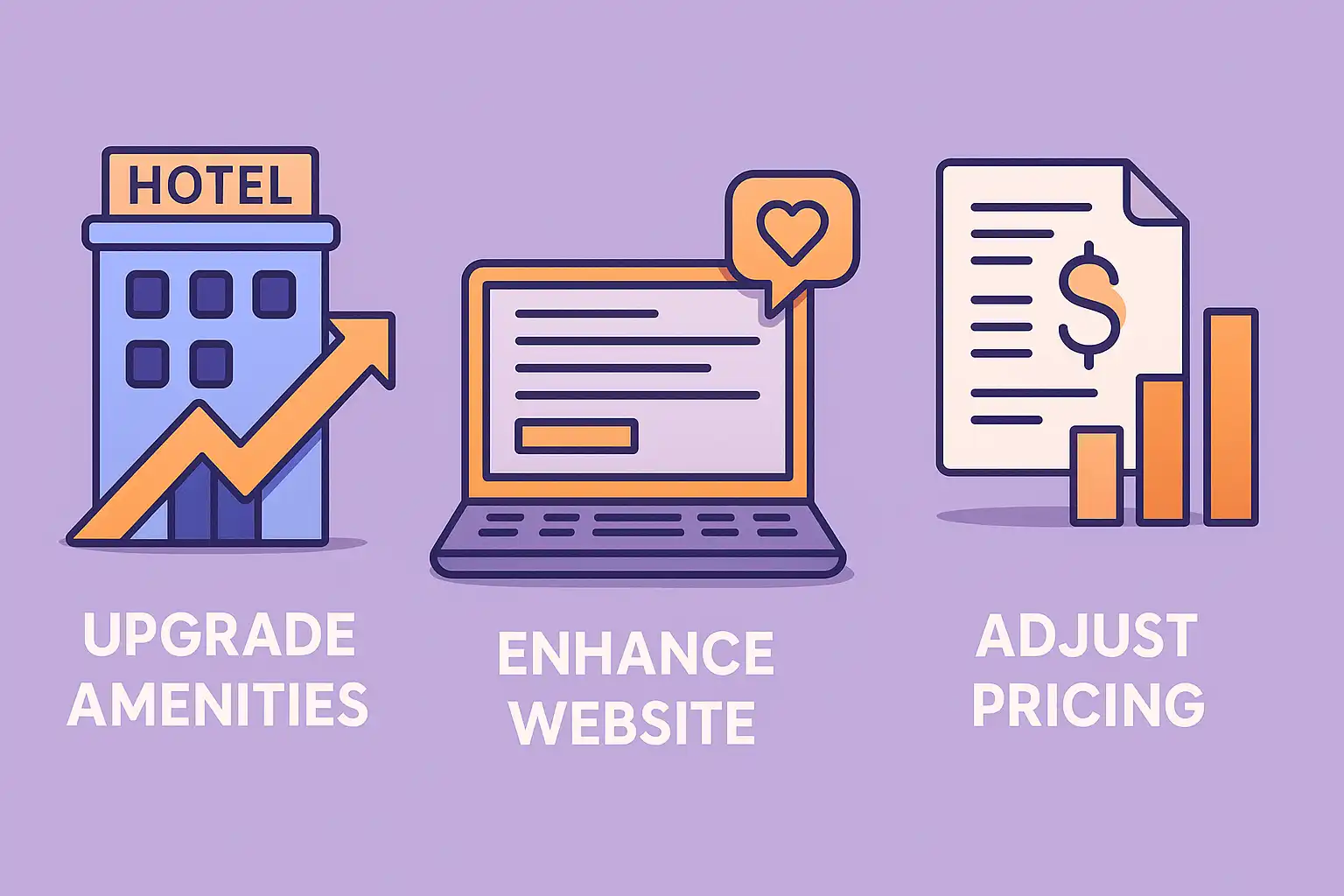
Well-crafted packages let you raise your average daily rate by bundling services and creating value that guests appreciate. Focus on your hotel’s strengths, local partnerships, and guest preferences.
Design romance packages for anniversaries and honeymoons with 25-40% markups. Include champagne, rose petals, spa treatments, and special amenities. These appeal to guests celebrating special moments who are less price-sensitive.
Create family packages with meals, activities, and kid-friendly perks. Offer connecting rooms, children’s meals, and attraction tickets. Families value convenience and will pay for comprehensive packages. Include extras like cribs and bathrobes to enhance their stay.
Develop business packages with meeting rooms, breakfast, and late checkout. Business travelers want convenience and productivity. These packages attract corporate guests seeking all-in-one solutions.
Offer seasonal packages like “Winter Escape” or “Summer Adventure.” Tailor packages around seasonal activities and local sights to attract guests looking for themed experiences.
Partner with local restaurants and attractions for exclusive deals. Work with high-quality local businesses to offer unique experiences that justify higher rates, support the community, and boost your hotel’s reputation.
Encouraging direct bookings helps you avoid OTA commissions and build stronger guest relationships, directly impacting your revenue and allowing for personalized service that commands higher rates.
Offer rate parity plus exclusive perks for direct bookings. Match OTA rates but add benefits like free breakfast, upgrades, or flexible cancellations for direct bookers. This adds value without cutting your published rates.
Guarantee best rates with extra benefits on your website. Promise to beat lower rates found elsewhere and offer additional perks for direct bookings. This builds trust and encourages guests to book directly.
Use retargeting campaigns to convert OTA browsers into direct bookers. Track visitors who check your property on OTAs and send them special direct booking offers. This turns price shoppers into direct customers, protecting your margins.
Create member-only rates and early access to promotions. Build a membership program offering exclusive discounts and packages. Though these may be lower than public rates, they drive direct bookings and build loyalty that leads to full-rate repeat stays.
Reduce reliance on OTAs to protect your ADR from commission erosion. While OTAs provide exposure, their fees cut into your net ADR. Improve your direct booking rate through targeted marketing and better conversion to reduce OTA dependency.
Modern revenue management needs smart technology that processes tons of data and recommends prices in real time. These tools help you increase ADR with automated decisions and detailed analytics.
Use revenue management systems (RMS) like Prostay for automated pricing. These systems analyze past data, booking trends, and market factors to suggest optimal rates. They can adjust prices multiple times daily based on market changes.
Employ competitive intelligence tools to track market rates daily. These tools alert you when competitors change prices, helping you stay competitive and spot chances to raise rates.
Use channel management systems to keep rates consistent across platforms. Maintain rate parity while offering exclusive perks for direct bookings. This prevents rate mismatches that hurt your brand and revenue.
Leverage CRM systems to track guest preferences and spending. Customer relationship management tools help you identify your highest-value guests and personalize upselling and marketing. Track demographics and spending to fine-tune your revenue approach for each segment.
Integrate business intelligence dashboards for real-time ADR tracking. Dashboards give you instant insight into ADR trends, booking pace, and revenue performance, helping you spot issues and make smart pricing moves quickly.
Use chatbots and AI to personalize upselling during booking. AI analyzes guest behavior to suggest relevant upgrades at the right time, increasing conversion rates and revenue.
Optimizing ADR isn’t a one-time task. It requires ongoing effort, clear processes, and tracking to ensure your strategies work and keep improving.
Set clear ADR targets by month, quarter, and year using past data. Create realistic but ambitious goals that consider seasonal shifts and market changes. Use historical trends to guide your targets.
Track ADR alongside RevPAR and occupancy for a balanced revenue strategy. Don’t focus on ADR alone—sometimes slightly lower occupancy with higher ADR leads to better total revenue.
Analyze ADR by market segment, room type, and booking channel monthly. Break down performance to find areas for improvement, like underperforming room types or low-rate channels.
Hold weekly pricing reviews to adjust rates based on upcoming demand. Meet regularly to review booking pace, events, and market trends so you can act proactively.
Train your revenue and front desk teams on ADR best practices. Make sure everyone knows how their role affects ADR. Provide ongoing training on upselling, pricing, and guest service.
Update pricing strategies quarterly based on market feedback. Adjust tactics as market conditions and guest preferences evolve.
Benchmark your ADR against competitors regularly. Compare to similar hotels to see where you stand and find improvement opportunities.
By consistently applying these strategies and monitoring results, you’ll see sustained ADR growth and improved profitability.
The hotel industry keeps changing, but one thing remains true: hotels that optimize to increase ADR while delivering great guest experiences will outperform those competing just on price. Focus on creating value for your guests and earning fair compensation for your services, and your hotel’s financial health will reflect that.
Remember, increasing your hotel’s adr isn’t just about raising prices—it’s about adding value, streamlining operations, and building lasting relationships with guests who appreciate quality and are willing to pay for it. Start with these strategies, keep an eye on your results, and adapt to what works best for your property and market.