How to Improve Hotel Sales: 15 Proven Strategies to Boost Revenue
 Mika Takahashi
Last updated Oct 3, 2025
Mika TakahashiThe hospitality industry has seen some big changes since 2020, reshaping the way hotels think about sales and revenue. With online travel agencies charging hefty commission fees of 15-20% and guests booking just days before arrival instead of weeks, hotel managers are under more pressure than ever to sharpen their sales strategies and boost direct bookings.
Figuring out how to improve hotel sales today means taking a well-rounded approach—one that blends tried-and-true relationship-building with savvy digital tactics. Successful hotel sales strategies and teams now juggle everything from dynamic pricing and social media marketing to keeping that personal touch that makes hospitality stand out from other industries.
In this guide, you’ll find 15 tried-and-tested strategies that hotels of all sizes use to increase revenue, fill more rooms, and build a lasting edge over the competition. Whether you’re running a cozy boutique or managing a big hotel chain, these actionable tips will help you stay ahead of market trends and maximize your hotel revenue.
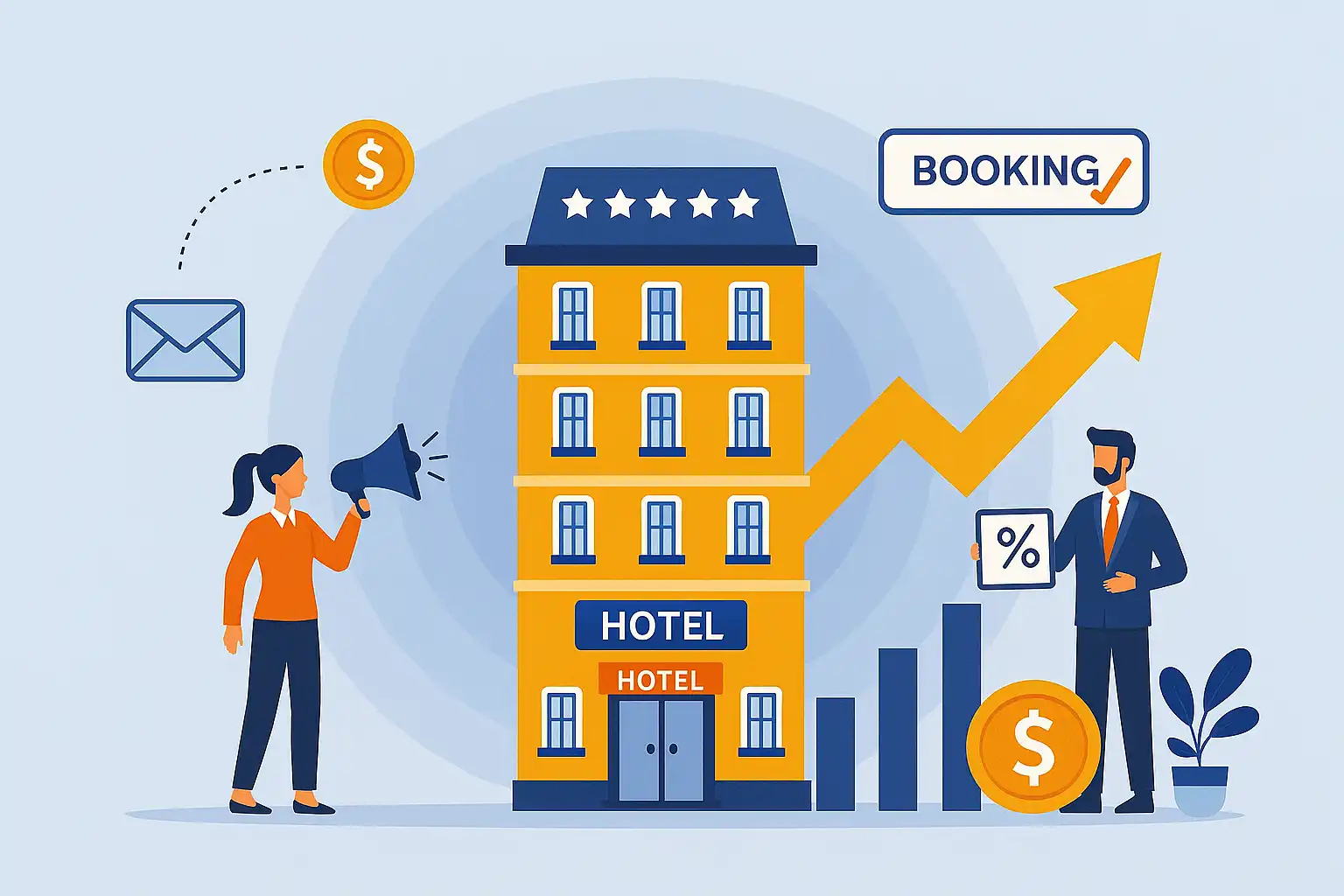
The hotel industry landscape has shifted dramatically, bringing both challenges and exciting opportunities for hotel sales strategies and teams. The old-school ways of relying mostly on travel agent relationships and phone bookings have given way to digital-first approaches that focus on online visibility and engaging guests directly.
Today’s hotels face commission fees of 15-20% when working with online travel agencies, which can really eat into profits. Plus, many travelers now start their search on OTA sites instead of going straight to hotel websites.
Booking windows have gotten much shorter too—guests often book just 24-48 hours before arrival. This makes forecasting demand trickier and means hotel sales teams need to be nimble with pricing and room availability.
Since 2020, the shift to digital-first sales has sped up, pushing hotel managers to invest in new tech and retrain their teams. Those who don’t adapt risk falling behind competitors who are more digitally savvy.
Today’s winning hotel sales strategies balance direct bookings with third-party distribution to get the best of both worlds: visibility and profitability. While OTAs are crucial for exposure, the real goal is to turn those browsers into direct-booking guests for future stays.
Top properties use smart property management systems that tie together booking engines, channel managers, and CRM tools. This tech combo streamlines the sales process and gives valuable data to inform decisions.
To really understand how your hotel’s sales are doing, keep an eye on these key metrics that show both current success and future potential:
| Metric | Industry Benchmark | Why It Matters |
|---|---|---|
| RevPAR (Revenue per Available Room) | $60-120 depending on market | Measures revenue efficiency |
| ADR (Average Daily Rate) | Varies by property type | Shows pricing effectiveness |
| Occupancy Rate | 65-75% annual average | Indicates demand capture |
| Direct Booking Percentage | 30-50% of total bookings | Controls commission costs |
| Conversion Rate | 2-5% website visitors to bookings | Reflects sales funnel success |
These numbers give you a full picture of your sales health and highlight where to focus your revenue management efforts.
If you’re looking to increase hotel sales fast, there are several strategies that often deliver noticeable results within 30-60 days. These quick wins focus on making the most of what you already have, without needing big investments or system overhauls.
Dynamic pricing lets hotels adjust room rates quickly—sometimes within 24-48 hours—based on real-time demand, what competitors are charging, and local market events. When done right, this can bump up RevPAR by 5-15%.
Keep an eye on local happenings like conferences or festivals to tweak your prices accordingly. For example, hotels near convention centers can raise rates during big events, while beach resorts might charge premiums during school holidays.
The trick is to balance smart pricing with guest trust—being transparent with your rates and offering guarantees helps keep guests happy while maximizing revenue.
Many hotel websites lose potential revenue because their booking engines are clunky—on average, 85% of users abandon the process before booking. Making your booking process smoother can boost conversion rates by 15-25% without extra marketing spend.
Focus on these improvements:
Upselling room upgrades, early check-in, and late checkout can add $25-75 to each booking’s value with little extra cost. Successful upselling includes pre-arrival emails with discounted upgrade offers, training front desk staff to suggest upgrades in person, and automated messages promoting spa or dining packages.
Flash sales during slow periods—often Sunday through Tuesday for leisure hotels—can fill rooms that might otherwise sit empty. These sales should offer real value without undercutting your usual rates.
Try these tactics:
During busy times and local events, requiring minimum stays (like 2-3 nights) helps maximize revenue. Make sure these rules are clear during booking and supported by your dynamic pricing strategy that reflects the premium value of these peak stays.
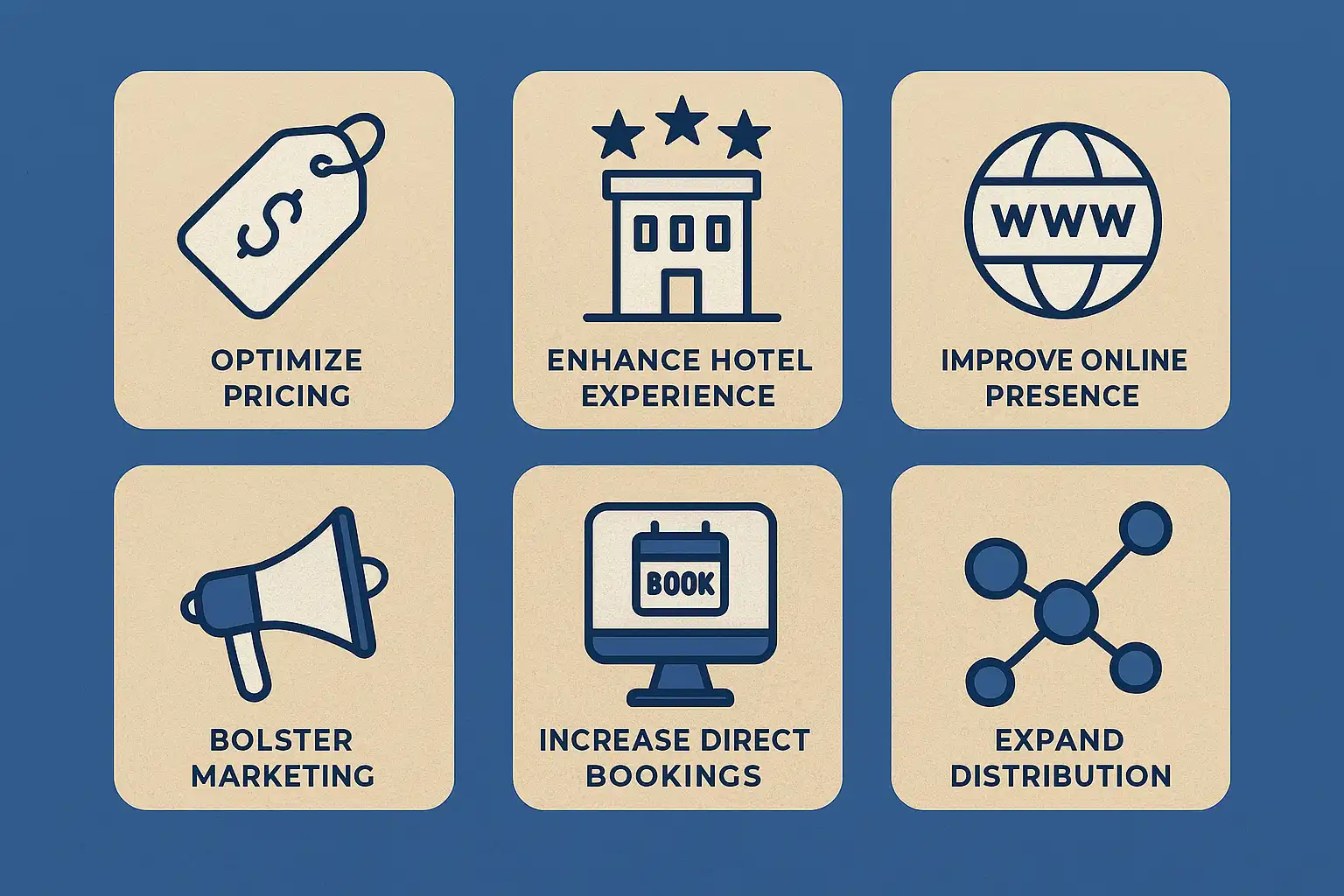
Hotel digital marketing is now a must-have for hotel sales strategies success, especially since 63% of travelers book accommodations via smartphones. Hotels need to optimize their online presence across channels to attract these mobile-first guests and turn them into loyal customers.
Your hotel website is the cornerstone of your digital marketing and direct booking efforts. Since so many guests book on phones, mobile optimization isn’t optional anymore.
Key mobile features include:
Hotels that nail mobile optimization often see 25-40% jumps in mobile booking rates within three months.
Local hotel SEO helps you catch “hotels near me” searches and other location-based queries from travelers ready to book. Optimizing your presence for local search helps you compete with OTAs and other hotels nearby.
Try these:
Social media for hotels lets you showcase your hotel’s unique vibe and build emotional connections with potential guests. Go beyond pretty pictures by sharing:
Retargeting ads bring back visitors who checked out your site but didn’t book. These ads typically convert at 2-3 times the rate of regular display ads because they target people who’ve already shown interest.
Make your retargeting ads count by:
Revenue management is one of the best ways to improve hotel sales without spending more on marketing. Smart pricing that takes competitor rates, local demand, and booking history into account can boost RevPAR by 10-20% annually.
Yield management helps you optimize both your room inventory and pricing to maximize total revenue, not just occupancy. It looks at demand patterns and competitor positioning to make smart decisions.
Try these strategies:
Hotels using yield management often see 8-15% RevPAR improvements in their first year.
Modern revenue management software automates pricing decisions and offers powerful analytics you couldn’t do by hand. These tools link with your property management system and channel managers for real-time pricing updates.
Look for software that offers:
Stay restrictions like minimum nights help you maximize revenue during peak periods by encouraging longer bookings. Be sure to apply these rules thoughtfully to avoid upsetting business travelers or key guest groups.
Ideas include:
Knowing what your competitors charge helps you price competitively and profitably. Monitor rates across OTAs and competitor sites regularly and adjust your pricing to stay attractive without leaving money on the table.
Do this by:
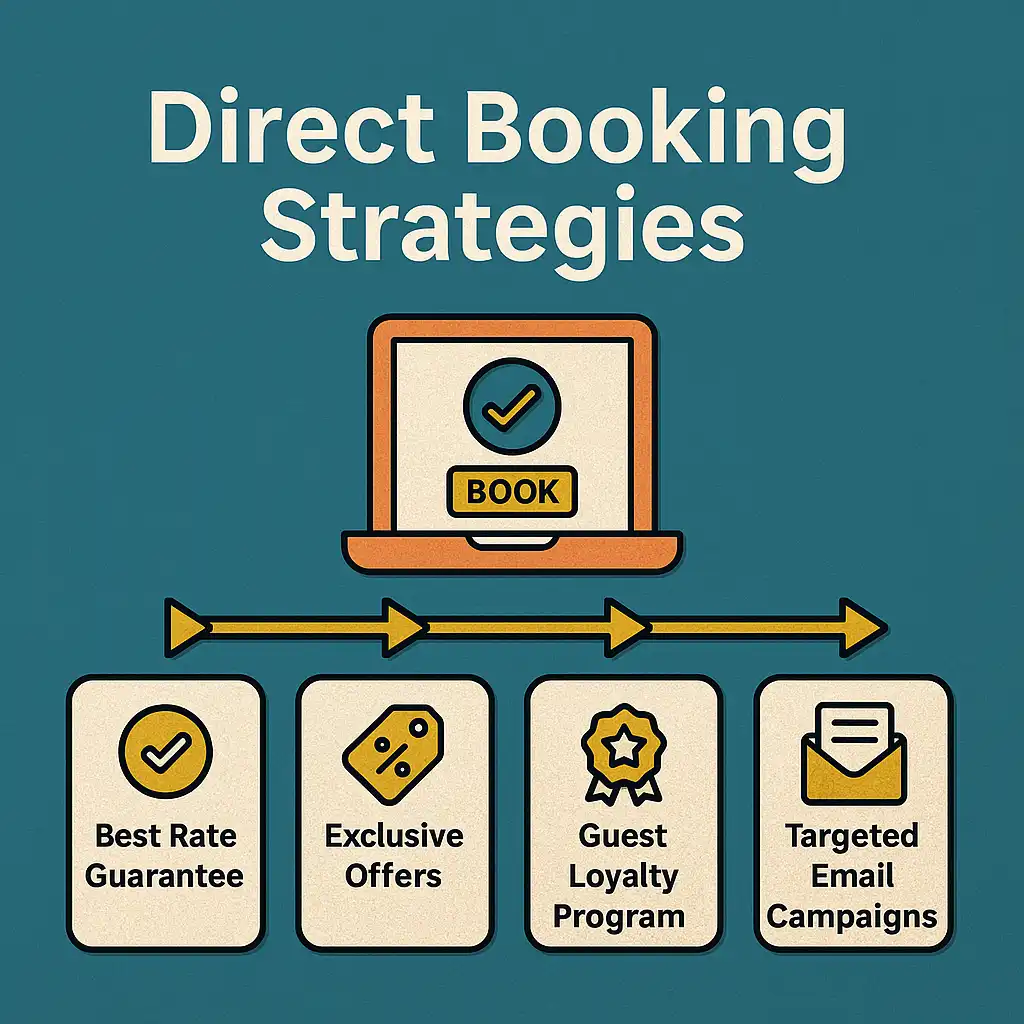
Direct bookings are the most profitable for hotels since they avoid OTA commissions and give you more control over the guest experience. Even a 10% increase in direct bookings can significantly boost your net revenue.
Give guests real reasons to book on your website instead of third-party sites by offering perks that add value without breaking the bank.
Try perks like:
Make sure these perks are front and center on your website and booking pages.
Keep your website’s rates consistent with other channels to build trust and encourage direct bookings. Use tools to monitor rates across platforms and offer:
Email campaigns for hotels targeting past guests are cost-effective ways to generate repeat business and direct bookings. Automated sequences nurture relationships without constant manual effort.
Effective campaigns include:
A simple loyalty program encourages direct bookings and repeat visits by offering exclusive perks. It doesn’t have to be complicated to work.
Examples:
Studies show repeat guests spend about 67% more per stay than newcomers, making loyalty programs a smart revenue booster.
Group bookings and corporate clients bring steady revenue, often guaranteeing room blocks plus extra income from meeting spaces, catering, and services. Building strong ties with event planners and corporate travel managers pays off long-term.
Corporate travelers have different needs than leisure guests, so tailor your approach to convenience, reliability, and cost-effectiveness. Corporate contracts can fill rooms during slow times.
Try these:
Wedding, meeting, and event planners often book the same venues repeatedly if they get great service and pricing.
Strategies include:
Local sports events can bring big group bookings, especially near sports venues.
Approaches:
Encourage larger bookings while protecting profits with tiered discounts.
Example tiers:
CRM tools help sales teams track leads, manage planner relationships, and follow up consistently—key for complex group sales cycles.
CRM benefits:
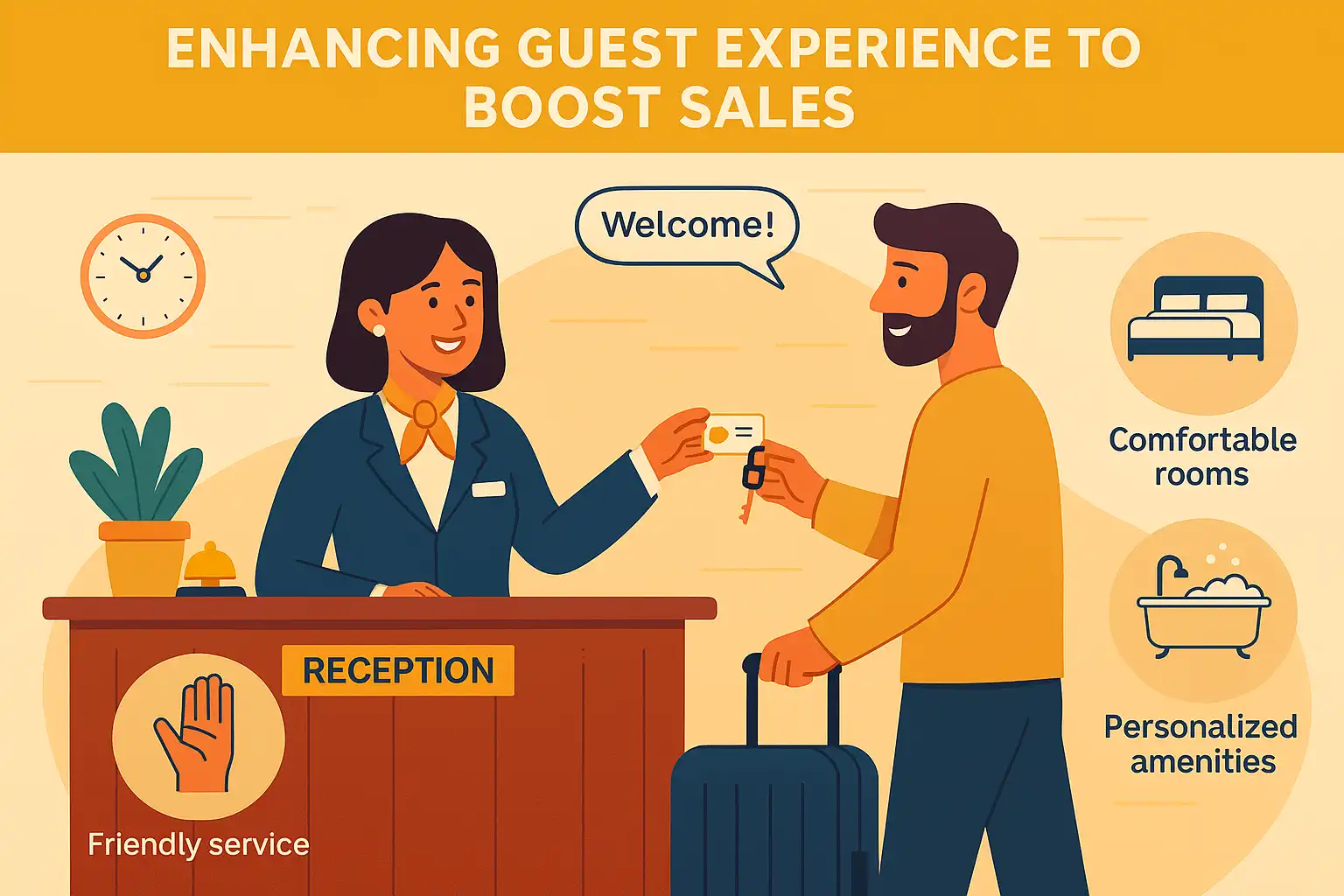
Great guest experiences lead to more upsells, repeat bookings, and referrals. Hotels that focus on guest satisfaction consistently outperform competitors in occupancy and rates.
Use pre-arrival emails to enhance guest experience and boost revenue with smart upselling.
Ideas:
Equip your front desk with skills to upsell without being pushy by focusing on guest needs.
Tips:
Well-trained staff can increase upselling revenue by 15-25% in three months.
Use guest data to tailor experiences, showing you care and encouraging loyalty.
Examples:
Reward repeat guests with perks that encourage direct bookings and more spending.
Features:
Repeat guests typically spend 67% more, making loyalty programs vital.
Use feedback to improve services and sales strategies.
Methods:
Partnering with local businesses boosts guest experiences and creates extra revenue streams, setting your hotel apart.
Work with local eateries to create dining packages and exclusive discounts.
Strategies:
Partner with tour operators and attractions for guest discounts and packages.
Ideas:
Work with transport companies to offer shuttles and car services.
Approaches:
Build relationships with local businesses for steady employee travel and events.
Benefits:
Create attractive packages that combine rooms with extras to increase booking value and guest satisfaction.
Capitalize on local events and holidays with timely offers.
Examples:
Offer premium experiences for couples and special events.
Includes:
Cater to corporate guests with convenience and services.
Features:
Combine spa, dining, and local activities for all-inclusive deals.
Examples:
Time your offers to maximize impact without hurting peak rates.
Tips:
Integrate tech to streamline operations, enhance guest experiences, and boost sales efficiency.
Use PMS that sync with booking engines and channel managers for smooth sales.
Look for:
Deploy chatbots for quick guest responses and upselling.
Capabilities:
Automate emails to nurture guests and drive repeat bookings.
Include:
Use analytics to track bookings, guest behavior, and revenue.
Focus on:
Offer contactless check-in/out to improve convenience and free staff for sales.
Benefits:
Online reviews heavily influence bookings—95% of travelers read them first. Managing your reputation means encouraging positive reviews and handling negative feedback professionally.
Respond to reviews on TripAdvisor, Google, and OTAs within 24 hours to show you care and fix problems quickly.
Best practices:
Ask happy guests to leave reviews via follow-up emails and incentives.
Strategies:
Handle negative feedback promptly to turn unhappy guests into future customers.
Approaches:
Analyze feedback to spot service gaps and opportunities.
Applications:
Monitor and engage on social platforms to manage your image.
Tactics:
Keep improving by tracking key sales metrics regularly.
Monitor these to gauge success:
| Metric | Frequency | Target Range | Purpose |
|---|---|---|---|
| Occupancy Rate | Daily | 65-85% | Measure demand |
| Average Daily Rate (ADR) | Daily | Market dependent | Optimize pricing |
| Revenue per Available Room (RevPAR) | Daily | Market dependent | Overall performance |
| Direct Booking Percentage | Weekly | 35-55% | Channel effectiveness |
| Website Conversion Rate | Weekly | 2-5% | Digital success |
| Guest Satisfaction Score | Monthly | 4.0+ out of 5.0 | Experience quality |
Look at how many website visitors actually book and find ways to reduce drop-offs.
Focus on:
Understand when guests book to time your marketing and pricing.
Consider:
Hold monthly meetings to review sales results and plan ahead.
Include:
Test different pricing, marketing, and website changes to find what works best.
Examples:
Improving hotel sales today means combining the best of traditional hospitality with smart digital strategies. The 15 strategies here offer a clear path to increase revenue, delight guests, and build a strong competitive advantage.
Top hotels use several tactics at once, creating synergy between direct booking, revenue management, guest experience, and marketing. While OTAs remain important for exposure, the real win is turning those guests into direct bookers who boost your bottom line.
Focus on mobile optimization, direct booking perks, dynamic pricing, guest loyalty, and tech-driven operations to stay ahead in this fast-changing industry.
The hospitality world keeps evolving, and so do guest expectations. Hotels that invest in technology, staff training, and guest experience innovation will be the ones thriving long-term.
Start today with quick wins like booking engine tweaks and dynamic pricing, then build out loyalty programs and partnerships that create lasting success. Your hotel’s revenue growth awaits!