Sustainability in Hotels: Strategies, Standards & Real-World Examples
 Mika Takahashi
Last updated Dec 14, 2025
Mika TakahashiSustainability in hotels is about more than just ticking boxes—it's a holistic approach that reduces environmental impact, supports local communities and staff, and keeps operations profitable. It goes way beyond simple towel reuse programs, aiming for a full transformation in how hotels use resources, treat people, and create lasting value.
The urgency to act has never been greater. With the UN Sustainable Development Goals set for 2030 and the Paris Agreement pushing to limit global warming to 1.5°C, the hospitality industry is under increasing pressure to cut carbon emissions. Big hotel chains are stepping up, pledging to reach net-zero emissions by 2050, and many are aiming to slash 90% of their emissions in this decade alone.
Here’s why sustainability in hotels is critical right now:
• Energy intensity: Hotels use 60-70% more energy per square meter than typical office buildings, making them key players in energy conservation and renewable energy adoption.
• Climate contribution: Travel and tourism account for about 8-10% of global CO₂ emissions, with accommodation being a major part of that footprint.
• Guest expectations: Around 70-80% of travelers say sustainability influences where they book, directly affecting hotel revenue.
• Investor pressure: ESG (Environmental, Social, Governance) criteria are increasingly shaping access to capital, impacting hotel valuations and financing.
• Regulatory momentum: Energy codes, plastic bans, and carbon reporting rules are spreading worldwide, making compliance a must rather than a choice.
• Operational benefits: Energy efficiency projects can cut consumption by 15-30%, leading to significant cost savings and better profitability.
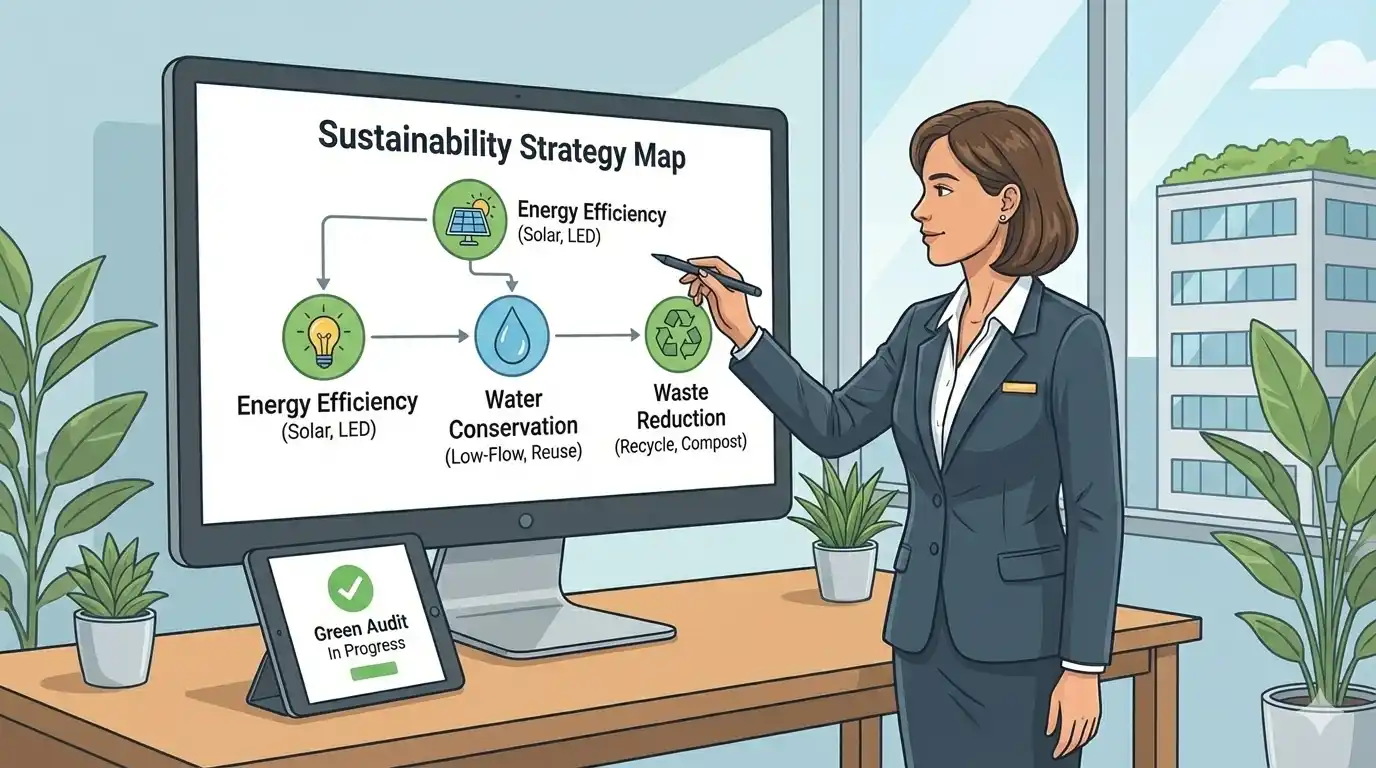
Applying ESG principles to hotels gives a clear framework that covers Environmental stewardship, Social responsibility, and Governance transparency. This three-pillar approach ensures hotels aren’t just doing one-off green projects but are transforming sustainably across the board.
Environmental Pillar
This pillar focuses on shrinking the hotel’s carbon footprint and using natural resources wisely throughout operations:
• Energy systems: Optimizing HVAC, switching to LED lighting, smart building controls, and integrating renewable energy sources.
• Water management: Installing conservation fixtures, leak detection, greywater reuse, and drought-resistant landscaping.
• Waste reduction: Cutting out single-use plastics, boosting composting and recycling, and embracing circular procurement.
• Biodiversity protection: Using native plants, creating pollinator gardens, and designing buildings with ecosystems in mind.
• Construction impact: Pursuing green building certifications and using sustainable materials to lower embodied carbon.
People Pillar
Social sustainability means hotels are responsible employers and good community members:
• Workforce development: Fair wages, solid training, career growth, and safe working conditions.
• Diversity and inclusion: Equal opportunity hiring, anti-discrimination policies, and accessibility.
• Community engagement: Hiring locally, partnering with local suppliers, and preserving culture.
• Guest health: Ensuring indoor air quality, using chemical-free cleaning, and making spaces accessible.
• Human rights: Fighting modern slavery and managing ethical supply chains.
Governance Pillar
Strong governance means accountability and ongoing improvement:
• Data transparency: Regular sustainability reports with verified metrics and science-based targets.
• Supply chain standards: Requiring vendors to meet sustainability and ethical sourcing policies.
• Risk management: Planning for climate adaptation and operational resilience.
• Stakeholder engagement: Listening to guests and communities to guide sustainability efforts.
Top hotel companies like Marriott, Accor, and Hilton now publish detailed ESG reports with clear 2025-2030 goals, showing the industry’s serious commitment to measurable sustainability progress.
The World Travel & Tourism Council (WTTC) rolled out the Hotel Sustainability Basics—a set of 12 globally recognized minimum criteria for hotels—as a foundation for sustainability. Launched in 2022-2023, these basics align with more advanced programs like GSTC criteria, LEED certification, and Net Positive Hospitality pathways.
The WTTC’s framework covers essential areas without demanding huge upfront investment:
• Energy measurement: Using digital thermostats, LED lighting, and regular HVAC maintenance.
• Water tracking: Installing efficient fixtures and monitoring consumption.
• Waste diversion: Recycling programs and cutting specific single-use items.
• Guest engagement: Linen reuse programs and sustainable dining options.
• Community support: Local sourcing and cultural preservation.
• Staff protection: Training and anti-modern slavery policies.
Increasingly, online travel agencies and corporate travel buyers look for these Basics when choosing hotels, making compliance key for market access. The phased approach lets hotels hit 8 criteria in the first year and reach full compliance over three years.
Hotels can use these 12 indicators as a handy checklist to spot sustainability gaps and focus improvement efforts. This clear, standardized system cuts confusion and opens doors to more comprehensive certifications and frameworks.
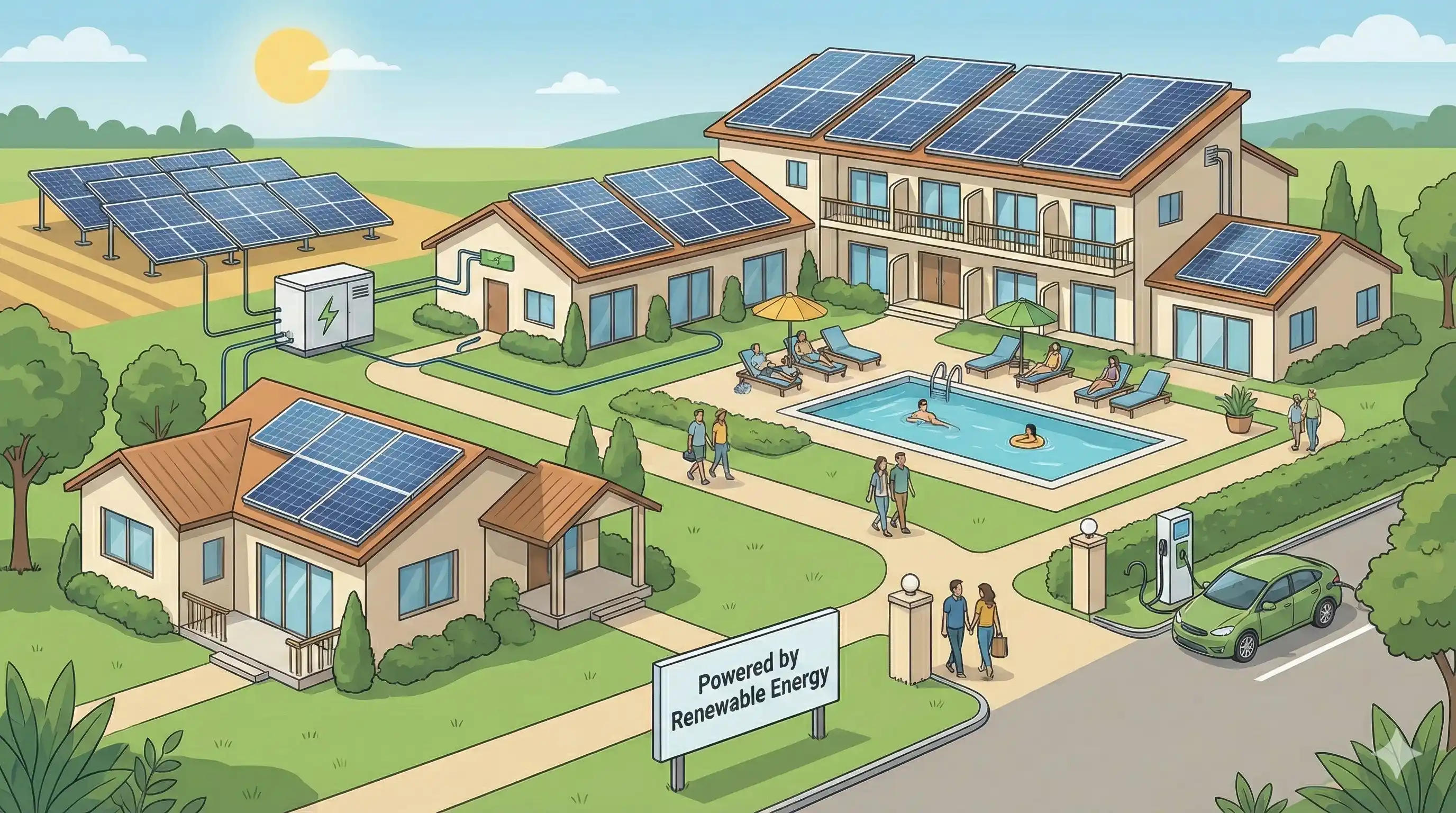
Sustainability isn’t just good for the planet—it makes solid business sense. Hotels that embed sustainable practices often see measurable improvements in financial performance within 2-3 years.
Operating Cost Reductions
Energy efficiency projects deliver big savings:
• Lighting retrofits: Switching to LEDs cuts energy use by 50-90% compared to old bulbs, with payback in 2-4 years.
• HVAC optimization: Smart controls and upkeep reduce energy consumption by 15-30% annually.
• Water conservation: Low-flow fixtures and leak detection can cut water bills by 20-40%.
• Waste diversion: Recycling and composting lower waste disposal costs by 30-50%.
Revenue and Market Advantages
Sustainability credentials increasingly influence bookings and partnerships:
• Guest satisfaction: Hotels with visible sustainability efforts see 10-15% higher guest satisfaction scores.
• Corporate contracts: Big companies often require sustainability certifications when choosing hotels.
• Online visibility: OTAs favor hotels with verified environmental programs.
• Rate premiums: Eco-certified hotels can charge 5-15% more in competitive markets.
Capital Access and Asset Value
Strong ESG performance boosts financial prospects:
• Green financing: Sustainability-linked loans offer interest rate discounts for hitting targets.
• Investment attraction: REITs prefer properties with solid ESG credentials.
• Valuation protection: Green-certified hotels hold value better during downturns.
• Risk mitigation: Climate adaptation protects operations from weather shocks.
Human Resources Benefits
Sustainable hotels attract and keep talent:
• Staff retention: Sustainability programs reduce turnover by 20-30%.
• Recruitment: Younger workers prioritize employers with strong environmental and social values.
• Training ROI: Sustainability education improves efficiency and guest service.
No matter the size or star rating, hotels can start making sustainability improvements today. The key is balancing quick, low-cost wins with strategic investments in systems and renewable energy.
Energy is the biggest utility expense and carbon source for hotels, powering heating, cooling, hot water, and lighting. Automated energy management systems give unprecedented control while keeping guests comfortable.
Smart HVAC and Building Controls
Modern energy management means systems that adapt to occupancy and weather:
• IoT thermostats: Room controls linked to keycards adjust temperatures when rooms are empty, cutting energy waste by 15-25%.
• Central building management: Coordinated HVAC and lighting optimize performance across the property.
• Predictive controls: AI analyzes weather and occupancy to pre-condition spaces efficiently.
• Demand response: Hotels can earn by reducing energy use during peak grid times.
Lighting Optimization
LEDs plus smart controls slash energy use:
• LED retrofits: LEDs use 75-85% less energy and last 25 times longer than incandescent bulbs.
• Occupancy sensors: Lights turn off automatically in empty areas.
• Daylight harvesting: Automated blinds and dimmers make the most of natural light.
Renewable Energy Integration
On-site renewables speed up decarbonization:
• Solar PV: Rooftop panels pay for themselves in 7-12 years and provide clean electricity for decades.
• Solar thermal: Solar water heating cuts fossil fuel use for laundry and guest rooms.
• Power purchase agreements: Long-term renewable electricity contracts stabilize costs.
• Geothermal systems: Heat pumps provide efficient heating and cooling where geography allows.
Hotels tracking emissions per room can benchmark and improve continuously toward net-zero goals.
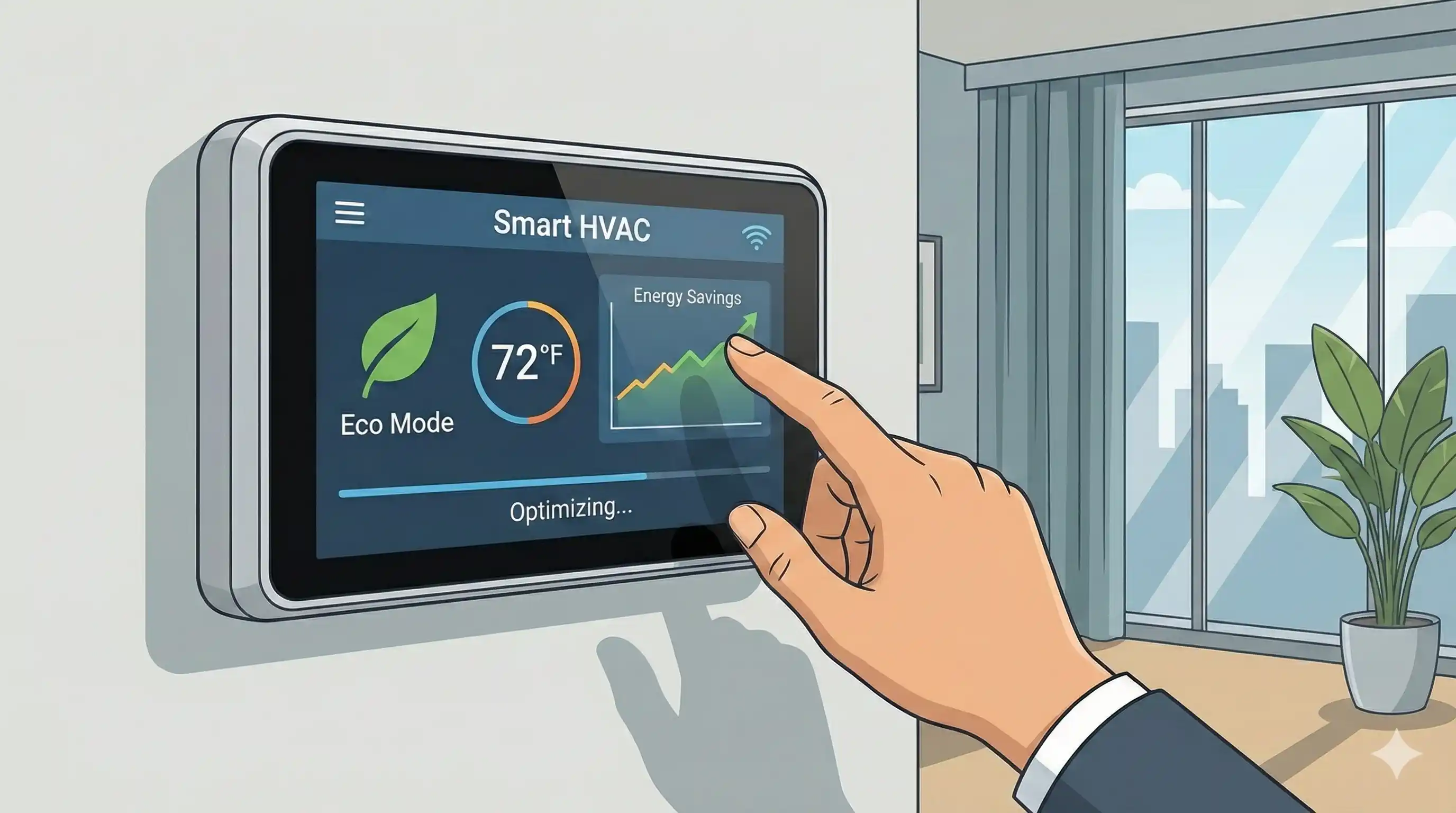
Hotels use lots of water for guest services, laundry, food prep, and landscaping—often in water-stressed regions. Smart tech and efficient fixtures can cut water use by 30-50% without sacrificing quality.
Fixture Efficiency and Automation
Water-saving tech delivers quick wins:
• Low-flow showerheads and faucets: Keep pressure while reducing flow by 30-50%.
• Dual-flush toilets: Use water appropriately for different waste types.
• Automatic shut-off valves: Sensors stop water running in public areas.
• Aerators: Retrofit faucets to reduce water without changing feel.
Smart Monitoring and Leak Prevention
Prevent waste with early detection:
• Smart meters: Real-time monitoring spots unusual use.
• Leak sensors: Alert maintenance before problems grow.
• Irrigation controls: Adjust watering based on weather and soil moisture.
• Predictive maintenance: Data flags equipment needing attention.
Water Reuse and Alternative Sources
Maximize water use with circular systems:
• Greywater recycling: Treat and reuse water from sinks and showers for toilets and irrigation.
• Rainwater harvesting: Collect rain for cooling towers and landscaping.
• Condensate recovery: Use HVAC condensate for non-potable needs.
Guest programs encouraging reuse towels and awareness of local water issues help change behavior and show commitment.
Hotels generate waste from food, packaging, single-use plastics, and amenities. Circular economy principles help minimize waste and keep materials in use.
Single-Use Plastic Elimination
Cut plastic waste quickly:
• Bulk dispensers: Replace thousands of small shampoo and soap bottles.
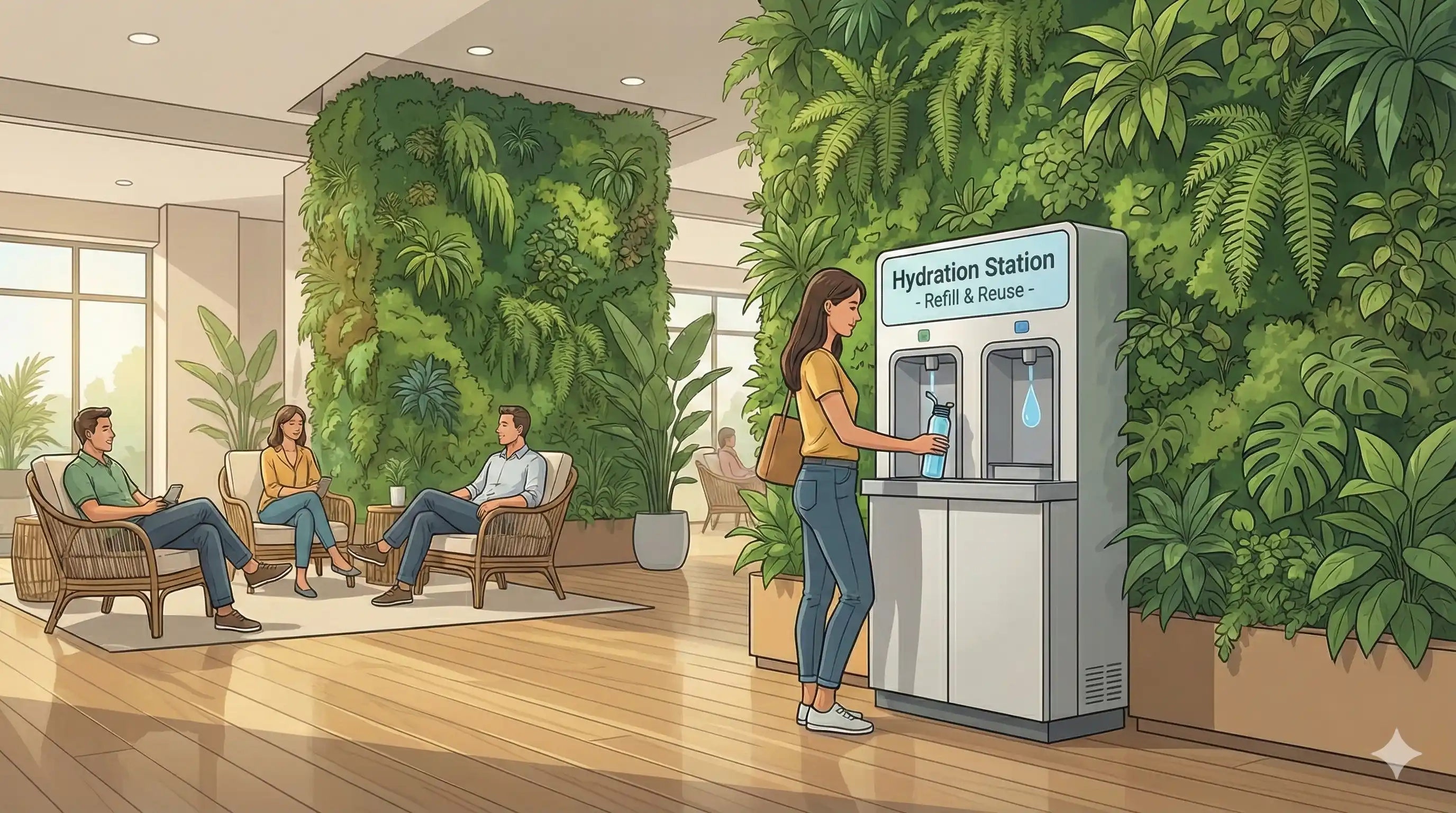
• Filtered water stations: Offer reusable bottles instead of single-use plastic.
• Reusable dining items: Swap plastic straws and takeaway containers for compostable or reusable options.
• Packaging optimization: Work with suppliers to reduce and recycle packaging.
Advanced Recycling and Composting
Comprehensive waste diversion includes:
• Guest room recycling: Clear labels and easy collection for paper, glass, metal, and plastics.
• Back-of-house sorting: Staff training and infrastructure for full waste separation.
• Organic composting: Turn food scraps and yard waste into soil.
• Textile recycling: Programs for worn linens and carpets.
Food Waste Analytics and Reduction
Tech helps cut food waste and costs:
• AI plate scraping analysis: Track waste to optimize portions and menus.
• Inventory management: Reduce over-ordering and spoilage.
• Donation partnerships: Give surplus food to local banks.
• Creative cooking: Use whole ingredients and repurpose leftovers.
Circular procurement also includes furniture take-back, refurbished equipment, and recycled renovation materials.
Food and beverage services impact the environment through farming, transport, and waste. Sustainable dining improves guest experience and supports local economies.
Local and Seasonal Sourcing
Buy local for freshness and lower emissions:
• Farm-to-table: Direct ties with local producers.
• Seasonal menus: Change dishes based on harvests.
• Regional specialties: Showcase local cuisine.
• Transparency: Label ingredient origins for guests.
Plant-Forward Menu Design
Plant-based eating lowers environmental impact:
• Highlight vegetarian options: Make them appealing and easy to find.
• Smaller portions: Right-size servings with extras on request.
• Protein variety: Include sustainable seafood, legumes, and plants.
• Buffet planning: Use data to reduce over-prep.
Kitchen Efficiency and Equipment
Behind the scenes, efficiency counts:
• Induction cooking: Precise, energy-saving electric stoves.
• ENERGY STAR appliances: Use less energy than standard gear.
• Cold storage: Maintain fridges to prevent spoilage and save energy.
• Water-efficient dishwashers: Cut water and energy per cycle.
Sustainable dining enhances guest satisfaction while telling a story of environmental care.
Sustainable building practices cover new builds and upgrades. Certifications provide frameworks to improve and showcase environmental performance.
New Construction and Major Renovations
Design for sustainability from the start:
• LEED and BREEAM: Green building standards covering energy, water, materials, and indoor air quality.
• Adaptive reuse: Convert warehouses or offices to reduce embodied carbon.
• High-performance envelopes: Insulation, windows, and sealing cut heating/cooling needs by 40-60%.
• Passive design: Use building orientation, natural ventilation, and daylight.
Retrofit Strategies for Existing Properties
Upgrade older buildings for big gains:
• Envelope improvements: Better insulation and windows.
• Mechanical system updates: HVAC upgrades and smarter controls.
• Lighting conversions: LEDs plus sensors cut electricity by 50-70%.
• Water system upgrades: Efficient fixtures and smart controls.
Landscape and Site Design
Outdoor spaces matter too:
• Native plants: Drought-tolerant and ecosystem-friendly.
• Green roofs and walls: Insulate, manage stormwater, and support wildlife.
• Permeable paving: Reduce runoff and recharge groundwater.
• Biodiversity: Pollinator gardens and habitats.
Certifications like Green Key, EarthCheck, and Green Globe help hotels improve and prove their environmental performance.
Technology boosts sustainability and guest convenience:
Guest Service Digitization
Cut materials and improve service:
• Mobile check-in and digital keys: No plastic keycards, contactless ease.
• Digital compendiums: Replace printed directories and menus.
• Online concierge: Info and bookings without paper.
• E-receipts: Email invoices instead of printing.
Integrated Property Management
Smart systems optimize resources:
• Occupancy-based controls: Adjust lighting, temperature, and ventilation automatically.
• Hotel Predictive maintenance: Sensors spot issues early.
• Energy dashboards: Show real-time use to staff and guests.
• Automated reporting: Track sustainability metrics regularly.
Guest Engagement Applications
Apps that educate and motivate:
• Sustainability trackers: Show guests their impact.
• Local eco-activities: Promote green transportation and attractions.
• Feedback tools: Let guests suggest improvements.
• Rewards programs: Recognize sustainable guest choices.
Technology supports both sustainability goals and great guest experiences.
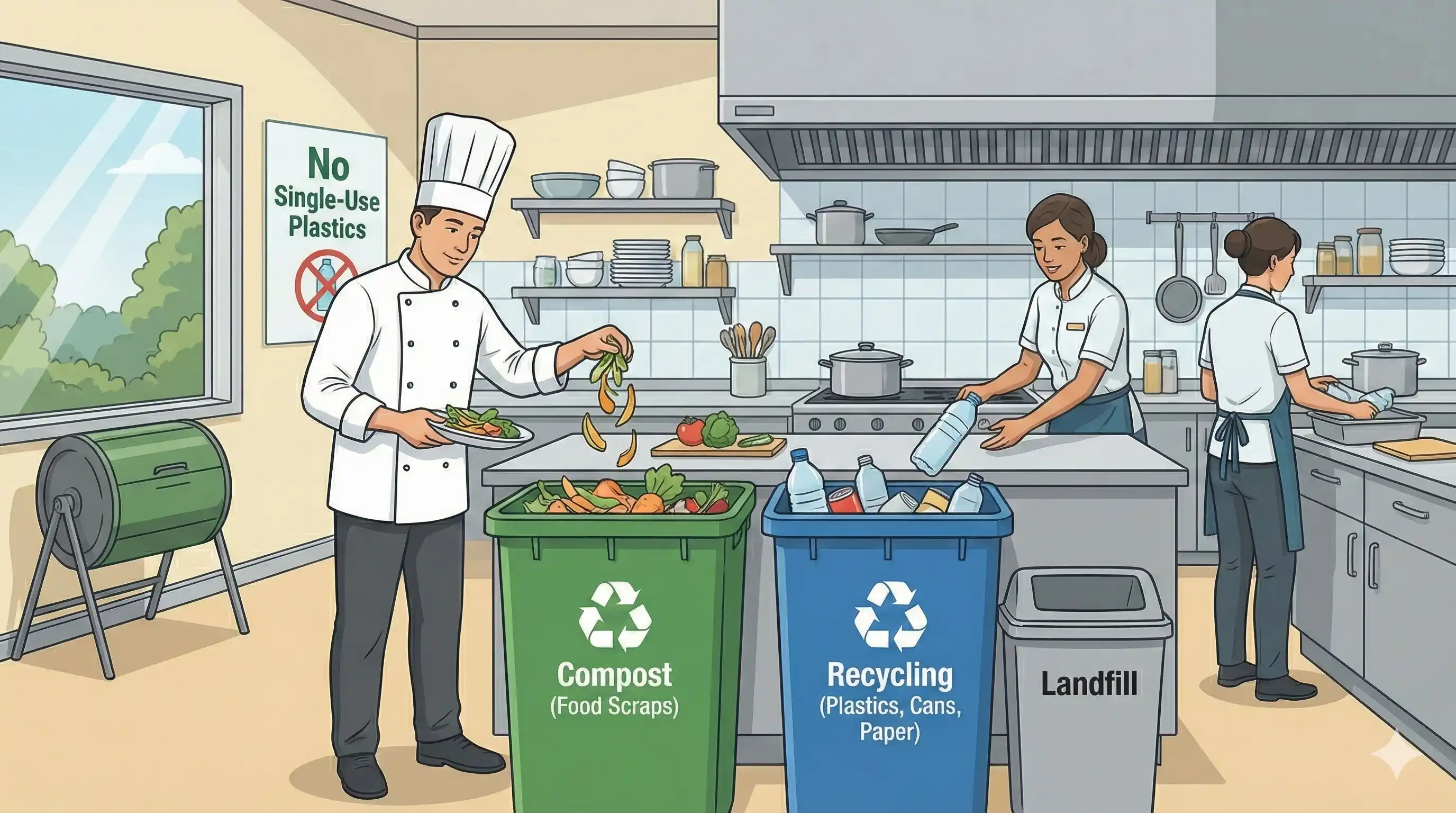
Sustainability isn’t just about the environment—it’s also about people. Hotels play a vital role as employers and community anchors, creating positive social impact and stronger business ties.
Workforce Development and Fair Employment
Sustainable hotels care for their employees:
• Living wages: Pay enough for workers to cover basic needs.
• Benefits: Healthcare, education help, and retirement plans.
• Career paths: Clear promotion and skills training, especially for housekeeping and food service.
• Safety: Strong training and equipment, especially for cleaning and maintenance.
• Flexibility: Work schedules that support work-life balance.
Diversity, Equity, and Inclusion Initiatives
Inclusive workplaces build better teams:
• Equal hiring: Actively include underrepresented groups.
• Anti-discrimination: Clear policies and reporting.
• Cultural training: Prepare staff to serve diverse guests respectfully.
• Leadership diversity: Reflect community in management.
• Accessibility: Support employees with disabilities.
Community Partnership and Local Economic Development
Hotels boost local prosperity:
• Local hiring: Employ community members with training.
• Small business partnerships: Buy from local suppliers and artisans.
• Internships: Work with schools to develop hospitality skills.
• Volunteer programs: Staff participate in community and environmental projects.
• Community spaces: Open hotel facilities for local events.
Cultural Preservation and Respectful Tourism
Authentic cultural engagement benefits all:
• Local guides: Offer genuine cultural experiences.
• Artisan showcases: Display and sell local crafts.
• Traditional cuisine: Celebrate local food traditions.
• Cultural training: Teach staff local customs and history.
• Heritage support: Help preserve local sites.
Social sustainability leads to happier employees, stronger communities, and memorable guest experiences.
Good sustainability management relies on measurement, transparent reporting, and third-party checks. Data-driven approaches help hotels improve continuously and build trust with guests, investors, and regulators.
Essential Measurement Systems
Track environmental, social, and economic indicators:
• Energy use: kWh per room and guest with monthly trends.
• Water consumption: Liters per guest and room, adjusted seasonally.
• Waste metrics: Total waste, recycling rates, food waste with reduction targets.
• Carbon footprint: Scope 1, 2, and 3 emissions following Hotel Carbon Measurement Initiative.
• Social indicators: Employee turnover, training hours, local procurement, community investment.
Industry-Standard Frameworks and Tools
Use established frameworks for benchmarking:
• WTTC Hotel Sustainability Basics: 12 minimum criteria for all hotels.
• GSTC criteria: Comprehensive standards for sustainable tourism certification.
• GRI standards: Global Reporting Initiative for sustainability reporting.
• SASB standards: Metrics for real estate and hospitality investors.
• Science-based targets: Emission goals aligned with Paris Agreement.
Verification and Certification Processes
Third-party validation prevents greenwashing:
• Annual audits: Independent checks of data and management systems.
• Certifications: Green Key, EarthCheck, Green Globe, and others.
• Financial audits: Include sustainability metrics.
• Guest feedback: Collect and analyze sustainability perceptions.
• Stakeholder engagement: Consult employees, community, and partners.
Reporting and Communication Best Practices
Transparency builds accountability and educates:
• Annual reports: Document progress, challenges, and future plans with data.
• Real-time dashboards: Show current performance to staff and guests.
• Website pages: Share certifications and initiatives.
• Guest communications: Pre-arrival emails, in-room info, and surveys.
• Benchmarking: Compare performance sector-wide.
Consistent measurement and open reporting spark innovation and trust.
Even small, independent hotels can begin meaningful sustainability work now. Success comes from planning, realistic goals, and commitment to long-term change.
Phase 1: Foundation Building (Months 1-12)
Get started with quick wins and baseline data:
• Sustainability audit: Assess current energy, water, waste, and social practices.
• Green team: Form a cross-department committee.
• SMART goals: Set specific, measurable targets for 2025-2027.
• Quick wins: LED lighting, linen reuse, plastic cuts, staff training.
• Measurement setup: Install smart meters and waste tracking.
Phase 2: System Integration (Years 2-3)
Build on success with bigger improvements:
• Tech investments: Smart building systems and guest engagement tools.
• Efficiency upgrades: HVAC, water conservation, renewable energy planning.
• Supply chain: Local sourcing and vendor sustainability policies.
• Guest programs: Expand communication and incentives.
• Certifications: Apply for third-party validation.
Phase 3: Leadership and Innovation (Years 3+)
Lead the way with advanced practices:
• Net-zero planning: Science-based targets and offsets.
• Circular economy: Waste elimination and regenerative landscapes.
• Community partnerships: Deepen collaborations.
• Innovation pilots: Test AI, alternative energy, and new materials.
• Industry influence: Share best practices and mentor others.
Organizational Integration Strategies
Make sustainability part of the hotel’s DNA:
• Policies: Document and embed in operations and manuals.
• Training: Regular education for all staff.
• Procurement: Sustainability criteria in purchasing.
• Performance metrics: Include in management reviews.
• Brand standards: Incorporate into franchise agreements.
This phased approach helps hotels build skills and show results that justify ongoing investment.

Hotels around the world prove sustainability can boost guest experience and deliver real benefits, no matter the market or location.
1 Hotels: Luxury Eco-Innovation in North America
This boutique chain shows how sustainability can define a brand and command premium rates:
• Design: Reclaimed wood, living walls, and biophilic elements connect guests to nature.
• Local sourcing: Farm-to-table restaurants with seasonal, regional ingredients.
• Operations: In-room recycling, energy-efficient lighting, filtered water systems.
• Guest engagement: Sustainability concierge and eco-activities.
• Results: LEED Gold certification and carbon-neutral operations.
Scandic Hotels: Scandinavian Sustainability Leadership
This Nordic chain covers 280+ properties with strong sustainability:
• Circular practices: No single-use plastics, recycling, furniture take-back.
• Energy: 100% renewable electricity, smart controls, heat recovery.
• Social: Living wages, diversity goals, accessibility beyond legal minimums.
• Community: Local hiring, cultural preservation, community spaces.
• Verification: Swan Ecolabel and science-based targets.
Alila Hotels: Regenerative Resorts in Asia-Pacific
This luxury brand creates positive environmental impact:
• Ecosystem restoration: Habitat and coral reef conservation.
• Water innovation: Rainwater harvesting and greywater recycling.
• Culture: Traditional architecture and artisan partnerships.
• Operations: Solar power, composting, chemical-free cleaning.
• Guest education: Marine conservation and craft workshops.
Pod Hotels: Urban Efficiency and Social Innovation
This micro-hotel concept excels in tight spaces:
• Space-saving: Compact rooms reduce materials and energy by 40%.
• Technology: Smart systems and digital services cut resource use.
• Community: Neighborhood partnerships and events.
• Accessibility: Universal design and affordable pricing.
These stories show sustainability drives brand strength, efficiency, and guest satisfaction everywhere.
Honest sustainability communication builds trust and loyalty, while greenwashing risks reputation and compliance.
Common Greenwashing Pitfalls
Avoid damaging your brand with:
• Vague claims: Saying “eco-friendly” or “green” without data or verification.
• Cherry-picking: Highlighting minor wins but ignoring big impacts.
• Irrelevant certifications: Promoting meaningless or unverifiable badges.
• Outdated info: Sharing old or superseded programs.
• Misleading imagery: Using nature photos that don’t reflect reality.
Evidence-Based Communication
Build credibility with:
• Clear data: “Reduced energy use by 23% since 2021” beats vague claims.
• Timelines: Show when goals were met or will be.
• Third-party verification: Display legit certifications prominently.
• Honest reporting: Share challenges and progress openly.
• Guest impact: Show guests their conservation contributions.
Effective Channels
Reach guests consistently via:
• Pre-arrival emails: Explain sustainability efforts and how guests can help.
• In-room materials: Simple info on towel reuse and recycling.
• Websites: Dedicated sustainability pages with data and stories.
• Staff training: Empower employees to discuss initiatives confidently.
• Digital platforms: Use social media and apps for updates.
Building Long-Term Credibility
Sustainability communication is a marathon, not a sprint:
• Regular reporting: Annual, verified sustainability reports.
• Stakeholder input: Include guests, staff, and community voices.
• Industry participation: Share and learn best practices.
• Continuous improvement: Set tougher goals and report progress.
• Education: Help guests understand local environmental issues.
Honest communication deepens guest relationships and supports a more responsible hospitality industry.
Looking ahead, climate risks, resource limits, and evolving guest expectations will keep reshaping hospitality. Hotels that embed sustainability now will be best positioned to thrive in a world that values environmental and social responsibility.
Emerging Trends and Technologies
Innovation is speeding up sustainability and creating new guest experiences:
• Regenerative tourism: Going beyond “do no harm” to actively restore ecosystems and support communities.
• Nature-positive design: Buildings and landscapes that boost biodiversity and guest enjoyment.
• Climate adaptation: Cool roofs, flood-proofing, and backup systems for extreme weather.
• AI optimization: Machine learning managing energy, water, and waste with precision.
• Alternative energy: Geothermal, micro-wind, and battery storage expanding renewable options.
Regulatory and Market Evolution
Policy and market forces will keep pushing sustainability:
• Mandatory climate disclosure: More rules on emissions reporting and targets.
• Carbon pricing: Taxes and trading making emissions cuts financially smart.
• Building standards: Tougher energy codes for new and renovated properties.
• Supply chain transparency: Rules requiring labor and environmental disclosures.
• Guest expectations: Demand for verified sustainability, not greenwashing.
Long-Term Strategic Considerations
Hotels must plan for ongoing change:
• Asset resilience: Infrastructure investments protecting against climate risks.
• Workforce training: Keeping staff ready for new sustainability tech and guest needs.
• Partnerships: Collaborating with local suppliers, tech providers, and communities.
• Innovation capacity: Testing and scaling new sustainability solutions.
• Financial planning: Balancing sustainability investments with returns.
Hotels embracing sustainability today will gain competitive edge, reduce risks, and build lasting bonds with guests, employees, and communities. The path is clear—success starts with commitment and action now.
This journey isn’t a burden—it’s an opportunity. Hotels that lead in sustainability will shape the future of hospitality, creating resilient, profitable, and meaningful experiences for years to come.