Hotel Review Management: Build a Strong Online Reputation
 Mika Takahashi
Last updated Oct 14, 2025
Mika TakahashiIn today’s digital world, your hotel’s online reputation can truly make or break your business. With over 95% of travelers checking reviews before booking and 88% trusting online reviews just as much as personal recommendations, managing your hotel’s reviews effectively is now as important as delivering exceptional service.
Hotel review management means keeping a close eye on, analyzing, and responding to guest feedback across various online platforms. It’s not just about reading reviews—it’s about actively engaging with guests in real time, having smart strategies in place, and using data-driven insights to turn guest experiences into your biggest competitive advantage.
This guide will walk you through proven strategies, the latest tools, and practical steps to help you master hotel review management. You’ll learn how to boost direct bookings, enhance guest satisfaction, and build a reputation that drives more revenue—all while protecting your brand from negative feedback.
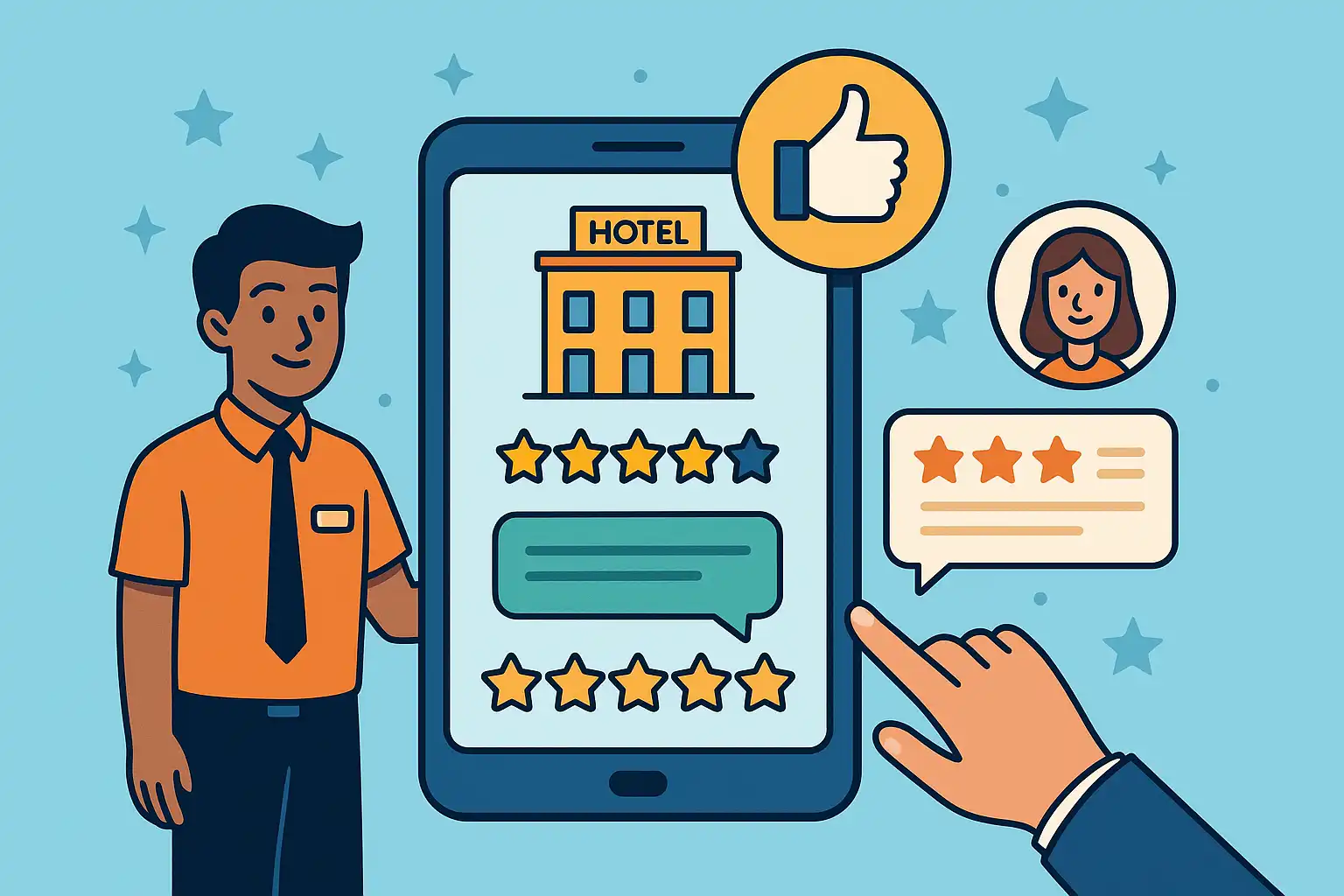
Simply put, hotel review management is the ongoing process of monitoring, responding to, and influencing guest reviews across online platforms to improve your property’s reputation and boost your business. It’s a multi-layered approach that goes beyond just reading feedback—it’s about engaging with guests throughout their journey to shape how your hotel is perceived and to encourage more bookings.
This process covers major platforms like TripAdvisor, Google Reviews, Booking.com, Expedia, and Yelp, as well as social media and niche travel sites. Each platform has its own quirks, so you’ll need tailored strategies to make the most impact on your hotel’s business.
Unlike general reputation management, which looks at brand image broadly, hotel review management zeroes in on guest feedback and hospitality-specific metrics. It focuses on the touchpoints that directly influence booking decisions and guest satisfaction scores.
Research shows that 95% of travelers read reviews before booking, and 74% are willing to pay more for hotels with excellent review scores. This makes it clear why top hotel teams make review management a key part of their operations. Hotels that actively manage their online reputation tend to enjoy higher occupancy, more direct bookings, and stronger guest loyalty than those that don’t.
Thanks to integration with property management systems, collecting and analyzing guest data has become easier than ever. Automated workflows, sentiment analysis, and predictive analytics now help hotels spot trends and fix issues before they turn into negative reviews.
The financial benefits of good hotel review management are huge. Studies consistently show that even a one-star bump in your average review rating can increase revenue by 5-9%. Hotels with stellar review profiles can charge premium rates and enjoy higher occupancy than their competitors.
But it’s not just about immediate revenue. Reviews influence every stage of a guest’s booking journey. With 74% of guests willing to pay more for highly rated hotels and 88% considering review scores a top factor in their choice, guest reviews directly help you boost direct bookings and reduce costly OTA commissions.
There’s also a strong SEO advantage. Google’s local search rankings favor hotels with consistent positive reviews and quick response times, helping your property stand out in search results and attract more qualified visitors to your website and booking engine—without extra marketing spend.
Responding well to reviews also improves guest retention. Hotels that engage professionally with both positive and negative feedback see a 33% increase in repeat bookings. This kind of ongoing engagement builds lasting relationships that go beyond a single stay, making your hotel a preferred choice.
In today’s competitive market, where travelers have endless options, a great online reputation sets you apart. Hotels that excel in review management gain market share even in crowded segments, while those that neglect it struggle to attract guests no matter how good their service really is.

To succeed with hotel review management, you need a well-rounded approach that combines proactive review collection, thoughtful responses, and smart handling of negative feedback. These strategies form the backbone of any successful reputation management program.
The best hotels don’t just wait for reviews—they actively encourage happy guests to share their experiences at the right time. Automated post-stay emails sent within 24-48 hours of checkout get the best response rates, capturing guests while their positive memories are fresh.
SMS review requests outperform emails by about 45%, making text messaging a key channel for review collection. Many hotels also use QR codes in rooms that link directly to review sites, letting guests leave feedback instantly when they’re most engaged.
Your staff play a huge role here. Front desk, housekeeping, and concierge teams should be trained to naturally bring up review requests during guest interactions. When done authentically, these conversations often lead to voluntary reviews without feeling pushy.
Incentives can help, but you have to be careful not to violate platform rules. Small perks like a welcome amenity or a discount on a future stay can encourage honest feedback without pressuring guests for positive ratings.
Integrating guest surveys with your property management system lets you spot your happiest guests and target them for review requests. This data-driven approach maximizes positive reviews while keeping feedback authentic.
Responding professionally to reviews shows you care and influences future guests. Aim to reply to all reviews—positive and negative—within 24 hours to demonstrate active engagement.
Personalized responses that mention specific guest comments feel genuine and build trust with both the reviewer and potential guests. Avoid generic templates that sound robotic—they can do more harm than good.
Having response templates for different types of reviews helps keep your brand voice consistent while allowing room for customization. Create frameworks for thanking positive reviewers, addressing concerns, and apologizing for issues.
When a problem needs deeper discussion, invite the guest to take the conversation offline. Providing contact info in your response shows you’re serious about resolving issues and often turns unhappy guests into loyal ones.
Following up after resolving concerns shows your dedication to continuous improvement. If possible, ask guests to update their reviews if their experience improves thanks to your efforts.
Negative reviews need quick, thoughtful attention to protect your reputation. Set up protocols to alert management immediately for low-star reviews so you can respond fast and investigate.
Offer sincere apologies that acknowledge the guest’s experience without admitting legal fault. Focus on empathy and accountability without taking blame for things outside your control.
Provide concrete solutions and fair compensation when appropriate. Document these interactions to help prevent similar issues and show your commitment to guest satisfaction.
Analyze recurring negative feedback to identify systemic problems. Use guest data to prioritize operational improvements that will boost future satisfaction.
Know the rules for removing fake or inappropriate reviews. While genuine negative feedback should be addressed, fraudulent content can sometimes be taken down if you follow platform guidelines carefully.
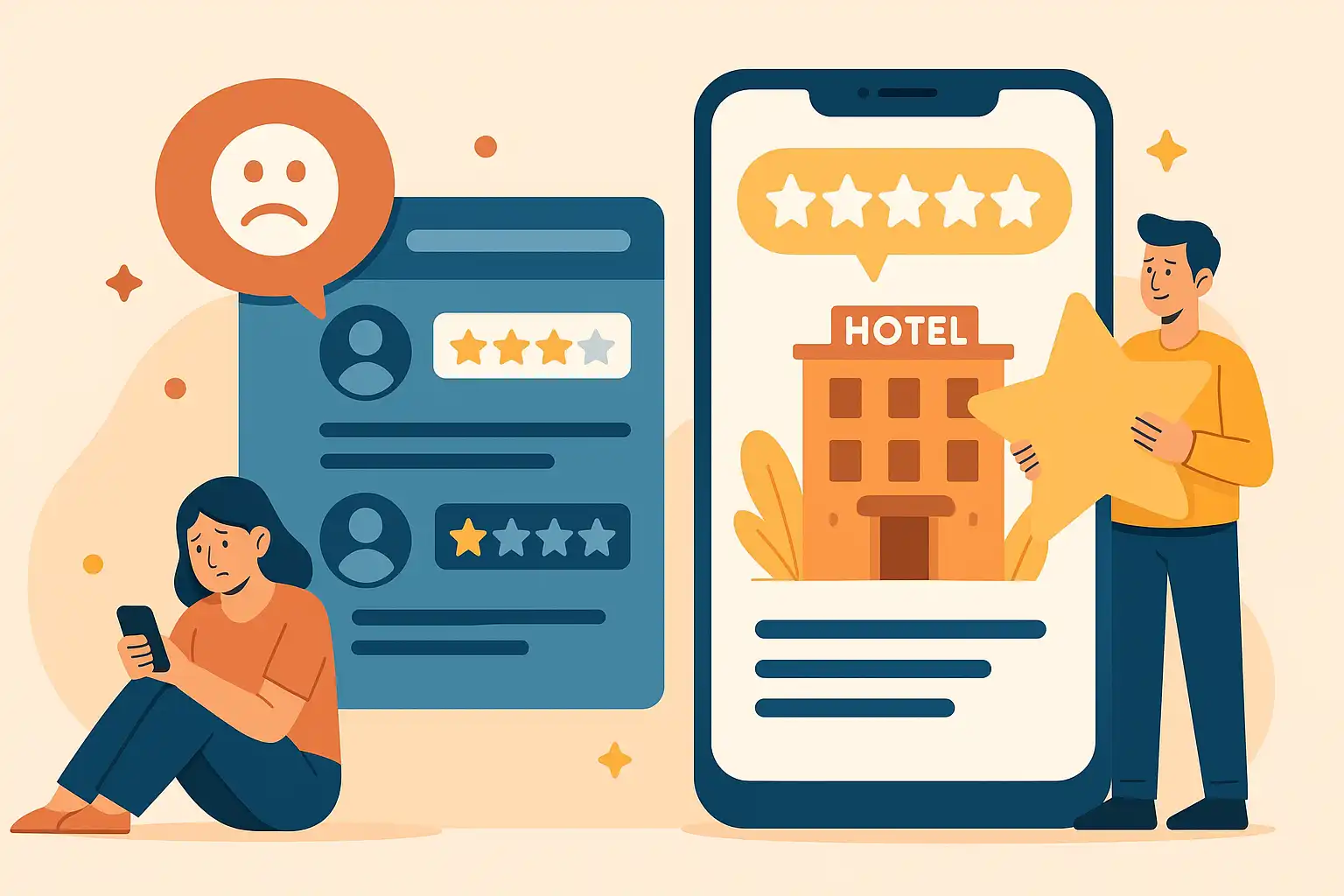
Managing reviews across multiple platforms can get overwhelming, which is why the right software is essential. The best tools monitor reviews, automate responses, and provide insights that help you improve operations and guest satisfaction.
TrustYou’s Customer Experience Platform leads the pack with AI-powered sentiment analysis covering over 200 review sites and social media channels. Their integrated solution offers real-time alerts, automated response suggestions, and detailed analytics to help you understand guest sentiment and competitive positioning.
ReviewPro excels at competitor benchmarking and department-level analysis, helping you spot operational improvements by correlating guest satisfaction with specific hotel services.
Revinate combines review management with automated guest surveys and targeted marketing campaigns. It integrates smoothly with major property management systems to build detailed guest profiles that enable personalized communication and upsell opportunities.
ALICE integrates review management directly into guest experience workflows, empowering hotel teams to address issues in real time before they escalate into negative reviews. Their concierge-focused tools help prevent problems rather than just reacting to them.
| Platform | Key Features | Pricing Tier | PMS Integration |
|---|---|---|---|
| TrustYou | AI sentiment analysis, 200+ site monitoring | Enterprise | Opera, Cloudbeds, SkyTouch |
| ReviewPro | Competitor benchmarking, department analysis | Mid to Enterprise | Most major PMS platforms |
| Revinate | Guest surveys, marketing automation | Mid-range | Strong PMS connectivity |
| ALICE | Real-time issue resolution, concierge tools | Premium | Selective integrations |
Look for platforms that aggregate reviews from 150+ sites to cover all relevant channels, including OTAs, Google, TripAdvisor, social media, and industry-specific sites.
Automated and personalized review invitations that integrate with your property management system help you reach guests at the right time with authentic messaging.
Sentiment analysis that categorizes feedback by department (housekeeping, front desk, dining, etc.) lets you target improvements where they matter most.
Response template libraries with approval workflows keep your brand voice consistent and speed up replies to time-sensitive reviews.
Real-time alerts for new reviews and rating drops help you react quickly to protect your reputation.
Integration with PMS platforms like Prostay, Opera, and SkyTouch ensures smooth data flow between guest profiles, stays, and review management.
Getting your review management system up and running requires careful planning, training, and clear protocols. A structured approach ensures your team delivers consistent, high-quality responses and builds lasting capabilities.
Claim and optimize your business profiles on all major review platforms—Google My Business, TripAdvisor, Facebook, Yelp, and OTA review sections. Complete profiles with accurate info, great photos, and up-to-date amenities build credibility and help potential guests.
Create standard operating procedures for staff training on review responses, including escalation rules, response times, and brand voice guidelines. Document how to handle different review types, compensation offers, and management involvement.
Set escalation protocols for serious negative reviews that need immediate management attention, such as safety issues or viral complaints.
Configure automated review monitoring and alerts through your chosen software. Set notifications for new reviews, rating drops, and competitor benchmarks so your team stays informed in real time.
Assign specific staff members to manage review responses, with backups and coverage schedules for weekends and holidays. Set performance metrics for response quality and timeliness.
Train front desk staff on when and how to ask for reviews naturally, so guests don’t feel pressured.
Housekeeping should be trained to report issues immediately so problems can be fixed before checkout, reducing negative reviews.
Develop procedures for recognizing staff who receive positive mentions and coaching those linked to negative feedback.
Equip front-line staff with authority and escalation processes to resolve guest issues before they escalate.
Hold regular review analysis meetings to identify improvement areas and celebrate successes across departments.

To see how well your review management is working, track key metrics that show guest satisfaction, online reputation, and business impact. Data-driven decisions help you keep improving.
Average review rating across platforms is your main gauge of guest satisfaction and competitive standing. Watch monthly trends for seasonal patterns and the effects of your efforts. Aim for ratings above 4.0 (out of 5) or 8.0 (out of 10) to stay competitive.
Growth in review volume month-over-month shows how effective your review collection is. Healthy hotels typically see 15-25% of guests leaving reviews when proactive strategies are in place.
Response rate to review invitations measures how well your outreach works. Good campaigns see 15-25% response rates, with higher rates indicating strong guest engagement.
Average response time to negative reviews reflects your dedication to service and reputation. Aim for under 24 hours, with immediate replies for serious issues.
Sentiment score improvements track the emotional tone of guest feedback over time. Use this to spot problem areas and measure the impact of improvements.
Track revenue per available room (RevPAR) alongside review score improvements to see the financial benefits of your efforts.
Monitor increases in direct bookings as your review profile improves to reduce OTA commissions.
Analyze guest lifetime value changes for those engaged in your review management programs, looking at repeat bookings and referrals.
Calculate commission savings from direct booking growth and compare to your review management costs for ROI.
For example, Marriott saw a 12% revenue boost within six months of rolling out comprehensive review management, thanks to higher rates, occupancy, and fewer OTA fees.
Even with clear benefits, hotels face hurdles that can slow down reputation building. Knowing these challenges helps you prepare effective solutions.
Managing reviews across multiple brands and property types means juggling different guidelines and communication styles while keeping brand consistency.
Integration issues between review management software and PMS can cause data silos, limiting your ability to analyze guest feedback fully.
High staff turnover means ongoing training needs and risks inconsistent review responses that can hurt your brand.
Responding to international guest reviews requires language skills and cultural sensitivity to maintain a consistent, appropriate voice.
Seasonal staffing changes can disrupt review management during peak times when review volume spikes.
TripAdvisor’s strict rules on review solicitation mean you must carefully encourage reviews without risking penalties.
Removing fake or competitor reviews on Google can be a complex, time-consuming process with uncertain results.
Booking.com limits how you can respond to property-specific complaints, especially when issues involve OTA policies.
Different OTAs have unique algorithms affecting review visibility and rankings, so you’ll need tailored strategies for each.
Algorithm changes can suddenly impact your hotel’s visibility and bookings, requiring constant monitoring and quick adjustments.
The future of hotel review management lies in AI, automation, and multi-channel integration to create smarter, more efficient reputation systems. These tools help you stay ahead of guest expectations and boost operational efficiency.
AI tools like ChatGPT can draft personalized review responses quickly, with human oversight to keep your brand voice authentic.
Predictive analytics identify guests likely to leave negative reviews so you can intervene proactively.
Automated sentiment analysis prioritizes urgent issues, helping your team focus on the most critical problems first.
Machine learning optimizes the timing of review invitations based on guest behavior to maximize positive feedback.
Voice-enabled review collection through smart devices and apps is an emerging way to gather more immediate, authentic feedback.
Monitor social media reviews on Facebook, Instagram, and Twitter to capture feedback beyond traditional platforms.
Encourage video reviews to engage younger guests who prefer visual content.
Partner with influencers to generate authentic, high-quality reviews and social media buzz.
Include corporate travel programs in your review collection to capture valuable B2B feedback.
Engage with local community platforms and business directories to broaden your reputation beyond hospitality sites.
Combining these advanced tactics with solid service excellence creates a powerful reputation management system that covers every guest touchpoint.
The key to success is treating guest feedback as valuable data that drives continuous improvement, not just managing public perception. Hotels that integrate review insights into operations, staff training, and guest experience design will see positive reviews flow naturally from outstanding service.
As hospitality evolves toward more personalized, responsive service, mastering review management will be central to thriving. Those who invest in comprehensive reputation management and deliver consistently excellent service will enjoy increased guest satisfaction, direct bookings, revenue, and lasting competitive advantages.
By embracing these strategies, you’ll future-proof your hotel’s business and build a reputation that truly reflects your commitment to exceptional guest experiences.