Hotel Outsourcing: Cutting Costs vs. Guest Experience
 Mika Takahashi
Last updated Dec 13, 2025
Mika TakahashiThe hospitality industry is facing some serious challenges right now—from ongoing labor shortages to rising operational costs and guests who expect seamless 24/7 digital service. Smart hotel owners and managers are turning to hotel outsourcing as more than just a way to save money. By teaming up with specialized third-party providers, hotels can tap into expert knowledge, cutting-edge technology, and flexible resources that not only improve their bottom line but also boost guest satisfaction scores.
In this guide, we’ll explore how successful hotels use outsourcing services to simplify operations, lower overhead costs, and let their in-house teams focus on what really matters: delivering outstanding service and driving business growth.

Simply put, hotel outsourcing means handing over certain hotel operations and support services to specialized third-party providers instead of managing everything internally. Rather than juggling every role in-house, hotels partner with outsourcing service companies that bring dedicated expertise, advanced technology, and proven processes to handle specific services more efficiently.
By 2026, the majority of midscale and upscale hotel brands across Europe, North America, and Asia-Pacific are using outsourcing for at least one key function. It’s become a must-have strategy for staying competitive.
Typical hotel functions that get outsourced include:
Outsourcing gives hotels access to specialized expertise, advanced technology platforms, and economies of scale that small in-house teams just can’t match. Instead of spreading themselves thin trying to cover every area, hotels can focus their core resources on creating memorable guest experiences while their outsourcing partners take care of the complex backend operations that keep things running smoothly.
Today’s hotel market is a perfect storm pushing more properties toward outsourcing. The post-pandemic bounce-back has created unpredictable demand, while labor shortages mean hotels have to compete fiercely for talent amid rising wages. At the same time, guests expect smooth, 24/7 digital service on par with top e-commerce sites.
With the global hospitality market valued at around USD 5.7 trillion in 2025 and growing through 2027, profit margins are tight. Many hospitality businesses realize that traditional staffing models just don’t deliver the operational efficiency and guest satisfaction needed to stay ahead.
Modern hotel outsourcing services goes way beyond cutting costs. Hotels now outsource to access AI-powered chatbots, advanced analytics, and multilingual support teams that would be too expensive to build in-house. Rather than seeing outsourcing as a compromise, forward-thinking hospitality firms view it as unlocking capabilities they couldn’t afford on their own.
Geographic arbitrage also plays a big role. For example, many European city hotels outsource night audit and call center services to providers in Eastern Europe, saving money while maintaining high service quality. Likewise, U.S. hotel chains often partner with call centers in Latin America and the Philippines, tapping into skilled multilingual agents who provide round-the-clock guest support at competitive rates.
The rapid digital transformation in hospitality means technology integration is now critical. Hotels that once managed simple websites and booking engines now need sophisticated hotel revenue management systems, omnichannel customer support, and real-time analytics. Outsourcing partners who specialize in hospitality technology can implement and manage these complex systems far more effectively than most hotel teams alone.
Hotel outsourcing services can cover both guest-facing operations and back-office functions, depending on the property’s size, brand, and priorities. Knowing which services offer the most value when outsourced helps hotel managers make smart decisions about where outside expertise can have the biggest impact.
Here are some of the most commonly outsourced hotel services:
• Housekeeping and room operations – Offering flexible staffing during peak seasons and consistent quality through specialized training and equipment
• Call center and reservations – Providing 24/7 multilingual support, overflow capacity during busy times, and professional upselling to maximize revenue per call
• Customer support and guest services – Delivering round-the-clock help across phone, email, chat, and social media with trained hospitality specialists
• IT infrastructure and PMS support – Ensuring enterprise-grade security, system monitoring, and tech support for hotel management systems without internal IT overhead
• Revenue management and pricing – Accessing advanced analytics, dynamic pricing tools, and dedicated revenue optimization expertise
• Digital marketing and SEO – Bringing specialized knowledge in hotel marketing, reputation management, and booking channel optimization
• Loyalty programs and CRM – Managing guest data, personalized marketing campaigns, and strategies that encourage repeat bookings
• Accounting and payroll services – Handling financial administration, compliance, and reporting with hospitality-specific know-how
While independent hotels and smaller groups tend to outsource more functions, even big hotel chains increasingly rely on outsourcing partners for specialized capabilities like advanced revenue management or multilingual guest support that require constant innovation and tech investment.
Call centers and reservations are usually the first step for hotels dipping their toes into outsourcing. These areas directly affect revenue and require 24/7 availability, multilingual skills, and hospitality know-how that many hotels find costly to maintain in-house.
Professional hospitality call center services offer full reservation management, guest inquiry handling, and revenue optimization through skilled upselling. These partners provide round-the-clock coverage across time zones, so potential guests get quick, helpful responses no matter when or where they call.
Top hospitality call centers support multiple languages like English, Spanish, German, French, Italian, Portuguese, Japanese, Mandarin, and Arabic. This multilingual support is a huge plus for independent and boutique hotels aiming to attract international travelers without having to hire diverse language staff internally.
For example, a 150-room city hotel that outsourced after-hours calls and WhatsApp messages saw a 30% boost in converting late-night booking inquiries. The external agents, trained on the hotel’s amenities and local attractions, could provide detailed info and complete reservations even when the hotel’s own staff were off-duty.
Modern call center outsourcing also integrates seamlessly with hotel systems. Outsourced customer service agents log interactions directly into the hotel’s central reservation system (CRS), property management system (PMS), or customer relationship management (CRM) platform. Whether using Prostay, Opera, or others, this ensures reservation records, guest preferences, and service requests stay consistent and accessible to on-property teams.
Performance is tracked with key metrics tied to hotel success: average handling times (usually 3-5 minutes), call answer rates (above 85%), booking conversion rates (15-35% depending on property), and revenue per call (including upselling premium rooms or add-ons).

Once hotels see the benefits of call center outsourcing, many expand into other operational and back-office areas to save costs and improve service quality through expert partners.
Housekeeping outsourcing – Seasonal hotels like beach resorts or ski lodges often contract external housekeeping companies to handle staffing swings during peak times. These providers supply trained attendants, supervisors, cleaning supplies, and standardized procedures that keep service consistent while letting hotels avoid year-round staffing overhead. The flexible cost structure aligns housekeeping expenses with occupancy, cutting costs in slow seasons.
IT and Technology outsourcing – Modern hotels rely on complex tech like cloud-based property management systems, revenue management tools, CRM platforms, and cybersecurity. Outsourcing IT to hospitality-focused providers delivers enterprise-level security, 24/7 monitoring, and fast tech support. These partners specialize in platforms like Prostay, Opera Cloud, channel managers, and integrated payments—areas most hotel teams can’t support cost-effectively on their own.
Food & Beverage and Catering outsourcing – Hotels often team up with local restaurants or catering firms to manage breakfast, banquets, or big events. A boutique hotel might contract a café for breakfast service, gaining expert food prep and suppliers while focusing internal staff on core hospitality. Event-driven F&B outsourcing lets hotels handle weddings and corporate functions profitably without full-time banquet teams.
Loyalty Programs and CRM outsourcing – Third-party experts design tiered rewards, automated email campaigns, and guest data analysis to boost repeat visits and direct bookings. Using advanced analytics, these providers identify booking trends, personalize offers, and create targeted campaigns that often outperform in-house marketing.
Maintenance and Security outsourcing – Facility management companies provide skilled technicians for HVAC, elevators, plumbing, electrical, plus security patrols and CCTV monitoring. This removes the need for 24/7 in-house engineering and security staff while ensuring professional upkeep and guest safety.
When done right, hotel outsourcing brings real improvements in efficiency, cost control, and guest satisfaction. Hotels embracing outsourcing as a core strategy often see lower operating costs, higher revenue per available room (RevPAR), better online reviews, and more agile operations that adapt quickly to market shifts.
Cost Savings and Financial Flexibility
Outsourcing service can cut operational costs by 30-50% compared to running the same functions in-house. Some areas like customer service and IT support offer savings up to 70%. This comes from turning fixed payroll expenses into flexible, usage-based costs tied to occupancy and demand. Hotels also save on recruiting, training, benefits, and overhead for managing diverse departments internally.
Service Quality and Consistency
Specialized outsourcing providers invest heavily in training, quality control, and standardized procedures that many hotels can’t develop alone. This focus often leads to better online reviews, higher guest satisfaction, and more repeat bookings. Call center agents trained in hospitality upselling frequently outperform hotel staff who handle reservations only part-time.
Access to Expertise and Technology
Outsourcing gives hotels instant access to AI chatbots, advanced revenue management, analytics platforms, and multilingual teams without big capital expenses. Partners maintain expertise in cutting-edge tech that smaller properties couldn’t afford to build or keep up with, leveling the playing field with larger chains.
Scalability and Flexibility
Outsourcing partners can quickly ramp up services for seasonal peaks, special events, or unexpected demand spikes without long hiring or training delays. Resorts can boost housekeeping for summer or holidays, city hotels can add call center support during conventions or festivals. This flexibility avoids understaffing in busy times and excess costs in slow periods.
Enhanced Focus on Core Activities
By offloading routine tasks to experts, hotel managers and staff can spend more time on revenue-driving activities like guest relations, local partnerships, and strategic planning. Front desk teams focus on personalized service rather than admin, and managers can pursue upselling and operational improvements that boost profits.
While outsourcing offers big benefits, it also comes with risks that need careful handling to protect brand reputation and service quality. Choosing the wrong partner or poor oversight can hurt guest satisfaction and cause operational headaches that outweigh cost savings.
Loss of Control and Brand Voice
Outsourced teams may struggle to fully capture a hotel’s unique personality and service style, especially for luxury or boutique properties where personal touches matter most. Clear brand guidelines, thorough training, and regular calibration meetings help ensure external teams represent the hotel’s voice consistently. But hotels must invest time and effort to educate partners and monitor quality.
Data Security and Privacy
Hotels handle sensitive guest info like personal details, payment data, and preferences, so protecting this data is critical when working with third parties. Compliance with GDPR and other regulations requires strict security protocols, encryption, and regular audits. Hotels remain ultimately responsible for guest data even when outsourcing.
Communication and Cultural Gaps
Time zone differences, language nuances, and cultural misunderstandings can cause service gaps if not managed well. Luxury hotels serving discerning international guests need outsourced agents who understand cultural subtleties and service expectations. Comprehensive cultural training and clear escalation paths help bridge gaps, but ongoing partner development is essential.
Hidden Costs and SLA Misalignment
Unexpected fees for setup, system integration, after-hours support, or penalties can erode savings. Vague service level agreements (SLAs) can cause disputes over scope, response times, and quality. Clear contracts with detailed metrics, penalties, and scope definitions help prevent problems but require careful review.
Hotels usually manage these risks through pilot programs, thorough vendor evaluations, regular reviews, and keeping some functions in-house as a backup.

Picking the right partner is key to success. The ideal outsourcing provider becomes an extension of your team, while a poor choice can damage guest relationships and efficiency.
Hospitality Track Record and Experience
Look for providers with proven experience serving hotels, resorts, or travel companies—not generic BPO firms. Ask for case studies, client references from similar properties, and familiarity with key hotel tech platforms like Prostay, Opera, SynXis, or Amadeus. They should understand hospitality-specific challenges like seasonal demand, revenue optimization, and guest service standards.
Service Scope and Scalability
Choose partners who can start small (like after-hours calls) and scale into chat support, email, reservations, and loyalty programs as you grow. This lets you test the relationship before expanding and ensures they can grow with your business.
Technology and Integration Capabilities
Make sure partners integrate smoothly with your existing systems via APIs, real-time syncing, and automated reporting. They should offer transparent performance monitoring, occupancy-linked staffing, and direct access to service metrics. Tech should simplify, not complicate, your operations.
Quality Assurance and Training Programs
Check how providers train and monitor agents. Good partners offer train-the-trainer programs, involve your staff in agent development, hold regular calibration sessions, and continuously improve based on guest feedback and data.
Compliance and Security Standards
Ensure providers hold relevant certifications for data protection, PCI DSS for payments, and comply with labor laws. Security measures should include encryption, secure storage, and regular audits. They should also have insurance for data breaches and operational issues.
Commercial Model and Contract Structure
Compare pricing models—per-occupied-room, hourly, per-interaction, or fixed fees—to find what fits your usage. Start with short pilot contracts (3-6 months) before long-term deals. Make sure contracts include performance guarantees, termination clauses, and clear scope to protect your interests.
Successful outsourcing happens gradually, with clear goals and ongoing optimization. Don’t overhaul everything overnight—take a phased, measured approach.
Assessment and Goal Setting
Start by auditing current operations to find pain points and quantify improvement chances. Common issues: high abandoned calls, low direct booking conversion, excessive housekeeping overtime, or weak digital marketing. Set measurable targets like 20% cost reduction, 15% better booking conversion, or 10% more direct reservations.
Scope Definition and Prioritization
Pick initial functions based on impact and complexity. Call handling, reservations, and after-hours support are usually easiest to outsource first. Define service channels (phone, email, chat, social media), hours, performance standards, and escalation rules clearly.
Vendor Selection and Pilot Program
Run a request for proposal (RFP) with 3-5 qualified providers focusing on hospitality experience, tech, and culture fit. Narrow to 2-3 finalists for presentations and reference checks. Launch a limited pilot (e.g., after-hours calls for 90 days) with clear KPIs like response times, conversion, and guest satisfaction.
Integration and Training
Onboard partners with brand guidelines, FAQs, local info, and service protocols. Integrate their systems with your PMS, CRS, and CRM for seamless data flow. Train hotel staff and outsourced agents together to align standards.
Go-Live and Continuous Optimization
Start services with close monitoring—daily reviews for first two weeks, then weekly and monthly check-ins. Hold regular calibration meetings to refine scripts, upselling, and fix gaps. Use guest feedback and data to keep improving.
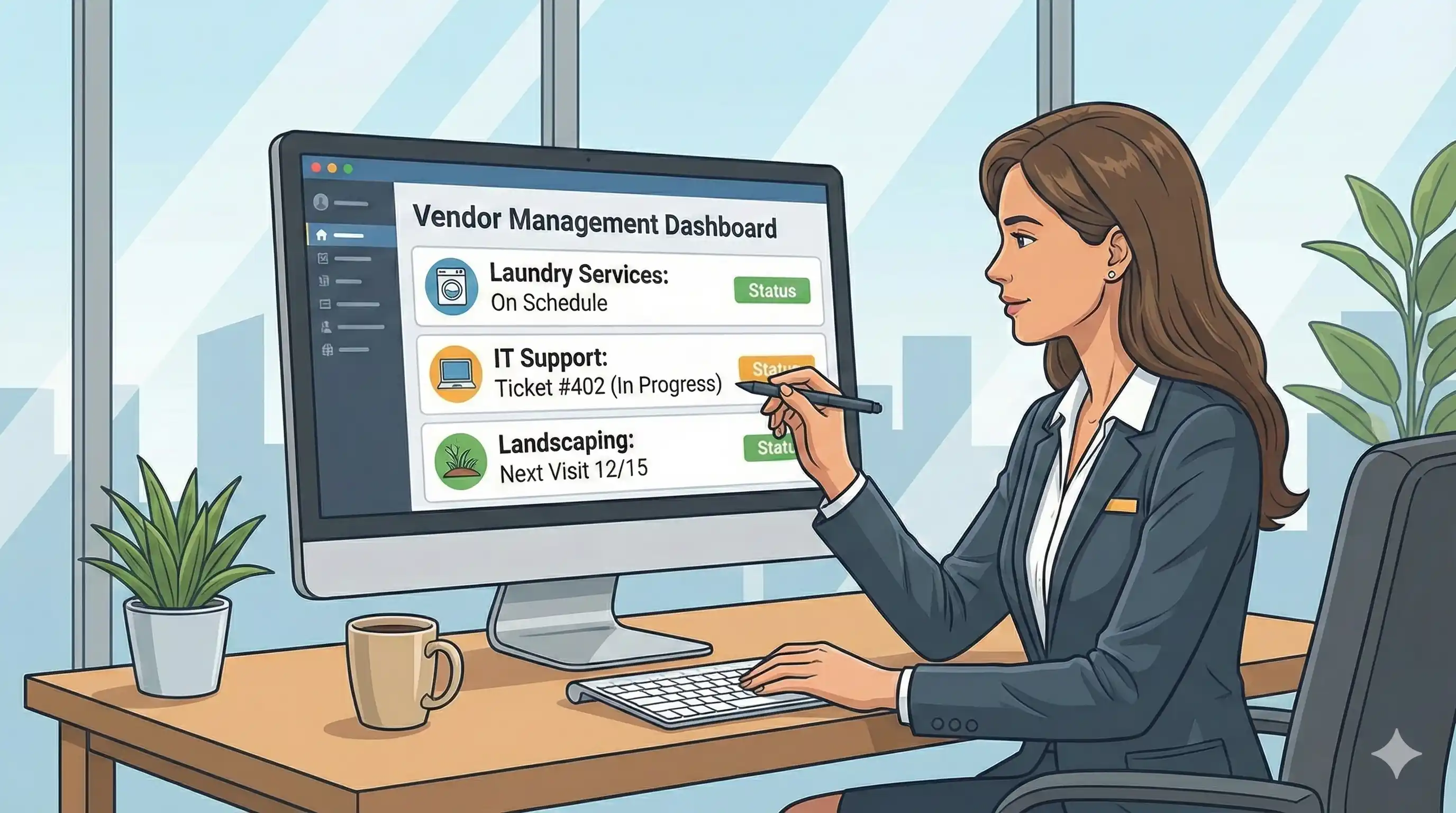
Here are some real-world stories showing how hotels have benefited from smart outsourcing.
Example 1 – Urban Midscale Hotel Success
A 120-room city hotel with high call abandonment and low direct bookings partnered with a hospitality call center to handle reservations and support. The multilingual team offered 24/7 coverage, trained on hotel amenities and upselling. Within a year, bookings improved by 30%, positive reviews rose 25%, and operational costs dropped 15%.
Example 2 – Resort with Seasonal Peaks
A coastal resort outsourced housekeeping and event catering during summer peak season, scaling from 50 to 200+ rooms cleaned and gaining professional catering for weddings and corporate events. Over 18 months, event revenue grew 40% and labor costs fell 35% compared to permanent staffing.
Example 3 – Independent Boutique Hotel Transformation
A 40-room boutique hotel outsourced digital marketing and revenue management to experts, replacing weak in-house efforts. The marketing agency ran SEO, paid ads, and social media; the revenue manager used dynamic pricing and analytics. After a year, direct bookings grew 45%, average daily rate rose 20%, and reliance on high-commission OTAs dropped 60%.
Hotel outsourcing is evolving into tech-driven partnerships that go beyond saving money to becoming strategic advantages. Forward-thinking hospitality firms see outsourcing as a core part of their growth strategy.
Automation and AI Integration
AI and automation are changing outsourced customer service with chatbots, voice recognition, and self-service portals handling routine guest inquiries. By 2027, most outsourcing will combine AI first-line support with human agents focusing on complex issues and high-value sales. This blend cuts costs while speeding responses and improving service quality.
Data-Driven Personalization
Outsourcing partners use advanced analytics to deliver personalized guest experiences like top e-commerce sites. Service teams access guest profiles including stay history and preferences to offer tailored recommendations, dynamic upselling, and proactive service that boosts revenue.
Remote and Hybrid Service Models
Cloud-based hotel systems and remote work let outsourcing providers tap talent worldwide while keeping quality high. This flexibility helps hotels cut costs, cover peak times, and ensure business continuity during emergencies.
Expanded Strategic Outsourcing
By 2027, more hotels will outsource strategic functions like full revenue management, digital marketing, and even property operations for some ownership models. Specialized providers often outperform internal teams in complex areas like pricing, channel management, and customer acquisition.
The future is about partnership, not just vendor relationships. Outsourcing providers share risk through revenue-based contracts and long-term plans aligned with hotel brand goals.
When planned and managed well, hotel outsourcing can cut costs, boost hotel guest satisfaction, and free managers to focus on growing the business. The key is to see outsourcing as a strategic way to access specialized expertise—not just a cost-saving move—and to build partnerships that enhance the guest experience.
Every hotel should tailor its mix of in-house and outsourced services based on brand, market, and goals. Luxury boutique hotels might outsource revenue management and marketing while keeping close control of guest-facing functions. Larger hotels might benefit from comprehensive call center and housekeeping partnerships for scale and consistency.
Start small with pilot programs like after-hours reservations or digital marketing campaigns, then expand when results prove value. This approach builds confidence, maintains control, and minimizes risk.
Hotel operators who strategically embrace outsourcing aligned with their growth plans will be better positioned to compete in an increasingly complex hospitality world while delivering the exceptional service that keeps guests coming back.