25 Hotel Lobby Ideas for a Memorable Arrival Area
 Mika Takahashi
Last updated Dec 25, 2025
Mika TakahashiIf you go into any successful hotel nowadays, you'll see that the hotel lobby is different. It's not just a spot to check in and get your key anymore. The modern hotel lobby is now a place where people can do a lot of different things. People work on their laptops, locals meet for coffee, and first-time guests take pictures for Instagram before they even see their rooms.
This change is more important than you would imagine. More and more reviews on Booking.com and Google mention "lobby vibe" as a reason for their choice. Before making a reservation, travelers sift through TikTok videos of dramatic stairs and warm lounges with fireplaces. Your hotel lobby ideas aren't simply an entryway; it's also the most photographed, talked-about, and frequently most profitable part of your hotel.
This book gives you real hotel lobby ideas that you can use, no matter if you own a 300-room metropolitan hotel, a beach resort, or a 25-room boutique business with a restricted budget. This will provide you a practical guide to making a space where guests really want to be.

The meaning of "hotel lobby" has changed a lot. In 2025, the lobby will be a place where people can check in, work together, hang around, and show off their brands all at the same time. Guests want to discover comfortable places to sit and work between meetings, a coffee bar where they can get breakfast without going to the restaurant, and separate areas where they can relax after a long travel.
Since about 2015, the usual functional parts have changed a lot. Instead of big, monolithic front desks, there are now smaller pods or staff members who move around with tablets. Instead of being in the middle of the room, the luggage area is quietly located near the main door. Hotel lobby ideas have become important. Restrooms are still important, but they are out of the way of the primary view. Elevators fit right in with the arrival experience. There should be free and fast Wi-Fi throughout. Seating has changed from the same old sofas to a mix of work tables, lounge clusters, and bar-height perches at food and drink touchpoints.
This change shows how people really respond when they travel. Business guests mix business and play all day long. Digital nomads require outlets and good internet access. Leisure tourists want to remember their trip from the time they get there. OTAs and review sites make every first impression stronger, which makes the first time guests come through the door even more important.
The hotel lobby ideas that follow combine timeless design rules with real-life examples from homes that have done it correctly. Let's start with the thing that gives you the most bang for your buck: lighting.
Lighting is the quickest and cheapest hotel lobby idea to change the look of any lobby space. Look at your light sources before you move any furniture or paint a wall. The appropriate lighting plan helps with three important things: navigation (bright areas near the reception area and entrances), atmosphere (warmer, dimmer levels in lounge areas), and brand storytelling (feature lighting that highlights art or architecture).
Instead of just one overhead light, modern hotels use tiered lighting. This usually means using recessed downlights for general lighting, wall washers to highlight textures and finishes, ornate pendants or chandeliers as focal points, and portable lamps on coffee tables and side tables to make the space feel more intimate.
The Four Seasons Kuwait is a great place to start. The almost 30-foot ceilings needed dramatic lighting on the stairs to drive the eye up and make people feel like they had arrived. The Mandarin Oriental Hong Kong also uses chandeliers that are placed in the right places to reflect light off marble surfaces, which makes them more powerful across the room.
Quick Wins for Lobby Lighting:
- Replace cold 4000–5000K lamps with warmer 2700–3000K LEDs
- Add dimming zones for day versus evening atmospheres
- Install scene controls (“Morning,” “Afternoon,” “Evening,” “Event”)
- Position task lighting at the front desk for document readability
- Use accent lighting to highlight one signature art piece or architectural detail
You don't need a degree in engineering to understand color temperature. The Kelvin scale shows how warm or cool light looks. Candlelight is around 2000K, warm white is between 2700 and 3000K, neutral is between 3500 and 4000K, and daylight is between 5000 and 6500K.
This means useful advice for hotel lobby design:
| Zone | Recommended Kelvin | Light Level (Lux) | Why It Works |
|---|---|---|---|
| Seating lounges | 2700–3000K | 150–250 lux | Creates intimacy, encourages lingering |
| Front desk | 3000–3500K | 300–500 lux | Documents readable, feels clean and professional |
| Circulation paths | 3000–3500K | 200–300 lux | Clear wayfinding without harsh brightness |
| Bar/F&B areas | 2700–3000K | 150–250 lux | Evening ambiance, social atmosphere |
Better illumination near the check-in desk makes the place look cleaner and makes people feel safer. Lower levels in lounge niches let guests know that they can sit down and rest. The most important thing is to be consistent with your hotel lobby ideas. Don't combine extremely cool and very warm bulbs in the same sightline, as this makes the room feel amateurish and fragmented.
With scene controls, your team may change the mood of the whole lobby without moving any of the lights. Morning settings are bright and wake you up. The evening presets lower the lights to softer, warmer levels, changing the room from a place to work to a place to hang out.
Statement fixtures are like the main points of your property that show off its personality right away. Chandeliers are the main attraction in big lobbies with high ceilings. Sculptural pendants over check-in pods or communal tables stand out in modern spaces. Over lengthy work tables or bar counters, linear lights work effectively.
The Wild Palms Hotel put in a bespoke acrylic disc mobile that guests see as soon as they walk in. The Four Seasons Hotel Kuwait has spiral staircases that are lit up in a way that makes the stairs themselves look like art. These aren't just lights; they're also statements about hotel lobby design.
Indirect lighting should get the same amount of attention. Cove lighting at the margins of the ceiling makes high ceilings feel less like caves and more like rooms. Wall grazing is when fixtures are placed near textured surfaces like stone, wood slats, or velvet curtains. This brings out the materials and creates depth. These mild methods balance out the drama of statement fixtures.
Most designers don't realize how important glare control is at first. Shielded downlights stop harsh shadows from falling on faces at the front desk. Task lights at concierge stations make sure that employees can work in comfort. Frosted globes over the lounge seats spread out the light so that guests may read or work without squinting.
Make sure the style of your fixtures matches your brand. Industrial black track lighting are a good fit for airport hotels like Moxy Sydney. Japanese-style or wellness properties go nicely with delicate lanterns or paper shades. Brass and crystal are two materials that are associated with old-fashioned elegance. Your choices about lighting should feel like they were meant to be.
A hotel lobby welcomes you with all five senses. Sight draws the most attention, but sound, smell, touch, and even taste all play a role in how people feel about your home in those initial few seconds.
Consistent sensory signals help people remember your brand over time. Guests will remember your house better if you utilize a signature aroma all the time. A handpicked playlist that changes every three months keeps the sound current while keeping the sound identity. These nuances are important because they make connections in the mind that affect how people recall their stay.
In this location, lifestyle and luxury hotels are the best. Hotel Brooklyn Bridge has a biophilic design philosophy that is supported by quiet environmental noises. Ace Hotel Kyoto uses native music and touchable elements like linen, wood, and stone to make you feel like you're really there.
Think about each layer of your senses in your hotel lobby ideas:
Aman Tokyo offers live music in its lobby during select hours, transforming the space into a destination rather than a passageway. Many boutique city hotels host jazz nights that draw both guests and locals, creating energy that extends the lobby’s role beyond hospitality.
By 2025, guests expect to work remotely, socialize, and eat in the hotel lobby, not just pass through it on the way to the elevators. This behavioral shift requires intentional zoning that supports multiple activities simultaneously without creating chaos.
Effective hotel lobby designs includes:
Moxy Sydney Airport fully embraced this by giving the place an industrial coworking feeling that seems lively instead of temporary. The foyer of Novotel Miami Brickell is based on the idea of "work/live/play," with separate areas for each. Proper Hotel San Francisco built a unique social room that draws in both guests and locals.
Hotel lobby ideas that support this multi-use approach include changing the heights of the seating (lounge chairs, work desks, bar stools), adding movable side tables that can be used for different things, adding soundproofing to separate noisy and quiet areas, and giving guests views of bars or terraces that make them want to stay longer.
A lot of lobbies now mix residents and travelers on purpose. Some properties sell day passes or coworking memberships that make money and energy at the same time. This means that the furnishings and finishes must be able to handle daily use by the community, not simply occasional guests.

You can make zones in an open lobby without putting up walls. Rugs hold sitting groups in place. Different regions are marked by ceiling treatments like wood slats, pendant clusters, or changes in height. In work spaces, the lighting is bright and focused on tasks, while in lounge areas, it is warm and subdued.
Room dividers and soundproof screens create semi-private meeting areas without restricting sightlines. A person checking in should still be able to see the whole room, but someone working at a quiet table shouldn't feel like they're in the way of the main flow of people.
Layouts that work:
Chiltern Firehouse in London arranges its lobby like a series of living-room vignettes, each with its own personality but all connected visually. Headlands Coastal Lodge positions an adventure desk next to a cozy fire, combining practical service with atmospheric comfort.
Circulation routes matter enormously. Guests should be able to roll luggage from the main entrance to the front desk and then to the elevators without feeling like they’re walking through someone’s private living room. Clear paths prevent awkward encounters and maintain the distinct character of each zone.
Hotel lmobbies that are too small or too empty make people feel uncomfortable and make the company look cheap. When a room is full of furnishings, it means they really want to fit as many people as possible. A lobby with a lot of furniture that is spread out makes it look cold and uninviting.
A good rule of thumb is that open, navigable area should comfortably hold roughly 10–15% of your key count during busy check-in times. A hotel with 200 rooms should be able to handle 20 to 30 guests in the lobby at the same time without getting crowded.
Some practical circulation needs are:
For large urban hotels (250+ keys): You have space to create multiple distinct zones. Use furniture groupings to break up the floor rather than leaving vast open areas. Consider a central anchor—a statement art piece, large planter arrangement, or bar—to give the space a center of gravity.
For mid-scale properties (80–250 keys): Balance efficiency with comfort. A compact front desk with one or two satellite seating clusters works well. Avoid the temptation to fill every corner.
For small boutiques (under 80 keys): Every square foot counts. Choose furniture carefully for scale. Use visual tricks—mirrors, light colors, transparent materials—to make the space feel more generous.
In small lobbies, window seats do two things at once. They add useful seats to the thickness of the wall while letting in as much natural light as possible. People like to gather in these areas, which makes more room for people to go around.
When there isn't enough floor room for big pots, vertical gardens and green walls can offer biophilia. Recent installations in city hotels in Europe and Asia show that living walls have a big effect without taking up valuable floor space.
Instead of long counters, front desk pods are a different option. Tablets that let people check in anywhere in the lobby save up room on the central floor and make the arrival experience more personal. Some properties have done away with the visible desk altogether. Staff now greet guests using mobile devices.
Automatic sliding doors at the main entry take up less space than regular doors, giving back many square feet of space. This is extremely important for properties in airports and city centers, where every inch counts.
Deployable smoke curtains can get rid of the necessity for big enclosed elevator lobbies that fire rules require in new buildings or substantial renovations. This architectural choice saves a lot of floor space while yet being secure.
Picking out hotel lobby furniture is like casting a movie: each chair, table, and lamp says something about the price and the person. A guest should be able to tell what your brand stands for right away when they view your chairs.
Some of the most common forms of furniture are:
Three main style directions dominate contemporary lobby design:
Historical/Classic: Traditional shapes, rich woods, tufted leather, and brass accents. Best for historic buildings, big hotels, and buildings that pay tribute to a certain time period. Check out the vintage-inspired items at The Bowery Hotel or the real mid-century items at the Detroit Foundation Hotel.
Modern/Minimalist: Lines that are clean, colors that are neutral, surfaces that are bare, and materials that are natural. Best for buildings that focus on health, brands that are ahead of the curve in design, and places where architecture should be the main focus. Healing Stay Kosmos is a good example of this style because its furnishings doesn't compete with its dramatic surroundings.
Eclectic/Contemporary: A look that mixes different times and styles, uses bright colors, layered textures, and things that have been accumulated throughout time. Best for boutique hotels and lifestyle brands that want to show off their identity. Publica Isrotel picks for things that look like they were picked out by hand instead of in a catalog.
Durability cannot be overlooked. Commercial-grade fabrics, stain-resistant finishes, and modular pieces that can be reconfigured for events are essential. Hotel lobby furniture takes more abuse than residential pieces ever would.
In crowded lobbies, rounded and curved furniture is useful. Soft edges make it easier for blood to flow. Curved sofas are less heavy than sectionals with sharp corners. Round tables may fit more people than rectangular tables, which is better for groups that need to be flexible.
Novotel Miami Brickell shows this with rounded furniture that makes a flow through a lobby that can be used for many things. Proper Hotel San Francisco uses art-deco-style rugs and soft-corner furniture to create a classy but welcoming space.
The lobby can change during the day because of small, mobile things like tables on wheels, light poufs, and stackable stools. It doesn't take much to turn a peaceful morning lounge into a location for events in the evening.
Don't give in to the urge to shove all the chairs up against the walls. This design makes rooms feel more like waiting rooms than living rooms. Move furniture away from the walls to make small groups. Leave enough room behind the pieces for personnel to get around.
Things to think about for ergonomics:
Plants, water, natural light, and organic materials are all used in biophilic design to bring nature into the lobby. Research suggests that these things lower tension and make people stay longer, which is exactly what you want in a lobby environment that makes money.
Well-known examples show how different the approaches can be. The whole character of 1 Hotel Brooklyn Bridge is based on salvaged wood and lots of plants. Explora Valle Sagrado uses huge wooden columns to connect tourists to the landscape around them. The Kitz makes a color scheme based on the forest that feels real without using real tree trunks.
There are two types of strategies: low-maintenance and higher-maintenance.
Low-maintenance biophilia:
Higher-maintenance biophilia:
Place plants in a smart way. Plants should frame important things like the front desk, big pieces of art, and vistas of the outdoors instead of getting in the way of people walking around. A big fiddle leaf fig next to the front desk makes for a great photo opportunity. The identical plant in the middle of the lobby makes it hard to get through.
For homes by the seaside or in the mountains, make sure the hotel lobby design flows with the outside. Windows that go from floor to ceiling and frame vistas make the space feel bigger. Terraces that flow smoothly from the lobby add to the usable space.
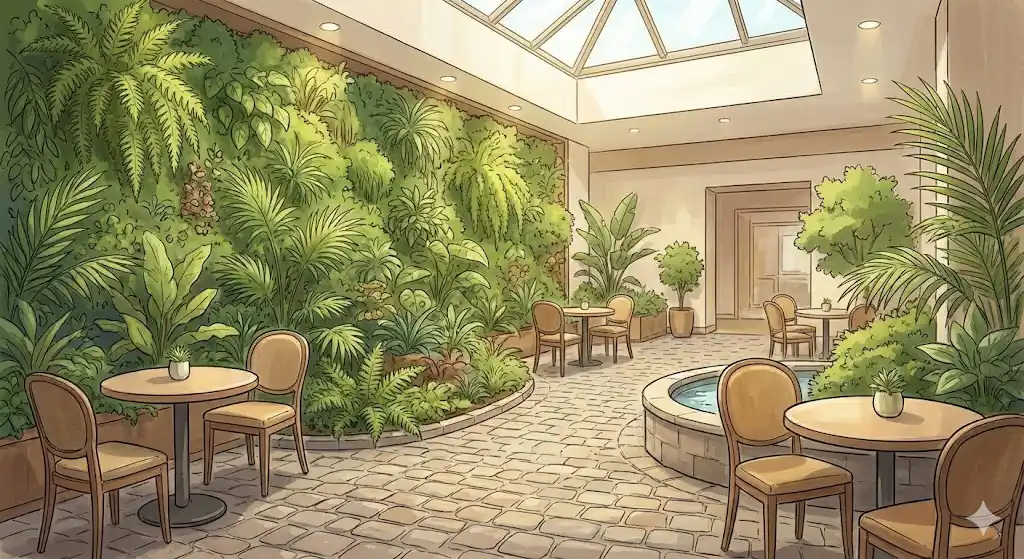
Plant selection should reinforce your property’s location and theme:
Vertical gardens are great for Instagram and also help with sound and air quality. Recent examples from hotels in European cities show that green walls may do well inside as long as they have the right lighting and watering systems.
Simple water elements, including narrow reflecting ponds and wall-mounted fountains, add soft sound and movement without needing a lot of care. Water sounds cover out other sounds and make the room feel quiet. Don't use complicated water features unless you have a team of engineers on hand.
Natural materials should be visible where guests touch things:
Maintenance reality check: Indoor landscapes that are too complicated for the hotel staff to really take care of will get worse and hurt the property's reputation. A few healthy, well-cared-for plants are better than an ambitious installation that appears like it hasn't been taken care of in months. If you want a lot of greenery, set aside money for continuous gardening help.
Long counters that have been around for a long time still work for big hotels that get a lot of check-ins. But lifestyle companies and small lobbies are more and more choosing pods, mobile check-in terminals, or even getting rid of desks altogether.
The way you set up your desk should change with your property:
| Hotel Size | Keys | Recommended Approach |
|---|---|---|
| Large resort/urban | 250+ | Traditional counter with 2–4 staffed stations |
| Mid-scale | 80–250 | Compact counter with 1–2 stations plus mobile backup |
| Boutique | Under 80 | Single compact station or roaming check-in |
High-impact front desks turn the reception desk into a design moment. Hotel Alessandra in Houston made a desk out of brass, myrtle burl, and marble that looks great in pictures. Room Mate Emir has an aged-brass counter that gives the room an air of sophistication right away.
ADA and accessibility requirements include:
Technology integration demands attention. Hidden cable routing keeps surfaces clean. Built-in RFID key encoders speed check-in. Discreet POS terminals handle payment without cluttering the guest-facing view. If self-service kiosks supplement staff, position them near but not at the main desk.
Since about 2010, the roles of concierges have changed a lot. More establishments don't have formal hotel concierge desks. More people utilize "lifestyle concierges" who walk about with tablets, or they combine concierge services with regular front-of-house staff.
In bigger city hotels, it's better to have a separate concierge near the lobby entrances. As guests leave, they naturally stop to ask about transportation, tours, and restaurants. This positioning lets those interactions happen without causing a lot of traffic at check-in.
For small and medium-sized hotels, merge the concierge and front desk, but make the area look different. A map wall, a bookcase with local guides, or a brochure rack with hand-picked suggestions all show that this is the place to receive local assistance.
Hotel concierge services are specific to certain places because of standout examples. An adventure concierge at a seaside retreat might offer surfboard rentals and tide maps. A ski facility can put recommendations for gear and sales of lift tickets front and center. A hotel in the city might focus on making reservations for restaurants and tickets to shows.
Operational considerations: personnel need to be able to see the door clearly for security reasons, printers and digital tools need to be simple to get to without getting in the way of guests, and they need to be close to resources like printed maps and transit timetables that guests still sometimes need.
Lobby F&B has changed from having concealed coffee machines and vending machines to having central café bars, curated grab-and-go fridges, and pop-up carts that change every week. This change shows how guests really want to eat and drink while they are there.
Business travelers and digital nomads want coffee, snacks, or small meals without having to go to a complete restaurant, especially in the early morning before it opens and late at night after it shuts. Meeting this need brings in money and raises satisfaction scores.
Layout approaches that work:
Fontainebleau Miami Beach maintains a high-energy lobby bar that functions as a social hub throughout the day and night. Plaza Athénée uses bistro-style seating that doubles as casual F&B space without requiring a separate café buildout.
For properties with limited budgets:
Modern alternatives to messy brochure racks include:
Adding local culture makes things feel real and sets them apart. The foyer of the Detroit Foundation Hotel pays tribute to the city's past with period-appropriate items and photos taken in the area. Montreal hotels incorporate artwork by local artists and motifs that are related to Quebec to make guests feel at home.
When guests need printed materials, make sure they are all in one neat place. A well-placed map, a modest stand with pamphlets about current events, and a magnetic rail for posters are better than having racks all around the lobby.
Some hotels work with local galleries or tourism boards to change their exhibits every three months. New content makes the lobby more engaging for guests who come back and provides staff new things to chat about.
For properties that get tourists from other countries, having signs in more than one language makes things easier. Make sure that at least the most important wayfinding information (such where the facilities, elevators, and restaurant hours are) is available in the main languages of your guests.
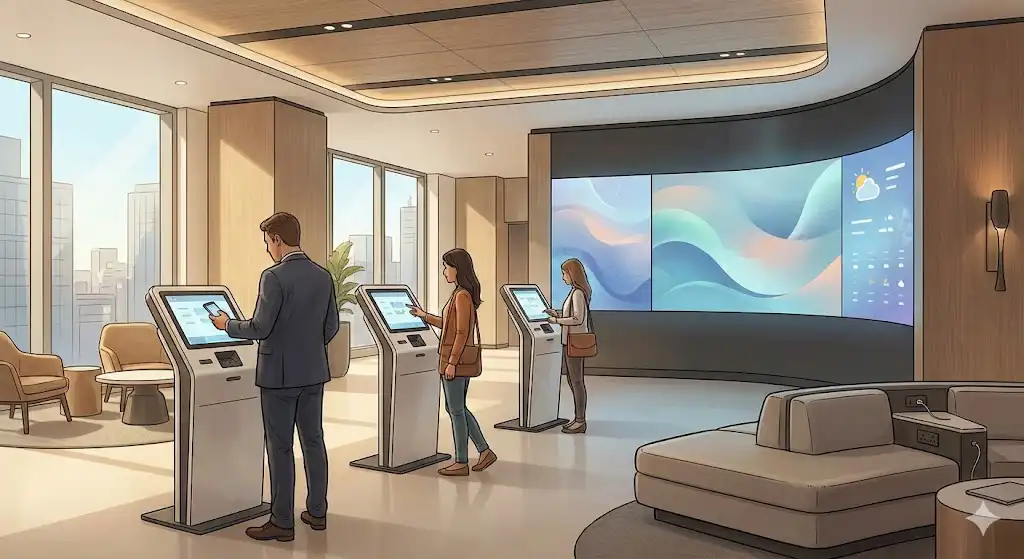
Ample, easy-to-use power outlets and fast Wi-Fi are baseline expectations for every hotel lobby in 2026. Guests arrive assuming they can charge devices and work anywhere in your property.
Strategies for distributing power effectively:
Clustering too many chargers in one location leads to crowding and cord tangles. Instead, distribute outlets so every 1–2 seats in work-oriented zones have access. Guests should never struggle to find power.
Advanced convenience features:
Digital check-in continues to expand. Mobile room keys reduce front desk interaction. Self-check-in kiosks near the entrance serve guests who prefer speed over personal service. But design must still accommodate guests who want human interaction—some travelers will always prefer a warm welcome from staff, and luxury positioning often demands it.
Large digital displays can showcase art, local information, or event schedules without feeling like airport signage when implemented thoughtfully. The key is curation and context.
The Intercontinental Los Angeles Downtown features a Doh Ho Suh resin installation that sets a high-tech, curated tone. Digital art walls with rotating exhibitions keep lobbies fresh between physical renovations.
Best practices for screens:
Projection mapping on walls or ceilings can transform lobbies for special events, holiday displays, or destination storytelling. A beach resort might project sunset colors. A city hotel might map local landmarks. These temporary installations create social media moments without permanent changes.
The underlying principle: all visible technology should feel intentional and premium. Exposed cables, off-brand monitors, and harsh brightness undermine the hospitality experience you’re trying to create.
Color palettes and material choices communicate whether a hotel is luxe, playful, minimalist, or historically grand within seconds of entry. These decisions cascade through every other design choice.
Neutral schemes signal calm sophistication. Mandarin Oriental Barcelona uses whites and warm beige tones (sometimes called “bleige”) that let architecture and furnishings take focus. This approach ages well and appeals broadly.
Bold palettes create memorable impressions. Wild Palms Hotel embraces sunny yellows and pinks that announce its personality immediately. These choices suit properties with strong lifestyle positioning and younger target demographics.
Material combinations carry their own associations:
| Combination | Association | Best For |
|---|---|---|
| Marble + brass | Classic luxury | Grand hotels, heritage properties |
| Concrete + black steel | Industrial chic | Urban lifestyle, design hotels |
| Rattan + linen | Relaxed elegance | Beach resorts, wellness properties |
| Velvet + lacquer | Glamorous drama | Nightlife-oriented, fashion hotels |
| Reclaimed wood + stone | Eco-luxury | Sustainability-focused properties |
Making sure that the foyer and other hotel areas look the same makes for a smooth guest experience. The facility feels like one big space as guests step out of the elevator and into a hallway that has the same colors and materials as the lobby. Principe di Savoia keeps its gold and velvet story going from the entrance to the hallways and into the guest suites.
Patterns should be thought about carefully. Geometric, kaleidoscopic, or cultural patterns can be the lobby's most important visual moment. But patterns might be too much—use them on only one wall, one floor area, or one piece of furniture instead of everywhere.
A single oversized focal point anchors the lobby and gives guests something to photograph and remember. Options include:
The Corinthia London hotel has a big globe in the middle of the lobby that helps guests find their way right away. The resin installation at Intercontinental LA makes a lasting first impression. Many guests take pictures in front of La Mamounia's distinctive black-and-white designs.
Layered art, such gallery walls, local photography series, and shifting exhibitions, keeps lobbies feeling fresh and connected to the area. Rotating displays give guests who come back something new to see and give them something to talk about on social media.
Mirrors bounce light and make the space feel bigger, which is especially useful in lobbies that are small or have low ceilings. Instead of blank walls or back-of-house doors, put mirrors where they would reflect windows, art, or intriguing architectural aspects.
Scale is really important. The size of statement pieces must fit the lobby. A small sculpture in a big room looks lost. An installation that is too big for a small lobby is too much. The piece should feel planned, not like an afterthought or clutter.
Independent hotels, inns, hostels, and motels with small footprints and limited capital face different constraints than major brands with design teams. But excellent lobby design doesn’t require unlimited budgets—it requires intentionality.
Minimalist design, careful color choices, and clutter control make a micro-lobby feel polished rather than cheap. The absence of unnecessary elements often reads as more sophisticated than abundance.
High-impact, low-cost improvements:
Accessible hacks for immediate improvement:
Quick-Win Checklist for Small Lobby Refresh:
In small lobbies, vertical strategies free up floor space while creating impact. Draw the eye upward with bold ceiling fixtures, painted or wood-slat ceilings, wall-mounted planters, or oversized art.
Narrow walls offer branding opportunities:
Hanging chairs or wall-mounted benches open floor space while adding memorable visual moments. These pieces photograph well and create distinction that guests remember.
Contrast the front desk in color or material to make the reception point clear and attractive from the entrance. A dark desk against a light wall, or a bright surface against a muted backdrop, signals where to go immediately.
Lighting strips along front desk edges or under wall cladding create an upscale, contemporary look without high cost. LED tape is inexpensive, easy to install, and transforms the feel of the room when done well.
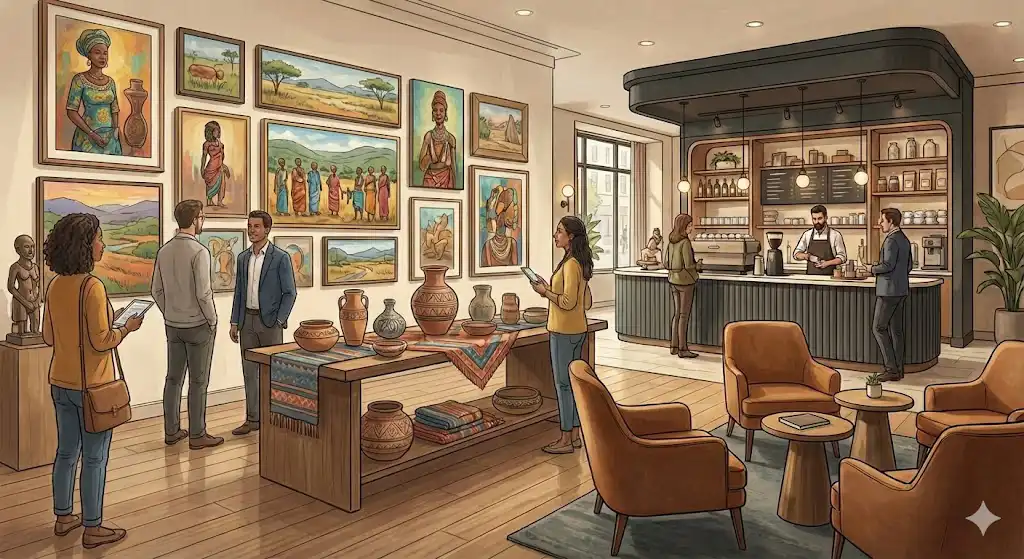
The best lobby ideas come from real local culture, history, or stories, not generic decor that could be found anywhere. Design that is distinctive to your location sets your business apart from worldwide chains and gives guests stories to tell.
The Onsen Ryokan Yuen Shinjuku in Tokyo is a great example of this. Through careful choice of materials, arrangement of space, and cultural references, the lobby takes guests from the modern metropolis to the traditional onsen atmosphere. When guests go to the bathing facilities, they have already psychologically left Tokyo.
Palazzo Petrvs in Orvieto, Italy, is inspired by the town's iconic Duomo. It has striped stone patterns that tie the hotel to its medieval setting. The lobby gets travelers ready for the old town they are about to visit.
Design principles based on culture:
The goal is authenticity, not caricature. A beach hotel doesn’t need seashells on every surface. A mountain lodge doesn’t need antlers everywhere. Select meaningful references and deploy them with restraint.
Sometimes “more is more” works. Urban luxury hotels, nightlife-oriented properties, and fashion-driven brands can embrace maximalist aesthetics that create drama and excitement.
Examples of successful maximalism:
Design tactics for maximalist lobbies:
Balance matters even in maximalism. Pair bold elements with calmer backdrops—plain ceilings, quieter flooring, solid-color walls—to prevent visual fatigue. Guests should feel excited, not exhausted.
Longevity consideration: Trendy shapes date faster than classic forms in bold colors. A velvet sofa in jewel tones will outlast a novelty-shaped chair. Choose foundational pieces with timeless silhouettes and inject personality through color, texture, and accessories that can be updated more easily.
Not every property needs grand gestures. Boutique hotels, extended-stay properties, and neighborhood-focused concepts often benefit from lobbies that feel like private apartments rather than formal hotel halls.
The residential approach emphasizes:
Chiltern Firehouse in London arranges its lobby like a series of living-room vignettes. Le Relais de Chambord fills its space with book-lined walls that invite browsing. The Wayback in Wisconsin creates a retro-modern motor lodge atmosphere where guests feel comfortable immediately.
Small touches that encourage lingering:
Operational notes: residential aesthetics require durability underneath. Select commercial-grade textiles that still feel soft. Choose rugs that can be professionally cleaned. Build in clever storage so clutter doesn’t accumulate on surfaces. The space should look effortless while withstanding daily use.
Dedicating a portion of the lobby to quiet pursuit creates value for guests who want more than social buzz. Mini-libraries, reading nooks, and listening corners attract guests who might otherwise retreat to their rooms.
Hotel Eden in Rome maintains a library that feels like a private study. Leather armchairs, reading lamps, and writing desks create an old-world ambiance where guests sit for hours.
Hotel lobby ideas for cultural corners:
These spaces serve dual purposes. A comfortable reading nook becomes an informal meeting spot during business hours or a quiet “Zoom call” corner for remote workers.
Maintain collections intentionally. A random pile of abandoned paperbacks looks neglected. Curated, cataloged books organized by theme look sophisticated. Assign staff responsibility for keeping these areas tidy and refreshed.
Some hotels intentionally position the lobby as an entertainment venue and revenue generator. This approach suits properties with strong F&B programs, nightlife orientation, or regular event calendars.
Examples of hotel lobby entertainment:
Spatial requirements for event-friendly lobbies:
When events and hotel operations happen in the same location, acoustic planning is very important. A DJ performance shouldn't be too loud for guests who are checking in. The quiet work area shouldn't be affected by a cocktail party. Get sound control by buying acoustic treatments, putting speakers in the right places, and training your team.
Lobbies that are good for events boost group sales, local collaborations, and food and drink upsell chances all year round. A lobby that has regular programming becomes a destination, drawing in people who might want to remain there again.
Design specific photo spots that guests will naturally discover and share. These become organic marketing that extends your reach beyond paid channels.
Effective photo moments:
Branded backgrounds that aren't too obvious, such logo walls, patterned flooring, and characteristic colors, let user-generated content spread without looking forced.
Check social media geotags and hashtags to see which corners guests naturally take pictures of. Make popular places better by adding greater illumination, clearer sightlines, or seasonal decorations. Sometimes guests find photo spots that the designers didn't think about.
Being real is important. The staged "selfie walls" should go well with the overall look of the hotel. Guests know and make fun of gimmicky installations that are merely there for photos. The best moments to share feel like they belong in the space.
Sustainability is a mainstream expectation rather than a niche differentiator. Guests, owners, and operators increasingly expect energy-efficient lighting, responsibly sourced materials, and design that prioritizes durability over disposability.
1 Hotel Brooklyn Bridge and Explora Valle Sagrado demonstrate that eco-driven lobbies can feel luxurious and aspirational. Sustainability doesn’t require sacrifice—it requires intention.
Key strategies:
Being flexible is a way to be sustainable. You don't have to buy new modular furniture when you need it for a different use. Reconfigurable walls let spaces change over time. Wiring plans that take future technology into account save money on expensive retrofits.
In 2030, hotel lobbies ideas will probably include more contactless technology, a stronger focus on wellness, and areas that combine business and hospitality, making it hard to tell where one ends and the other begins. Good design now—flexible, robust, and well-planned—can handle these changes without needing to be torn down.
The hotels that do well will be the ones whose lobbies can change to meet the needs of guests while still being warm and welcoming, which no technology can replace.
The best hotel lobbies don't just say hello to guests; they also ask them to remain. They make first impressions that affect the whole hotel experience and get people to write reviews and take pictures that affect future bookings.
If you're building something from the ground up or just updating a property before the busy season, start with the basics: lighting that sets the mood, furniture that can be used for more than one thing, and design choices that convey your unique story. You don't have to use all 25 ideas at once. Choose two or three that fit your brand and budget, do them effectively, and then build on them.
Your lobby is the most public space in your building and the one that gets the most pictures taken of it. Make it something to remember.