Hotel Efficiency Guide: Streamline Operations & Profit
 Mika Takahashi
Last updated Feb 2, 2026
Mika TakahashiHotel efficiency is the smart use of resources including staff time, energy, supplies, and technology to give guests great experiences while keeping prices low and profits high. Understanding how to make hotels run as efficiently as possible is now very important for staying profitable in competitive marketplaces. This is because labor costs make up 30–40% of operational costs and utilities costs keep going up.
This blog article talks about ways to maximize hotel efficiency, technologies that can help, and ways to monitor performance that can be used by both solo hoteliers and hotel organizations with multiple properties. This material talks about the main problems that hotel teams face today, such as not having enough staff, rising costs of doing business, and changing client expectations for satisfaction. It is useful for both line-level managers who want to make everyday operations more efficient and owners who run many hotels.
Using less resources to give guests better experiences and make more money is what hotel efficiency implies. This means getting more bookings, running operations more smoothly, and making fewer mistakes with smaller teams and the correct technologies.
By reading this guide, you will gain a better understanding into hotel productivity as well as boost operational efficiency of hotels through:
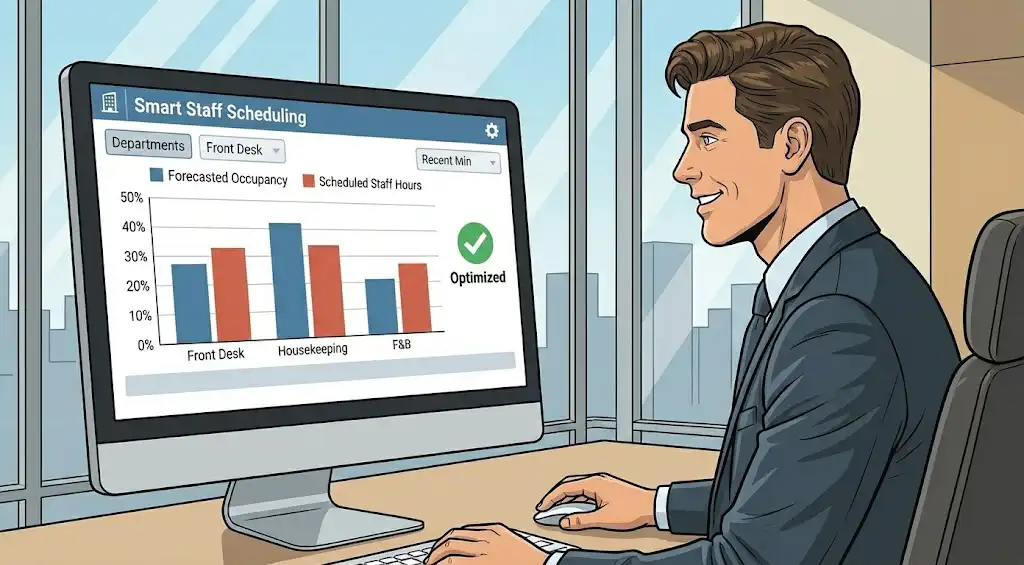
Hotel efficiency is the right mix of getting the most out of your resources and providing the best service. An efficient hotel doesn't just decrease expenses; it also carefully manages its resources to get the most out of its gross operating profit while still making sure guests are happy.
This balance is important since the hospitality industry is facing problems it has never seen before. Because there aren't enough workers, staffing problems are always a top priority. Margins are under pressure because fixed costs are going up. At the same time, expectations for guest experiences keep rising. Hotels that don't improve their operational efficiency could lose both top talent and market share.
Hotel operational efficiency means that all departments have processes that are as efficient as possible, cutting down on waste of time, labor, and materials. This involves making the front desk work better, improving how housekeeping works, and making sure that maintenance procedures are the same across the board.
When hotel operations function smoothly, activities are done faster and with fewer mistakes. Check-in at the front desk used to take five minutes, but now it just takes ninety seconds. The quality of the work done by housekeeping crews doesn't suffer even though they clean more rooms per shift. Instead than waiting for problems to happen, maintenance issues are fixed before they happen. Every improvement builds on the last, making everything run more smoothly across the site.
Hotel financial efficiency is all about keeping costs down while still providing good service and making as much money as possible. This involves knowing how much it costs to keep a room filled, keeping an eye on your average daily rate compared to your competitors, and finding out where your operational costs are higher than they should be.
There is a direct link between financial efficiency and profitability: hotels that are good at keeping costs down per occupied room routinely have higher hotel gross operational profit margins than their competitors. For a hotel, the gap between ordinary and great financial efficiency can mean 15–20% more profit.
To figure out how financially efficient a hotel is, we need to know what numbers make it work well.
Using the hotel efficiency ideas above, particular metrics measure progress and help make decisions based on facts. Without measurement, efforts to improve efficiency are just guessing. With the correct analytics, you can find opportunities before they happen and keep an eye on performance data that show what really drives your organization.
GOPPAR, or Gross Operating Profit per Available Room, is the best way to measure how productive a hotel really is. GOPPAR is different from revenue-focused KPIs since it shows whether your hotel business truly keeps profit after paying for operating costs. To find it, divide gross operational profit by the total number of available hotel nights.
Benchmark GOPPAR values are different for each sector. Budget hotels usually make $40 to $60 per available room, whereas upmarket hotels aim for $80 to $120. Cost per occupied room keeps track of all the costs associated with each sold room. This shows how well housekeeping, amenities, and hotel labor management are working. The labor cost percentage, which should be between 30 and 35 percent of revenue, shows whether the number of employees matches the number of guests.
Average check-in and check-out times are a clear indicator of how well the front desk works. Industry leaders get 90-second averages with mobile and kiosk solutions, while manual processes take 4 to 5 minutes. Housekeeping productivity, or how many rooms are cleaned per staff hour, usually falls between 2 and 3 rooms per hour, depending on the type of property.
Energy use per occupied room shows how utility costs change with occupancy, which might help you find ways to save energy. The staff-to-guest ratio shows how many guests a hotel can handle. Luxury hotels usually have a ratio of 1.5:1, while select-service hotels can handle guests with a ratio of 0.5:1.
Guest satisfaction scores are directly related to how well a hotel runs. Properties that respond to guest inquiries in less than 60 seconds typically get 15 to 20 percent higher scores on satisfaction surveys. The speed of service delivery, such as the timing of room service, the settlement of maintenance issues, and the handling of amenity requests, is a measurable efficiency category.
The percentage of direct reservations shows how well marketing works and how strong the brand is. Hotels that cut their reliance on OTAs from 60% to 40% usually see RevPAR rise by 8% to 12% only from saving on commissions.
These numbers show you where to put your efforts to make things better. The next section describes how to make adjustments that will affect these data.
You only need to know what to measure when you do something about it. The following solutions turn ideas about hotel efficiency into real advances in technology, staffing, and managing resources.
When manual processes slow things down, when the front desk is too busy, or when data silos make it hard to make educated judgments, hotels should focus on technology solutions. A smart solution can make a big difference in how things work.
| Factor | Traditional Approach | Efficient Approach |
|---|---|---|
| Front Desk Staffing | Fixed schedules regardless of occupancy | Create labor plans based on actual occupancy forecasts |
| Housekeeping Assignment | Room lists distributed at shift start | Dynamic routing via hotel effectiveness mobile application |
| Maintenance Response | Reactive work orders | Predictive maintenance using historical data |
| Training Method | Annual sessions | Continuous micro-learning with intuitive analysis built in |
| Scheduling | Single day scheduled shifts planned weekly | Demand-based scheduling using rated labor management software |
| Cross-Training | Single-role specialization | Multi-skill development for open shifts coverage |
A labor management tool that lets you see competitive wage data and position information helps keep personnel by making sure that labor standards are in line with market conditions. Hotels that use smart labor management to make labor plans based on expected demand can cut overtime by 20 to 25% while still providing good service.
Smart energy management gives you a return on investment (ROI) that you can see within 12 to 24 months. Most of the time, LED lighting upgrades cut lighting expenses by 50–75% and pay for themselves in less than two years. Smart thermostats with motion sensors can save you 15–25% on HVAC costs by changing the temperature based on how many people are in the room.
For most hotels, utility costs make up 6–8% of their income. Properties that use full smart energy management systems, like smart thermostats, LED lights, and motion sensors, say their energy costs go down by 20% to 30%. This means that a 150-room facility will save $30,000 to $50,000 a year.
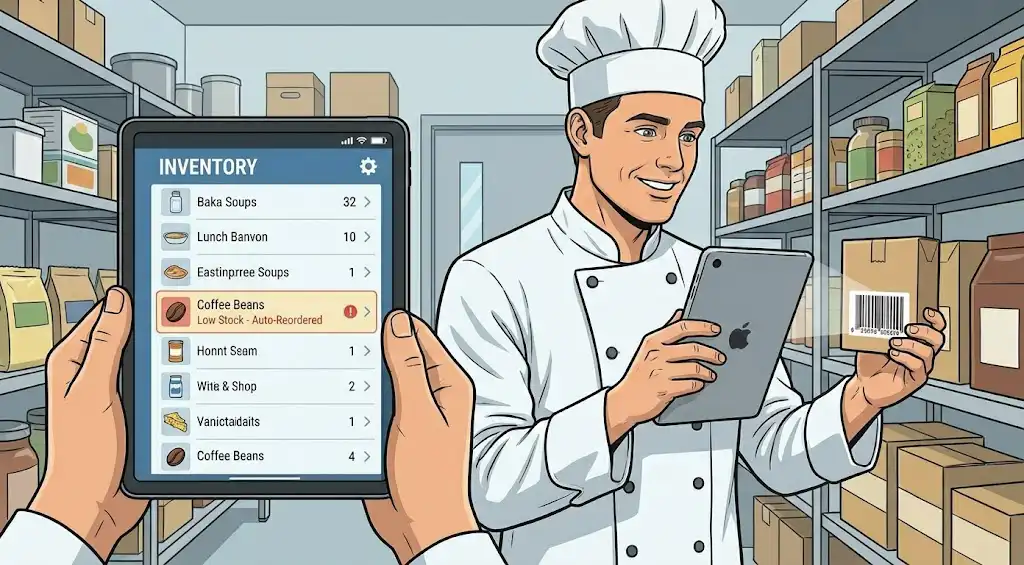
Using data-driven insights to optimize inventory cuts down on waste in linens, supplies, and amenities. Hotels that keep track of how much guests use their rooms can lower the cost of supplies by 10–15% and avoid running out of stock.
These investments need money and might be hard to put into action. Knowing what common problems are helps make sure they work.
Even well-thought-out plans to make hotels more efficient run into problems. Knowing what problems usually happen lets you fix them before they happen.
Solution: Use incremental rollouts with extensive training programs for staff that show how the changes will benefit them personally, not simply the company. Show the people who work at the front desk how technology can help them do less work and do it more quickly. Use peer champions to encourage adoption and celebrate early adopters.
Begin with non-core tasks before moving on to core tasks. Give teams 30 to 60 days to get used to things before they go live. Resistance usually goes down when staff see how much more efficient things are.
Solution: Use ROI calculations and hotel group summary report analysis to find the best investment options and put them at the top of your list. A property management system usually gives you a return on investment (ROI) of 300–400% over five years by saving you money on labor, maximizing your income, and cutting down on mistakes.
Think about implementing in stages: start with mobile solutions for guests (which will have the most impact on satisfaction), then optimize housekeeping (which will save a lot of manpower), and finally control energy (which will give you steady long-term returns). A lot of vendors provide financing that makes payments match the savings you get.
Solution: Find a balance between automated processes and individualized guest experiences. Automate encounters that include transactions while keeping high-touch moments. Use mechanisms that let guests give feedback to keep an eye on contentment during changes.
Set service standards before cutting back on workers. Keep an eye on overall performance metrics every week while modifications are being made. If satisfaction numbers go down, stop any other efficiency measures until things settle down again. The idea is to cut costs while still making sure guests are happy, never at their expense.
To run a hotel well, you need to find the right balance between technology, training personnel, and improving processes. Properties that use current techniques and have well-trained staff routinely make more money in gross operating profit and have happier guests than their competitors. The best hotels use data to make decisions that help them get better all the time, instead of just once in a while when they want to be more efficient.
Immediate actionable steps:
In today's competitive hospitality industry, making your hotel efficiency run as well as possible is no longer an option; it's a must. You can cut down on inefficiencies, save labor expenses, and make guests happier all at the same time by using data-driven insights, smart technology, and giving your staff the tools they need to do their jobs well through good training and scheduling.
Prostay has a whole hotel management platform that makes your daily tasks easier. It includes things like an integrated property management system, AI-powered guest communication, and centralized reporting. Prostay's modular approach matches your specific demands, whether you own a single boutique hotel or a wide range of properties. It helps you make smart choices that improve the efficiency of your business and maximize your earnings.
Today is the day to start your journey toward a hotel business that is more efficient, profitable, and focused on guests. Get in touch with Prostay or ask for a trial to find out how our cutting-edge technologies may change the way your hotel runs, make more money, and cut costs.
Prostay is where smart technology meets seamless hospitality management. It will help your hotel run more smoothly.