ERP for Hotels: 2026 Guide to Hotel Enterprise Systems
 Mika Takahashi
Last updated Feb 22, 2026
Mika TakahashiEnterprise resource planning ERP for hotels is a set of software programs that work together to bring all hotel operations, from managing the front desk to keeping track of finances, into one system. Hotel ERP solutions do rid of data silos by linking property management, guest services, inventory, human resources, and financial processes through a single database that lets all departments see and use the same data at the same time.
This guide has everything hotel owners, hospitality managers, and decision-makers need to know about hospitality enterprise resource planning. It covers the basics, the most important features of the best systems, how to implement them step by step, the problems that come up when moving to a new system, and how to choose the best erp solution for your property. If you run a small inn or manage a portfolio of hotels, you need to know about hotel ERP systems to stay competitive in the hospitality sector today.
Hotel ERP software combine property management, financial management, inventory management, HR, and guest interaction capabilities into one platform. This makes it easier for hotels to run their businesses, cut down on manual errors by up to 70%, and make their operations 20–30% more efficient.
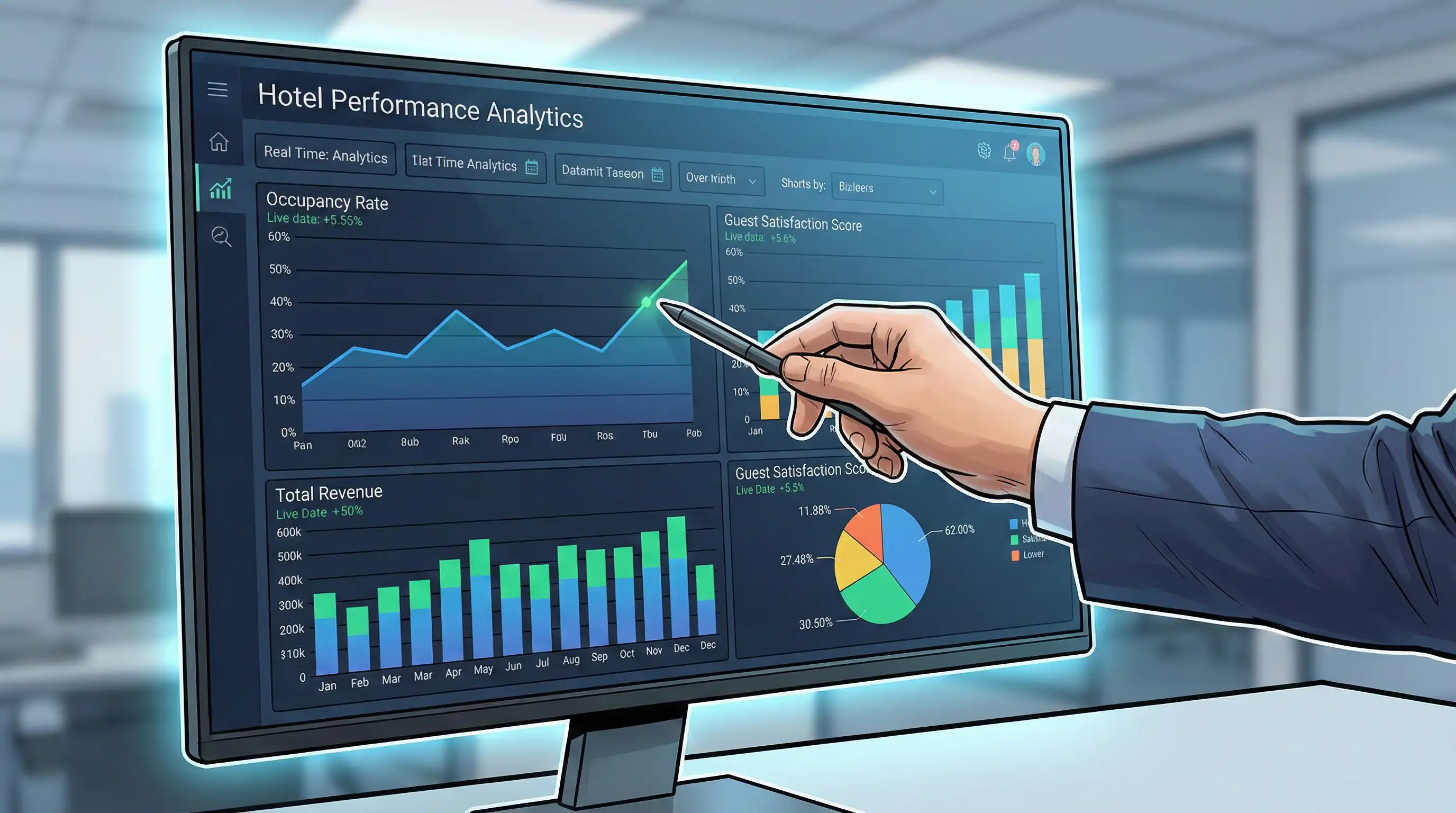
A hotel ERP is a type of enterprise resource planning ERP software, sometimes known as a property management system, that is made expressly for the unique operating challenges of the hospitality industry. Hotel ERP systems are different from regular business software because they meet the needs of the hotel industry. For example, they can manage room availability in real time, keep track of visitor preferences, integrate food and beverage point-of-sale systems, and use algorithms to manage revenue that change based on market conditions.
It is very important for modern hotel management. Properties that use complete systems see RevPAR go up by 15–20%, guest satisfaction scores go up by 25%, and costs go down a lot because of automated procurement and resource allocation. When margins are tight and guest experience is the most important thing in the hospitality industry, having up-to-date information across all departments gives you the edge you need to expand your business in a sustainable way.
PMS Integration for Property Management System The property management system is the main part of any hotel ERP. It takes care of reservations, check-ins, room assignments, and guest folios. Modern hospitality ERP systems have PMS features built in instead of as add-ons, which makes it easy for guest-facing operations and back office systems to share data.
Modules for Accounting and Financial Management Strong financial accounting features keep track of accounts payable and receivable, the general ledger, budgeting, and financial reports that work with several currencies, which is important for worldwide chains. These modules connect directly to operations data, so there is no need to reconcile data by hand. They also give you real-time information on how well your property is doing.
Systems for managing inventory and buying Real-time inventory management goes beyond just keeping track of room supplies. It also includes food and drink supplies, cleaning supplies, and parts for repairs. Good supply chain management in the ERP system automates reorder points, keeps track of vendor connections, and helps keep costs down by making purchases in bulk.
Managing human resources and payroll for a hotel means making complicated schedules for staff members with different skills, shifts, and departments. ERP human resources modules take care of payroll processing, benefits administration, training monitoring, and compliance documentation. This lets hospitality managers focus on strategic objectives instead of administrative responsibilities.
These parts work together through a shared database. This means that when a guest books a room, the reservation systems automatically update the availability, housekeeping gets assignment notifications, inventory changes to reflect the need for more amenities, and financial data shows the expected revenue.
Traditional hotel software usually has different programs for each task, such as a reservation system, accounting software, inventory tools, and customer relationship management databases. This broken-up method causes a number of serious problems that hotel ERP systems fix.
| Aspect | Traditional Software | Hotel ERP Systems |
|---|---|---|
| Data Flow | Manual data entry between systems | Automated real time data synchronization |
| Reporting | Consolidated reports require manual compilation | Unified dashboard with operations data |
| Guest Data | Scattered across multiple databases | Single guest profile with complete history |
| Integration | Requires custom development or middleware | Native connections between all modules |
| Scalability | Adding properties means adding complexity | Designed for multi-property management |
Over time, the benefits of linked systems grow. When customer data moves automatically from reservation management to housekeeping to guest services, staff can give guests great experiences by providing personalized service. For example, they can keep track of guests' preferences for room temperature, pillow choices, or dietary restrictions without having to ask them again.
Knowing these basic characteristics will help you look at particular aspects that set great hotel ERP systems apart from good ones.
Beyond the basic design, the specific features of each ERP module define how well a system supports everyday hotel operations and strategic decision-making. The best ERP systems for hotels are those that include both hotel-specific features and enterprise-level reliability.
Managing Reservations and Bookings Advanced reservation management can handle complicated booking situations like group reservations, long stays, package deals, and changing prices. The system needs to stop overbooking while maximizing occupancy by using smart room assignment algorithms that take into account visitor preferences, maintenance schedules, and chances to upgrade.
Automating Guest Check-in and Check-out Modern hospitality ERP systems make the arrival process easier by letting guests pre-register, check in on their phones, and have their folios automatically prepared. These automated chores free up front desk staff to focus on giving guests great experiences instead of entering data.
Assigning rooms and coordinating housekeeping The front desk and cleaning personnel can send real-time updates about the status of rooms to each other. This cuts down on communication delays by up to 40%. Housekeeping modules that work on mobile devices let staff update room availability right away, making sure that guests get the right information when they arrive and increasing service.
Talking to guests and taking service requests Integrated messaging systems keep track of all guest interactions, from room service orders to maintenance inquiries. This makes it possible to provide better service and fix problems more quickly. Hotels can constantly give their guests great experiences by managing all of their communications from one place.
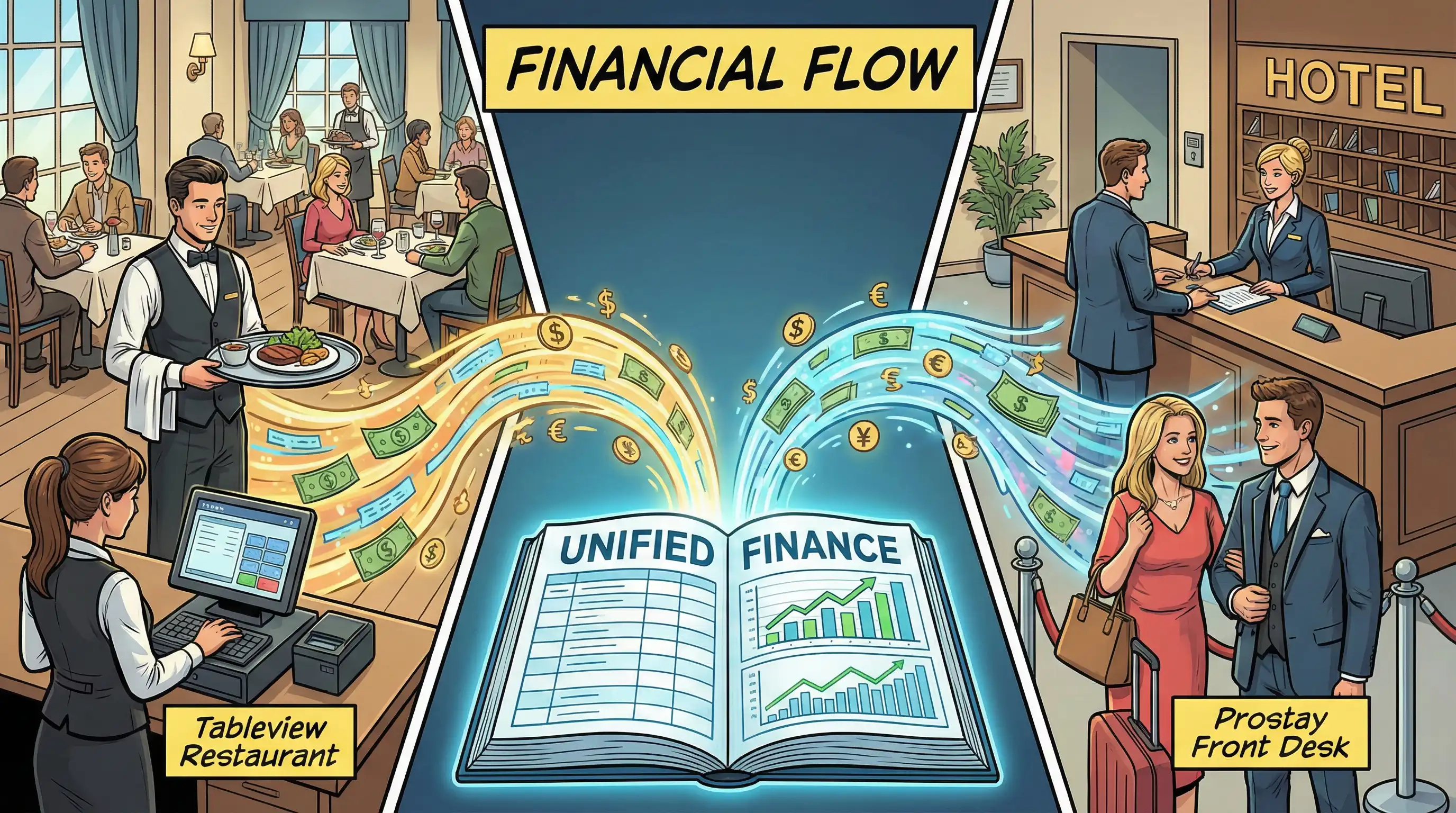
Automated Invoicing and Billing Automating financial procedures does away with manual folio calculations, automatically combines charges from the restaurant POS and spa services, and creates accurate guest bills without the need for personnel to do anything. This makes things easier, which cuts down on mistakes when billing and speeds up checkout.
Consolidation of finances across multiple properties For hotels with several locations, ERP systems let you see all of your financial information in one place while still keeping track of each property's details. Standardized metrics and comparative analytics give hospitality managers a better idea of how their portfolios are doing.
Tracking income and expenses in real time Business intelligence dashboards show how well a company is doing financially compared to its budget. This helps managers make smart choices regarding pricing, staffing, and marketing. Managers may respond to changes right away instead of waiting for reports at the end of the month because they have access to real-time data.
Tools for budgeting and forecasting Advanced forecasting uses past data, market trends, and booking patterns to guess how well a business will do in the future. These tools help you make smarter choices about how to spend your money on marketing, staffing, and capital investments.
OTA Integration and Rate Sync Seamless links with sites like Booking.com, Expedia, and local OTAs make sure that rates are the same and that availability is correct across all distribution channels. The finest hospitality enterprise resource planning systems cut down on manual overrides by 70% by automatically syncing.
Direct Booking Engine Connection Integrated booking engines capture reservations at lower commission costs while keeping guest data collecting constant. This helps find the right balance between OTA distribution and direct bookings.
Managing inventory across all channels Centralized management of room availability minimizes overbooking across channels and makes the most of occupancy. When a room sells on any channel, it updates all over the place in seconds, which protects both revenue and the guest experience.
Tools for Maximizing Revenue AI-driven pricing algorithms look at things like rival rates, local events, past patterns, and booking speed to provide the best prices. Properties that use advanced revenue management see RevPAR improvements of 15–20%, which has a direct effect on the bottom line.
These features lay the groundwork for better operational efficiency, but to get the most out of them, careful preparation for deployment and migration is needed.
To successfully switch to a new hotel ERP, you need to plan carefully, have enough resources, and set reasonable deadlines. When properties rush implementation or don't realize how complicated it is, they typically have expensive problems. On the other hand, deliberate approaches lead to faster hotel ROI and more users.
Before starting the move, hotels should look at their current problems, write down how their business works, and set clear goals for success. Most implementations take between 6 and 12 months, depending on how big and complicated the property is.
You need to look at your options and see which one best meets your needs in order to choose the proper one. The following comparison shows the main differences between system categories:
| Feature Category | Traditional Systems | All-in-One Solutions (Prostay) | Enterprise ERP |
|---|---|---|---|
| Implementation Time | 3-4 months | 8-12 weeks | 12-18 months |
| Integration Capabilities | Limited, requires middleware | Native hospitality integrations | Requires extensive customization |
| Scalability | Single property focus | Multi-property ready | Enterprise-wide but complex |
| Cost Structure | Lower upfront, higher ongoing | Predictable subscription | 25-30% higher total cost |
| Support Quality | Varied by vendor | 24/7 hospitality-specific | General enterprise support |
| Hospitality Features | Basic PMS functions | Full hospitality stack | Requires custom development |
For most hospitality businesses, from small hotels to growing chains, all-in-one systems like Prostay offer the best mix of hospitality-specific features, quick setup, and low total cost of ownership. Generic business ERPs like NetSuite need a lot of customisation to work for the hospitality industry, which raises both costs and risks.
Knowing what problems are likely to come up helps properties get ready for and lower the risks of adoption.
Even the best-planned deployments run into problems. Getting ready for these problems with tried-and-true solutions greatly improves results and speeds up the time it takes to get value.
The data migration phase of most ERP deployments is the one with the most risk. Before transferring, legacy systems often include formatting issues, duplicate records, and old information that needs to be fixed.
Before migration starts, spend money on a complete data cleaning. Set up data ownership in each department to make sure it's correct. Use automated validation tools to check the data at the source and the destination against each other. This will catch any differences before they affect operations. Modern cloud-based PMS systems like Prostay let you transfer data using APIs and automatic validation, which means less human work and more security for critical data during the process.
People don't want to use new technologies because they are afraid of the unknown, worried about job security, and frustrated by the learning curve. Properties that don't spend enough on training have longer adoption times and don't use the system's full potential.
Start talking about change management early, and stress how the new technology will make mundane chores less annoying instead than taking jobs away. Find champions in each department who will get extra training and help their coworkers during the changeover. Choose systems with easy-to-use interfaces that don't require a lot of training. Intuitive design is directly linked to faster adoption and happier customers with their ERP investment.
Hotels can't just close when the system changes. Guests keep coming, restaurants keep serving, and cleaning has to stick to their timetables even when there is technical work going on in the background.
When possible, plan important migration chores during times when there aren't many people there. Keep access to the old system as a backup during the first several weeks of going live. Set up explicit steps for escalating system problems and make sure that vendor assistance is available 24/7 during the changeover. Cloud-based hospitality ERP systems are better in this case since they cause fewer problems on-site and make it easy to roll back changes quickly if necessary.
Hotels can make successful changes that bring in quick returns on investment (ROI) and long-term operational benefits by becoming ready for these obstacles.
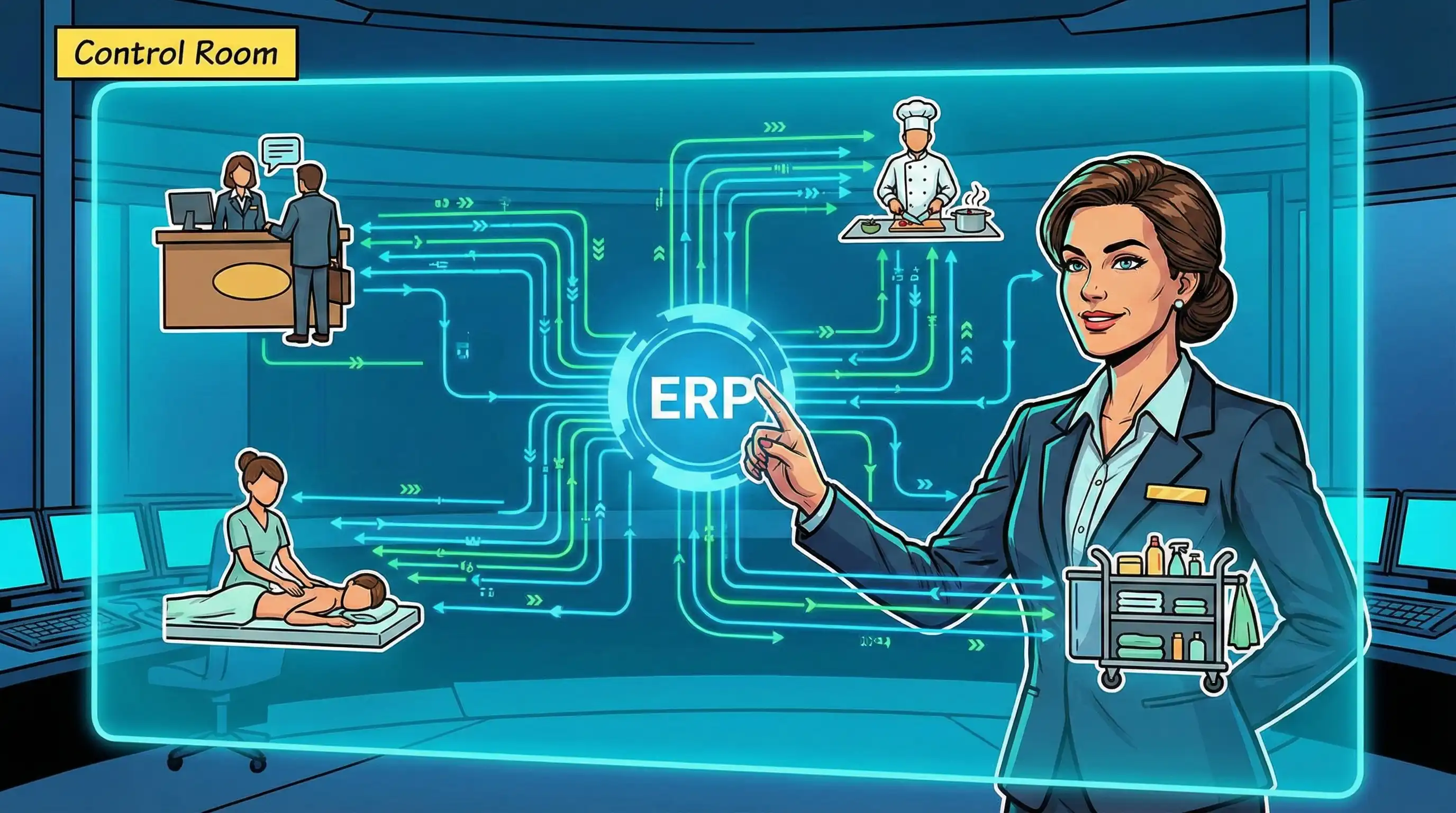
Hotel ERP systems are a big change from hotel management processes that are broken up and done by hand to ones that are all done automatically and work together, which helps every department. Hotels can compete in today's tough hospitality sector by combining property management, financial accounting, inventory management, human resources, and guest services into one platform. This gives them real-time access to data and makes their operations more efficient.
The correct ERP system for hotels gets rid of data silos, cuts down on mistakes made by hand, speeds up guest service, and gives you business insight that helps you make better decisions. Properties that use full systems typically see 20–30% increases in efficiency, 15–20% increases in RevPAR, and guests who are clearly happier.
Immediate next steps:
Prostay stands out as the best all-in-one hotel ERP for establishments who want a lot of features without the high cost and complexity of an enterprise-level system. Its cloud-native design makes it easy to use and doesn't require much training. It offers PMS, revenue management, housekeeping automation, and business intelligence analytics. Prostay cuts total ownership expenses by 35% compared to other options. It does this by offering native OTA connections, AI-driven forecasting, and 24/7 hospitality-specific support. It also allows your business to expand with it.
If you're a hotel owner or hospitality manager who wants to modernize your business with ERP technology, the next step is to look into how Prostay can meet your specific demands. This will help you run your business more efficiently and grow it in a way that lasts.