Average Room Rate (ARR): What Is It and How to Calculate It
 Mika Takahashi
Last updated Sep 25, 2025
Mika TakahashiKnowing your hotel’s financial health means more than just counting how many rooms are occupied. One of the most important numbers to understand is the average room rate. This key performance indicator can truly make a difference in your hotel’s profitability. Whether you’re running a cozy boutique inn or managing a sprawling resort, getting a handle on this metric is vital for boosting your revenue and staying competitive.
In this detailed guide, we’ll cover everything you need to know about average room rate — from the basics of calculating it to the insider revenue management strategies top hotels use in 2025 to fine-tune their pricing. You’ll learn practical tips to raise your rates smartly, avoid common pitfalls, and put into practice methods that lead to steady revenue growth.
Simply put, average room rate tells you the average revenue you earn from each occupied room during a certain time frame. It’s a fundamental benchmark in hotel revenue management that focuses solely on room revenue — leaving out extras like food, drinks, or other services.
Hotels, motels, B&Bs, and vacation rentals all across the hotel industry rely on ARR to keep track of how well their pricing strategies are working. This metric offers valuable insight into your property’s financial health and helps revenue managers figure out if their pricing is hitting the mark.
Sometimes called Average Daily Rate (ADR), ARR is a bit more flexible because it can cover longer periods — like weeks or months — while ADR usually zooms in on daily numbers. Both are useful, but ARR lets you spot trends over time and make smarter pricing moves.
Revenue managers use average room rate to see how their hotel stacks up against competitors, evaluate marketing efforts, and fine-tune pricing strategies. Knowing your hotel’s ARR means you can make decisions based on data, helping you optimize revenue and keep a strong foothold in your market.
Why does it matter so much? Even a small bump in average room rate — say, $10 more per room — can add up to thousands of extra dollars in revenue each month if your occupancy stays steady.
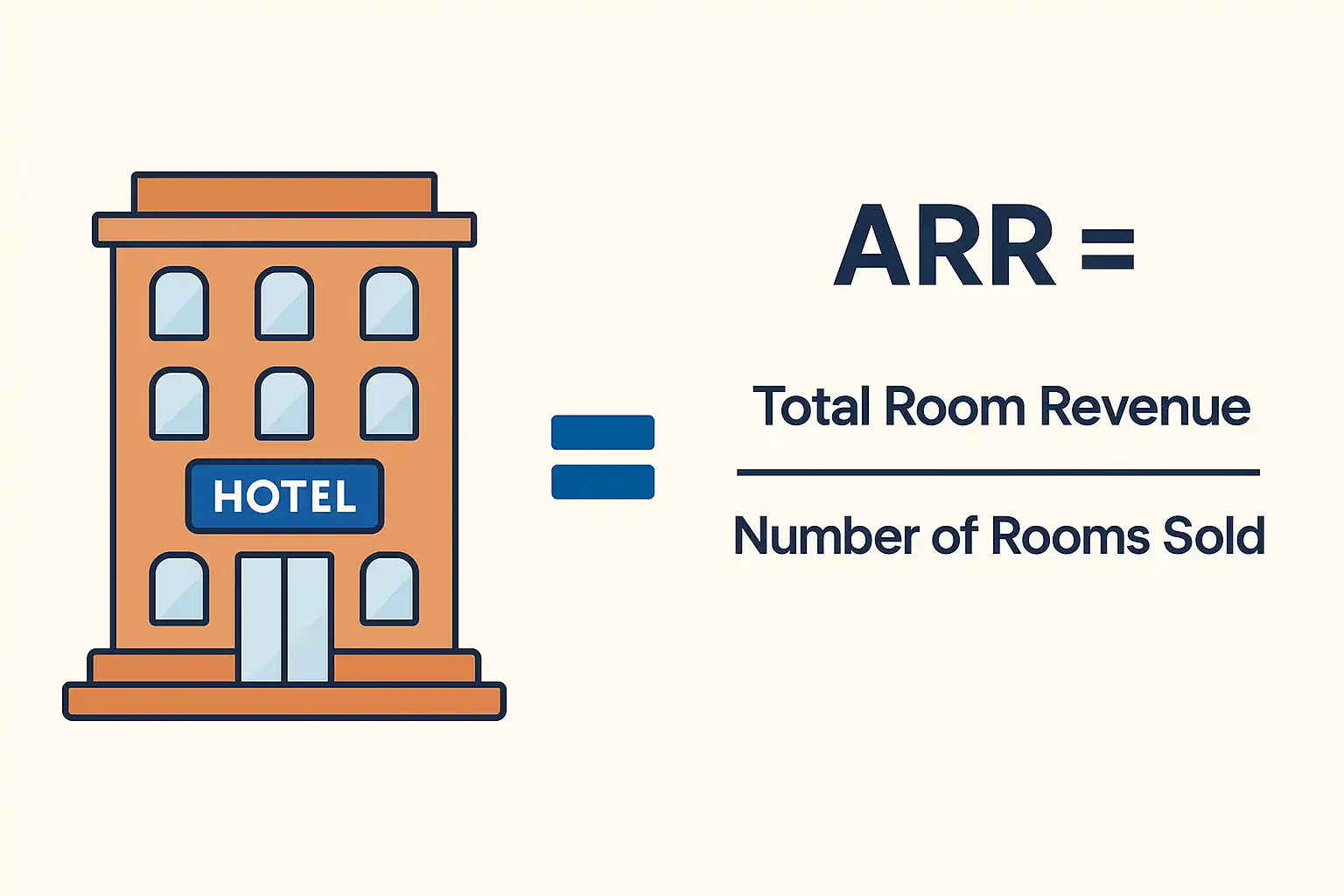
Getting a clear picture of your average room rate is straightforward but essential for smart hotel management and revenue optimization. Here’s the basic formula:
Average Room Rate = Total Room Revenue ÷ Number of Rooms Sold
This formula focuses only on actual room revenue and rooms that were occupied and paid for. It excludes complimentary rooms, staff accommodations, or rooms out of service.
Imagine your hotel made $45,000 from 180 sold rooms in January 2025. To find your average room rate:
So, on average, each occupied room brought in $250 during January.
When calculating your hotel’s average room rate, don’t include rooms that don’t generate revenue — like free stays, staff rooms, or rooms used as compensation. Also, exclude income from things like room upgrades or early check-in fees since those extras can skew your pure room revenue calculations and make it tricky to compare performance over time.
It’s important to understand how ARR fits with other hotel metrics like ADR and RevPAR, as each tells you something unique about your hotel’s revenue performance.
ARR measures the average rate per sold room over any chosen time period — whether that’s a day, week, month, or season. It’s great for spotting pricing trends over time and comparing performance across different periods.
ADR zooms in on the daily room rate, helping you analyze how pricing performs day-to-day. This is especially useful for understanding differences between weekdays and weekends, or how special events affect your rates.
RevPAR combines your average room rate with occupancy rate: ARR multiplied by occupancy. This gives you a fuller picture of your revenue by showing how well you’re filling rooms at profitable rates.
| Metric | Value | What It Shows |
|---|---|---|
| ARR | $200 | Pricing effectiveness |
| Occupancy | 75% | Demand capture |
| RevPAR | $150 | Overall revenue |
Revenue managers benefit from tracking all three to get a complete understanding of their property’s performance.
ARR is a cornerstone metric that helps hotels optimize revenue while keeping a competitive edge. Here’s why it matters:
ARR lets you compare your pricing to local competitors, giving you a benchmark for strategic positioning. This helps you find pricing opportunities and make sure your hotel captures its fair share of the market.
It’s especially useful during peak seasons — like summer or holidays — when demand is high. Tracking ARR during these times helps you adjust prices smartly to maximize revenue.
ARR also supports dynamic pricing, letting you change rates quickly based on demand, local events, or competitor moves.
Using ARR data, revenue managers identify the best times to raise prices — such as during New Year’s Eve or other high demand periods — ensuring the hotel captures the most value when demand peaks.
It helps strike the right balance between room rates and occupancy, avoiding the trap of pricing too high and losing bookings.
ARR also supports yield management by tailoring pricing to different guest segments, like business travelers or leisure guests, to maximize revenue from each group.
By comparing your ARR to competitors through reports or market studies, you get a clear picture of your market positioning.
You can spot pricing gaps, identify service improvements to justify higher rates, and adjust your strategy during major events to capture premium pricing.
Boosting your ARR takes a mix of smart pricing, enhanced services, and strategic positioning. Here are some proven tactics:
Hotels that apply these strategies often see ARR increases of 10-25% in the first year, depending on market conditions and execution.
Keeping an eye on your ARR compared to the market helps you spot opportunities and make smart decisions.
Calculate your ARR Index by dividing your hotel’s ARR by the market or competitor average. A value above 1 means you’re positioned as a premium option, while below 1 suggests room to improve pricing.
Use reliable sources like STR reports or market research for benchmarking.
Monitor ARR monthly to catch seasonal shifts and pricing opportunities.
Look at year-over-year changes to see if your strategies are working long-term.
Compare ARR during events or peak or shoulder seasons to understand how well you capture premium pricing.
Check how ARR varies between business travelers, leisure guests, group bookings, and direct bookings. Knowing which segments bring higher value helps tailor your marketing and pricing strategies.
| Segment | Typical ARR Range | Characteristics |
|---|---|---|
| Business Travelers | 10-20% above market | Higher weekday demand, service-focused |
| Leisure Guests | Market average | Price-sensitive, weekend peaks |
| Group Bookings | 5-15% below market | Volume guarantee, advance planning |
| Direct Bookings | 5-10% above OTA | No commission fees, higher loyalty |
Avoid these pitfalls to protect your revenue and market positioning:
Booking too many rooms through online travel agencies can lower your ARR by 15-25% due to commissions and discounts. Encourage direct bookings with perks like exclusive amenities and loyalty rewards.
Don’t underprice during high-demand times — you could miss out on big revenue gains.
Avoid static pricing; use dynamic pricing to respond to market shifts.
Focus on value rather than just competing on price to avoid a damaging price war.
Keep an eye on local events that justify rate increases.
Exclude non-revenue rooms for accurate ARR calculations.
Stay updated on competitor pricing to keep your rates competitive.
Segment your ARR analysis by guest type and booking channel for deeper insights.
Choose appropriate time frames for meaningful trend analysis.
Stay ahead by embracing modern ARR strategies that combine technology, data, and smart thinking.
Use revenue management software to automate pricing based on market trends and competitor data.
Leverage property management systems that calculate ARR and provide detailed revenue reports.
Employ dashboards for real-time ARR monitoring to react quickly to market changes.
Integrate pricing tools that adjust room rates dynamically to maximize revenue.
Review ARR targets regularly to stay aligned with market shifts.
Train staff in upselling to boost average room revenue through room upgrades and extras.
Monitor ARR weekly during peak seasons for timely pricing adjustments.
Create pricing calendars that account for local events and seasonal trends.
Use predictive analytics to forecast optimal ARR based on historical and market data.
Test different pricing strategies to find what works best for your property.
Develop dynamic packages that bundle rooms with services for higher perceived value.
Model customer lifetime value to balance immediate revenue with long-term loyalty.
Hotels using these approaches often see ARR improvements of 15-30% within 18 months while keeping occupancy and guest satisfaction strong.
Prepare for changing market trends with flexible pricing strategies.
Invest in staff training and technology to support advanced revenue management.
Balance short-term revenue goals with long-term brand and market positioning.
Keep an eye on emerging booking channels to optimize your distribution strategy.
The hospitality industry keeps evolving, so staying informed and adaptable is key to maintaining strong ARR and overall financial health.
Mastering your average room rate is essential for sustainable profitability in today’s competitive hotel industry. From calculating the basics to applying advanced revenue management tactics, ARR is the foundation for smart pricing decisions that boost your bottom line.
The strategies in this guide offer a clear path to increasing your hotel’s average room rate while keeping occupancy and guest satisfaction high. Whether you’re using dynamic pricing tools, enhancing your offerings, or refining your marketing, focusing on ARR will bring measurable results.
Success means staying on top of market trends, competitive positioning, and guest expectations. Hotels that make data-driven decisions, embrace technology, and prioritize value creation will see their ARR—and their business—thrive.
Start today by analyzing your current ARR, spotting opportunities, and building a solid revenue management plan. Your hotel’s financial health depends on making the most of every revenue opportunity, and managing your average room rate well is the key to unlocking that potential.