
Messaging Solutions for Hotels: Modern Guest Communication
Dec 8, 2025
 Mika Takahashi
Popular Categories
Hotel Technology & InnovationHotel Operations OptimizationDigital MarketingIndustry TrendsRevenue ManagementHospitality Industry
Popular Categories
Trending Post
Hotel Walk Letter Template: Professional Guest Communication
Online Travel Agents: What They Are and How They Work
Hotel Security Systems: Modern Protection Solutions

Hotel Advertising: Complete Guide to Boost Bookings and Revenue
25 Hotel Marketing Strategy Ideas for 2025: Complete Guide

AI Reservation Agent: Revolutionizing Hotel Booking and Guest Experience

PMS Communication: Streamlining Property Management Through Effective Guest Messaging
Table of contents
In today’s hospitality world, communication has changed dramatically. Studies show that 73% of travelers now prefer messaging over traditional phone calls when reaching out to hotels. Even more impressive, messaging platforms boast a 90% open rate within just three minutes—far outperforming the 20% phone answer rates during busy times.
Because of this shift, having a messaging solution for hotels is no longer just a nice-to-have; it’s essential. Guests expect fast, smooth communication across multiple channels—whether that’s SMS, WhatsApp, social media, or email—all brought together in one easy-to-use platform.
This guide covers everything you need to know about hotel messaging solutions: how they’ve evolved, the must-have features, tips for implementation, the benefits they bring, common challenges, and why choosing the right guest messaging software can significantly boost guest satisfaction, streamline hotel operations, and increase revenue.
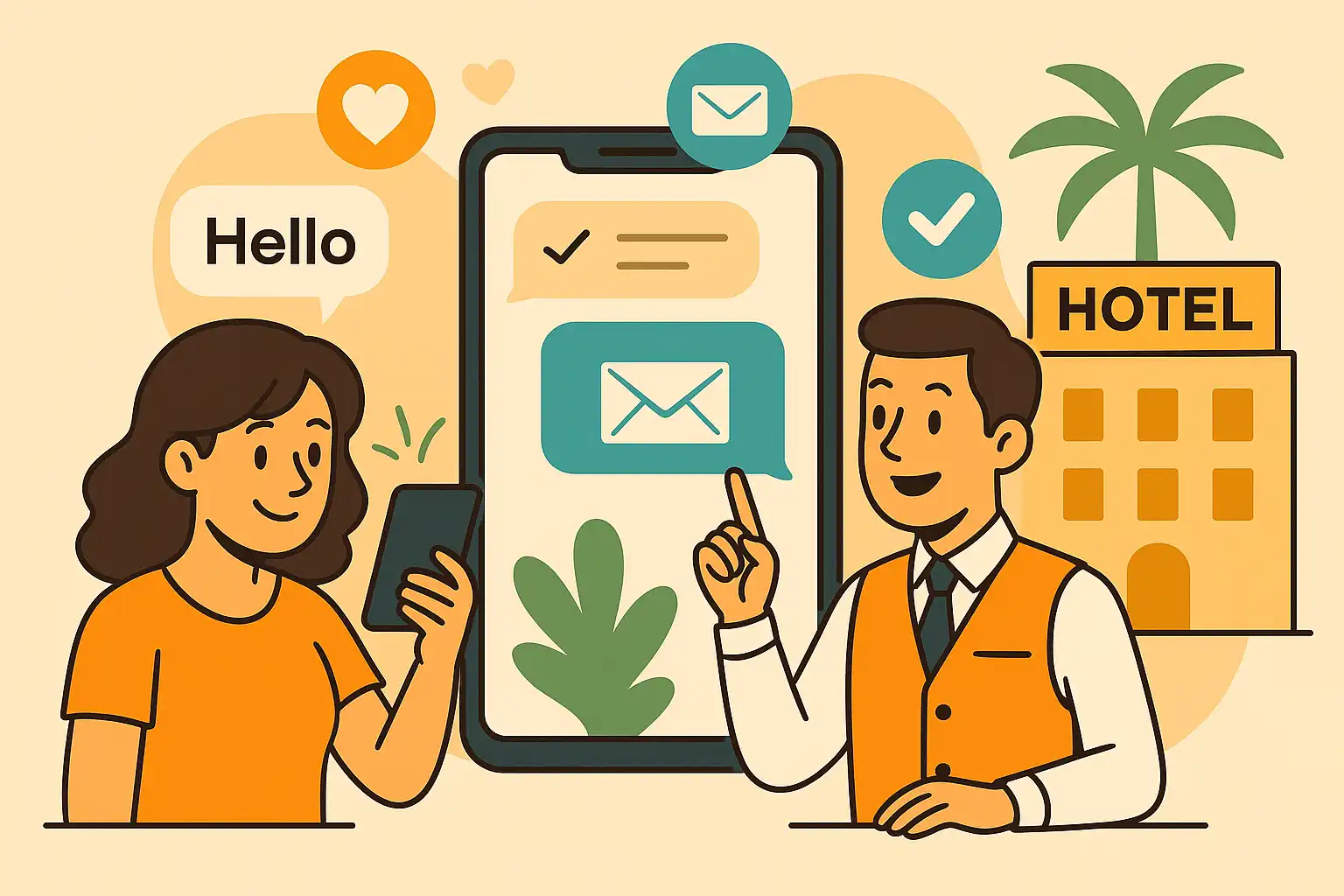
What Are Hotel Messaging Solutions?
Hotel messaging solutions are all-in-one hotel communication platforms that let hotel staff and guests chat in real time across various digital channels. Unlike old-school phone systems limited to voice calls, these platforms bring together SMS, WhatsApp, email, web chat, and social media messages into one unified inbox.
What sets these solutions apart is their holistic approach. In the past, hotels juggled separate tools for calls, emails, and social media. Today’s messaging solutions combine all these channels into a seamless experience.
They also integrate deeply with major property management systems (PMS), syncing guest details, bookings, and conversation history automatically. This means hotels can tailor their communication based on each guest’s preferences, past stays, and current reservations, making every interaction more personal and effective.
Beyond just sending messages, modern hotel guest messaging software uses AI, automation, and analytics to transform how hotels serve guests, manage operations, and drive revenue through better guest engagement.
The Evolution of Hotel Messaging Solutions
The shift toward modern hotel messaging started in the early 2010s as smartphones and messaging apps became widespread. Initially, hotels used simple SMS systems for reminders and promotions, but these lacked the integration and sophistication we see today.
Between 2014 and 2016, the first dedicated hotel text messaging systems appeared, mainly handling one-way communication like booking confirmations and pre-arrival info. Companies like Kipsu and Zingle were early pioneers in two-way SMS communication tailored for hospitality, realizing text could handle guest requests more efficiently than phone calls.
The COVID-19 pandemic accelerated this trend dramatically. Contactless communication became a must for safety and smooth operations. Hotels quickly adopted messaging platforms to manage digital check-ins, housekeeping coordination, and guest services without face-to-face contact. Messaging adoption jumped from about 30% to over 55% of hotels using some form of guest messaging.
Today, the trend continues toward AI-powered, omnichannel platforms. These systems understand guest intent, provide automated answers for common questions, and hand off complex issues to staff seamlessly. Integration now goes beyond PMS to include revenue management, CRM, and business intelligence tools.
By 2025, over 70% of hotels have embraced texting systems for hotels, especially luxury and business-focused properties. This reflects younger travelers’ preferences and the clear operational benefits these tools bring.
Essential Features of Modern Hotel Messaging Solutions
To truly enhance guest experiences and hotel efficiency, guest messaging software needs to offer a robust set of features, combining ease of use with powerful backend tools.
Unified Inbox Management
At the heart of any great messaging solution is a unified inbox that pulls all guest communications into one place. This stops messages from getting lost across different platforms and keeps the whole conversation history handy.
A good unified inbox shows messages from SMS, WhatsApp, OTA platforms like Booking.com, emails, and social media chats all in chronological order. Staff can reply right there, no matter which channel the guest used, keeping conversations smooth and continuous.
Advanced systems also use smart routing to send messages to the right team automatically. Maintenance requests go to engineering, dining questions to restaurant staff, and tricky issues escalate to management. This cuts down front desk workload and speeds up responses.
Having full conversation history means staff always have context—if a guest messages multiple times during their stay, anyone can pick up where the last conversation left off, making service more personal and efficient.
AI-Powered Automation
Modern platforms use artificial intelligence to handle routine questions instantly, with a friendly, conversational tone. Whether guests ask about check-in times, WiFi passwords, amenities, or local tips, AI can provide quick, accurate answers.
The best AI goes beyond keyword spotting—it understands the meaning behind questions, even when phrased differently, and gives helpful responses.
When the AI hits a question it can’t answer well, it smoothly hands the chat over to human staff, passing along all relevant info so the guest doesn’t have to repeat themselves.
Sentiment analysis keeps an eye on how guests are feeling. If frustration or urgency pops up in messages, the system flags those conversations for immediate attention—helping hotels catch issues early and recover service.
Multilingual support is also key, letting hotels communicate with guests in their preferred languages via AI-powered translation, breaking down language barriers without needing multilingual staff around the clock.
PMS Integration Capabilities
Integrating deeply with property management systems turns messaging from a simple chat tool into a powerful guest service hub. This connection allows automated workflows that respond with real-time info on room availability, pricing, and services.
By syncing with guest profiles, the messaging platform can access booking details, preferences, loyalty status, and past stays. This enables personalized messages—addressing guests by name, offering upgrades based on history, or suggesting spa visits they’ve enjoyed before.
Automated message sequences can be set up to trigger at key points—welcome messages 48 hours before arrival, check-in instructions a couple of hours before, and feedback requests after checkout. These can be tailored by guest type, room category, or special occasions.
Thanks to PMS integration, upselling becomes smarter. The system can automatically offer room upgrades if available, suggest dining experiences at the right time, or promote local activities the guest might like.
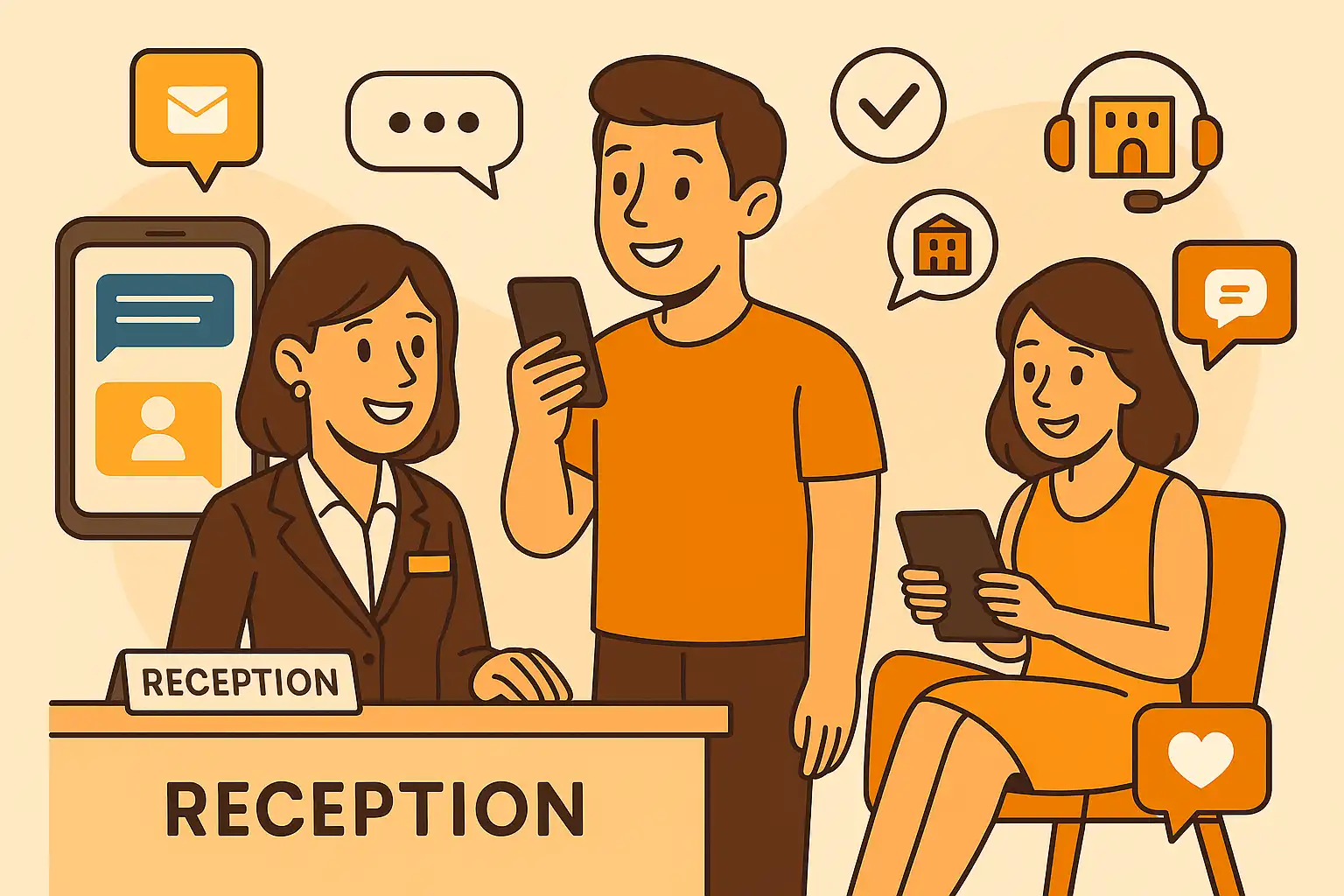
Multi-Channel Communication Support
A modern messaging solution supports all the channels guests want to use. SMS remains a staple because it’s universally used and reliable across regions and demographics.
WhatsApp Business API integration is increasingly important, especially for international hotels where WhatsApp is the go-to messaging app. This lets guests share photos of issues or receive rich info about hotel amenities and local spots.
Social media messaging through Facebook Messenger and Instagram expands reach, catching potential guests during their research phase and allowing instant answers that can seal the booking.
Website live chat and chatbots add even more touchpoints, helping both prospective and current guests who prefer web-based chat over mobile apps.
Email rounds out the mix for longer messages, documents, and formal communication, all integrated into the unified inbox for easy management.
How to Implement Hotel Messaging Solutions
Rolling out a hotel guest messaging platform takes thoughtful planning, careful setup, and ongoing fine-tuning. Hotels that prepare well see faster adoption, happier staff, and quicker guest satisfaction wins.
Pre-Implementation Planning
Start by reviewing how guests currently communicate with your hotel. Track how long it takes to respond to different inquiries and how much staff time goes to communication tasks. This baseline helps measure success later.
Identify your main guest types and their preferred channels—business travelers might like quick SMS, while leisure guests might prefer WhatsApp or social media. Tailoring the platform to actual guest habits ensures better adoption.
Set clear goals for guest satisfaction and operational improvements. For example, aim to cut response time to under two minutes, boost satisfaction scores by 15%, or reduce front desk calls by 25%. These targets help focus efforts.
Budget realistically, including software fees (usually $1-4 per room per month), integration costs, training, and ongoing support. Investing in good training and workflow design pays off in long-term efficiency and happier guests.
Platform Selection and Setup
Evaluate platforms based on PMS integration, channel support, automation features, scalability, vendor reputation, support quality, and implementation timeline.
Configure the unified inbox with routing rules so messages automatically reach the right teams—maintenance, dining, management—and set escalation triggers for delayed responses.
Coordinate with your IT and PMS teams to ensure smooth data syncing and workflow automation. Test all channels thoroughly before going live to catch any issues.
Create message templates for common questions and situations, keeping your brand voice consistent but allowing staff to personalize replies.
Staff Training and Adoption
Train front desk and customer service teams on how to use the platform and communicate effectively. Cover technical use and soft skills like tone and multitasking.
Set clear response time goals and communication standards to keep service consistent.
Define escalation procedures for tricky issues, so staff know when to involve supervisors and how to transfer conversations smoothly.
Monitor performance regularly, reviewing response times, satisfaction scores, and resolution rates to identify coaching opportunities.
Advantages of Hotel Messaging Solutions
Implementing a modern messaging platform brings measurable benefits to guest experience, efficiency, and revenue.
Enhanced Guest Experience
Messaging platforms boast 90% message open rates within minutes, far outpacing phone and email. Guests get quick answers and fast service, improving their overall impression of the hotel.
24/7 availability means guests can reach out anytime, even when staff aren’t immediately available. Automated replies keep guests informed and manage expectations.
Personalized messages referencing guest preferences and stay history make interactions more meaningful, building loyalty.
Quick issue resolution via direct messaging prevents small problems from turning into bad reviews or compensation claims.
Operational Efficiency Improvements
Hotels often see a 20-30% drop in front desk calls after adopting messaging, freeing staff to focus on personal guest interactions and upselling.
Automated workflows save 5-10 hours per week by handling routine questions without human help.
Centralized communication reduces response times to under two minutes, with staff accessing all guest info and history in one place.
Streamlined workflows and automated routing boost staff productivity and service quality.
Revenue Generation Opportunities
Messaging enables upselling campaigns with response rates over 24%, far higher than email marketing.
Better communication during booking helps increase direct bookings, reducing reliance on third-party sites and boosting margins.
Improved guest retention from great communication leads to higher lifetime value.
Fast issue resolution and attentive service improve online reviews, which drive more bookings and better pricing.
Disadvantages and Implementation Challenges
While messaging solutions offer many benefits, hotels should be aware of potential hurdles.
Technology and Integration Challenges
Older PMS platforms may require custom work for integration, adding time and cost.
Staff may resist new technology or feel overwhelmed managing multiple channels, needing extra training.
High message volumes during busy seasons can strain staff if automation isn’t well set up.
Data privacy regulations require careful handling of guest info and communication.
Cost Considerations
Monthly fees add up, especially for smaller hotels.
Advanced features and integrations often come with extra costs.
Training and onboarding require time and resources.
Ongoing maintenance and updates need IT support.
Guest Communication Risks
Too many automated messages can annoy guests.
Generic AI replies may feel impersonal.
Language or cultural misunderstandings can cause issues.
Technical glitches can disrupt communication during critical times.
Best Practices for Hotel Messaging Success
To get the most from hotel messaging, plan carefully and keep optimizing.
Communication Strategy Development
Map the guest journey to find the best messaging moments.
Define your brand voice for consistent, friendly communication.
Segment guests by preferences to personalize messages.
Balance message frequency to avoid overwhelming guests.
Performance Monitoring and Optimization
Track response times, resolution rates, and satisfaction scores daily.
Run A/B tests on message templates and timing.
Listen to guest feedback to refine communication.
Update automation rules regularly to keep info fresh.
Why Prostay Nexus is the Best Messaging Solution for Hotels
Among the many options out there, Prostay Nexus stands out as a top choice for hotels wanting a complete, AI-driven guest communication platform. It combines cutting-edge technology, proven results, and excellent support tailored for hospitality.
Advanced AI and Automation Capabilities
Prostay Nexus boasts an impressive 95% automation rate for common guest questions—higher than many competitors. Its AI is trained specifically on hospitality conversations and continually learns from millions of interactions.
Its sentiment analysis detects guest dissatisfaction with 94% accuracy, escalating issues before they become problems and helping hotels recover service promptly.
Predictive messaging anticipates guest needs by analyzing booking patterns and past stays, delivering personalized offers that convert better than generic messages.
Human agents get seamless handoffs with full context and AI-suggested replies, speeding up resolution without losing quality.
Superior Integration and Customization
With native integration to over 50 major PMS platforms—including Oracle, Marriott, and Hilton—Prostay Nexus avoids the usual technical headaches.
Message templates are fully customizable to match each hotel’s unique brand voice and operational needs.
White-label options ensure guests always feel they’re communicating directly with the hotel, not a third party.
APIs allow custom connections to other systems like revenue management and CRM tools, enhancing personalization and efficiency.
Proven Results and ROI
Hotels using Prostay Nexus typically see a 40% boost in guest satisfaction within six months.
Direct bookings increase by 35% thanks to better communication during the booking process.
Return on investment hits 300% in the first year through increased revenue and operational savings.
The platform guarantees 99.9% uptime with 24/7 monitoring, ensuring reliable guest communication even during peak times.
Comprehensive Support and Training
Prostay Nexus offers round-the-clock support from hospitality-savvy experts.
Free onboarding and ongoing training help staff get up to speed and stay current.
Regular updates keep the platform aligned with evolving guest expectations and technology trends.
Enterprise clients benefit from dedicated account managers for personalized optimization.
With its blend of advanced technology, real-world results, seamless integration, and outstanding support, Prostay Nexus is the go-to messaging solution for hotels aiming to elevate guest communication, streamline operations, and grow revenue.
If you’re considering a messaging solution for your hotel, start by assessing your current communication challenges, setting clear goals, and choosing a partner committed to your long-term success. Prostay Nexus offers the complete package to help your hotel lead in guest communication—not just keep up.